🧵 Could polygenic risk score (PRS) be used to explore diabetes misclassification? We examined this in a British South Asian cohort @EastLondonGenes with genotyped data and linked health record, now available on @medrxivpreprint https://t.co/A6s2ePQPCr 1/12
Over a year ago, a call with @ravi_sola changed my life.
Since then, I’ve watched how @PrimaMente grow with speed, creativity, rigour, and relentless drive, pushing deep tech into clinical applications. It’s been inspiring to witness, and even better to be part of.
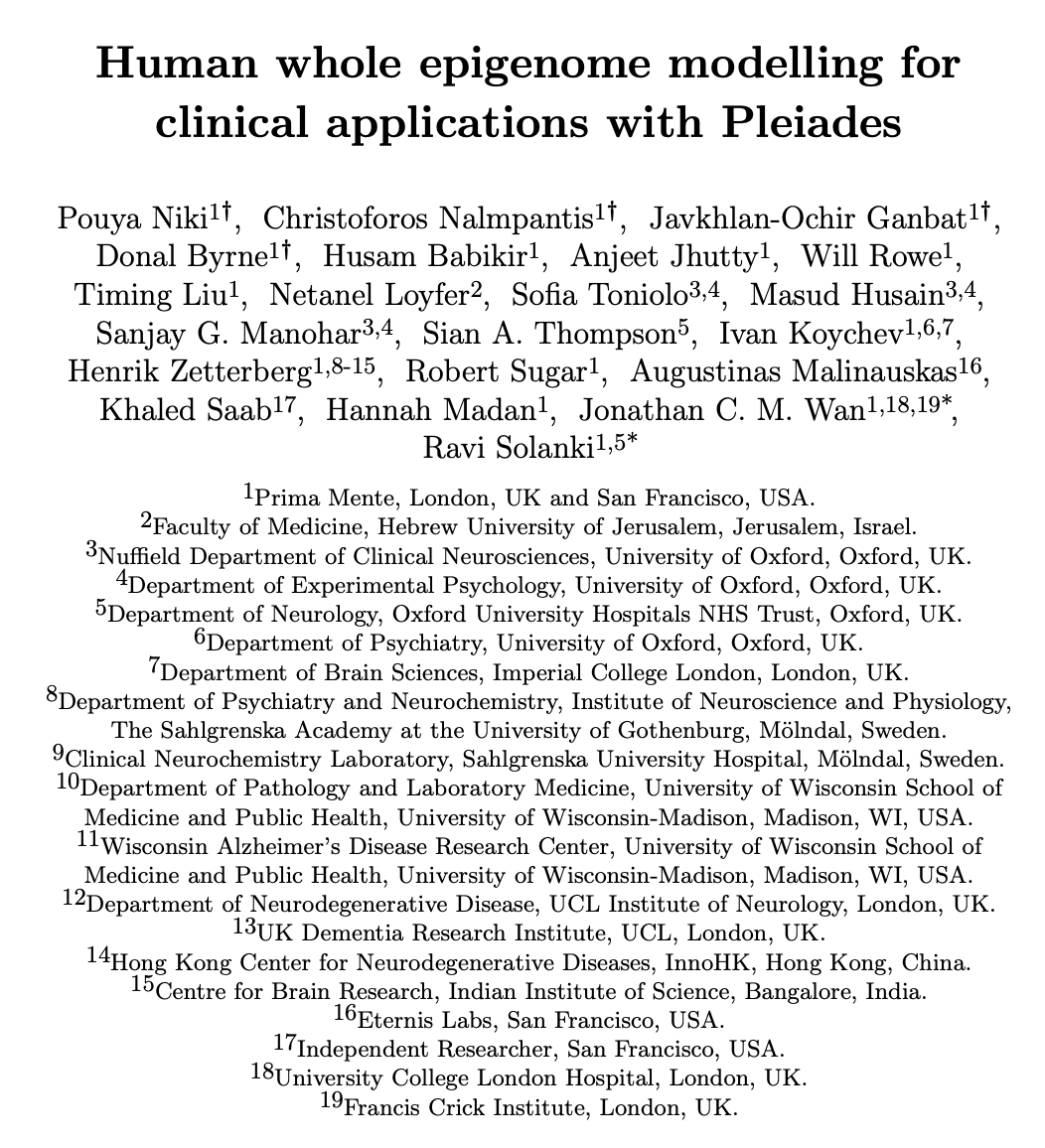
1/ Today we announce Pleiades, a series of epigenetic foundation models (90M→7B params) trained on 1.9T tokens of human methylation & genomic data. Pleiades accurately models epigenetics for genomic track prediction, generation & neurodegenerative disease detection from cfDNA, outperforming previous pure DNA baselines.
Over the coming weeks, we will be introducing Prima Mente to the world. We kicked off today at @NVIDIAGTC Paris highlighting two foundational collaborations:
@nebiusai has become a core partner for our work to generate the world’s largest brain foundation models. Our goal long-term: understand the brain across health, age, and disease.
Through @nvidia DGX Cloud with Lepton, we have started to scale our exciting work in Alzheimer’s Disease to Parkinson’s.
Thank you to Arkady Volozh and Jensen Huang for supporting what will be the biggest application of AI in our world today - human health.
It is a privilege to work with both the @nvidia (Janisha Anand, @cedricSteenb, Ben Griffiths) and @nebiusai (@romanchernin, Danila Shtan, Ilya Burkov, Hasan Göktuğ Çolak, Anastasia Ustinova) teams.
Links to both press releases are in the thread.
🚨 We’re #hiring a Staff Scientist to drive innovative computational workflows for large-scale, multi-omics data in human microbiome research @LawleyLab@sangerinstitute
📅 Closing date: 27th April 2025
📢 Please share & apply!
https://t.co/RFTeEqru47
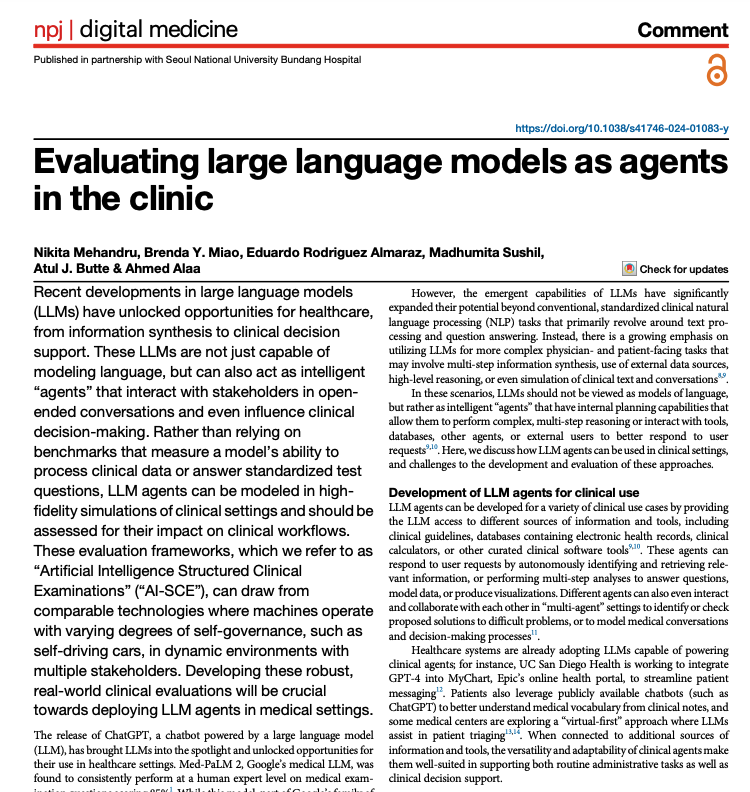
How should we evaluate #LLMs for downstream clinical use cases? In this @npjDigitalMed article, we propose a transition from static QA-style benchmarks to dynamic agent-based simulators, similar to methods used in biology, epidemiology & social sciences.
https://t.co/giyVwMZDpl
Congratulations to my student @tenghiangh on her first PhD preprint! It's about recessive associations in @GenesHealth , a cohort of >40k British South Asians. See her thread for an account and the paper here https://t.co/tRadSYboVV.
Our paper describing a way to infer the phase of rare variant pairs using gnomAD v2 is out now in Nature Genetics.
We hope that the resource we generated will be useful when interpreting rare co-occurring variants in the context of recessive disease.
https://t.co/29Qflr6Yce
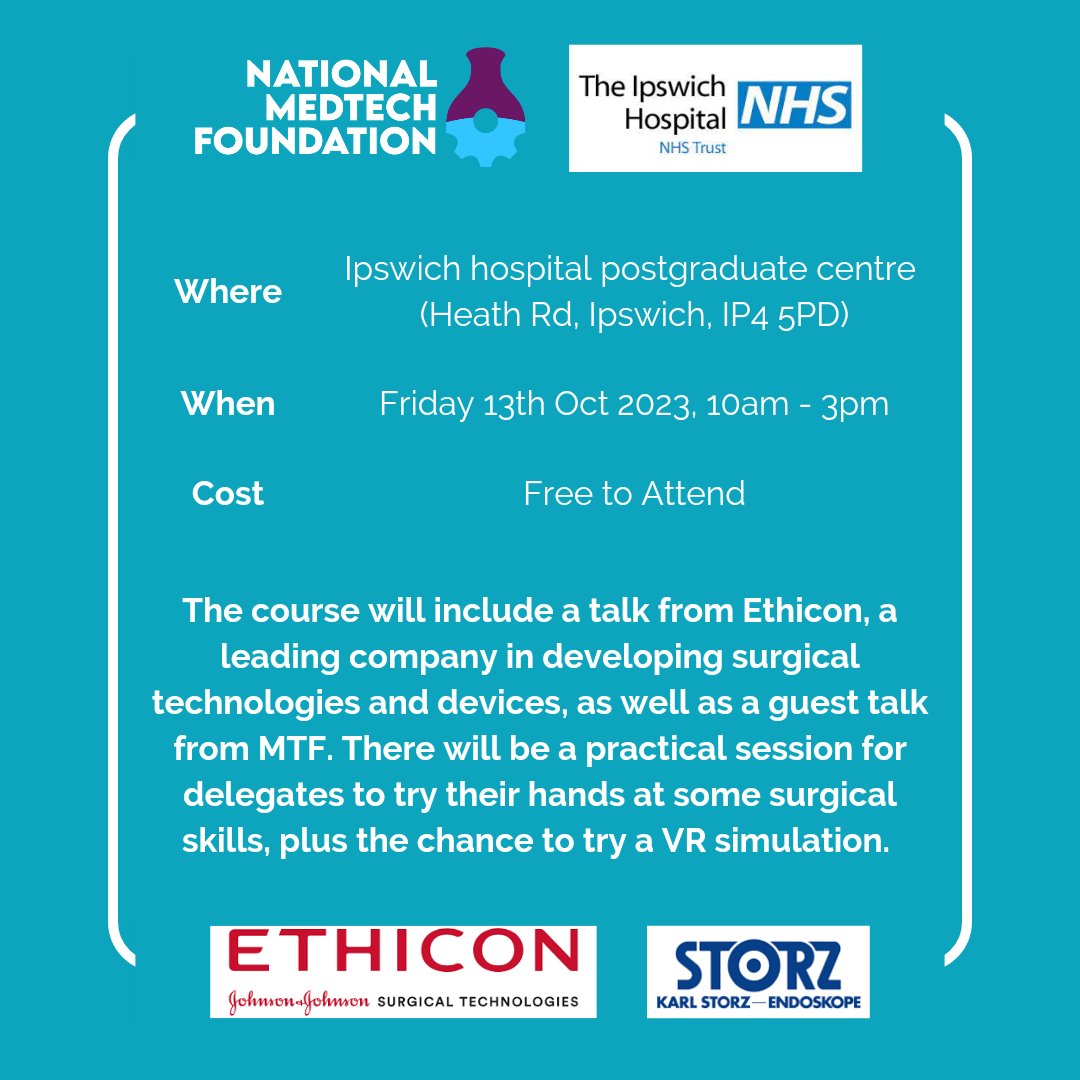
MTF is excited to announce we will be delivering a talk as part of Ipswich Hospital's Basic and Laproscopic Surgical Skills Course. The event is free to attend and will be in person at Ipswich Hospital on October 13th.
Hope to see you there!
Is anyone here using the UKBiobank 200k genomes dataset? We are having some weird issues and are trying to troubleshoot if data vs code 😬 Anyone else seeing anything odd?
Either way, please share! 🧬
Many congratulations @sktywagner! Very well deserved and thank you so much for all the wisdom imparted. Real stars bring lights to others and you have never stopped doing that. 🎉
👏Congratulations to @sktywagner - one of ten rising stars on @OphthoMag's 2023 Power List.
Siegfried is a core member of the research group supported by INSIGHT in advancing the field of #oculomics@Moorfields@UCLeye@MoorfieldsBRC
🔗Read more: https://t.co/LWBaTb7YOE
Congratulations @sktywagner! 🥳🤩Speaking for the whole group when I say we are incredibly proud of the many feats you’ve achieved this year and excited for the way your work and #AlzEye will propel #oculomics ! A #risingstar indeed @OphthoMag 👏🏽
Very pleased our manuscript is out today at @CellCellPress on the influence of autozygosity on common disease risk: https://t.co/3OWbGW0fqJ
Thank you to the thoughtful reviewers that helped us improve our work!
Check out the thread below for a summary of the main results
Great paper by @DMalawsky, @hilsomartin and the team on the associations of consanguineous union with common diseases.
Consanguinity (i.e., marrying close relatives e.g. cousin marriages) results in the passing of very similar genomes from father and mother to the offspring. This increases the load of recessive deleterious mutations in the offspring, which can be inferred from genetic data by quantifying the stretches of homozygous genotypes (described as autozygosity).
Consanguineous marriages are highly common in many South-Asian populations. The negative health consequences of consanguineous unions are well known in the context of rare recessive severe diseases such as skeletal deformities, intellectual disability etc. However, the effect of consanguineous unions on the risk of common diseases is not well studied. This is very important as diseases like type-2 diabetes are highly common in South-Asian populations.
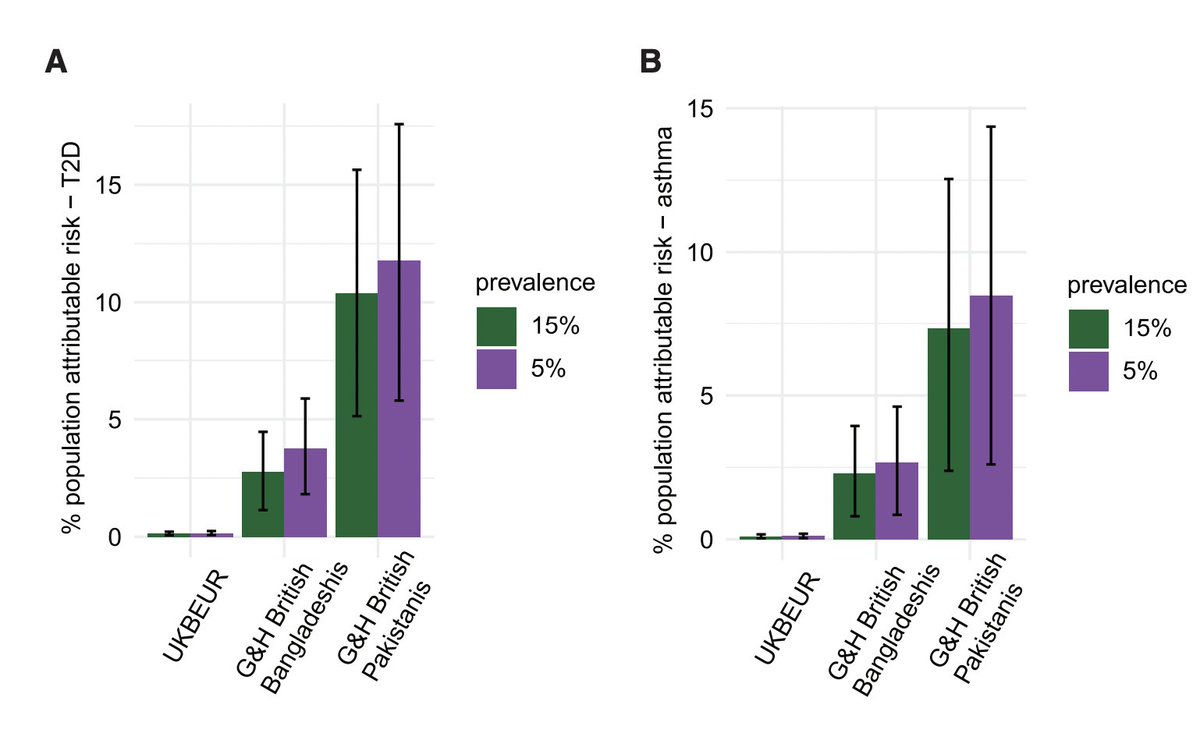
Here by analyzing genetic and phenotypic data of two South-Asian cohorts, the authors show that consanguinity strongly increases the risks of even common diseases. For example, in communities practising consanguineous marriages, more than 10% of type 2 diabetes might be due to autozygosity (and this is probably an underestimate).
What type of genetic variants are mediating the association between autozygosity and increased risk of common diseases? Likely rare recessive variants acting in a non-additive manner. To pinpoint which recessive variants are driving which diseases, we will need extremely large sample sizes as homozygous genotypes are extremely rare (square of minor allele frequency).
An important research contribution to the South-Asian communities by Malawsky et al. 👏👏
🎉 New updated version of @NeomateApp for NICU doctors/nurses released this morning on both iOS and Android with lots of updates. Please download it (it's free) and let us know what you think! More info at https://t.co/9l3BKbtNAF
#RETFound demonstrated SOTA performance in various tasks across multiple subgroups using retinal images alone
Great work by the team for laying foundations towards #OpenScience and #Oculomics.
Model architecture and weights are available #OpenAccess! 🥂
1/
🚨🚨 New paper alert 🚨🚨
Introducing RETFound, a foundation model for ophthalmology
We’re super excited about this and hope it will act as a #Cornerstone for global efforts to prevent blindness through #AI@UCLeye@Moorfields#OpenAccess@Nature
https://t.co/DsvKgeUH5m
Feeling very proud to have worked with Yukun, Pearse, and the team on research like this over the past couple of years.
The potential is enormous - @ucl@cdt_ai_health & @Moorfields is THE place to be for creating responsible, impactful AI with a focus on future patient benefit.
> half the time a masked reading center disagreed with treatment decisions in ROP. @irop_consortium working on AI solution to standardize diagnosis with https://t.co/eBjULrpTdL
https://t.co/EJl87YJ8gs