Le vrai ou faux le vrai ou faux, de Vincent Piguet 🎶☀️
La matinale de la nuit, c’est tous les mardis de 22h à minuit en direct sur Nova et à tout moment en podcast et sur YouTube.
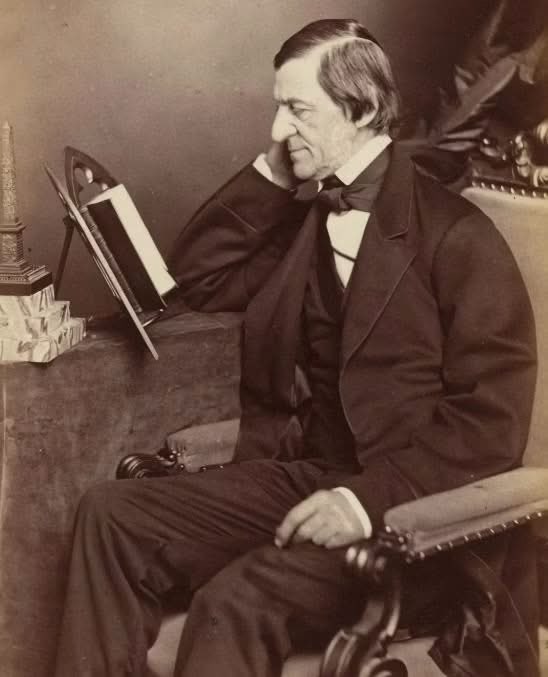
"Le but de la vie n’est pas simplement d’être heureux. Il s’agit d’être utile, intègre, compatissant ; de laisser derrière soi une trace, aussi infime soit-elle, qui rende le monde un peu meilleur. Vivre pleinement, c’est transmettre un héritage qui témoigne que l’on a vécu — et vécu avec justesse.
Que ce soit en veillant sur un enfant, en cultivant un jardin ou en œuvrant à l’amélioration des conditions humaines, le véritable accomplissement réside dans cette certitude intime : grâce à ta présence, une vie au moins a respiré plus librement. Voilà, en vérité, ce qu’est toucher à l’essence même de la vie."
Ralph Waldo Emerson
En 1966, on alertait déjà sur l’extrême fatigue dans le monde professionnel. Un constat toujours d’actualité en cette Journée mondiale de la sécurité et de la santé au travail.
#SantéAuTravail#Surmenage#BurnOut#archives#ina
A monumental moment in medical history: the first gene therapy for genetic hearing loss is now FDA approved. As a former Regeneron scientist, I feel very proud. I had the opportunity to hear about this programme while it was still in development. It’s one of the few programmes that, every time you came across it, you felt the medical breakthrough in your bones and privileged just to be there while it was happening.
At this moment, it’s important that we look 30 years back when researchers mapped a locus on chromosome 2 to congenital deafness in a Lebanese family (https://t.co/o8ltjHyLNy). They named it DFNB6 (later DFNB9) with no clue about the responsible gene. Three years later, the causal gene came to light: OTOF, encoding a protein called otoferlin (https://t.co/tBGlFPzaQd). Seven years after that, in 2006, pioneering work by Christine Petit revealed that otoferlin is a calcium sensor in the inner hair cell membrane, acting as a molecular trigger that converts sound into electric signals that the brain can read (https://t.co/oxXtifPrTZ). Twenty years fast forward, we now have a successful treatment. Thirty years from discovery to medicine.
OTOF-related deafness is congenital, caused by complete deficiency of otoferlin. In these children, the cochlea is structurally intact, hair cells are there, the mechanics of sound transmission work. It’s just that final step, where hair cells hand off the signal to the auditory nerve through neurotransmitter release, that doesn’t happen. Sound arrives and dies at the synapse. It’s deafness due to a defect in the synapse caused by the absence of a single protein, which is what made this a beautiful, clean target for gene therapy.
The treatment itself is a feat of molecular engineering. OTOF is too large to fit in a single AAV capsid. The team solved this elegantly by delivering the gene in two halves separately, which then get spliced to produce the full functional protein. A single surgical injection into the cochlea, a molecular miracle unfolds. Results from the CHORD trial were striking: of 20 evaluable patients, including children as young as 10 months, 80% showed meaningful hearing improvement, and by 48 weeks, 42% had achieved normal hearing including the ability to hear whispers. Otarmeni is not only the first gene therapy for deafness, it’s also the first dual-AAV therapy to be approved by the FDA.
There are very few things in medicine that come close to giving back a sense like vision, hearing, or touch that a human never had from birth. It’s almost God’s work. A parent witnessing their child who was born deaf hearing their voice for the first time, it’s a joy that no words can describe. Multiply that by the fact that it came from a single injection, a repaired gene, and 30 years of science. We are truly in the golden era of medicine.
Regeneron press release:
https://t.co/6zvdsT2uzI
Below video is from the NEJM publication of CHORD trial (Valayannopoulos et al. NEJM 2025)
https://t.co/YvIqwQ0SDu
Built for perfection.
Where science meets soul, every detail is crafted to flawless precision. We haven’t just brewed beer; we’ve set a new standard.
The masterpiece is ready. Stay tuned !
#ElmirBrewery#CraftBeer#Elmir#ElmirCraftBeer
🇱🇧 ✝️ ☪️ Yousra Boutros Chedid : “Nous adoptons trop souvent une posture de victimes éternelles, et de sous-entendre une certaine « supériorité » culturelle … Chrétiens et musulmans cohabitent et sont d’ailleurs tout aussi victimes d’une classe politique corrompue et mafieuse.”
Can you imagine reading works by all Nobel Prize laureates in literature?
One book club in Canberra, Australia have spent over ten years exploring the literary worlds of 121 literature laureates.
The book club members come from an array of backgrounds: poets, artists and those that work in the sciences. It began when Bernadette Hince, who loves reading, became curious about the Nobel Prize laureates in literature. Her colleague Lenore Coltheart, a historian, joined her and encouraged the development of the club.
At the end of August 2025, the book club members completed their goal of reading all laureates from 1901 to 2024. At their final meeting they discussed the works of Juan Ramón Jiménez (1956), Joseph Brodsky (1987) and Günter Grass (1999).
When asked what books they enjoyed most during these eleven years, they mentioned many Scandinavian writers such as Thomas Tranströmer, Selma Lagerlöf and Jon Fosse. Gabriela Mistral, Wislawa Szymborska and John Steinbeck were also favourites.
Now the 2025 Nobel Prize laureate, László Krasznahorkai, has been announced these avid readers have a new writer to add to their list.
How many literature laureate's books have you read?
Photo: Ulrika Eriksson
"What happens in Vegas, stays in Vegas"
Al-Nawaji (died 1455) discusses how a wine-drinking session among companions is like a carpet: once you're done, you fold it. No one should talk about what happened.
Cheers 🥂
(From section in Halbat al-Kumayt covering the drink-buddy)