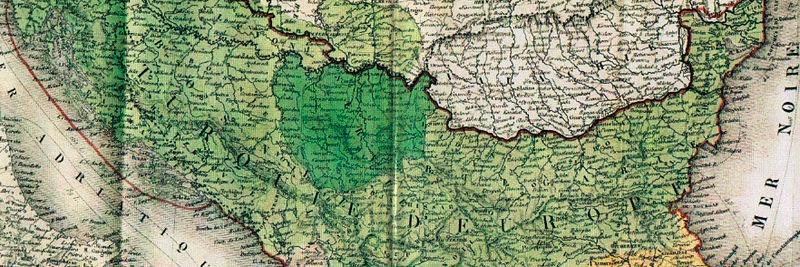
Антун Радић, „Tko je stvorio Hrvate?“, Dom: list hrvatskomu seljaku za razgovor i nauk, год. V, бр. 19–20, Загреб, 10. новембар 1904, стр. 304–307.
Часопис Dom покренуо је и уређивао Антун Радић.
18. априла 1992. Рамбо Амадеус прекида програм Београдског љета овим испадом. До тог 18. априла убијено је намјање 102 Срба у Броду, Сијековцу, Кострешу, Купресу, Д. Маловану, Рилићу, Занглини, Ботуну, Бареву, Мостару. Није се никад огласнио ни прије ни послије за убијене Србе.
@Sloboda63365299 Укидање ропства у дубровнику је био само политички указ. На жалост робови у Дубровнику су постојали деценијама и деценијама после укидања
By the late nineteenth century, the wave theory of light looked secure.
Young and Fresnel had explained interference and diffraction; Maxwell had shown that light is an electromagnetic wave. Yet one problem remained: the theory described how light travelled, but not fully how it transferred energy to matter.
The clue appeared in 1887, when Heinrich Hertz noticed that ultraviolet light made electrical sparks easier to produce. Wilhelm Hallwachs found that ultraviolet light could discharge a negatively charged metal surface. After J. J. Thomson identified the electron in 1897, the meaning became clearer: light was ejecting electrons from matter.
Philipp Lenard discovered something classical physics did not predict. Increasing the intensity of light increased the number of emitted electrons, but not their maximum energy. That energy depended on frequency. Below a threshold frequency, no electrons were emitted at all, however bright the beam became.
If light delivered energy continuously, a strong enough wave should eventually free an electron. Nature instead behaved as though energy arrived in separate transactions.
The missing idea came from Max Planck. In 1900, while solving the blackbody-radiation problem, Planck introduced
E = hν,
where h is Planck’s constant and ν is frequency. Planck quantized how matter emitted and absorbed radiation; he did not initially claim that light itself was particulate.
Einstein took that step in 1905. He proposed that light of frequency ν behaves, in its interaction with matter, as if its energy is concentrated into localized units, each carrying E = hν. They were later called photons.
Applied to the photoelectric effect, the idea is simple. One photon transfers its energy to one electron. Part of that energy is required to free the electron from the metal; this minimum escape energy is the work function, φ. Whatever remains becomes kinetic energy:
K_max = hν − φ.
The equation explains why. Frequency determines the energy of each photon. Intensity mainly determines how many photons arrive. A brighter beam can release more electrons, but only a higher-frequency beam gives each electron more energy.
It also predicts a threshold frequency. At the threshold,
hν₀ = φ,
so
ν₀ = φ/h.
Below ν₀, every photon is individually too weak. More low-energy photons do not help in the ordinary photoelectric process because the required energy must be delivered in one quantum interaction.
The maximum kinetic energy can be measured using a stopping voltage Vₛ:
eVₛ = hν − φ.
This predicts a straight line between stopping voltage and frequency. Robert Millikan spent years testing it. Though skeptical of light quanta, his measurements confirmed the equation and produced an accurate value of Planck’s constant.
But the result did not simply prove that light is a classical particle. Light still interferes and diffracts like a wave. Yet when it exchanges energy with matter, the exchange occurs in discrete events. The same light that spreads through space as a wave can arrive at a detector one photon at a time.
That is the philosophical rupture. “Wave” and “particle” were concepts borrowed from ordinary experience, but nature was not required to fit completely into either category. Maxwell’s theory remained correct within its domain; what failed was the belief that a continuous wave was the complete description of light.
Planck had shown that matter exchanges energy in steps. Einstein argued that those steps can travel through space.
This raised the next question: if light, once regarded as a wave, can behave like a particle, could matter, long regarded as particulate, also behave like a wave?
That question would eventually lead to de Broglie and quantum mechanics. Before that, Einstein would ask another: if every inertial observer measures the same speed of light, what must happen to space and time?
Српски филолог Ранка Куић се у интервјуу за НИН 2001. године, између осталог, осврнула и на тренутак када је на обали реке Бистрице код Призрена откривена античка некропола из 1-3 века, на којој налази и српска реч ПРАОТЦЕМ https://t.co/s7CXvZYLHo
KNJIGA KOJA RUŠI SVE LAŽI O SRBIMA
Bibliotheca apostolica Vaticana, a Sixto V. Pont. Max. in splendidiorem commodioremq. locvm translata : et a fratre Angelo Roccha a Camerino
Knjiga štampana 1587 u delu u kome se bavi Ilirskim jezikom nabraja sve narode koji govore ovim
"Новинар" Дејан Спаловић је у јучерашњем броју "Политике" плагирао део мог текста.
Део „Спаловићеве“ реченице:
„autošovinizam, koji je 2000. godine bio u povoju, pojava na margini elitističke margine, u međuvremenu je izrastao u samoodrživu kulturu“
плагиран је од речи до речи из мог текста „БУЂЕЊЕ НЕКРОПОЛИТИКЕ“ објављеног 20. маја 2023. године на мом блогу, где гласи:
„аутошовинизам, који је 2000. био у повоју, појава на маргини елитистичке маргине, у међувремену је израстао у самоодрживу културу“
Нисам проверавао да ли је плагирао и друге делове мојих текстова.
In 1937, a 21-year-old MIT student sat in a quiet library, mapping abstract philosophical logic onto electrical circuits to pass the time.
By the time he finished his thesis, the young man had mathematically proven that mechanical telephone switches could perform complex calculations. Instead of just routing phone calls, they were destined to become thinking machines.
He had just discovered the mathematical trigger for digital computing.
But when he published his work, the leading engineers of the industrial world paid little attention, viewing his mathematics as a mere academic parlor trick.
His name was Claude Shannon.
It would take years for the industrial establishment to fully realize he was right and adopt the binary logic that now powers every computer, smartphone, and network on Earth.
His breakthrough against traditional engineering is the ultimate lesson in what happens when rigid practices clash with unexpected philosophical reality.
In the early 20th century, engineers believed they understood circuit design. They knew that as telephone networks grew, they needed more physical wires and relays. But traditional engineering offered no universal science; it was a manual process of brute-force trial and error.
The systems would grow into a chaotic, tangled mess of blueprints and copper lines.
The entire industrial establishment agreed: every circuit, no matter how complex, had to be wired by manual experimentation. It was a tedious, costly formula.
But in that library, Shannon realized the establishment had left a massive variable out of their equations: 19th-century symbolic philosophy.
Shannon recalculated the engineering, factoring in what happens when you treat an electrical switch using the laws of Boolean algebra.
What he found shattered the industrial consensus.
He proved that an electrical switch has only two possible states: it is either closed and letting power through, or open and blocking the current. This was mathematically identical to True (1) and False (0).
The circuit could evaluate logical statements. There was no limit to what it could compute. It could automate human thought, transforming physical electricity into digital logic.
When Shannon presented this concept, mainstream electrical engineers were skeptical. They couldn't accept that an abstract philosophical concept could solve real-world hardware bottlenecks.
Shannon was initially ignored. The establishment stuck to their traditional wiring methods.
Instead of fighting a rigid, closed system, Shannon quietly expanded his work into Information Theory, proving that all data could be compressed into a universal currency called the "bit." Decades later, when the global tech revolution exploded, the world realized the 21-year-old student had been right all along.
The philosophical blueprint Shannon left behind is a vital truth for navigating complex problems and institutional pushback:
Comforting traditions will always be more popular than disruptive innovations. Trust the system's underlying logic anyway.
Most of us approach our careers and projects seeking the validation of current experts or established guidelines. When we propose a radical new idea or try to change a broken system, and the authorities tell us we are wrong, our instinct is to assume our logic is flawed. We abandon our data to fit the consensus.
But Shannon’s legacy proves that traditional industry consensus is not the same thing as truth.
Gatekeepers are human; they protect their own methods, their own training, and their own comfort.
What is a bottleneck, a project, or a direction you’ve abandoned just because an expert or a boss told you it wouldn't work? What happens if you stop looking for their permission and trust the structural logic of your own work?
Dragi @AntonMilan ,
mi nismo nikakve kolege, osim na papiru. Bavimo se potpuno drugim poslom. Vi se bavite "najstarijim zanatom", a mi pravom..
Sportski pozdrav,
jovan
In 1873, a painfully shy Yale professor published a series of dense, mathematical papers that practically no one in America could understand.
He was so obscure that his university didn't even bother to pay him a salary for the first nine years of his career.
Yet Albert Einstein later called him "the greatest mind in American history."
His name was J. Willard Gibbs.
He didn't invent a new machine or discover a new particle. Instead, he did something far more profound: he took the invisible, chaotic chaos of chemical reactions and turned it into a breathtaking geometric map.
In doing so, he quietly laid the foundation for modern chemistry, metallurgy, and the materials that built the 20th century.
In the late 19th century, chemistry was a mess of trial and error. Scientists knew that if you mixed certain elements together under heat and pressure, things happened. Sometimes they exploded. Sometimes they froze. Sometimes they morphed into entirely new substances.
But no one knew why. There was no universal formula to predict if a chemical reaction would happen spontaneously or require external energy.
The scientific establishment was trying to solve this by treating chemistry like a giant cookbook, memorizing thousands of individual recipes.
Gibbs looked at this chaotic kitchen and realized they were missing the underlying architecture.
He introduced a radical new concept that we now call Gibbs Free Energy. He proved that every chemical system has a hidden, mathematical bank account of energy available to do work.
But his true genius wasn't just the math; it was how he visualized it.
Gibbs realized that you could map a substance’s temperature, pressure, and energy onto a three-dimensional geometric surface.
Suddenly, the messy, unpredictable behavior of matter became a landscape.
A chemical reaction wasn’t a mysterious magical event anymore. It was just a ball rolling down a hill. If the geometric slope leaned downward, the reaction would happen naturally (spontaneous). If the slope went upward, the reaction was impossible without forcing it. Water turning to ice, iron turning to rust, coal turning to diamond, all of it was just matter navigating the hidden topography of Gibbs' geometry.
When Gibbs sent his work to Europe, the legendary physicist James Clerk Maxwell was so struck by its genius that he literally sculpted a 3D plaster model of Gibbs’ thermodynamic surface with his own hands and mailed it to Gibbs' house in Connecticut.
The philosophical blueprint Gibbs left behind is a game-changer for navigating complex decisions:
You cannot master a chaotic system by memorizing every possible outcome. You master it by mapping the terrain.
Most people approach their life decisions, their careers, investments, or habits like 19th-century chemists. They treat every new situation as an isolated recipe. They ask, "If I mix X and Y today, will it explode?" They look for specific formulas for specific moments.
But life, like chemistry, is governed by an underlying energetic terrain.
If you stop looking at individual events and start looking at the energetic slope of your choices, everything changes. Some habits have a downward geometric slope, they require almost zero effort to maintain once they start rolling, naturally producing massive results. Other goals have an impossible upward slope because you are fighting the natural friction of your environment.
Success isn't about forcing an explosion through sheer willpower. It’s about altering the geometry of your environment so that the outcomes you want become the path of least resistance.
What is a goal in your life right now that feels like an impossible, exhausting uphill battle? Stop trying to force the mixture to react. How can you change the pressure, the environment, or the underlying structure of your day so that success becomes a ball rolling down a hill?
A Stanford psychologist spent 35 years trying to prove that high IQ produced genius. He selected 1,528 of the smartest children in California and tracked them for the rest of their lives.
Not one of them won a Nobel Prize. Two of the boys he had rejected from the study won the Nobel Prize in Physics.
The trait he had built his entire career on did not predict the thing he thought it predicted.
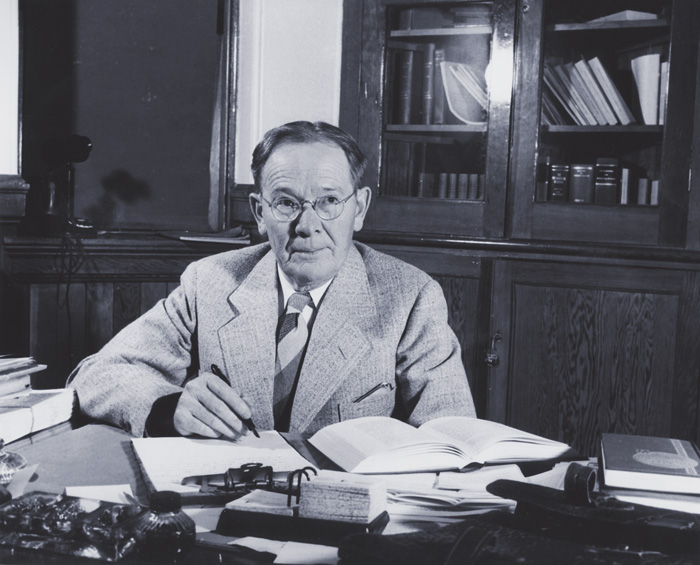
His name was Lewis Terman. The study is one of the most honest accidents in modern psychology.
In 1921, Terman was the most famous psychologist in America. He had translated and adapted the original French intelligence test into the version that would dominate American schools for the next 50 years.
He called it the 'Stanford-Binet'. He believed, with the certainty of a man who had built a career on a single idea, that intelligence was the master variable behind every form of human achievement. The doctors, the inventors, the senators, the artists, the great writers and great scientists. All of them, in his model, were sitting at the top end of the same bell curve. If you could find the children with the highest scores, you could predict the future leaders of the country.
So he set out to prove it.
He sent his research team into California schools and screened roughly 168,000 children. He had teachers nominate their brightest pupils. He gave the nominees the Stanford-Binet. He kept the ones who scored 135 or higher, which placed them in roughly the top one percent of the population. The final sample was 1,528 children, average age 11. They had a name in his lab notebooks within a year. Termites.
He planned to follow them for the rest of their lives. He died in 1956 having tracked them for 35 years. Stanford kept the study going. The last surviving Termites were tracked until the 2000s. The data set is one of the longest continuous psychological studies in human history.
Here is what the data showed.
The Termites did well. They went to college at higher rates than their peers. They earned more money. They became professors and engineers and lawyers and physicians at higher rates than the general population.
Terman was not entirely wrong. High IQ is correlated with conventional success. The correlation is real and the effect size is meaningful.
But that was not what he had set out to prove.
He had set out to prove that high IQ produces genius. The kind of genius that wins Nobel Prizes, writes great novels, founds new fields, and reshapes the technological direction of the world. And on that specific question, the dataset turned on him.
None of the 1,528 Termites won a Nobel Prize. None of them won a Pulitzer. None of them became world-class musicians. None of them produced a single piece of work that historians of science or art still talk about. They were accomplished. They were comfortable. They were not, in any sense Terman would have recognized in his original ambition, geniuses.
The detail that haunts the study is what happened to the children he rejected.
In the screening phase, his team had tested two boys named William Shockley and Luis Alvarez. Both scored below the cutoff. Both were sent home. Shockley went on to co-invent the transistor and win the 1956 Nobel Prize in Physics, the same year Terman died. He founded the company that seeded the entire ecosystem we now call Silicon Valley. Alvarez won the 1968 Nobel Prize in Physics for his work on subatomic particles, and later proposed the asteroid impact theory of dinosaur extinction that turned out to be correct, too.
Two of the most consequential American physicists of the 20th century had been measured by Terman's own instrument and judged not gifted enough to be worth tracking.
There is an important caveat here that the more honest critics have raised in recent years. A 2020 simulation study from researchers at Utah Valley University showed that even with a perfect IQ test, the base rate of Nobel Prizes is so vanishingly low that Terman would have been statistically unlikely to catch a future laureate in any sample of his size, no matter where he set the cutoff.
The Shockley and Alvarez story is dramatic but it does not, on its own, prove that IQ does not matter. It proves that rare outcomes are hard to predict from any single variable, including a very good one.
That caveat is real. It is also not the most important thing the study showed.
The most important thing the study showed is what Terman himself eventually admitted, late in his career, in a quieter voice than he had used for the previous three decades. He wrote that the relationship between intelligence and achievement was, in his words, far from perfect. Within the Termite sample itself, the highest-IQ children did not become the most accomplished adults.
The variation in outcomes inside the group of geniuses was enormous, and IQ explained almost none of it. Some of the Termites had unremarkable careers. Some of the Termites had remarkable ones. The thing that distinguished the two groups was not the score he had used to select them.
What distinguished them, when researchers eventually analyzed the data more carefully, was a cluster of traits Terman had not been measuring. Persistence. Curiosity. Health. Stable family circumstances.
The willingness to keep going when a project stopped being interesting and started being hard. Most of the Termites who went on to do meaningful work were not the ones with the highest scores. They were the ones who had spent decades grinding on a single problem.
The lesson is the part that should change how anyone reading this thinks about talent.
The trait you select for is the trait you optimize for. If you measure children on a test of pattern recognition and verbal recall, you will find children who are good at pattern recognition and verbal recall. You will not find the children who will spend 30 years thinking about a single equation. You will not find the children who will quietly read the same difficult book six times.
You will not find the children whose curiosity is wider than their working memory. Those traits do not show up on the test you are running, which means they do not show up in the dataset you build.
Terman spent his life trying to find genius and ended up proving that he had been measuring the wrong thing all along. The kids he rejected were not stupider than the kids he kept. They were running a different program underneath, and his instrument could not see it.
The trait you can measure is almost never the trait that actually matters.
Most people building careers, hiring teams, and raising children are still selecting for the version of the trait that fits on a test.
Dobri Dobrev wasn’t any ordinary old man. Known as Grandpa Dobrev or The Saint of Bailovo, he lost his hearing in the second world war, and every single day walked 20 kilometers from his village in his homemade clothes and leather shoes to the city of Sofia, Bulgaria, only to spend the day begging for money.
Though a well known fixture around several of the city’s churches known for his prostrations of thanks to all donors, it was later discovered that he never collected any money for himself, and donated every penny he collected - over 40,000 euros - towards the restoration of decaying Bulgarian monasteries and the utility bills of orphanage, living instead off his monthly state pension of 80 euros. He died in 2018 at age of 103.