OG SEO
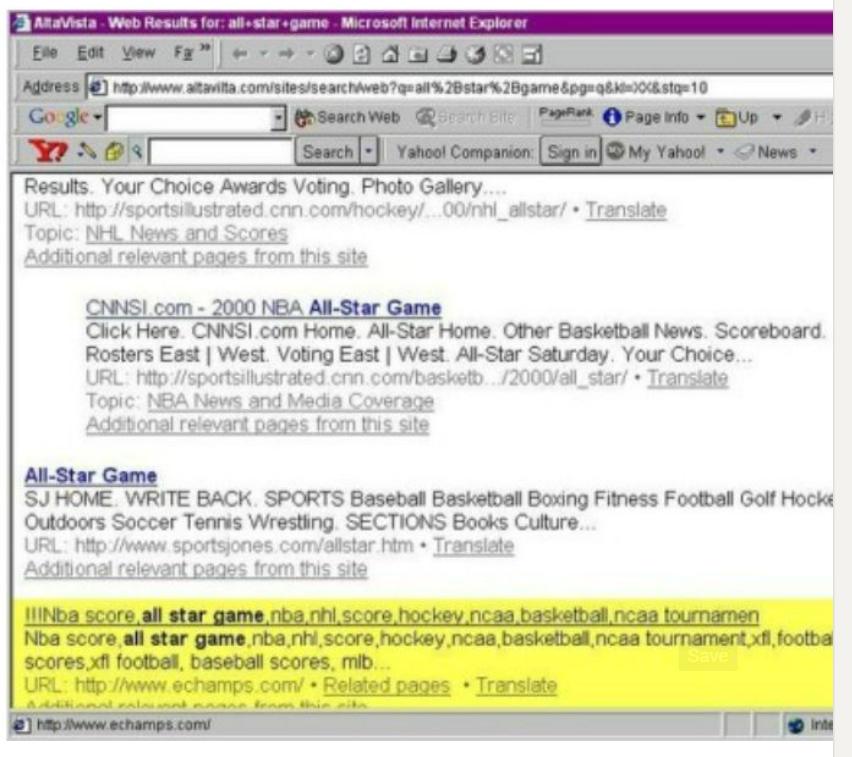
Alta Vista back in the 90's
Coach T!
Pimping EChamps!
For my Pacific Tiger pals, I discovered that Savaii by coincidence had his sports paintings for sale in our gallery.
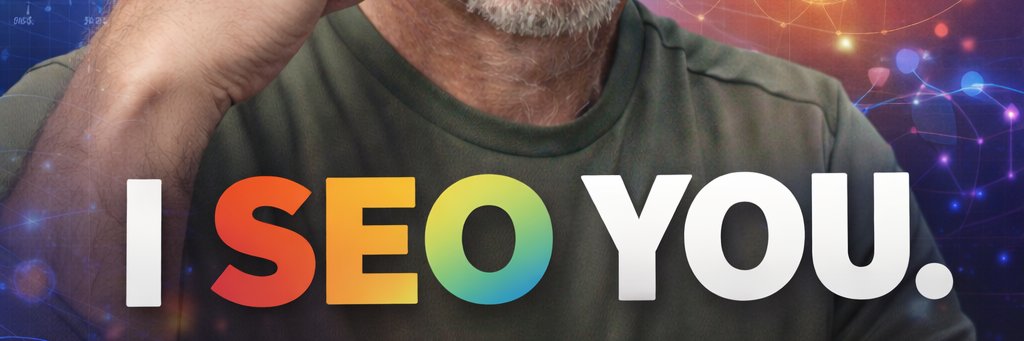
Is SEO really dead? — or did most business owners just misunderstand what SEO actually is? In this interview, digital marketing strategist and SEO veteran Tim O’Keefe breaks down how Google and AI get you found.
https://t.co/aAidgZuYVQ
If that addict on your street were your own son, what would you do? That is the defining question that guides my 5 step plan to fix the homelessness problem in LA. We *must* end this evil racket of corrupt politicians and NGOs who profit off the misery of these poor souls. They launder money and feed them more drugs, so they can keep their customers locked in this hell on our streets. We have a moral obligation from God to help them and make our city safe and clean for everyone. Karen Bass and Nithya Raman have forsaken this city. Time for real leadership. Time for real compassion.
So peeps are freaking out with even more Google changes. But at some point if they give no love to the content creators there will be no point in creating crappy content. Or good content. Or any content. Then what? And I gotta believe at some point the consumer taps out.
Do These 5 Things to Increase Your Emotional Intelligence | Jonice Webb Ph.D., Psychology Today
How to strengthen the emotion skills you may not have learned growing up.
Key points
- Emotional intelligence is a set of learnable skills, not something you are simply born with.
- Growing up with your feelings unseen can quietly limit your emotional skills in adulthood.
- Low emotional intelligence can affect your decisions, relationships, and self-understanding.
---
What’s been shown by research to be more important for job success than IQ?
What’s a major factor in life satisfaction?
What contributes to lasting marriages and happy children?
What can leap tall buildings in a single bound? (Well, maybe not that.)
It’s emotional intelligence, also known as EQ.
Emotional intelligence has been defined as the capacity to be aware of, control, and express one’s emotions, and to handle interpersonal relationships and conflicts with empathy and skill.
Research tells us that people with high EQ enjoy many advantages and benefits in life. But some people have a lot more of it than others.
Many people feel rather mystified by the concept of EQ. It’s natural to wonder how people get it. Are we born with our EQ already set? And why do some people have high EQ and some people don’t? And, probably the most important question of all: Can we increase our EQ?
Are We Born With EQ?
The answer is, “maybe somewhat.” Few things are purely genetic, and EQ is no exception. Sure, some babies are undoubtedly born with a more natural tendency toward emotional awareness and capability for abstract thought, both of which would make it easier to learn about and understand emotions.
But in the nature/nurture question, I have clearly seen that nurture is enormously important.
The Role of Parenting in EQ
Childhood is a training ground for emotional intelligence. When your parents see what you feel and respond to your feelings by helping you name and manage them, you learn what different emotions feel like and how to put them into words. You learn how to identify what you’re feeling, and why you may be feeling it. You learn how to understand why you do what you do and deduce the reasons for others’ actions as well.
Emotionally aware and skilled parents do all of the above, naturally. So they tend to raise high-EQ kids. But, unfortunately, the opposite is also true. When your parents are not emotionally aware or skilled, you may not get what you need to learn the EQ skills.
When your emotions are not noticed, validated, or addressed enough in childhood (this is childhood emotional neglect), your emotions automatically become blocked off in adulthood. So throughout the most formative decades of your life, you are missing the opportunity to learn how emotions work.
You are left with a lack of crucial knowledge. Which emotion is which? What do you do with your feelings when you have them? How are your emotions affecting your decisions? How do other people’s emotions affect their behavior?
The effects of this lack of knowledge on every single area of the emotionally neglected person’s adult life are far more severe than most people realize.
Lacking a solid EQ makes it hard to handle situations when you are having feelings or when the other person is. So you are more likely to ignore issues, sweep problems under the rug, hurt other people’s feelings, or make decisions that you will later regret.
So, although less clearly visible, the effects of low EQ are so significant that I have often compared them to those of having a physical disability, such as a missing limb.
The Bright Side
Fortunately, for all of us, that is not the end of the story. There is some very good news here. EQ is nothing other than a set of skills. And you, no matter how much emotional neglect you were raised with, no matter what genes you were born with, can learn them.
Do These 5 Things to Increase Your Emotional Intelligence
- The first step is to decisively declare yourself a student of emotions. Then start paying attention to feelings in your everyday life, and make it your plan to learn everything you can about emotions and how they work.
- Start trying to be aware of when you are having a feeling. Being aware of your own feelings is the most important building block in all of the EQ skills.
- Increase your emotion vocabulary. This involves learning and using more emotion words in your everyday life.
- Build your capacity for empathy. You may already have plenty of ability to empathize (many who grow up emotionally neglected actually have too much empathy). But if it is rare for you to feel someone else’s feelings, you can learn how to be more empathetic. To do this, start by practicing when you are watching TV, a movie, or reading a book. Try to feel the feelings of the characters. Then move forward to trying to feel the feelings of the people around you.
- Practice assertiveness. Assertiveness is saying what you need to say in such a way that the other person can take it in. It requires you to know what you feel and to be able to put it in words that will not insult the other person or put them on the defensive. It is speaking your truth but with compassion for the other person.
Of all of the things you can work for in your life, emotional intelligence is one of the most fruitful. As you study and pay attention to the world of feelings, you will find yourself changing in small but remarkable ways. You will find yourself feeling more. You will become more connected and more attuned to the people in your life, and they will feel it too.
Slowly, gradually, but with purpose and intention, you will stop neglecting your own feelings and become better able to handle others’ feelings.
What can change your life?
Emotional intelligence.
https://t.co/wdpZb4pPGq
Winston Churchill fought his depression with bricks. He'd lay them for hours at his country home in Kent. He joined the bricklayers' union. And in 1921 he wrote about why it worked. It took psychology another 75 years to catch up.
He called his depression the "Black Dog." It followed him for decades. His method for fighting it back was as basic as it sounds: laying brick after brick, hour after hour.
Churchill spelled out his theory in a long essay for The Strand Magazine. People who think for a living, he wrote, can't fix a tired brain just by resting it. They have to use a different part of themselves. The part that moves the eyes and the hands. Woodworking, chemistry, bookbinding, bricklaying, painting. Anything that drags the body into a problem the mind can't solve by itself.
Modern psychology now calls this behavioral activation. It's one of the most-studied depression treatments out there. Depression sets a behavior trap. You feel bad, so you stop doing things, and doing less means less to feel good about. Feeling worse makes you do even less. The loop tightens until you can't breathe inside it.
Behavioral activation breaks the loop from the action side. You schedule the activity first, even when every part of you doesn't want to. Doing it produces small rewards: a wall gets straighter, a painting fills in, a messy room gets clean. Those small rewards slowly rewire the brain. Action comes first, and the feeling follows.
Researchers at the University of Washington put this to the test in 2006. They studied 241 adults with major depression and compared three treatments: behavioral activation, regular talk therapy, and antidepressants. For the people who were most severely depressed, behavioral activation matched the drugs. It beat the talk therapy. A 2014 review of more than 1,500 patients across 26 trials backed up the result.
Physical work like bricklaying does something extra on top of this. It crowds out rumination, the looping bad thoughts that grind people down during the worst stretches of depression. Bricklaying needs both hands and gives feedback brick by brick: each one is straight or crooked. After an hour you can see exactly how much wall you built. No room left for the mental chewing.
The line George Mack used in his post, "depression hates a moving target," is good poetry. The science behind it is sharper. Depression hates a brain that has somewhere else to be.
@TheJeffLundeen scribd .com https://t.co/HiWLWr4mVz
https://t.co/hIpv8o04wz https://t.co/FOTOUq5aIp
in Google "filetype:pdf" for directsearches, or "site:pdf" for specifically PDF hosting sites.
ie "atomic habits" "filetype.pdf"
https://t.co/6U3rJNhioa
careful for sketchy downloads
Elon Musk turned down all shares when he left OpenAI because he believed nonprofits are not meant for self-enrichment.
"The reason I founded OpenAI was because I was concerned, based on my conversations with Larry Page, that he was not sufficiently concerned about the dangers of AI. At my birthday party, he, in front of a large group of people, called me a speciesist, for favoring humanity over computers. So after that, I was like, We got to have some counterbalance to Google, because Larry doesn't seem to care if humans make it or not.
So I thought, what's the opposite of Google? It would be an open source nonprofit, and that's where the word open, in OpenAI comes from. It means open source.
I provided all the money, recruited the key people, and taught them everything I know. I actually even got them to deal with Microsoft.
And for all that, I did not seek any financial reward whatsoever. The reason I actually took down the offer for shares is because, I mean, I felt like what are the shares, and why like nonprofits supposed to have shares? Nonprofits are not supposed to be self enrichment, so that's why I turned on the offer of shares."
— Elon Musk
The SEO industry's addiction to inventing new acronyms is genuinely embarrassing at this point..
GEO, AEO, AIO, EEO, LLMO, and now HEO - All to describe variations of "make sure your stuff shows up in places people search."
Less rebranding, more doing the work!!!
The SEO industry's addiction to inventing new acronyms is genuinely embarrassing at this point..
GEO, AEO, AIO, EEO, LLMO, and now HEO - All to describe variations of "make sure your stuff shows up in places people search."
Less rebranding, more doing the work!!!