many big problems won’t be solved under the incentive structures of standard organizational models
coordinated research programs identify and develop the often hidden solutions—the “intellectual dark matter”—that could have outsized impact on the world
My least scientific, most Malcolm Gladwell style midwit take about why we live in hell is that 90% of our species’ best and brightest who even 40 years ago would’ve been designing rocketships or fertilizers or home appliances 9 to 5 are now working on Algorithmic Hypergouging
I was about to roast Pete saying rail doesn't need to profit--I always point out transport doesn't need to earn an *internal financial profit* but it needs to earn a *social* profit in Circular A4 BCA terms--but then he made the point himself!
This guy is actually fucking smart
Techno-optimism is fundamentally humanistic. It's the belief that human societies deserve to have more options.
Society and technology are not really separate entities, and we should never think of them as being in opposition to each other.
https://t.co/08PLizIsjv
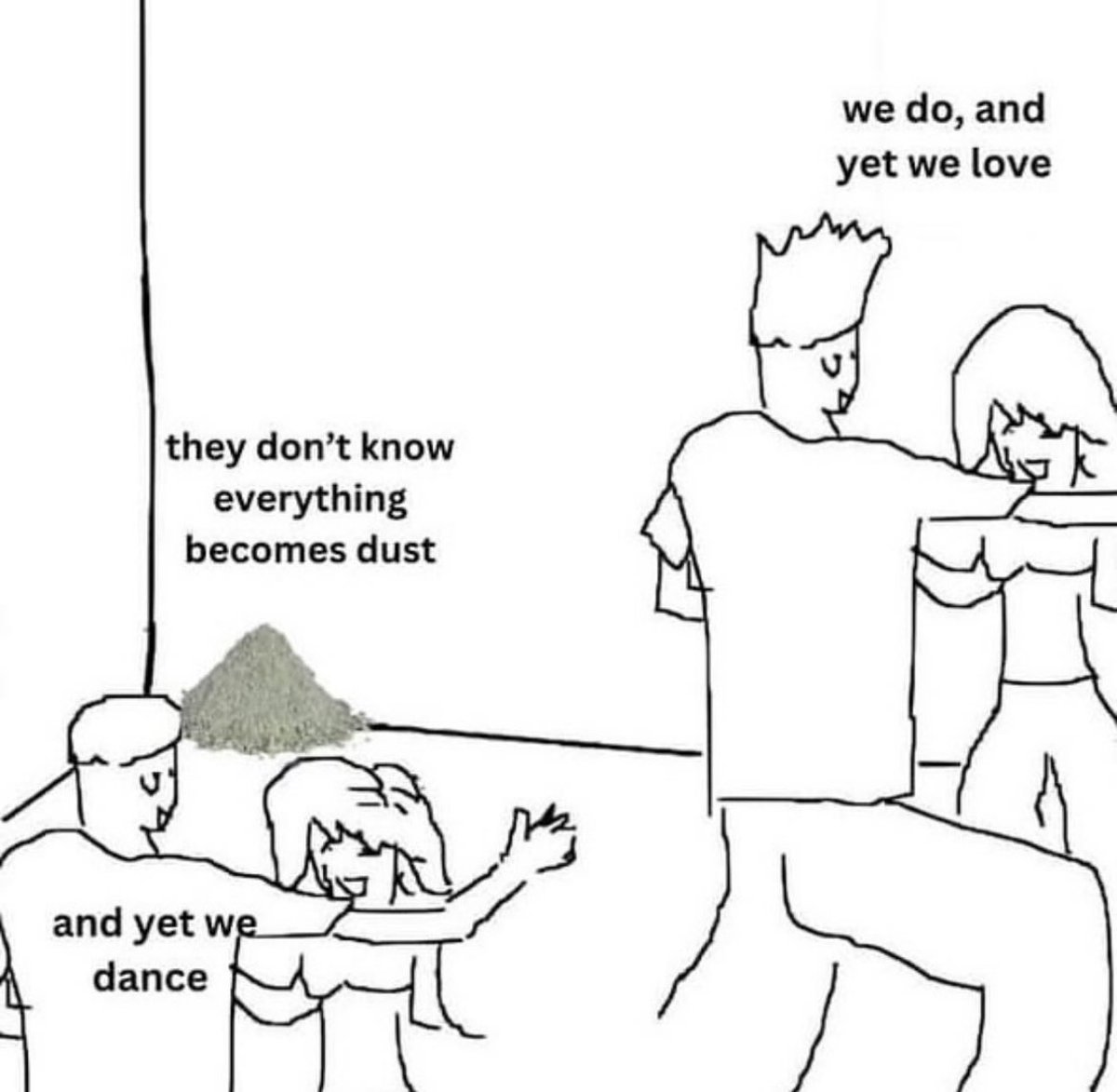
«When my husband died, because he was so famous and known for not being a believer, many people would come up to me ― it still sometimes happens ― and ask me if Carl changed at the end and converted to a belief in an afterlife.
They also frequently ask me if I think I will see him again. Carl faced his death with unflagging courage and never sought refuge in illusions. The tragedy was that we knew we would never see each other again. I don't ever expect to be reunited with Carl.
But, the great thing is that when we were together, for nearly twenty years, we lived with a vivid appreciation of how brief and precious life is. We never trivialized the meaning of death by pretending it was anything other than a final parting.
Every single moment that we were alive and we were together was miraculous-not miraculous in the sense of inexplicable or supernatural. We knew we were beneficiaries of chance.
That pure chance could be so generous and so kind. That we could find each other, as Carl wrote so beautifully in Cosmos, you know, in the vastness of space and the immensity of time. That we could be together for twenty years. That is something which sustains me and it’s much more meaningful.
The way he treated me and the way I treated him, the way we took care of each other and our family, while he lived. That is so much more important than the idea I will see him someday. I don't think I'll ever see Carl again. But I saw him. We saw each other. We found each other in the cosmos, and that was wonderful».
― Ann Druyan
OH at CSHL: "I don't ever look at PubMed anymore".
Common to hear this. Social recommendations, Google Scholar, etc. increasingly dominate discovery in some fields.