Welcome post to all new members here:
I'm
- 12yrs | Marketing
- 11yrs | Frontman
- 10yrs | Founder
Topics
- ai
- sales & marketing
- growth hacks
- personal efficiency
- biz & life philosophy
(bcz i don't have blueMark now, it's my LIMIT)
(photo with mo WIFE, SriLanka'26)
"Pre-seed is no longer pre-customer."
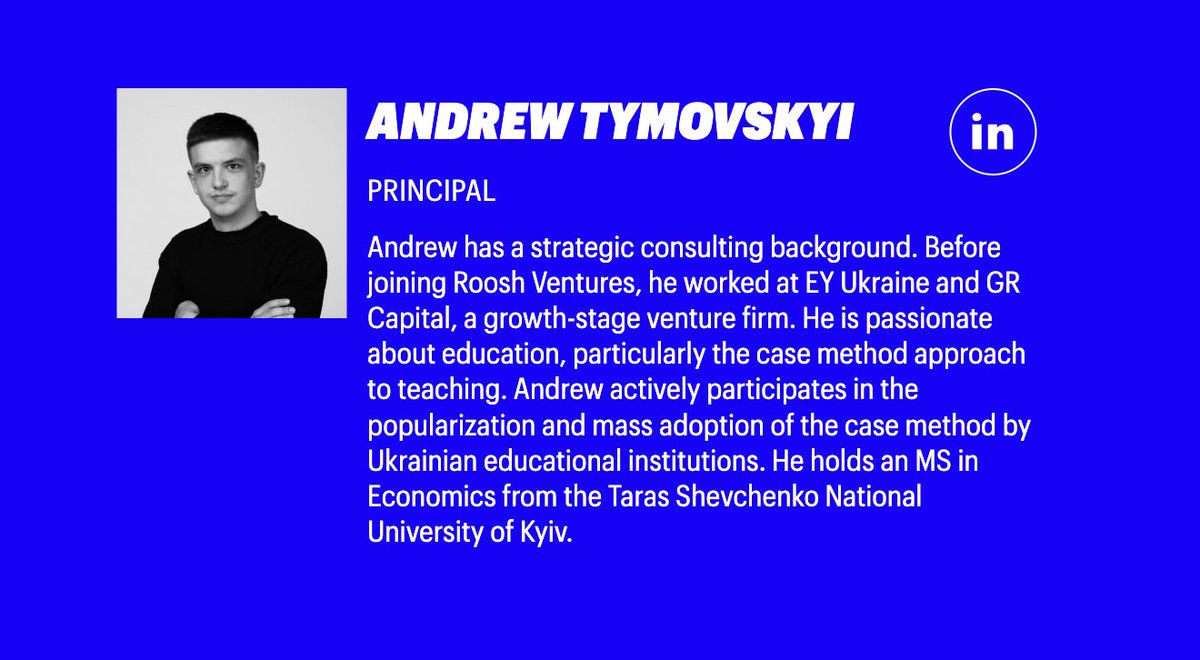
(с) Great take from Andrew Tymovskyi, Principal at Roosh Ventures.
A strong team and a good thesis used to be enough to raise a pre-seed round. Today, investors increasingly want evidence of execution, even before your product goes live.
Here's what Andrew looks for:
1/ Design partners — real companies testing early versions and shaping your roadmap.
2/ LOIs — signed letters of intent, ideally with pricing or pilot scope.
3/ Customer conversations — 30, 50, 100 actual calls and what you've changed based on them.
4/ Paid pilots — even €1k. Someone paying you is a fundamentally different signal from someone saying they like your idea.
5/ A live sales pipeline — named accounts, deal stages and next steps.
Ultimately, VCs are trying to understand two things:
→ Are you building around actual customer needs or your own assumptions?
→ Can you sell something that barely exists yet?
This is also why YC pushes founders so hard to close their first customers before Demo Day.
IMO, this is valuable regardless of whether you're raising money or bootstrapping.
Finding out nobody wants your product before spending six months building it is probably the best ROI a founder can get.
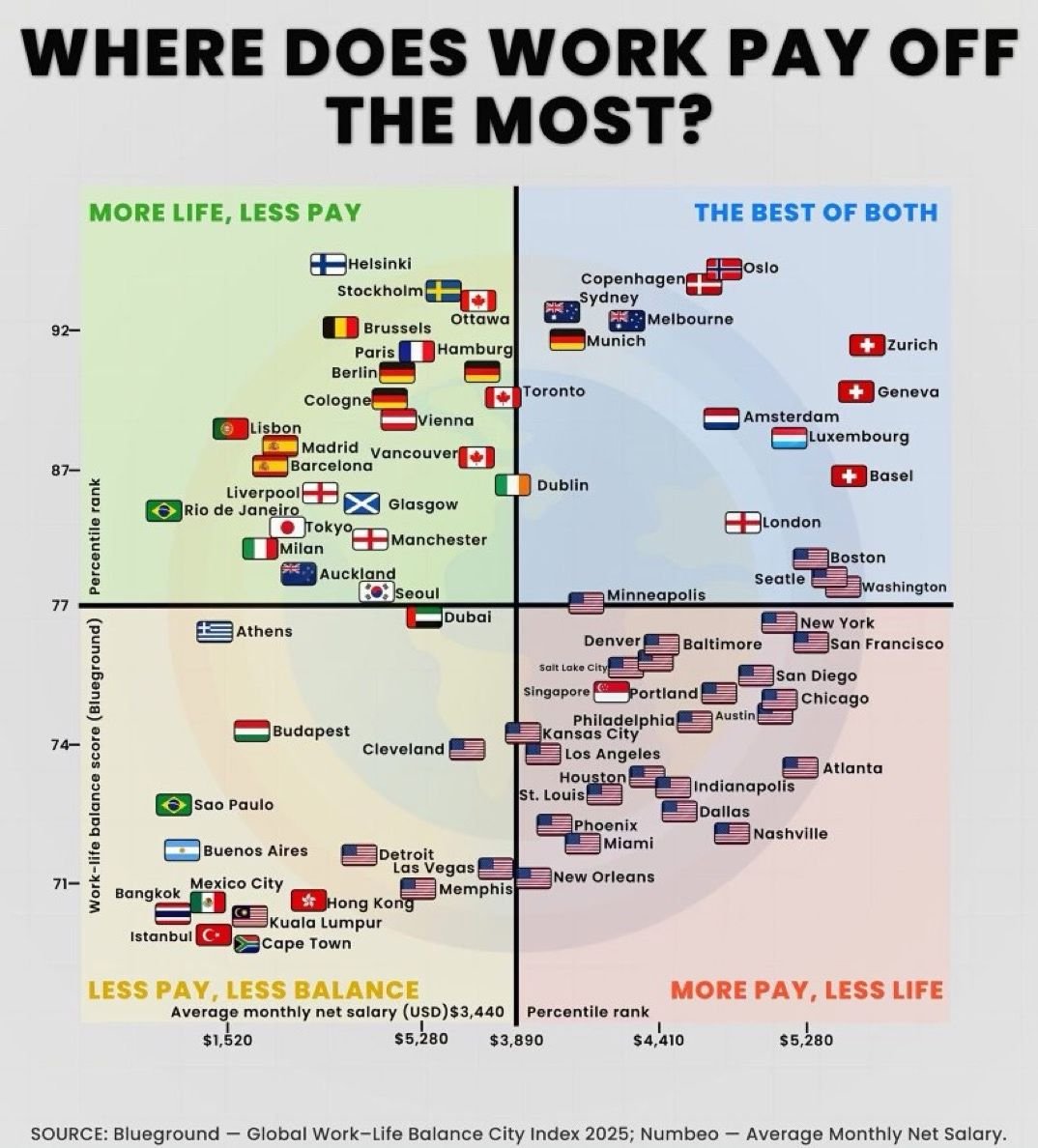
If you want to work like a dog and not make good money, go to Turkey
If you want to not make good money but have an easy life, go to Finland
If you want to make good money but not have a good life, go to America
If you want to make good money and have a good life, go to Switzerland😁
9 GitHub repos every founder building with AI should know about
If you're running a startup with Claude Code or Codex, you probably spend way too much time explaining the same shit to your agents.
Your product, customers, previous decisions, experiments, roadmap — most of that context lives in your head, scattered docs and old chats.
Here are 9 open-source projects that give your AI agents long-term memory:
1/ GBrain by Garry Tan, YC CEO (33.1k ⭐)
A shared memory layer for you, your team and your AI agents. Garry open-sourced his own setup.
https://t.co/Ya5cxGfaPK
2/ Obsidian Skills by Steph Ango, Obsidian CEO (52.9k ⭐)
Connect your agents to your personal knowledge base and let them build on your existing research.
https://t.co/ufZsWWl90e
3/ LLM Wiki by Andrej Karpathy (5k+ ⭐)
A single instruction file that turns your scattered documents, notes and research into an AI-maintained knowledge base.
https://t.co/Dba5dJFCOL
4/ Productivity Plugin by Anthropic (36.3k ⭐)
Gives Claude context about your team, projects, internal terminology and ongoing tasks.
https://t.co/2kzYIMPMOH
5/ Notion Knowledge Capture by OpenAI (28.8k ⭐)
Turns conversations into structured documentation, decisions, guides and FAQs. Useful for onboarding both humans and agents.
https://t.co/Nz4v9S4QZ8
6/ Khoj (38.1k ⭐)
Self-hosted AI for document search, research and scheduled automations. Keep your data on your own infrastructure.
https://t.co/qJ5T1Hu5vF
7/ ai-memory (16k ⭐)
Persistent memory across coding agents. Switch between Claude Code and Codex without starting from zero.
https://t.co/un7u8Bqki6
8/ Basic Memory (4.6k ⭐)
Lets Claude, Codex and Cursor build on previous conversations instead of forgetting everything between sessions.
https://t.co/WfFZ2W0Ona
9/ COG Second Brain (1.5k ⭐)
35 AI skills, 10 agents and a built-in CRM for managing relationships with investors, customers and candidates.
https://t.co/pc3DUxeVBa
IMO, building a shared memory layer for your startup is becoming as fundamental as setting up a GitHub repo.
Every new agent, employee or co-founder should be able to access the same company context without spending hours on onboarding.
What else should be on this list?
YC just dropped its Requests for Startups for Winter 2027
11 areas they're actively looking to fund:
1/ Startups in a World of Abundant Space Access
2/ The $15-an-Hour Expert
3/ Robots Made in America
4/ LLMs That Write Well
5/ Plaid for Government Benefits
6/ Wall Street for the Physical Buildout
7/ Vertical Foundation Models
8/ AI for City Hall
9/ Data Center Supply Chain
10/ AI for the Air-Gapped Economy
11/ Own Your Intelligence
What's interesting about this batch is the shift in focus: AI's biggest bottlenecks are no longer just the models. They're everything around them.
AI is already capable of solving real problems in factories, hospitals and banks. But robots still rely on Chinese magnets. Power transformers have 3-year waiting lists. Banks can't move sensitive data outside their infrastructure. Lenders still don't know how to properly finance robots.
Better models alone won't fix any of that.
YC is betting on four major areas: hardware, infrastructure, financial systems and specialized software that bring AI into the real economy.
You don't need to build something from this list to get into YC. But if you're looking for your next startup idea, it's a pretty good place to start.
Good read, true
Not sure how much of this is actually true, but it raises an interesting point
feel like the AI singularity could happen tomorrow or in 10 years. Both scenarios seem entirely plausible to me.
back in 2016, experts thought AI was still a decade away from beating the world's best Go players. AlphaGo did it that same year. Meanwhile, fully self-driving cars were supposed to be everywhere years ago, and we're still waiting
The tricky part with AI is that we're trying to predict the progress of a technology that could eventually accelerate its own development. How do you even put a timeline on that?
------ the only prediction I'd be comfortable making is that most of our predictions will age terribly
@PaulKlayVC same story as with telegram's founder
> blame the person who commits the crime, not the guy who built the tool
what's next? blaming GTA 6 for street violence? lol
#FreeRomanStorm
@alohaproxy@grok it stands a chance only if it stops being identical - Cursor didn't beat Copilot's distribution with the same product. of course that's survivorship bias
1. i congrats you with this point, bcz
> you have working product
> you have 400 users
> you have a family and gym (time will come)
2. entrepreneurship is not easy yep, and you'll never know (was it right descision or not right, you'll know only when u'll be an ancient old man)
> all my approaches were when i had negative money balance
> all my bad decisions led me to new changes and improvements
3. so if you'll quit your job and change it to 100% what you want → you'll be a happy man
- and it could works
--- if not: you can go to the job ANYtime, mate!
Have a good luck
drop follow to follow your path
DM me if you need any support or advices
(c) 10years+ founder:
- 16+ approaches
- 3 working cash cows with opperating profits
- 1 non profit education project
- 1 exit