@TNTJohn1717 I enjoyed reading that and I feel the same. I’ll say this though, as you also know, the nonbelievers, heretics, ect. will never believe it’s real even if proven but like you stated, Genesis and KJV is still true and as is Jesus alive and saving souls !
@Owennfa I doubt you would know what rough really means, believe me you have so many more opportunities than Boomers or X Gen. A lot of this crying has been taught to you in these liberal schools you have attended, on borrowed money. Where is the Social Security we paid? Shut up.
@Amybailey1007@Ashleyhays2089@Neloangelo314 Scripture is confusing if you don’t rightly divide it and the verse or verses you talking about is not the complete story. Follow back pls
The Rapture and the Cry That Ends the Church’s Suffering
Key Passage: “For I reckon that the sufferings of this present time are not worthy to be compared with the glory which shall be revealed in us” (Romans 8:18).
Introduction
Paul does not deny suffering, rename it, medicate its vocabulary, or pretend a believer can smile hard enough to make pain disappear. He calls it exactly what it is: “the sufferings of this present time.” There are bodies that ache, graves that stay occupied, Christians who are persecuted, homes that know sorrow, prayers answered differently than expected, battles with the flesh that refuse to take Sundays off, and burdens that cannot be solved by printing another inspirational slogan on a coffee cup. Yet Paul puts every one of those sufferings on one side of heaven’s scale and places “the glory which shall be revealed in us” on the other. The scale does not merely tip toward glory. The comparison becomes ridiculous. Present suffering may be heavy enough to bend a saint’s back, but it is not heavy enough to outweigh what Christ has prepared. Pain has weight; glory has eternity.
Romans 8:18 is not an isolated promise floating above the chapter. Paul immediately moves into creation groaning, believers groaning, and the future “redemption of our body” (Romans 8:23). That makes the passage particularly powerful when considering the Rapture. The chapter begins with “no condemnation” for those in Christ Jesus (Romans 8:1), moves through life in the Spirit, adoption, suffering, hope, intercession, providence, election, justification, and security, and ends by declaring that nothing can separate us from the love of God in Christ. Between justification and glorification stands present suffering. The believer is secure, but he still groans. He is saved, but his body still hurts. He is seated spiritually with Christ, but his feet still walk through a fallen creation. Salvation is complete in its certainty while bodily redemption still waits for its appointed morning.
Then comes the Rapture. “The Lord himself shall descend from heaven with a shout” (1 Thessalonians 4:16). The dead in Christ rise first. Living believers are caught up together with them in the clouds. First Corinthians 15 says it happens “in a moment, in the twinkling of an eye” and that mortality puts on immortality (1 Corinthians 15:52–53). For the Church, that shout is the great dividing line between present groaning and bodily glory. Every trial belonging to mortality reaches its boundary. Cancer cannot climb into a glorified body. The grave cannot follow a resurrected saint into the clouds. The flesh cannot pack a suitcase for heaven. The world cannot persecute somebody it can no longer reach. One cry from Christ does what centuries of medicine, politics, philosophy, and human improvement never could: it closes the book on the Church’s earthly suffering.
1. “The Sufferings of This Present Time” Are Real
Paul knew enough suffering to use the word without embarrassment. He had been beaten, imprisoned, stoned, shipwrecked, betrayed, hungry, cold, weary, threatened, and abandoned. Second Corinthians 11 reads less like a prosperity brochure and more like a demolition report. Yet this is the man who wrote Romans 8:18. His confidence did not grow out of a sheltered life. Paul was not sitting in a marble study explaining pain to people who had actually experienced it. He had scars under his clothes while he wrote about glory. When he said suffering could not compare with what was coming, he had earned the right—humanly speaking—to know the size of the first side of the comparison.
Christian suffering comes in different forms and must not be doctrinally blurred. Some suffering comes simply because we live in fallen bodies. Some follows obedience to Christ in a hostile world. Some results from foolish choices and has no right to wear a martyr’s halo. Some comes through chastening because “whom the Lord loveth he chasteneth” (Hebrews
@Mild_Contempt@Ashleyhays2089@Neloangelo314 Not so, Rapture, He removes the saved from wrath, then Tribulation 7years, then Second Advent. Jesus comes back only once right, so we meet him in the air his feet never touches earth. After 7 years of Tribulation He comes with all the Saints to defeat Satan, rebuild The Temple.
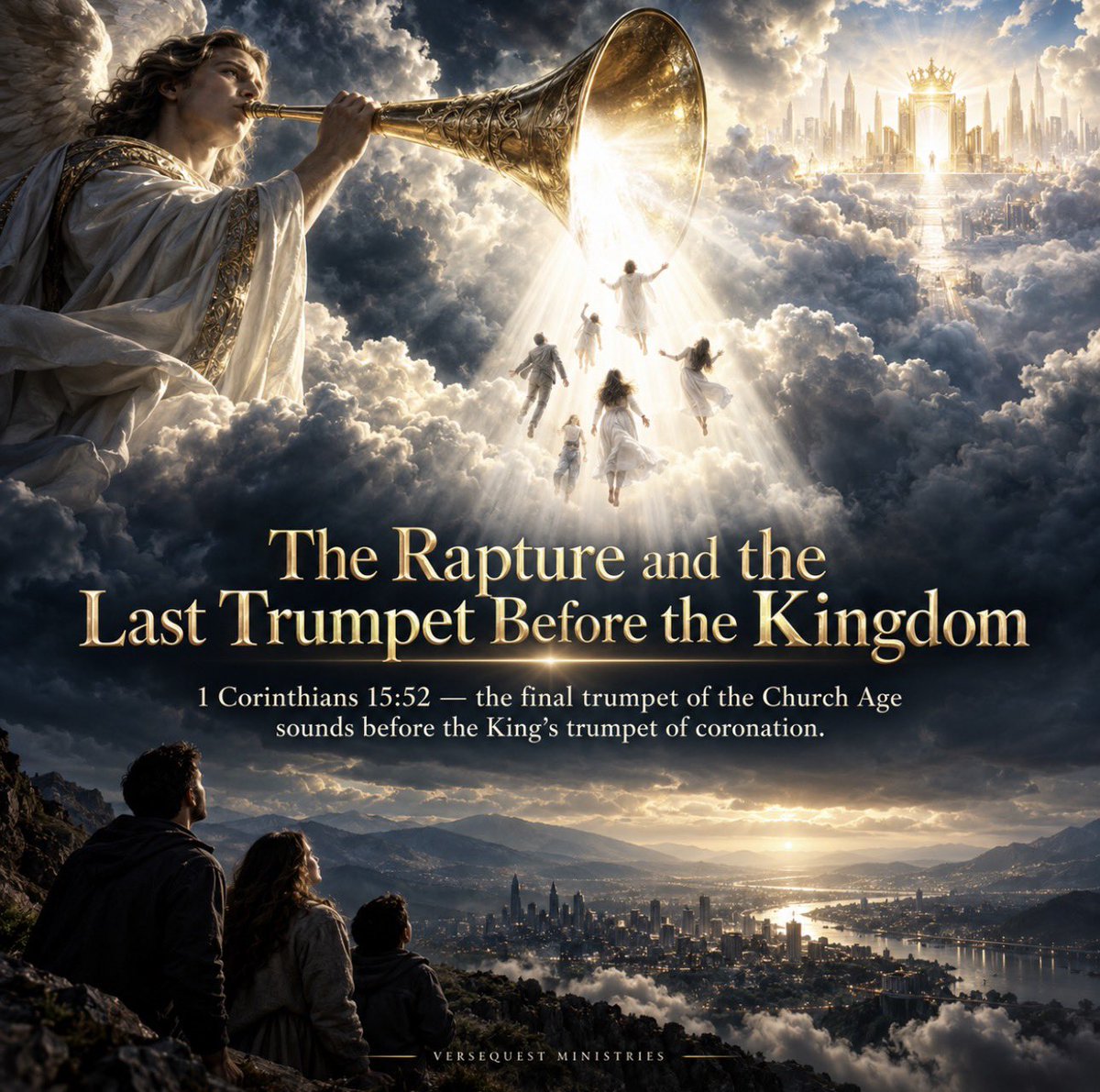
The Rapture and the Last Trumpet Before the Kingdom
Key Passage: “In a moment, in the twinkling of an eye, at the last trump: for the trumpet shall sound, and the dead shall be raised incorruptible, and we shall be changed” (1 Corinthians 15:52).
First Corinthians 15:52 does not give the Church a foggy symbol, a religious mood, or a trumpet buried somewhere in Revelation that must be dragged backward through the Tribulation to make a theological system work. Paul gives the Body of Christ a clear promise: “at the last trump” the dead in Christ are raised incorruptible and living believers are changed. The context is resurrection. The company is the Church. The result is glorification. The speed is “in a moment, in the twinkling of an eye.” Nothing in the passage says seven seals must first be opened, six trumpet judgments must destroy the earth, the beast must establish his kingdom, Israel must flee into the wilderness, and the saints must survive the worst period of wrath in human history before Paul’s trumpet finally sounds. Men can import all that into the passage, but they cannot find it there. Paul is discussing the victory of Christ over death, not handing the Corinthians a Tribulation survival manual.
The phrase “the last trump” has nevertheless been made to carry more theological baggage than a railroad porter at Christmas. Some hear the word “last,” run to Revelation 11, find the seventh angelic trumpet, and announce that the problem is solved. But the Bible is not a word-association game. A trumpet must be interpreted by its context, audience, purpose, result, and prophetic setting. The last trump of 1 Corinthians 15 transforms the saints. The seventh trumpet of Revelation announces kingdom authority in the middle of scenes of wrath, judgment, temple measurement, witnesses, earthquakes, and prophetic conflict. One trumpet changes the bodies of believers; the other belongs to the judicial trumpet series of Revelation. One is connected with the mystery revealed through Paul; the other is plainly numbered among angelic judgments. Calling them identical because both are called trumpets is like calling every door in the Bible Noah’s ark because both can be shut.
The last trump belongs to the closing movement of the Church’s earthly course. It is the trumpet of transformation before God’s prophetic dealings move toward the public kingdom of His Son. The Church is caught up before the King comes openly to take possession of His earthly throne. The saints are changed before the nations behold the Son of man coming in power and great glory. The Bride is gathered before the coronation scene reaches the earth. The last trumpet for the Church therefore stands on one side of a great dispensational boundary, while the trumpet associated with the proclamation of Christ’s kingdom stands on the other. The Rapture does not establish the millennial kingdom; it removes the heavenly Body before the prophetic events that lead to that kingdom reach their climax. The trumpet that ends our waiting is not the trumpet that ends the world’s rebellion. Right division keeps both where God placed them.
1. The Last Trump Belongs to a Revealed Mystery
Paul introduces the subject with unmistakable language: “Behold, I shew you a mystery” (1 Corinthians 15:51). A mystery in Paul’s writings is not something mysterious in the modern sense, like a locked attic or a detective novel. It is divine truth previously hidden and now revealed. Paul then says, “We shall not all sleep, but we shall all be changed.” That statement concerns the Church. Some believers will die before Christ comes, but an entire generation will be alive when He returns for His Body. They will never enter the grave. Their bodies will be changed instantly. That is not the general resurrection of mankind, not Israel’s national restoration, and not the Second Advent in judgment. It is a mystery concerning Christ’s Body, revealed through the apostle to the Gentiles. Before
@Neloangelo314@PaulGTTHM@Ashleyhays2089 Prove this with scripture,I would love to know where I’ve been taught wrong and have read myself what the Holy Spirit inspired the prophets to write.
@Ashleyhays2089@Neloangelo314 ALL of you need to read your Bibles and rightly divide the scriptures. Ashley is 100% right. Thessalonians 4: 16-18. Read this and tell her she’s wrong.