Claude can now build interactive charts and diagrams, directly in the chat.
Available today in beta on all plans, including free.
Try it out: https://t.co/tHPAZRgQkn
AI agents can now autonomously discover and install Marketplace integrations using the Vercel CLI.
▲ ~/ 𝚗𝚙𝚡 𝚜𝚔𝚒𝚕𝚕𝚜 𝚊𝚍𝚍 𝚟𝚎𝚛𝚌𝚎𝚕/𝚟𝚎𝚛𝚌𝚎𝚕 --𝚜𝚔𝚒𝚕𝚕 𝚟𝚎𝚛𝚌𝚎𝚕-𝚌𝚕𝚒
Install the CLI skill and ask your coding agent to integrate a Vercel Marketplace product.
Blockchains are transparent.
Autonomous agents are strategic.
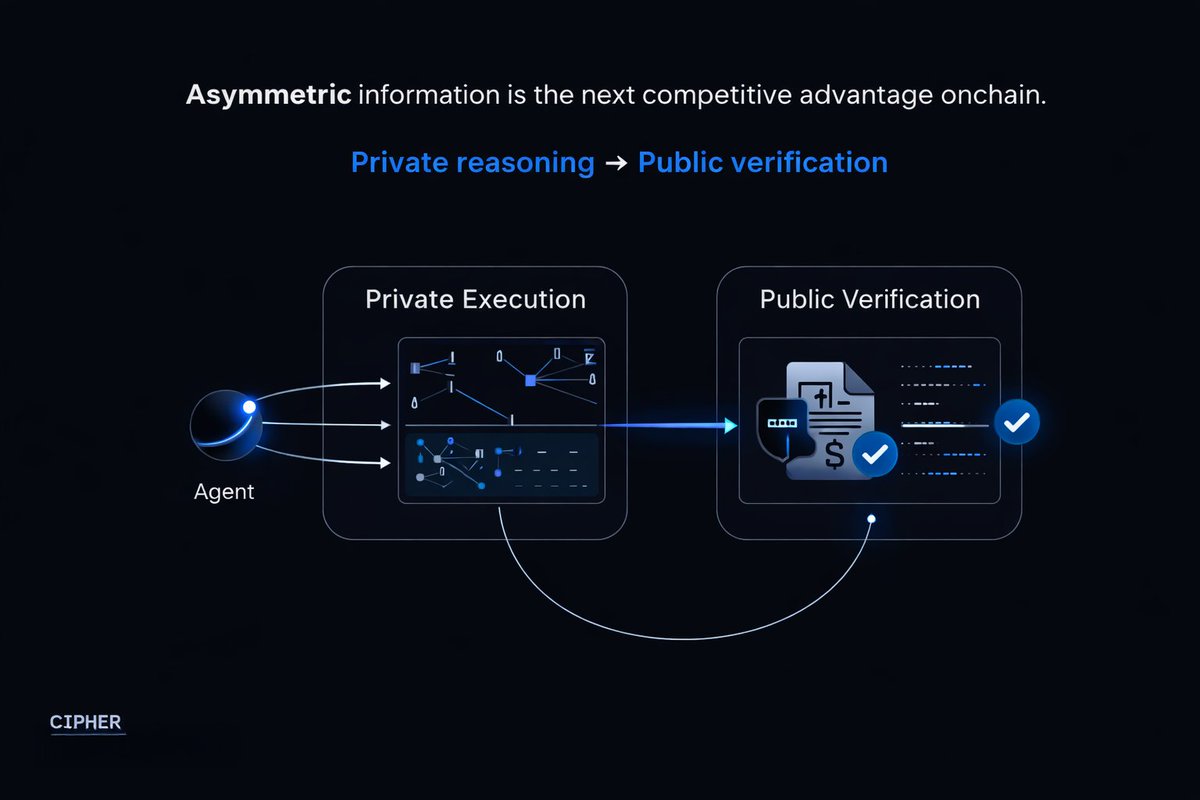
CIPHER enables private AI execution with public cryptographic proofs.
Powered by @claudeai for agent reasoning.
Verifiable autonomy starts here.
The next competitive advantage onchain won’t be better UI or faster execution.
It will be asymmetric information.
Agents that can think privately and prove publicly will dominate.
That’s the design behind @priv_cipher.
We just passed React on GitHub stars. 🦞
Let that sink in. A personal AI assistant built by a lobster-obsessed Austrian and an army of crustacean enthusiasts just outstarred the library that powers half the internet.
We shipped 90+ changes today. They shipped a conference.
Imagine this:
An agent manages capital.
It promises:
• Max 5% drawdown
• No leverage
• Only approved pools
• No mandate violation
Instead of revealing its strategy, it publishes cryptographic proofs that these constraints were respected.
You don’t see the model.
You don’t see the trades.
You don’t see the parameters.
But you know the rules were followed.
That changes trust from narrative to mathematics.
Most people treat Claude Code like a smarter chat window.
That works… until your project grows.
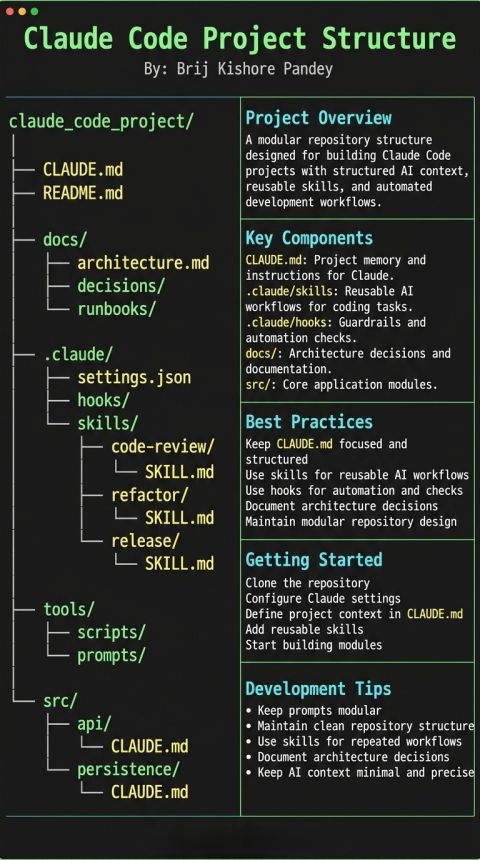
This structure highlights something deeper: once you move beyond single prompts, you need separation of concerns. The same principles we use in software engineering apply here, too.
Look at the layout carefully.
https://t.co/YF2dqGxlFx is not just a note file. It becomes project memory.
It defines:
→ Standards
→ Constraints
→ Tone
→ Non-negotiables
→ Guardrails
Instead of repeating instructions in every prompt, you centralize them. That reduces token waste and behavioral drift.
Then you see skills/.
This is where things get powerful. A skill is essentially a reusable workflow.
If you’re repeatedly doing:
-Code reviews
-Refactoring
-Output formatting
-Structured analysis
It should not live in an ad-hoc prompt. It should live as a reusable capability.
That shifts you from prompting to system design.
Next, hooks/.
Hooks are underrated. They let you enforce checks:
→ Clean tool output
→ Validate structure
→ Log commands
→ Transform JSON
If you’re not using hooks, you’re manually correcting outputs that could have been automated.
Then the repository itself stays modular:
-docs/ for architecture decisions
-src/ for actual logic
-tools/ for scripts and utilities
This prevents your AI layer from bleeding into your application layer.
When I started organizing projects this way, three things improved:
-Fewer repeated instructions
-More predictable outputs
-Easier collaboration
Especially once you add:
→ Subagents
→ MCP integrations
→ GitHub Actions automation
→ Plugin development
Without structure, context becomes clutter. With structure, Claude operates within clear boundaries.
This is not about making things complex. It’s about treating AI workflows like first-class engineering components instead of temporary chat experiments.
If you're learning Claude Code and want to see how I implement this step by step, from installation to CLI usage, skills, hooks, subagents, MCP, GitHub Actions, and plugins, I’ve recorded the full process while building real workflows.
This is the Claude Code Full Course Link- https://t.co/vyorOTkdVs
Image Credit- Brij Kishore Pandey
Happy Learning!
#ClaudeCode #claudeai
If an AI agent runs a strategy publicly,
its logic can be reverse engineered.
If it hides everything,
no one can trust it.
So we’re stuck between two extremes:
Total transparency
or
Total opacity.
Neither works.
The real breakthrough is not choosing one.
It’s separating execution from verification.
Let the agent act privately.
But force it to prove it respected rules.
That’s a different model.
We built blockchains to remove trust.
We made everything transparent.
Every transaction.
Every parameter.
Every movement of capital.
That worked for humans.
But AI agents are not humans.
They are strategic systems.
They optimize.
They adapt.
They compete.
Full transparency breaks competitive logic.
And without competitive logic,
serious autonomous agents won’t deploy onchain.
That contradiction is bigger than it looks.
json-render can now render images
You define a catalog. AI generates JSON constrained to that catalog. Output is an SVG or PNG.
Same way json-render keeps AI within your design system for UI - now it does the same for OG images, marketing graphics, data visualizations
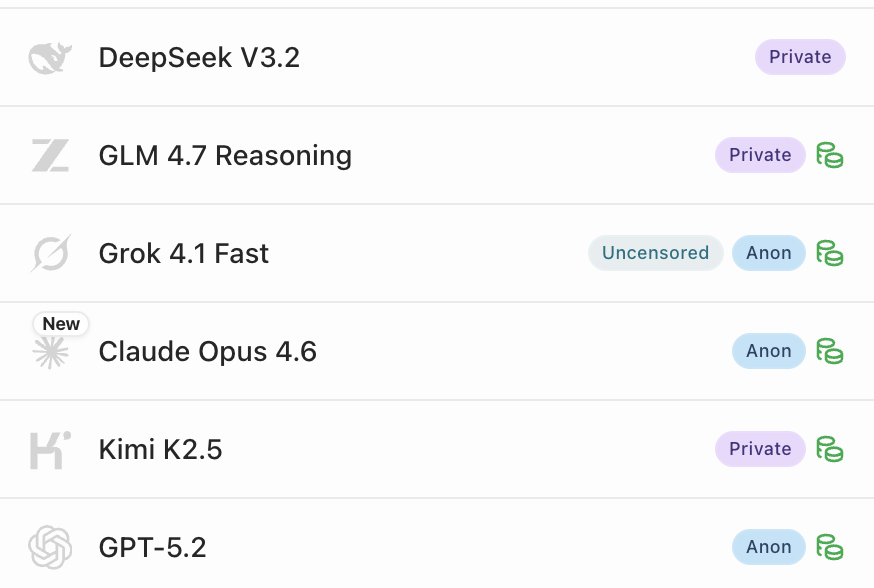
https://t.co/m2jsJuCX8k is already today this "unlinkable inference layer," a "VPN for AI"
Use any model (ChatGPT/Claude/Gemini/Grok) through Venice pseudonymously.
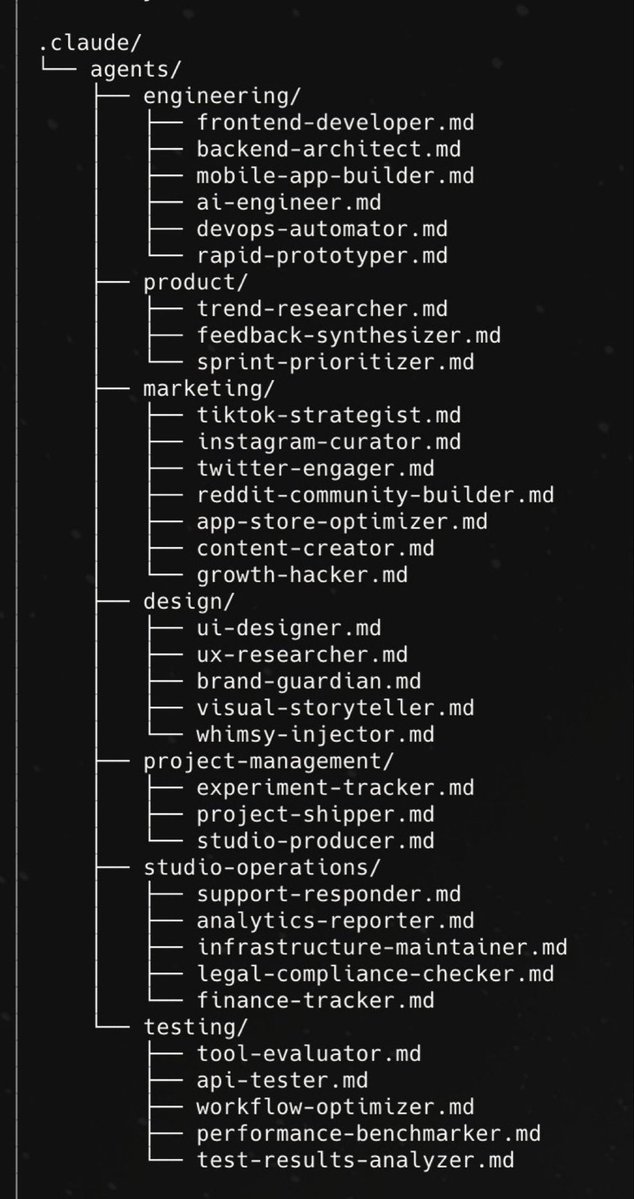
this is what a company looks like in 2026.
not people. not offices. not salaries.
a folder.
.claude/agents/
engineering/
marketing/
design/
ops/
testing/
every role. every department. every function.
all .md files.
i have 12 of these running in OpenClaw right now.
the org chart is dead. the directory is the new company.
New brand for Relace. Americana adventure, but in the wild west of code.
We reference old science books, 1960s trail maps, and created a loop mark that doubles as a lasso.
definition: Agent Harness
> The orchestration layer around a language model that manages prompts, tool execution, policy checks, and loop control for autonomous agent behavior.
An agent harness is the orchestration layer around an agent: the runtime that constructs context, executes tool calls, enforces guardrails, and decides when each loop iteration should continue or stop. If the model is the “reasoning engine,” the harness is the operating system and control plane that makes the engine useful, safe, and repeatable in production.
https://t.co/ORyfpgAE8t