Excited to share that our Universal Cell Embedding (UCE) paper is published in @Nature ! Single-cell RNA sequencing data gives us an unprecedented look into the diversity of cell biology, but analysis has often been limited to the specific dataset or atlas that was collected.
https://t.co/FmH1WDd23F
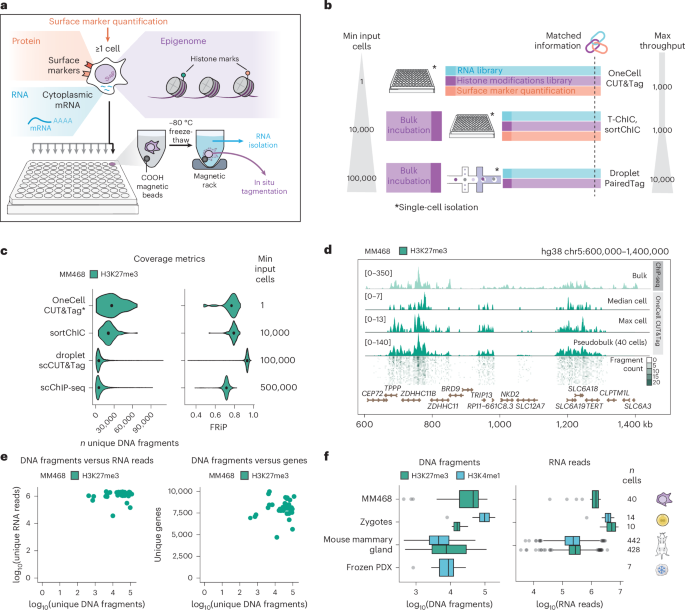
For readers interested in therapeutic epigenetic editing, which aims to reprogramme gene expression by rewriting epigenetic signatures without editing of the genome, here's a comprehensive review https://t.co/O7Ps5IKptM
https://t.co/zRdpy2otFL
Exciting update!
Repbase and Dfam are being unified into a single, fully open access framework, with Repbase released under CC-0 and its core curation team joining the Dfam project.
Read about this update in a newly published comment in Mobile DNA
https://t.co/0GrilZvJ6P
Exciting update!
Repbase and Dfam are being unified into a single, fully open access framework, with Repbase released under CC-0 and its core curation team joining the Dfam project.
Read about this update in a newly published comment in Mobile DNA
https://t.co/0GrilZvJ6P
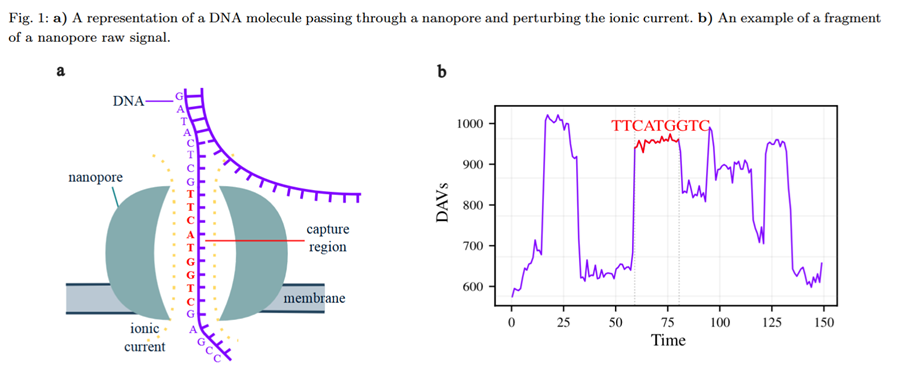
⚡ Just published in Bioinformatics Advances: "Efficient lossless compression of nanopore sequencing signals"
Find the full paper at: https://t.co/NGiPvzbwpi
AGI has an assembly index.
In assembly theory (Sharma, Czégel, Lachmann, Kempes, Walker & Cronin, Nature 2023), the assembly index a of an object is the minimum number of recursive joining operations required to construct it from a basis set of elementary parts, where each intermediate is reusable once formed.
The framework was developed to distinguish biotic from abiotic matter: empirically, molecules with a ≳ 15 are not produced by undirected chemistry at detectable abundance, and their occurrence is treated as evidence of an underlying selection process a causal history capable of preserving and recombining intermediates.
The index is thus not a measure of static complexity but of contingent depth: the length of the shortest causal chain compatible with the object's existence.
A thread 🧵⬇️
Targeted DNA insertion remains a major bottleneck in plant engineering. We developed the R2 retrotransposon as an efficient plant genome editor to precisely insert large DNA payloads at targeted sites:
https://t.co/P0dB1cDn9W
Congratulations to @kimuchenje03 and the team!
🧵👇
1/RNA-seq accurately measures gene expression changes, right?
Wrong.
When a stress shuts down much of the transcriptome, standard analysis can report the OPPOSITE of what is happening. Our new paper fixes it, and saves money on the way. 🧵