@COP29_AZ I attended a side event on Climate Finance Accountability Through Local Tracking and Validation, led by @icsc_ph in partnership with ‘Munich Climate Insurance Initiative’ (MCII), @ClimateRealPH , @AfricaCRP and @TheCVF . The event highlighted climate finance tracking initiatives in the Philippines, Ghana, and South Africa over the past decade.
My recent collaboration with the Government of Malawi and civil society stakeholders on a gap analysis report for Malawi's ‘Global Shield’ financial request, prompted reflections on the valuable lessons from COP29 for Malawi's climate finance reporting. Often, climate finance reporting prioritizes source-driven interests over aligning with national ambitions and plans.
As I reflect on my role, I am committed to enhancing in-country climate finance reporting that justifies Malawi's key asks in climate finance, to support its position in building resilient communities.
Tuition is discussed at university council level, where a representative from ministry of education is present, through director of higher education and principle secretary for education. Student union is also represented at such. Government denying the increment would mean commiting more resources to the very same universities through subvention fund (money that goes to the university from the national budget). The arguement of the public universities has always been that the subvention fund is never enough. As of five years ago, most universities needed about 4 milion Malawi kwacha to educate one university student per one academic year. The logic therefore is, government allocation plus tuition fees that students pay, should be equal or more than 4 million per student allocation. Most public universities have averaged at around 600 000 per student allocation of the subvention fund. If Fredokiss is to take up this issue with the ministry of education, this arguement should not be ignored. The option on the table then would be the increase in the money that goes to the universities. The how is the most interesting part.
In our @Irish_Aid-funded project, where we are Strengthening Citizens’ Engagement and Duty-Bearers’ Accountability for Climate Finance, through the Embassy of Ireland in Malawi, we have partnered with @PlatformMalawi to deliver trainings on Climate Finance and Investigative Journalism to Malawian journalists from the project’s implementing districts and at the national level.
As we wind up our insightful conversations on how Malawian journalists can track climate finance, I am eager to engage with the reporting that will emerge to support climate finance accountability in the three implementing districts of Salima, Balaka, and Chikwawa, and at the national level.
GIS in Climate Education: Using Mapping to Build the Next Generation of Climate Change Leaders. Tarcizio & Christiana will explore how GIS and mapping tools are empowering young leaders to understand, visualize...
Read more: https://t.co/DLmZUPyw96
#SotMAfrica2026
Future Beats, Mapping Feats! Join @tkalaundi as he explores “Facing the Future: Potentials of OSM Africa in Advancing Geospatial Science.”
Tune in to how Africa’s mapping movement is shaping tomorrow’s...
Read more: https://t.co/cgnjGgZZMC
#SotMAfrica2026#SotMAfrica
The interesting part about this is he could actually have the 100 million that he could invest from the ideas dropped in the comment section. It’s another brilliant way to solicit investment ideas as that would be shared in good faith. The moral compass will be determined by his willingness to adopt not just the idea but the person making the suggestion too.
What climate change-related projects can communities do with 12 million Malawi Kwacha?
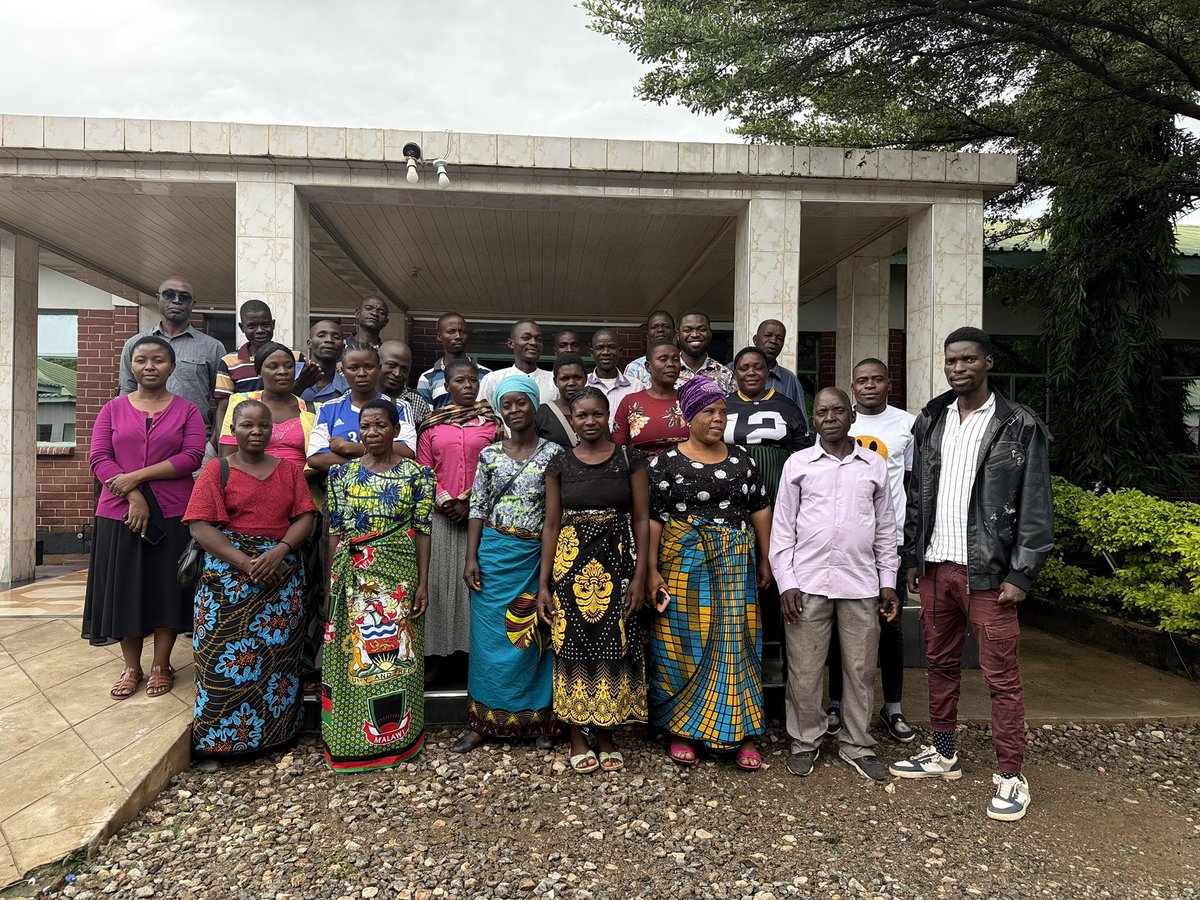
Over the last two days, we have been engaging with community structures in Chikwawa district that we are working with in our @Irish_Aid -funded project on strengthening citizens' engagement and duty bearers' accountability for climate finance.
Our engagement focused on grant management training and the development of climate related projects to be financed by the community-level grant, aimed at generating evidence of what communities are capable of if entrusted with resources to execute community-level project programming.
I look forward to the lessons emanating from this approach.
I am interested in point number 1, in reference to report number 9 of the Malawi Extractive Industry Transparency Initiative, that has pegged earnings from the mining sector at 300 million USD max per year for the next 10 years. The gap is too alarming considering that the sector is deemed a game changer in addressing fiscal deficits. Have you appreciated any conversations leaning towards your recommendation in the mining circles?, are there any possibility of advocating for the listing of mining companies with respect to fiscal deficit redress as a motivating factor?
You raise an interesting point on making systems work for the intended purpose. I certainly believe constant reference to government reforms has the answers on enforcing transparency and accountability. The existence of the civil service workforce itself was a result of system reforms conducted in the early 1960s, and 70s, highlighting evidence of what works when reforms are let to follow the course of recommendations. Under what pace we are responding to the recommendations contained in the recent reforms, remains a question I try to answer.
Yesterday’s National Newspaper front page carried an interesting story on how CSO are engaging government to remove fuel levies, in an attempt to cushion fuel price currently at k6672 per pump price. Exclusive of exercise and import duties, Malawi fuel pump price carries with it k521 levy for road maintenance, k207 levy for rural electrification, k350 under recovery levy, and k168 for price stabilization fund. The Malawi energy compact needs about 9.55 trillion by 2030 to increase energy access from the current 24% to 70%, and the price stabilization arrears are in excess of 1.1 trillion. The government of Malawi suspended remittance of the road levy in 2023 at the expense of fuel price stabilization, end result , the concerns that you are putting forward right now. But how do we balance economic pressure needs like the current fuel price with long term developmental priorities to avoid concerns like the one you raise?. I more interested in the arguments that will be laid forward by CSOs on this.
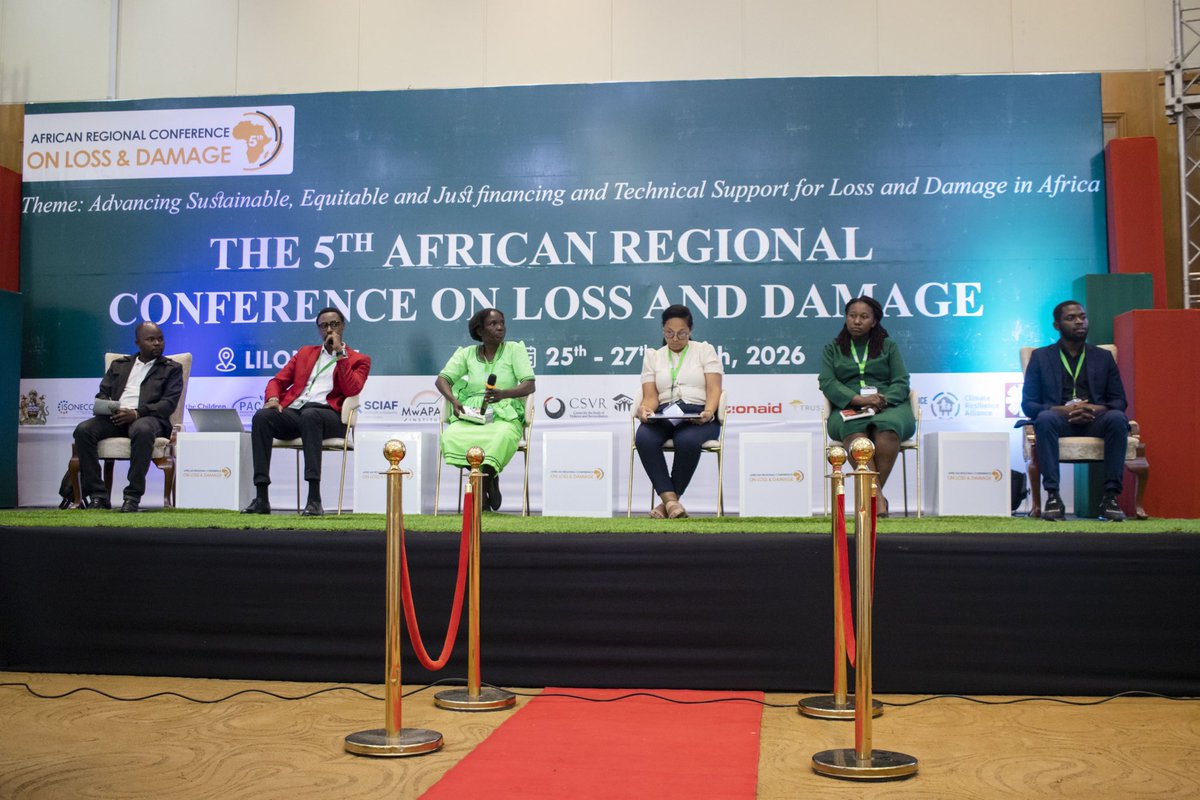
Wrapping up my participation at the African Regional Conference on Loss and Damage, I am reflecting on the cost of disasters that have hit Malawi in recent years. The evidence of both economic and non-economic losses is overwhelming, with Malawi needing not less than $600 million to address impacts of cyclone Freddy alone. While one wonders how such quantification is arrived at, it is clear that not all sectors affected by disasters are adequately considered, calling for robust multisectoral assessments in key areas like health, agriculture, and infrastructure.
Through diverse loss and damage assessment approaches presented during the conference, it is evident that our lack of technical capacity in developing robust anticipatory action or post-disaster needs assessments stems mainly from siloed interventions. As Malawi prepares to submit its proposal to the Fund for Responding to Loss and Damage to access $10–20 million of the first $250 million made available for access through the Barbados Implementation Modalities, it is an opportunity to redefine collaborative technical capacity at the Loss and Damage focal point level, leveraging the potential of these siloed interventions in anticipatory and post-disaster response.
It is also crucial that community voices be at the epicenter of Loss and Damage programming, respecting disaster risk management plans set up through community structures. The four-year effort that began at COP26 in Scotland, to mobilize Loss and Damage monetary resources, which currently stand at $788 million in commitments and remittances, needs scaling up, leveraging the call for global multilateral financial institutional reforms in debt management and cancellation, reparations, grants, and historical causality of Loss and Damage.
African countries also need to hold themselves accountable for tracking and monitoring in-country resource allocation and capacity to articulate needs and evidence-based projects that are grounded in local context and community empowerment to enhance sustainability.
For the next three days, I am attending the African Regional Conference on Loss and Damage, where I will be listening to conversations about what direct access to Loss and Damage finance could look like for the most impacted communities, and how to mobilize such support, taking advantage of African climate finance movements. I will also listen to definitions of technical support that can be scaled up by countries like Malawi to address climate related Loss and Damage.
This week Malawi is hosting the 5th African Regional Conference on Loss and Damage, a civil society led platform convened by Civil Society Network on Climate Change - Cisonecc and Pan African Climate Justice Alliance with support from a number of partners including Trocaire
The event is on Wednesday 25 - Friday 27 March. Please find the attached programme for the event, covering a range of topics related to Loss and Damage advocacy. https://t.co/eCKRyTOHOk
If there are sessions you would be interested to join in remotely, please access using the link below.
Main Conference Online Zoom Link:
https://t.co/MuirXkJcDk
Please feel free to share with those interested.
Can community structures be entrusted with monetary resources to deliver climate change projects?
As part of our project to strengthen citizens’ engagement and duty-bearers’ accountability for climate finance, we are working with community level structures in Traditional Authority Karonga and Pemba in Salima District.
We are sharing principles of climate justice, climate finance tracking approaches, and modalities for an effective community-led climate change management grant.
I am keen to see what interventions and lessons emerge from providing these small grants, to gather evidence on community-led action in climate change interventions.
On November 14, 2025, the Platform for Investigative Journalism covered a missing grades story affecting public universities' students from graduating. It reminded me of a similar ordeal we faced in college, which prompted us to call for a sit-in to have our issues resolved. The sit-in went on to uncover a bigger problem, affecting sister colleges of our university. In the end, over 1500 missing grades queries were resolved. What I found amiss in the investigative report is the role of the students' union in protecting its students.
I joined an insightful discussion last night on climate finance budget analysis with the parliamentary cluster, comprising of representatives from the Natural Resources, Energy and Mining Committee, the Agriculture Committee, the Budget and Finance Committee, and the Public Accounts Committee.
Our conversation laid the foundation for highlighting concrete mechanisms Malawi could use to mobilize adequate resources for climate change redress.
Mobilizing climate finance is crucial, with approaches such as carbon markets, mining activities, public private partnerships, and debt reform that upholds climate justice, especially when the government borrows to address climate change impacts.