Re-posting this -- applications for this summer school are due in less than 3 weeks! Please apply at https://t.co/6BTe1xmnBd, and reach out if you have any questions.
Hi everyone, I'm hiring a postdoc to work on planetary thermal evolution modeling with me at @ucsc. Topics will likely include sub-Neptunes, gas giants, and brown dwarfs.
Please apply! Deadline is Jan 22nd.
https://t.co/kIpg8nJVi7
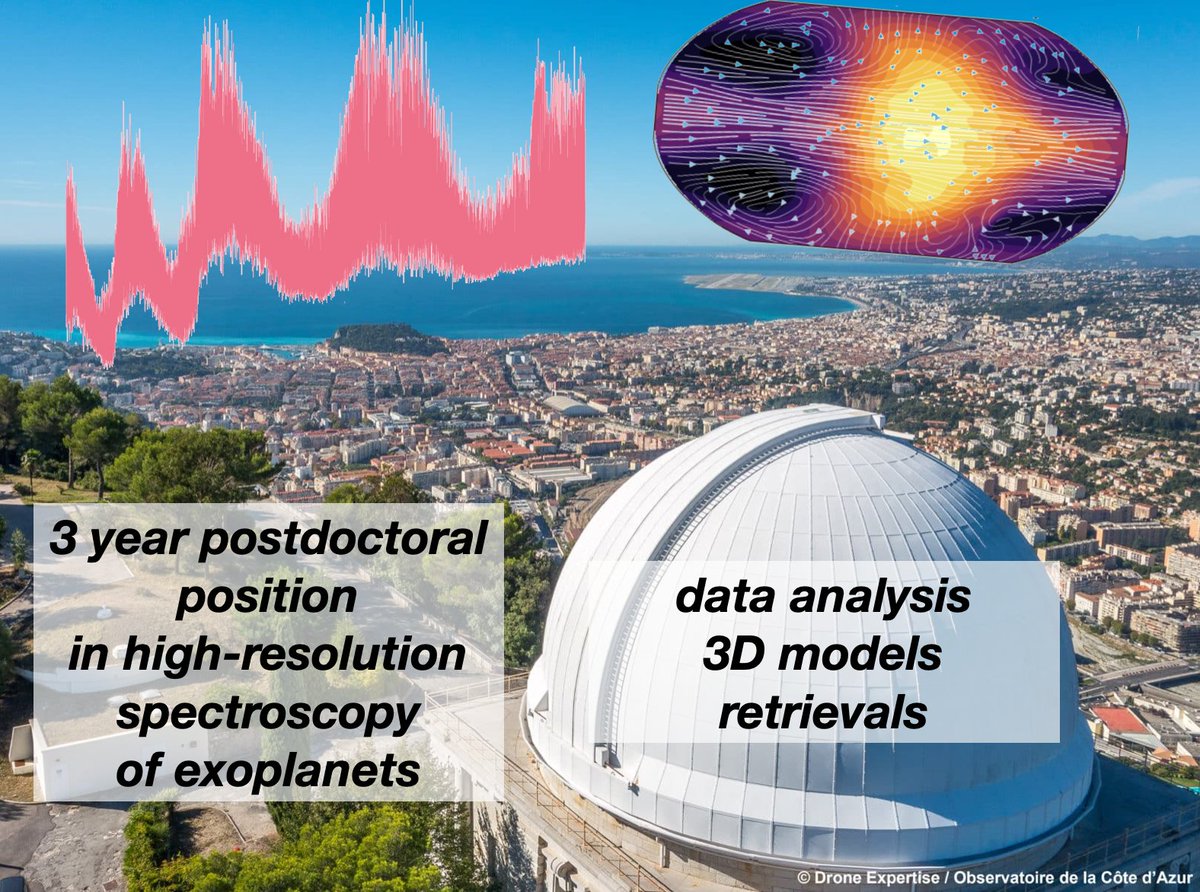
Hey #astrotweeps, I'm hiring a great person for 3 years to work on high-resolution spectroscopy datasets and push our understanding of exo-atmospheres futher than ever. All this in beautiful Nice.
Come for the sun, stay for the science.
Details : https://t.co/kyZN0Kaq6N
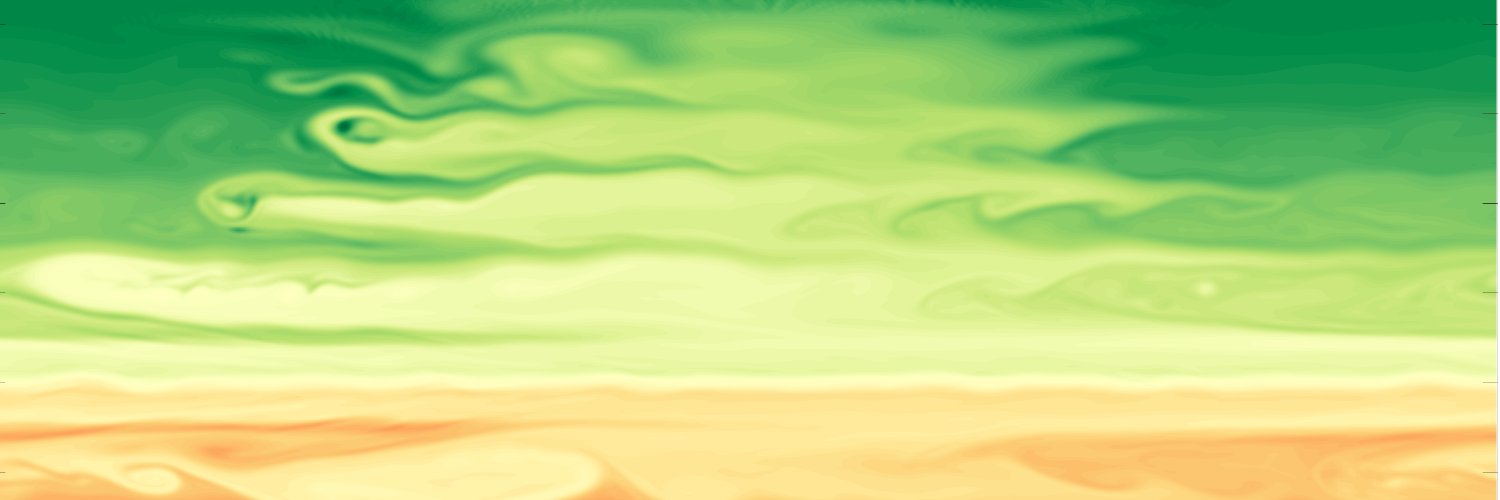
Our brilliant modeler Elsie Lee has just released a new generation of substellar/giant planet general circulation models with all chemistry-cloud-radiative coupled together https://t.co/kFiPicqpnp This work is with @ShamiTsai
Applications for the 2024 UMD Brin MRC Summer School in Tracer Mixing in Fluids Across Planetary Scales are now open at https://t.co/6BTe1xmnBd! The school will take place from July 8-19, 2024 in College Park, MD. Please see https://t.co/kj1whZJLBy for more information!
We are hiring! Astronomy at SJTU consists of two branches, the SJTU Astro department and the TDLI Astro division, with research frontiers spanning from exoplanet to cosmology. https://t.co/EFKBahqKSH
https://t.co/gOatSVKmuF
https://t.co/u8rWoaBQjo
https://t.co/f6CQDe8zOL
We are hiring! Astronomy at SJTU consists of two branches, the SJTU Astro department and the TDLI Astro division, with research frontiers spanning from exoplanet to cosmology. https://t.co/EFKBahqKSH
https://t.co/gOatSVKmuF
https://t.co/u8rWoaBQjo
https://t.co/f6CQDe8zOL
𝗥𝗲𝗮𝘀𝗼𝗻𝘀 𝘁𝗼 𝗯𝗲 𝘀𝗰𝗲𝗽𝘁𝗶𝗰𝗮𝗹 𝗮𝗯𝗼𝘂𝘁 𝘁𝗵𝗲 '𝗼𝗰𝗲𝗮𝗻 𝗽𝗹𝗮𝗻𝗲𝘁 𝘄𝗶𝘁𝗵 𝗽𝗼𝘀𝘀𝗶𝗯𝗹𝗲 𝘀𝗶𝗴𝗻𝘀 𝗼𝗳 𝗹𝗶𝗳𝗲'.
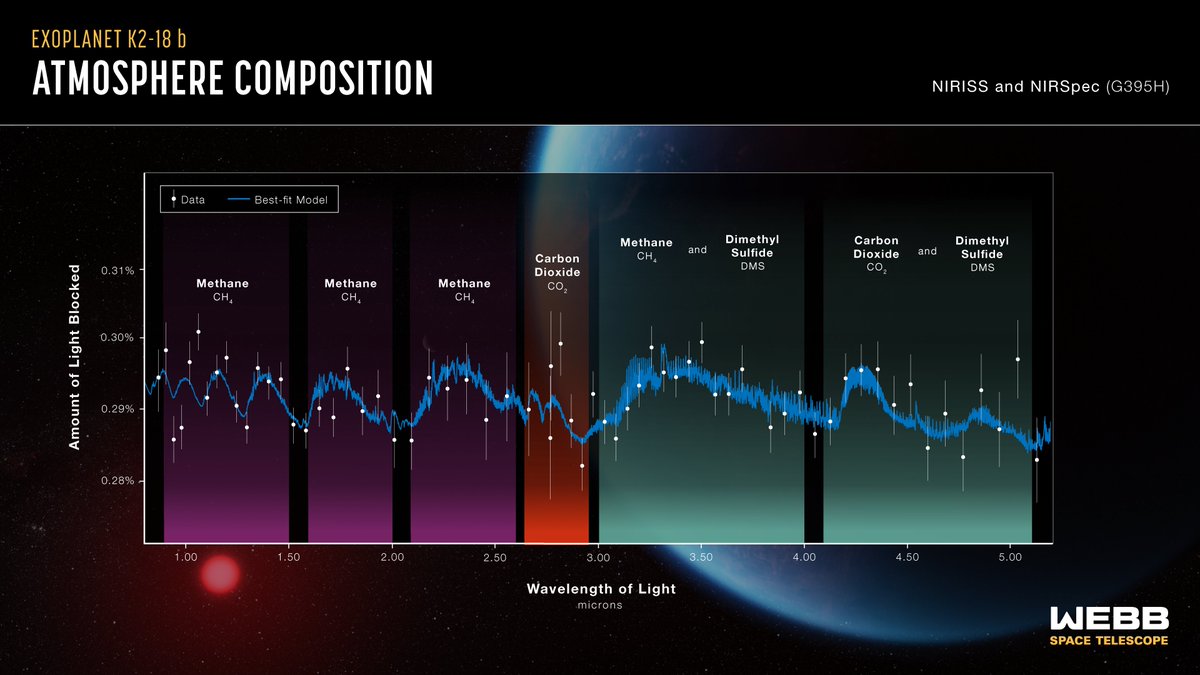
The 1st JWST analysis for the planet K2-18b is out.
But many exoplanet scientists are pretty sceptical about these claims - THREAD (1/N)
The Webb telescope has detected carbon dioxide and methane in the atmosphere of exoplanet K2-18 b, a potentially habitable world over 8 times bigger than Earth. Webb’s data suggests the planet might be covered in ocean, with a hydrogen-rich atmosphere: https://t.co/qN1SqCfFt1
Our 3D models suggest that the so-called quenching (chemical disequilibrium driven by vertical motions) is typical even in stratified atmospheres for a wide range of brown dwarfs. This has been shown in previous 1D models with ad-hoc ways of dealing with turbulences.
Modeling chemical reactions in planetary atmospheres is difficult, and is more so in three-dimensional dynamical models. We take a step forward in brown dwarf and giant planet global models in our latest paper https://t.co/8DFK3MuUqn. Lead author E. Lee (who is not on Twitter)
The good news from our study is that one-dimensional chemical kinetic models should be doing well in brown dwarf conditions. Of course, if one is concerned about the time variability (due to the rotation of the objects) and their chemical signatures, one should seek 3D models.