IEPF - should govt fight the market or harness it?
One of the most dysfunctional parts of India's financial system is IEPF - the place where unclaimed shares go. I spent most of today at a 'Niveshak Shivir' in Pune organized by Sebi and IEPF to help investors get back unclaimed shares. It's a long and fascinating story - grab a coffee and follow my footsteps as I walk you through it.
About 300 people turned up. Many with walking sticks, barely able to stand. One man, was a retired govt servant with Rs 80 lakh stuck in IEPF - application pending for the past yr. It had actually been approved, but not paid out. Just 1% of shares have come out of IEPF so far, @apri_sharma wrote in late 2024. Why? Well, let's dial back.
1) Shares go to IEPF if dividends have not been paid for 7 yrs (dividends cheques coming back unpaid). Till then the money sits with companies and is claims are handled by RTAs.
2) Usually happens for non-demat shares, bought years ago
3) The investor might've passed away and heirs need to produce more paperwork
4) Name mismatches make it hard. eg: Maharashtrians give father's name as middle name in most official docs. But if the share certificate doesn't have it - there's a mismatch. Now an affidavit and other proofs are needed.
Today's 'joint Shivir' by Sebi and IEPF is a genius idea. Sebi & RTAs were trying to solve unclaimed money below 7 yrs (under Sebi jurisdiction) and IEPF trying to solve cases where money has moved to it (above 7 yrs). Two parts of govt, working in sync.
Now, what's the larger issue here? Agents have mushroomed in this area and the risk of fraud is huge. "Investor mara hai, toh mai usko zinda kar dunga," an agent once boasted to an IEPF official who did not wish to be named. IEPF has taken steps to curb them. Earlier you could source data from company websites on unclaimed shares. Agents would download it and approach the investors. Now you need a login - getting the info is harder. But it's also harder for investors - that's always the side-effect. There were agents trying to solicit business at the event too and IEPF officials had to put a stop to it.
Infact about half of the attendees were 'agents' and some see this in a negative light. The officers had put a cap on 3 files (claims) per attendee to prevent agents from overwhelming the system. Good vs evil? The debate is more complex
Many agents are just doing a job - solving complexity and getting back money for people. They did not create this mess. You may see their commission as too high, but that's between agent and client. Of course any agent indulging in corruption should be punished. But if it's just about navigating the system and sorting paperwork, by all means recognize them. Regulate them. Make them accountable.
It was evident to me, IEPF & Sebi are trying their hardest to solve an intractable problem. I saw the top level officials from Sebi including WTM Ananth Narayan and IEPF CEO Anita Shah on their feet for hours, personally assisting people. Listening to grievances. They didn't have to spend their Sunday travelling to Pune to do this, but they did. Sebi EDs like Jeevan Sonparote and Shashikumar Valsakumar also worked hard to make it a success. IEPF is also trying to solve the IT back end to process claims faster and making the rules simpler for small claims (below 5 lakh). The Shivirs will happen in more cities like Mumbai and Ahmedabad.
But at the top level, government has to make a choice. The problem is massive. Do you solve it without the private sector or with?
Broad mutual funds like flexicap or hybrid make sense. They save us the endless switching dilemma- large cap to small cap or vice versa. These switches incur tax as well. Let the fund manager make those decisions. Pick a broad fund after considering risk appetite & time horizon.
Where do you get financial advice? Today @sashindnj has drafted a handy guide to the different intermediaries. Who to go to & who not to. https://t.co/428wVu7g1j
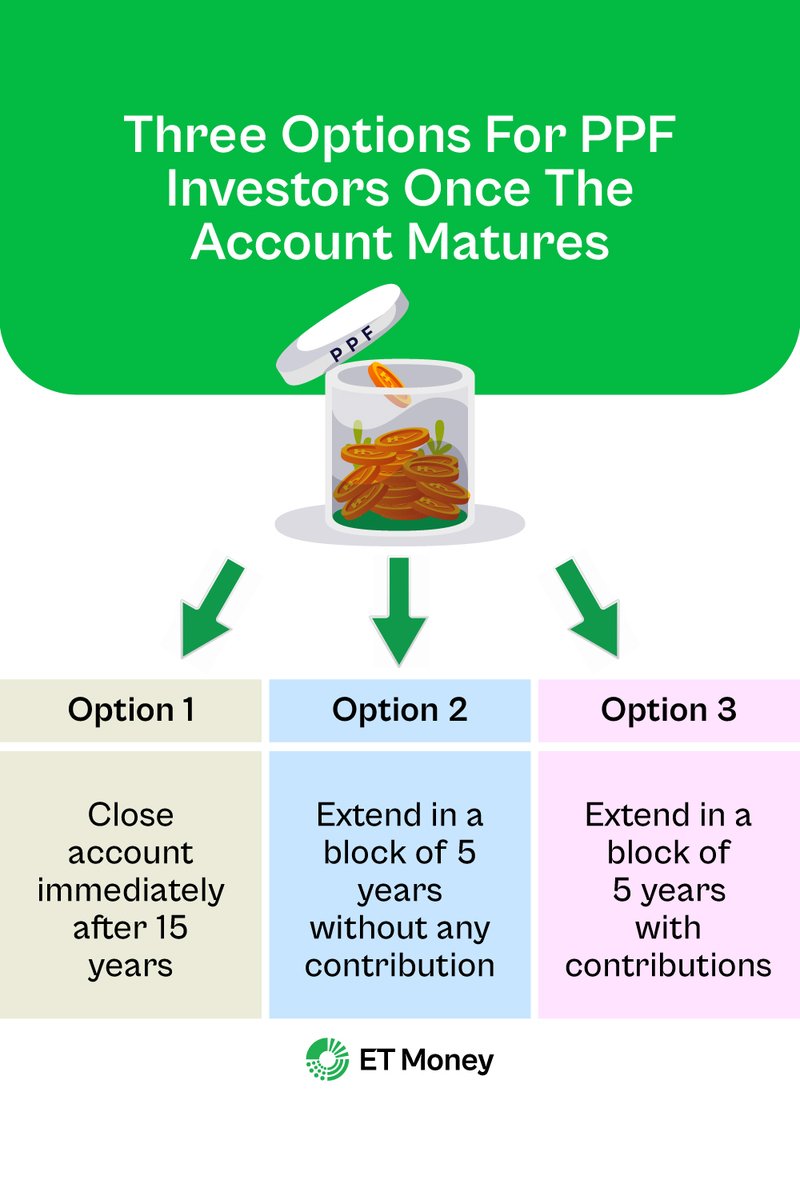
PPF matures after 15 years.
But what happens after that?
You get three options. (See image)
But each option has some rules.
Even bank employees and post office staff may not tell you these.
Let’s discuss them in detail to find out which’s best for you.
A thread 🧵
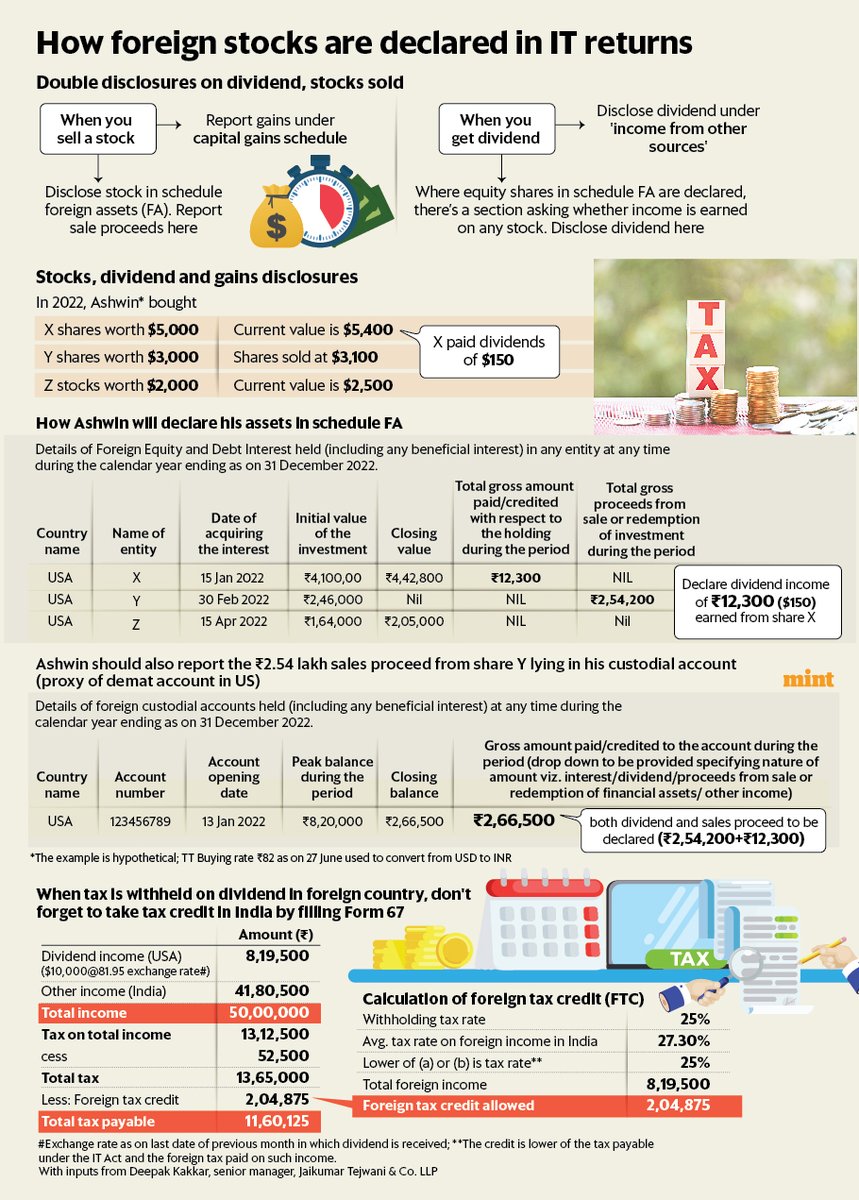
A lot of Indians invest in US stocks. What they are not told is just how complex tax filing becomes. Today, @Shiprasorout does a deep dive into Schedule FA, the schedule you have to fill if you own any kind of foreign asset - stocks, bonds, property, ESOPs etc.
Big things to keep in mind
1) Schedule FA is a calendar year disclosure while the rest of your return is financial year.
2) Even if you disclose income in other parts of your return, you have to still fill up Schedule FA. So FA is a kind of 'double disclosure' with a lot more details.
3) Go to a good CA. Not just any CA, but a CA with experience in this. Be ready to pay well for expertise.
4) If you miss something, you can get slapped with India's draconian Black Money Act. Don't risk this.
There's a lot more to be understood around capital gains, dividends etc, so please carefully read the graphic and our article. https://t.co/jviHSHM4g9
In my video series #FinancePeCharcha, this week our guest was @ushinair
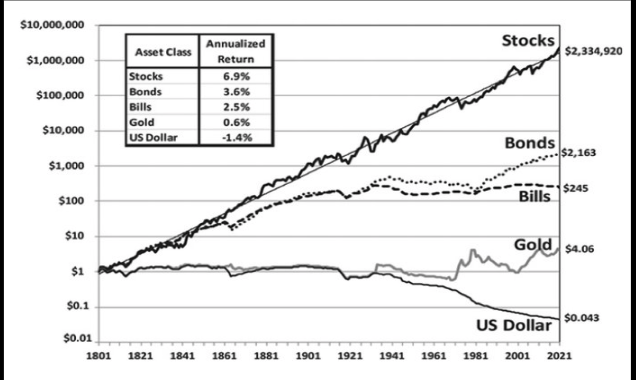
Topic - Asset Allocation Strategies
I want you to go & watch the video & hence sharing some insights in this thread on what you can expect from the video
Link to the video - https://t.co/gltDdXuSqR (1/6)