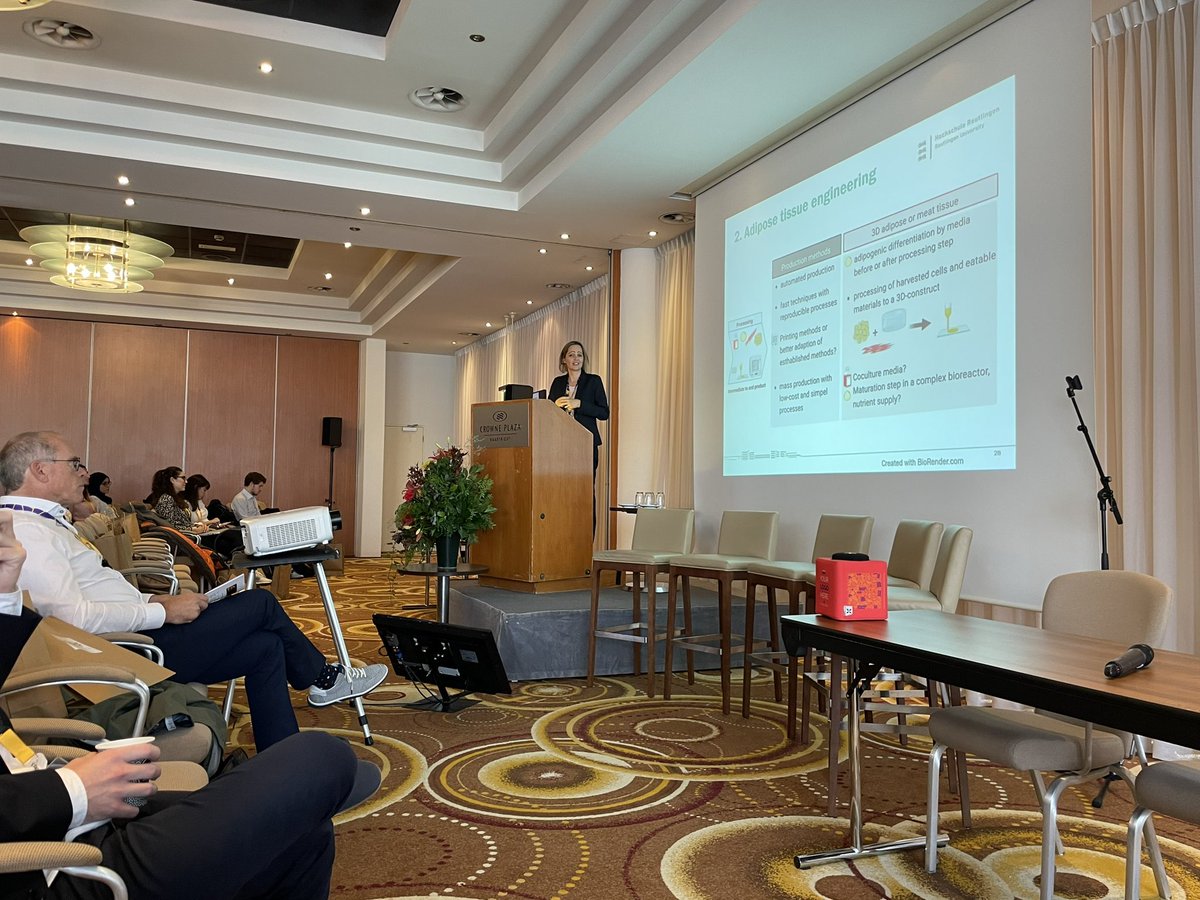
The program for the 8th International Scientific Conference on Cultured Meat is now online. Registration options are still available. #cultivatedmeat#culturedmeat#foodtech#altprotein https://t.co/12rFNBJ16w
So still a lot of exciting science left to do here (and in particular by using the amazing bioinformatic toolbox that are out there)!
Big thanks to my great colleagues - especially Josh - for contributing to this study!
Our new preprint is out on biorxiv: Single-cell analysis of bovine muscle-derived cell types for cultured meat production
https://t.co/5lTCfzuLtn
I'm really excited about finally sharing this study, and this is why:
Understanding these states better might indicate future directions for further improving SC culture (e.g. their stemness). But we surely are just at the start of understanding the cellular heterogeneity of primary cells in the bioprocess of Cultured Meat production.
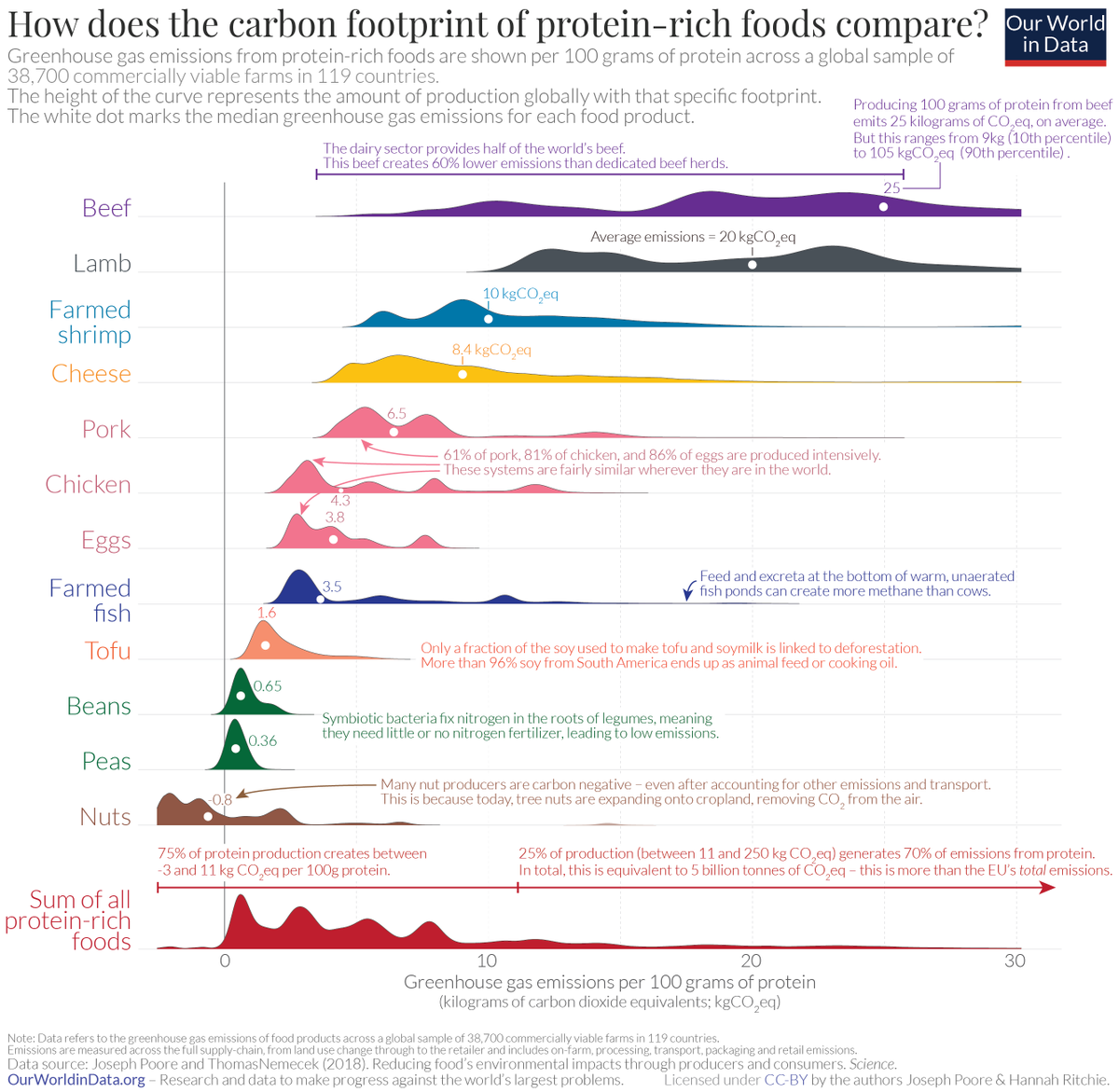
An issue when comparing the average carbon footprint of food is that it hides the variation *within* a given food.
But the key message doesn't change: the 'best' (lowest impact) meats still tend to emit more than the 'worst' plant-based foods.
https://t.co/xslz3mXDMg
🆕 New data on the environmental impacts of food.
For a long time we've had environmental footprints of food commodities on @OurWorldInData: beef, wheat, rice, etc.
I've added lots of new data on specific food products: bread, burgers, pasta, etc.
https://t.co/yQYDIi9pVu
🧵
Scientists @mosa_meat quietly published another study detailing their development of serum-free media for bovine muscle cell culture. The serum-free media performs at ~97% efficiency compared to serum-containing media.
https://t.co/SayejsdbgJ
@wimbimbim @kaakrampmeier Ich empfehle den Verein der Zellulären Landwirtschaft als Informationensquelle rund um das Thema kultiviertes Fleisch: https://t.co/HbIfoEpFHY