Tweets on technology innovation management and strategy. Assistant Professor at EBS / former visiting scholar at UC Berkeley, Copenhagen Business School
“A man asked his gardener why his plants grew so beautifully.
The gardener said: I don’t force them to grow. I remove what stops them.”
(This is brilliant advice for people managers)
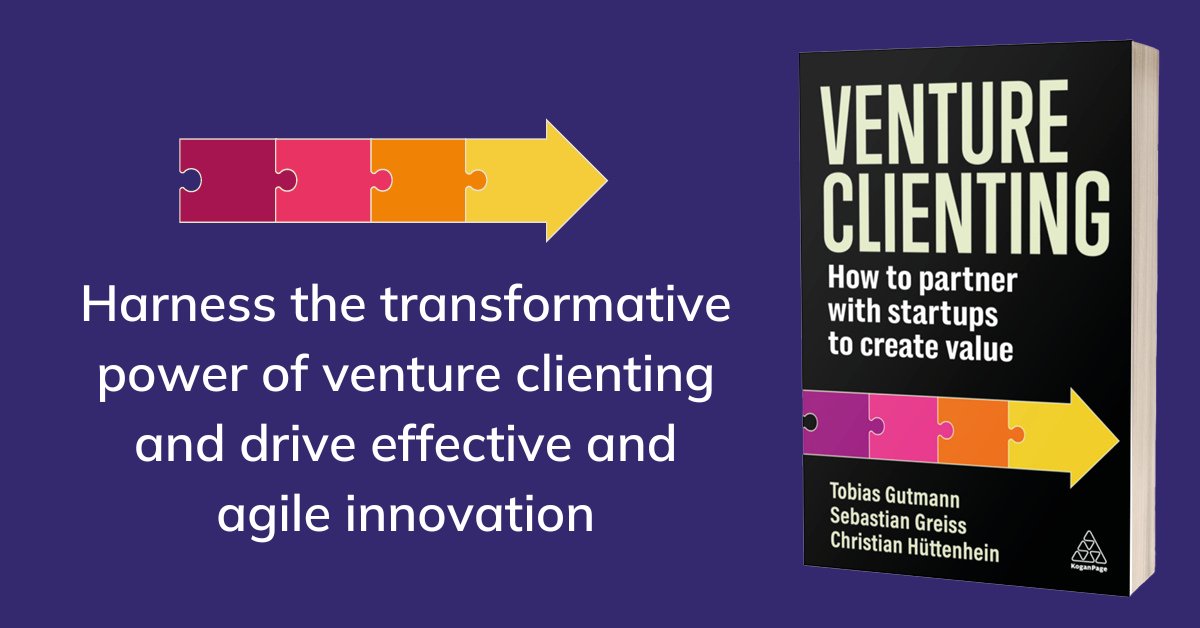
How can venture clienting drive innovation in your organization?
Discover frameworks, tools and methodologies to help you establish and manage a successful #venture client unit, with '#VentureClienting': https://t.co/nl85CczI7U
New Stanford research shows that hybrid is the new sweet spot of work.
Employees working at home 2 days a week were:
- Just as productive as in-the-office-all-week peers,
- Just as likely to get promoted,
- Far less likely to quit.
Screaming at employees doesn't make you a tough boss. It makes you an asshole.
Great leaders are demanding, not demeaning. They set high expectations and create accountability without abuse.
Yelling is unprofessional. Treating people with dignity is not optional—it's required.
When a group of army ants are separated from the main foraging party, they lose the pheromone track and begin to follow one another: as a result, they might eventually die of exhaustion
[📹 biolocousb]
After training for 4 months, I wasn't able to run my half marathon last Sunday.
Here's what happened:
A little backstory: After my son was born in November, I needed a new goal to chase. I decided that half marathon training would be a great mental/physical outlet following postpartum. Plus, I found a race on April 28, which seemed like the perfect, far-away date.
So I started training in January. I shared updates about it in my newsletter, and on Twitter, and Instagram. For the first time, I publicly stated my intention to run a sub-2 hour half, and I thought that would give me the accountability I needed to take the training seriously.
And I did. I ran mile after mile during the week and dutifully completed my long runs every Sunday morning.
On the evening before the race, I laid out my clothes for the following day and studied the course map one last time.
And then, of course — of course — I started feeling severely nauseous and deeply unwell. I’ll spare you the details, but my husband and I got food poisoning.
So at 4 a.m — four hours before the half was set to begin — I was Googling, “Can you run a half marathon with food poisoning?” (The answer is: you can try, but there’s a serious chance you might get dangerously dehydrated & end up in the hospital.) Given that I couldn’t even keep a sip of water down, I decided it wasn’t worth the risk.
Needless to say, I wasn’t able to run it. I gotta admit — it was a weird cocktail of feelings. Even though food poisoning wasn’t exactly on my bingo card, I felt really disappointed that I couldn’t close the chapter on this journey.
So then what? I kept thinking about this one part from Casey Neistat’s video "Sisyphus and the Impossible Dream." In it, he talks about how he attempted to complete the New York City marathon under three hours last year, and his time came in at …. 3 hours and 1 minute. Devastating.
He says:
“It’s just an arbitrary number. I don’t need to break three hours to know who I am. What matters are the experiences. The journey. Even if I failed in the goal, see, life’s a battle, and there are times when you need to accept that you’ve been beat. ”It’s been a long road, and there’s a lot to be proud of. But I’m never going to break three. I’m just not that guy.
[he pauses, and then says:]
“Oh, F*CK THAT.”
Of course he didn’t stop. Of course he didn’t give up after that attempt. It took him 17 years and 24 marathons, but finally, at age 42, Neistat ran a 2 hour and 57 minute marathon.
Here’s the thing: I know that running this half doesn’t define me, but I am also determined to finish what I start.
So yesterday, May 4, without telling anyone, I went to Central Park and ran the exact route of the half marathon — two loops around the park for a total of 13.1 miles.
(And I managed to achieve my goal/personal best of sub-2 hours, running 1:58:48 with an average pace of 9:05 minutes/mile.)
No cheering. No fanfare. No medal. Just me and my family at the “finish line.”
I didn’t have to run it. It may seem meaningless, purposeless, and stupid, but it was important to me. As Neistat said:
“You do a lot of meaningless, purposeless, stupid things. You get obsessed. You spend years focused on it. And literally, no one cares but you. But you persevere anyway and you keep running. Because when you add up all those stupid, meaningless obsessions, what they add up to is your life.”
When someone asks why is AI not changing many things yet, I point to Amara’s Law: “We tend to overestimate the effect of a technology in the short run and underestimate the effect in the long run.”
Social systems change slower than technological systems. But signs are appearing.
"New goals don't deliver new results. New lifestyles do. And a lifestyle is a process, not an outcome. For this reason, all of your energy should go into building better habits, not chasing better results."
-@JamesClear
Habe mich mit @th_sattelberger dem Thema #NewWork gewidmet. Deutschland ist kranker Mann Europas und spielt #NewWork und manche sind „im Sandkasten der Vier-Tage-Woche“… @handelsblatt https://t.co/PfRjXadTNK
Habe mich mit @TobiasGutmann wieder mal dem Thema #NewWork gewidmet. Deutschland ist kranker Mann Europas und spielt #NewWork und manche sind im Sandkasten der Vier-Tage-Woche https://t.co/ASDlGvAoQe
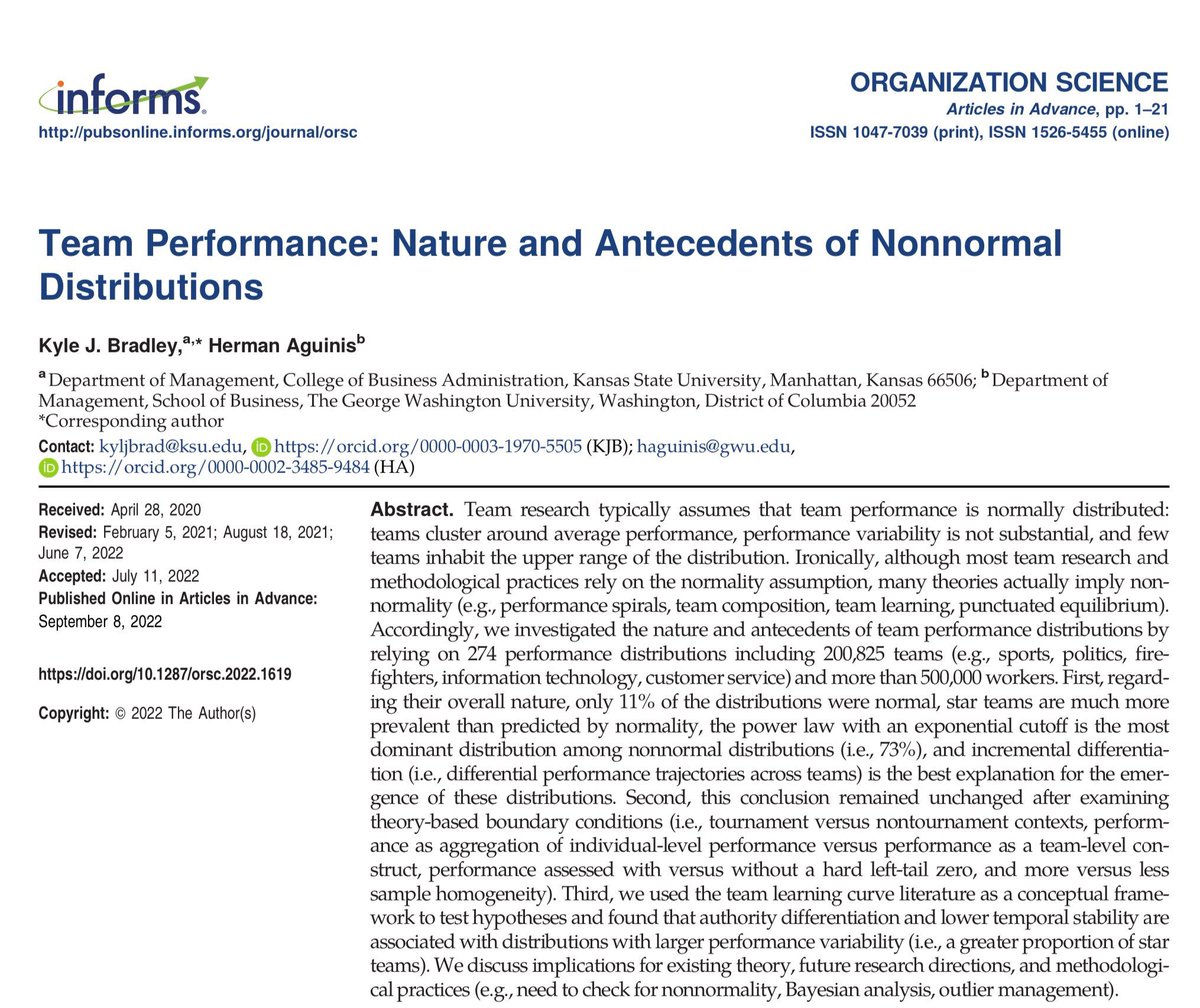
Most people’s mental model of team performance is wrong. We think team performance is normally distributed, so a good team is a little better than average
In fact, in 71% of fields, teams are power-law distributed. A good team is much better than average! https://t.co/xdqi9tfaKP
Overcome the most pressing barriers to #OpenInnovation with Inside-In and Outside-Out knowledge flow practices. Authors @tobigutmann, Chris Chochoiek, & @HenryChesbrough preview their latest work in CMR available now!
https://t.co/1C8Ixhzk3X
Inspired by a discussion at @UCBerkeley last year, I discovered 'The Hedgehog and the Fox' by Isaiah Berlin. Berlin explores 2 types of thinking in humans - hedgehogs & foxes. Which one are you? @AcademicChatter 🦊🦔
While reflecting on the past year and making goals for the future, I encourage you to look at @McKinsey 's healthy aging framework, which might provide additional inspiration.
I've been using a multi-faceted lens to set and achieve my New Year's resolutions for the past few years. I used to look at my own version of the "wheel of life", but as I came across @dickiebush post on how he organizes his life, it inspired me to adjust my template even further
Use the S.L.I.M.E.-Method for every sub-category...
For every sub-category, ask yourself what do you want to start, abandon, improve, continue doing and want to try out. This is niceley illustrated in @spencerideas Spencer S.L.I.M.E-method:


![polinapompliano's tweet photo. After training for 4 months, I wasn't able to run my half marathon last Sunday.
Here's what happened:
A little backstory: After my son was born in November, I needed a new goal to chase. I decided that half marathon training would be a great mental/physical outlet following postpartum. Plus, I found a race on April 28, which seemed like the perfect, far-away date.
So I started training in January. I shared updates about it in my newsletter, and on Twitter, and Instagram. For the first time, I publicly stated my intention to run a sub-2 hour half, and I thought that would give me the accountability I needed to take the training seriously.
And I did. I ran mile after mile during the week and dutifully completed my long runs every Sunday morning.
On the evening before the race, I laid out my clothes for the following day and studied the course map one last time.
And then, of course — of course — I started feeling severely nauseous and deeply unwell. I’ll spare you the details, but my husband and I got food poisoning.
So at 4 a.m — four hours before the half was set to begin — I was Googling, “Can you run a half marathon with food poisoning?” (The answer is: you can try, but there’s a serious chance you might get dangerously dehydrated & end up in the hospital.) Given that I couldn’t even keep a sip of water down, I decided it wasn’t worth the risk.
Needless to say, I wasn’t able to run it. I gotta admit — it was a weird cocktail of feelings. Even though food poisoning wasn’t exactly on my bingo card, I felt really disappointed that I couldn’t close the chapter on this journey.
So then what? I kept thinking about this one part from Casey Neistat’s video "Sisyphus and the Impossible Dream." In it, he talks about how he attempted to complete the New York City marathon under three hours last year, and his time came in at …. 3 hours and 1 minute. Devastating.
He says:
“It’s just an arbitrary number. I don’t need to break three hours to know who I am. What matters are the experiences. The journey. Even if I failed in the goal, see, life’s a battle, and there are times when you need to accept that you’ve been beat. ”It’s been a long road, and there’s a lot to be proud of. But I’m never going to break three. I’m just not that guy.
[he pauses, and then says:]
“Oh, F*CK THAT.”
Of course he didn’t stop. Of course he didn’t give up after that attempt. It took him 17 years and 24 marathons, but finally, at age 42, Neistat ran a 2 hour and 57 minute marathon.
Here’s the thing: I know that running this half doesn’t define me, but I am also determined to finish what I start.
So yesterday, May 4, without telling anyone, I went to Central Park and ran the exact route of the half marathon — two loops around the park for a total of 13.1 miles.
(And I managed to achieve my goal/personal best of sub-2 hours, running 1:58:48 with an average pace of 9:05 minutes/mile.)
No cheering. No fanfare. No medal. Just me and my family at the “finish line.”
I didn’t have to run it. It may seem meaningless, purposeless, and stupid, but it was important to me. As Neistat said:
“You do a lot of meaningless, purposeless, stupid things. You get obsessed. You spend years focused on it. And literally, no one cares but you. But you persevere anyway and you keep running. Because when you add up all those stupid, meaningless obsessions, what they add up to is your life.”](https://pbs.twimg.com/media/GM0SUiWWAAALyct.jpg)







![polinapompliano's tweet photo. After training for 4 months, I wasn't able to run my half marathon last Sunday.
Here's what happened:
A little backstory: After my son was born in November, I needed a new goal to chase. I decided that half marathon training would be a great mental/physical outlet following postpartum. Plus, I found a race on April 28, which seemed like the perfect, far-away date.
So I started training in January. I shared updates about it in my newsletter, and on Twitter, and Instagram. For the first time, I publicly stated my intention to run a sub-2 hour half, and I thought that would give me the accountability I needed to take the training seriously.
And I did. I ran mile after mile during the week and dutifully completed my long runs every Sunday morning.
On the evening before the race, I laid out my clothes for the following day and studied the course map one last time.
And then, of course — of course — I started feeling severely nauseous and deeply unwell. I’ll spare you the details, but my husband and I got food poisoning.
So at 4 a.m — four hours before the half was set to begin — I was Googling, “Can you run a half marathon with food poisoning?” (The answer is: you can try, but there’s a serious chance you might get dangerously dehydrated & end up in the hospital.) Given that I couldn’t even keep a sip of water down, I decided it wasn’t worth the risk.
Needless to say, I wasn’t able to run it. I gotta admit — it was a weird cocktail of feelings. Even though food poisoning wasn’t exactly on my bingo card, I felt really disappointed that I couldn’t close the chapter on this journey.
So then what? I kept thinking about this one part from Casey Neistat’s video "Sisyphus and the Impossible Dream." In it, he talks about how he attempted to complete the New York City marathon under three hours last year, and his time came in at …. 3 hours and 1 minute. Devastating.
He says:
“It’s just an arbitrary number. I don’t need to break three hours to know who I am. What matters are the experiences. The journey. Even if I failed in the goal, see, life’s a battle, and there are times when you need to accept that you’ve been beat. ”It’s been a long road, and there’s a lot to be proud of. But I’m never going to break three. I’m just not that guy.
[he pauses, and then says:]
“Oh, F*CK THAT.”
Of course he didn’t stop. Of course he didn’t give up after that attempt. It took him 17 years and 24 marathons, but finally, at age 42, Neistat ran a 2 hour and 57 minute marathon.
Here’s the thing: I know that running this half doesn’t define me, but I am also determined to finish what I start.
So yesterday, May 4, without telling anyone, I went to Central Park and ran the exact route of the half marathon — two loops around the park for a total of 13.1 miles.
(And I managed to achieve my goal/personal best of sub-2 hours, running 1:58:48 with an average pace of 9:05 minutes/mile.)
No cheering. No fanfare. No medal. Just me and my family at the “finish line.”
I didn’t have to run it. It may seem meaningless, purposeless, and stupid, but it was important to me. As Neistat said:
“You do a lot of meaningless, purposeless, stupid things. You get obsessed. You spend years focused on it. And literally, no one cares but you. But you persevere anyway and you keep running. Because when you add up all those stupid, meaningless obsessions, what they add up to is your life.”](https://pbs.twimg.com/media/GM0SUicXsAIeydQ.jpg)