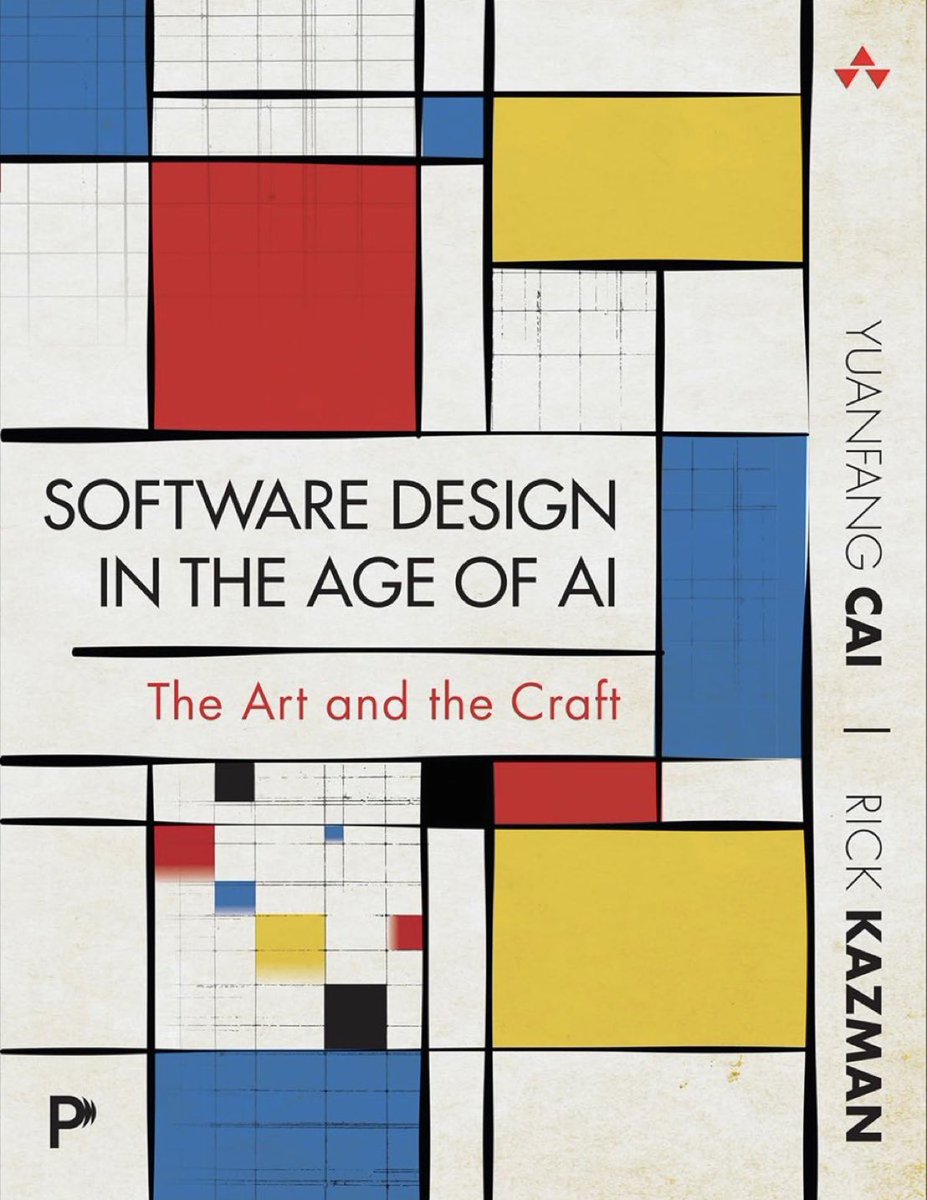
AI can help you write code, but you still need to know what to build, how to test it, and when to step in.
Our free ebook, Claude for Software Engineers, explores how to use Claude Code, break features into manageable stages, and build AI-assisted testing into your workflow.
As I have said in the past:
IAM jobs are going to explode in the next 6-12 months and 99% of people are not ready for that.
You're still early. Lock in.
What happens inside an LLM after you hit enter?
Our free Inside the LLM ebook covers transformer architecture, GPT construction, and text generation with chapters from four books.
Get it here: https://t.co/1kSYiZI6LN
And check the thread for deals on the four featured books:
• Build a Large Language Model (From Scratch) by @rasbt
• Transformers in Action by Nicole Koenigstein
• How Large Language Models Work by @EdwardRaffML, @drewfarris, and @BlancheMinerva
• Deep Learning with Python, Third Edition by @fchollet and Matthew Watson
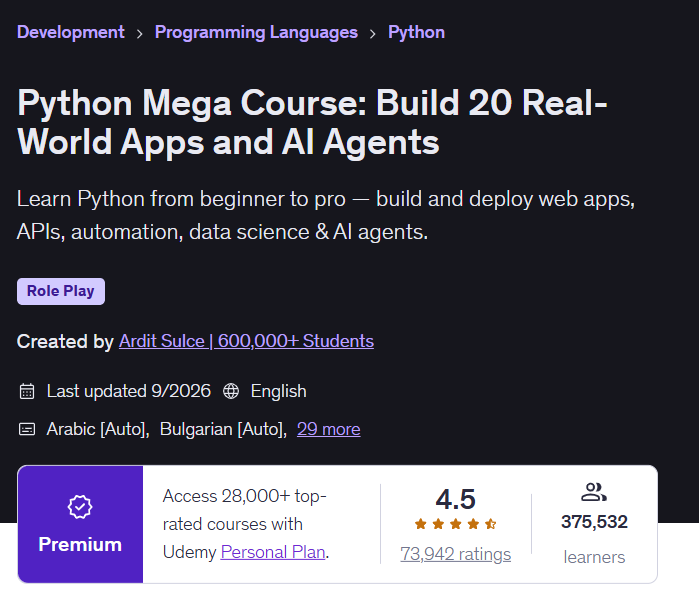
Want to Go from Python Beginner to Building Real-World AI Applications?
Check out the Python Mega Course: Build 20 Real-World Apps and AI Agents!
If you're looking to level up your Python skills, this course offers a practical learning journey from the fundamentals to advanced development.
What can you learn?
Python programming from beginner to pro
Web development and API building
Automation with Python
Data science projects
AI agents and real-world applications
Build and deploy practical projects
Detailed Explanation: https://t.co/GXm7XsrdzD
UK autumn budget is confirmed for 28 October 2026.
I’m hearing rumors that visa fees might go up again. Hope it doesn’t cause the cost of living is affecting everyone
If you want to get better at API design:
Bookmark these:
→ REST API Design Rulebook
→ Microsoft REST API Guidelines
→ Google API Design Guide
→ Zalando RESTful API Guidelines
→ OpenAPI Specification
→ OWASP API Security Top 10
Study:
Versioning
Pagination
Filtering
Error responses
Idempotency
Rate limits
Authentication
A good API makes the next engineer’s job easier.
WHOEVER LEAKED THIS CLAUDE CODE SETUP DESERVES A RAISE
I thought the best way to use Claude Code was to just throw Opus at everything.
Apparently not.
Anthropic’s setup is much more interesting:
→ Sonnet 5.5 runs the main session and actually builds the thing
→ Haiku 5.5 swarms the repo for file discovery, AST scans, grep, and docs
→ Opus 5.5 stays in the background as the architect
→ Opus gets called in before big plans, after repeated test failures, and before shipping
→ JEV handles the boring mechanical routing in ~16ms so frontier models only wake up when real reasoning is needed
so you get:
Opus reviews. Sonnet builds. Haiku swarms. JEV routes.
the interesting part isn’t using multiple models.
it’s giving each model a different job.
Instead of burning Opus context on finding files and running routine commands, you save it for the moments where architectural judgment actually matters.
Plan on high.Delegate on medium. Keep Opus on call.
Want to Become a Strong Backend Engineer?
Solving LeetCode problems is only one part of the journey....
Here are 10 skills that a software builder needs:
— Concurrency & Multithreading: Thread safety, synchronization, race conditions, deadlocks, and asynchronous execution.
— System Design: Scalability, load balancing, API design, bottlenecks, and architectural trade-offs.
— Database Engineering: Indexing strategies, query optimization, transactions, normalization, and caching with Redis.
— Distributed Systems: Replication, leader election, consistency models, network failures, and distributed coordination.
— Fault Tolerance: Timeouts, retry policies, exponential backoff, circuit breakers, and graceful degradation.
— Event-Driven Architecture: Kafka, RabbitMQ, SQS, message ordering, idempotency, and delivery semantics.
— Application Security: OAuth 2.0, JWT validation, TLS/mTLS, access control, and secure API communication.
— Observability & Debugging: Logs, metrics, distributed tracing, OpenTelemetry, and production incident analysis.
— Practical Problem Solving: Implement an LRU cache, rate limiter, job scheduler, thread-safe queue, and producer-consumer pipeline.
— Performance Optimization: JVM memory usage, CPU profiling, database bottlenecks, connection pools, and N+1 query issues.
The real goal isn't just to write code that works.
It is to build software that remains secure, fast, and reliable under real. world conditions.
Save this roadmap for your backend engineering preparation.
Need backend projects to build?
Try:
→ URL shortener
→ Rate limiter
→ Job queue
→ Webhook service
→ Notification system
→ Payment ledger
→ Fraud scoring engine
→ API gateway
→ Distributed cache
→ Reconciliation system
Don’t build another todo app.
Build something that forces you to deal with failure.
Don’t overthink backend in the AI era.
You still need the fundamentals.
• Learn HTTP → how the web talks
• Learn Databases → how data lives
• Learn Caching → how apps get fast
• Learn Auth → how users stay safe
• Learn APIs → how systems connect
• Learn Queues & Background Jobs → how async work happens
• Learn Logging & Observability → how production gets debugged
• Learn Testing & CI/CD → how software ships reliably
Then add the AI layer:
• LLM APIs → how applications use intelligence
• RAG & Retrieval → how AI gets context
• Tool Calling → how AI interacts with systems
• Agents & Workflows → how AI executes tasks
• Evals & Guardrails → how AI becomes reliable
Master the fundamentals first. AI is another layer on top of them.
Good UI/UX design starts with basic ideas and grows into polished, interactive prototypes.
In this course, Wish teaches you how to design professional interfaces with Figma.
You'll create wireframes, style guides, components, Auto Layout designs, and high-fidelity prototypes for real-world apps.
https://t.co/zQN2FsDVi7