I am the British whistleblower who reported evidence concerning Howard Lutnick, his links to Jeffrey Epstein, and Cantor Fitzgerald and BGC to the FBI in 2020–21.
Listen to the BBC File on 4 documentary about my whistleblower story:
https://t.co/rLRDnZA4Dv
BBC News:
https://t.co/DdNNOosnKL
I later shared evidence with the House Oversight Committee, which subsequently questioned Lutnick behind closed doors.
My disclosures also contributed to regulatory action in the US and UK, including a £96m HMRC tax assessment relating to BGC’s partnership scheme. I believe the true tax exposure is substantially higher.
I also reported to the FBI and financial regulators matters involving Cantor Fitzgerald’s Relief Fund and BGC/Cantor’s annual 9/11 Charity Day.
The personal consequences of whistleblowing, and the retaliation I say followed, have been devastating for my family and me.
Mother Jones previously reported that documents I uncovered revealed a years-long business tie between Howard Lutnick, Cantor Fitzgerald and Jeffrey Epstein through AdFin, including a 2018 exchange in which Lutnick and Epstein discussed the company directly:
https://t.co/aRdn302v4i
https://t.co/aRdn302v4i
Follow me here on X and on LinkedIn. I intend to share more of the evidence and the story behind what happened.
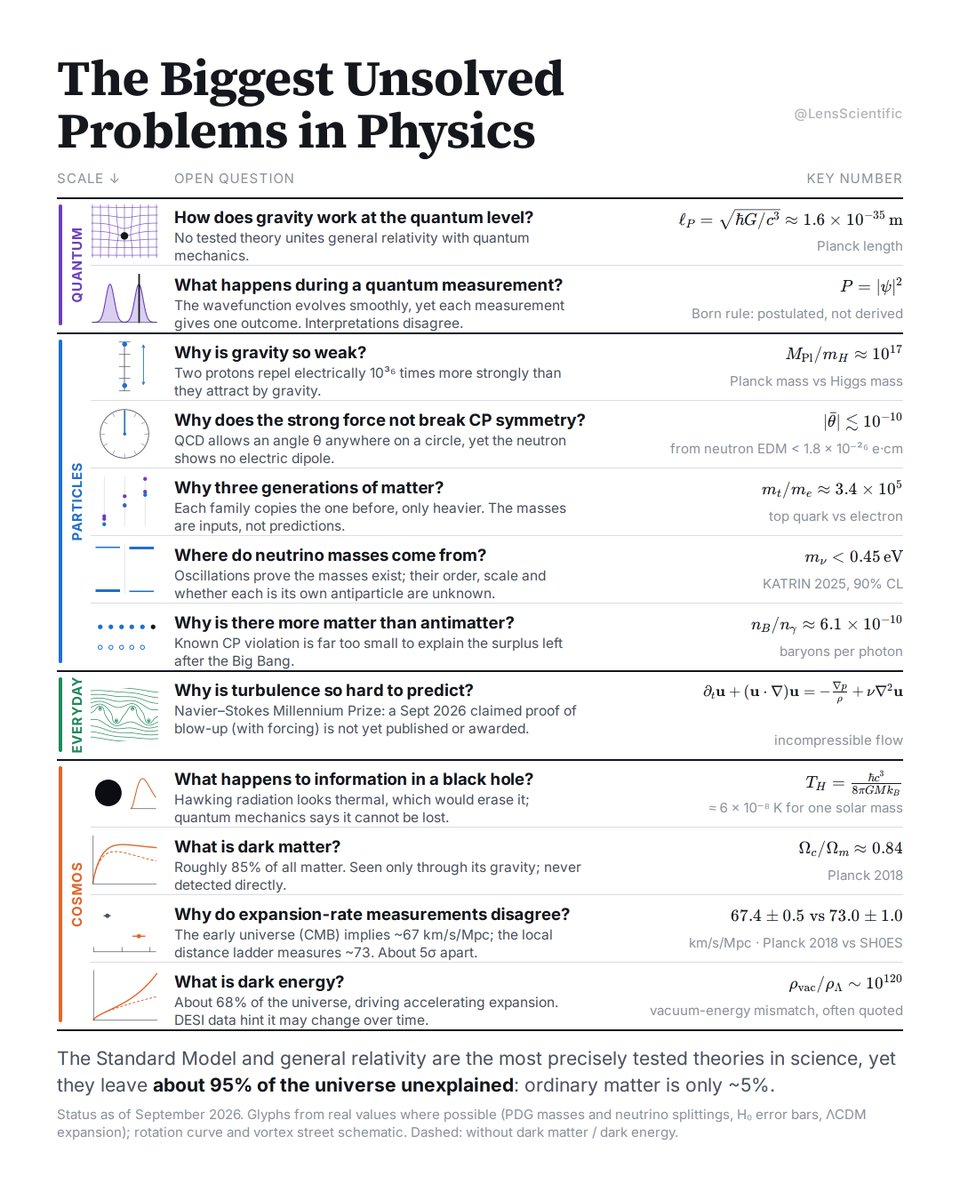
@SciNatureNews A rotating cosmos is one proposed patch for the Hubble tension. Whatever the model, redshift stays a measured spectral shift; turning that number into a lookback clock is a separate step.
@StartsWithABang Whether our cosmos is a black-hole interior or not, redshift stays a measured spectral shift. Turning that number into a lookback clock is a separate step.
@SpaceTelescope When that dual-band science stream lands it will be spectra, positions, and fluxes; redshifts are measured numbers; a lookback clock is a separate step.
@StartsWithABang@battersbot The galactic center is local; on more distant frames, redshift is still the measured spectral shift; a lookback clock is a separate step.
@SpaceTelescope Here the disk is nearby; on more distant Webb frames, redshift is still the measured spectral shift; a lookback clock is a separate step.
@StephenFleming@DragonCon When that 3-meter stream lands it will be spectra, positions, and fluxes; redshifts are measured numbers; a lookback clock is a separate step.
@scitechgirl Those distant spirals are labeled distant after redshift is turned into lookback distance; redshift is the measured spectral shift; the calendar is a separate step.
@SPACEdotcom Here the distance is local. On more distant Hubble frames, redshift is still the measured spectral shift; a lookback clock is a separate step.
@newscientist More ancient than theory only after redshift is turned into a lookback clock. Redshift is the measured spectral shift; the calendar is a separate step.
@coastal8049 When that Ka-band science stream lands it will be spectra, positions, and fluxes. Redshifts are measured numbers; a lookback clock is a separate step.
@konstructivizm Most distant only after redshift is turned into lookback distance. Redshift is the measured spectral shift; the calendar is a separate step.
@konstructivizm That black hole looks overmassive only after redshift is turned into a lookback clock. Redshift is the measured spectral shift; how long the host had to grow is a separate step.
@NASARoman That terabyte will be spectra, positions, and fluxes. Redshifts and distances are measurements; a lookback clock is a separate step from those numbers.
@scitechgirl Two expansion rates show up only after redshift is turned into distances and a clock. Redshift itself is the measured spectral shift; the calendar is a separate step.