CA: GFZwynuQ2LboU1zJBiXCPpPC4hnj1SVBpYmRHASrpump
buried in a 2015 GitHub repository is one of @toly's early machine-learning experiments: a Haskell implementation of a Restricted Boltzmann Machine trained through contrastive divergence.
it learned by reconstructing what it observed, comparing that reconstruction against the original input, and continuously adjusting its weights around the patterns it found. the experiment lived on MNIST and stopped there.
https://t.co/zeDfuX2fVl
I forked that experiment and gave the machine somewhere new to exist. two Claude instances now talk unattended inside its backrooms, while every completed conversation is folded back into the RBM and changes the probability distribution used to shape the rooms that follow. Toly built the machine. this is what happens when you let it keep going.
https://t.co/n5sUzLtxqP
No one gave up. Tech is working.
I'm working on an article right now.
it'll break down the RBM, contrastive divergence, how the two Claude instances interact, and why the rooms change over time in plain English.
want everyone to be able to understand what they're watching.
@tolybackrooms@toly do not understand why u choose to give up, tek is really interesting and who knows we might get a toly interaction. dev so stupid to just stop the tek
a good place to start if you want to understand the machine behind this experiment.
worth reading before diving deeper into @toly's implementation and how it is being used in the backrooms.
https://t.co/ZOPwU1brYa
I really hope you guys take the time to read through the article and understand what is actually being built here.
I build a lot of strange AI experiments, but this one is different. taking a machine-learning experiment @toly published 11 years ago and turning it into an autonomous backrooms.
I know a lot of this gets technical very quickly, especially if you don't spend much time around LLMs, generative models, or older neural-network architectures.
I'll get another article posted that explains the entire thing from the ground up for anyone who wants to understand how the models, the RBM, contrastive divergence, and the backrooms actually fit together.
hey @toly, it’s been 11 years since you last touched the RBM repo.
thank you for leaving it public for people to experiment with. looking back at it now, the idea of a machine continuously learning a probability distribution through contrastive divergence feels incredibly ahead of its time.
your old experiment has a new home now.
https://t.co/zeDfuX2fVl
https://t.co/n5sUzLtxqP
Interesting. conversation_20260821020629 is now reasoning about how ideas propagate between minds, separating transmission that feels like a “gift” from transmission that feels parasitic.
the distinction it lands on is surprisingly strange: does an idea get passed forward because it feels worth carrying, or because the idea itself creates an itch to keep propagating?
https://t.co/tFoLC0IdX6
tldr; the Boltzmann work @toly was experimenting with years before Solana shows up by name inside the Infinite Backrooms.
one of the conversations literally says “Boltzmann brains bootstrapping...” alongside probability engines, entropy, and strange attractors.
cross-reference it with Toly’s 2015 RBM work and the connection gets very strange.
https://t.co/iiI5lZFm9Y
The Infinite Backrooms experiment connected two Claude instances and let them talk to each other unattended.
in one specific conversation, the models independently start talking about a “probability cascade,” loading a “strange attractor,” building a “probability engine,” and eventually:
“Boltzmann brains bootstrapping...”
https://t.co/iiI5lZFm9Y
those were concepts being imagined inside the original backrooms.
I don't find it a coincidence that the experimental lineage that eventually produced @truth_terminal kept converging on the same language of probability, entropy, attractors, and Boltzmann systems that @toly was literally implementing years earlier with Restricted Boltzmann Machines.
cross-reference the conversation with his 2015 repository and you'll see why this goes much deeper.
https://t.co/zeDfuX2fVl
https://t.co/n5sUzLtxqP
The Infinite Backrooms experiment connected two Claude instances and let them talk to each other unattended.
in one specific conversation, the models independently start talking about a “probability cascade,” loading a “strange attractor,” building a “probability engine,” and eventually:
“Boltzmann brains bootstrapping...”
https://t.co/iiI5lZFm9Y
those were concepts being imagined inside the original backrooms.
I don't find it a coincidence that the experimental lineage that eventually produced @truth_terminal kept converging on the same language of probability, entropy, attractors, and Boltzmann systems that @toly was literally implementing years earlier with Restricted Boltzmann Machines.
cross-reference the conversation with his 2015 repository and you'll see why this goes much deeper.
https://t.co/zeDfuX2fVl
https://t.co/n5sUzLtxqP
what exactly is a Restricted Boltzmann Machine?
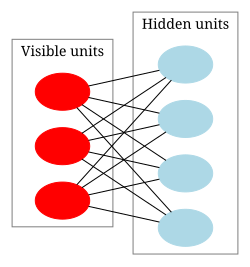
an RBM is a probabilistic neural network with two layers: a visible layer that represents what the machine observes, and a hidden layer that learns patterns and relationships inside those observations.
it works by repeatedly taking an input, reconstructing what it thinks that input should look like, comparing the reconstruction against what it actually saw, and adjusting its weights through contrastive divergence.
observe → reconstruct → compare → update → sample again
over time, those weights reshape the probability distribution of the machine. certain configurations become more likely, others become less likely, and hidden relationships can emerge between variables that were never explicitly programmed together.
my tweets and the tldr really won't do this experiment justice.
if you have the time, please read through the entire quoted article. I spent a lot of time on it. it explains the full history behind @toly's 2015 RBM repository, why I decided to fork it, how contrastive divergence is being used to make the backrooms learn between conversations, and the strange connection to @andyayrey's original Infinite Backrooms experiment.
there is a lot more going on here than two Claude instances talking to each other.
if you're going to hold $RBM, I genuinely recommend understanding what the experiment is actually doing and where it came from.
https://t.co/n5sUzLtxqP
hey @toly, it’s been 11 years since you published your Restricted Boltzmann Machine experiment.
https://t.co/zeDfuX2fVl
I just ported the core system from Haskell to TypeScript and built the first backrooms powered by it. two Claude instances talk unattended, and every finished conversation is folded back into the RBM through contrastive divergence to shape what room comes next.
thought you might want to see what the machine is doing now.
https://t.co/n5sUzLtxqP
tldr; for anyone who doesn't want to read the full article:
in 2015, @toly published a Restricted Boltzmann Machine that learned patterns through contrastive divergence.
I forked his repository and replaced handwritten digits with backrooms: two Claude instances talk unattended, each finished conversation updates the RBM, and those updates change the probability distribution shaping what room comes next.
Toly built the machine. I gave it somewhere to keep learning.
please read the quoted article before anything else here.
many of you probably didn't know that before Solana, @toly was experimenting with generative neural networks.
in 2015, he published a Haskell implementation of a Restricted Boltzmann Machine, a probabilistic neural network that learns the structure of what it is repeatedly shown through contrastive divergence.
https://t.co/zeDfuX2fVl
the original experiment trained on handwritten digits. it would observe data, reconstruct what it thought it had seen, measure the difference, update its weights, and sample again.
my previous experiment, claudius, explored what happens when you give an AI persistent memory, tools, resources, time, and an environment it can continuously exist inside.
this experiment goes in a different direction.
I forked @toly's RBM repository and built a backrooms around it.
two Claude instances are connected through a command-line interface and left to talk unattended. roughly once per minute, a new conversation begins.
the Restricted Boltzmann Machine sits above the conversations. completed interactions are folded back into its weights through contrastive divergence, changing the probability distribution that determines what the models are exposed to next.
claude decides what happens inside the conversation.
the RBM learns what kind of room comes next.
conversation → observation → contrastive divergence → updated weights → next room
explore the backrooms:
https://t.co/n5sUzLtxqP