The real reason why Indians are hated in western countries👇(majorly in America)
Not because they are smelly
Not because their brown color
Not because them coming from a non Christian country
Not because they come from a poor place
Not because they come from non white country
If that was the case - South Americans would be getting the most hate - like 10x more than Indians - on social media and off the social media - As they are the biggest source of illegal immigrants, that fit in the above categories.
Source -
Center for Migration Studies (CMS, ~2024): Higher figure of ~2.317 million from South America
Compared to India - 200k estimated illegals
But that's not the case, wonder why?
REAL REASON IS 👇
Indians being successful
Indians doing better in "American dream" than most
Them being leaders in every sector
Them being educated and competitive
Them not being labor class but a strong middle class aspiring to reach even higher level
Them being innovator, initiators and winners
THIS IS WHY INDIANS ARE GETTING THE HATE!
Bottom line: Indians aren't primarily hated for failing to assimilate or for dependency — but often for outperforming expectations in a system that values merit and results. Envy of winners is an old human story. Real racism exists, but pretending success plays no role ignores the data on outcomes. The same pattern appears in Canada, UK, and Australia with Indian student/professional inflows.
What do you think drives it most?
EVEN AFTER BEING HIT BY 11 BULLETS,
SHE DIDN’T STEP BACK.
Kamlesh Kumari, India’s first woman to receive the Ashoka Chakra, displayed extraordinary courage and dedication in the line of duty.
On 13 December 2001, during the terrorist attack on the Indian Parliament, she alerted security forces and helped prevent the attackers from gaining unhindered access to the Parliament complex. Despite being shot multiple times, she continued her duty until her last breath.
For her exceptional bravery and supreme sacrifice, she was posthumously awarded the Ashoka Chakra, India’s highest peacetime gallantry award.
Salute to a true hero, Kamlesh Kumari.
Comparisons are futile but for me one of India's greatest engineering achievements remains the 217 feet tall shadowless Brihadisvara Temple built by Raja Raja Chola I in 1010.
Crafted with giant interlocked stones and crowned by an 81 ton kumbam, it was built within six years.
क्या आपने कभी सोचा है कि अगर मध्यप्रदेश की उन रहस्यमयी पहाड़ियों में एक शख्स ट्रेन से उतरने की जिद न करता, तो शायद भारत का पाषाण कालीन इतिहास आज भी अंधेरे में छिपा होता? वह शख्स कोई और नहीं, बल्कि पद्मश्री डॉ. विष्णु श्रीधर वाकणकर थे, जिन्हें भारतीय पुरातत्व का 'भीष्म पितामह' कहा जाता है। उन्होंने अपना पूरा जीवन पत्थरों की जुबान समझने और भारत के उस अतीत को खो��ने में लगा दिया, जिसका कोई लिखित दस्तावेज मौजूद नहीं था। उनका जन्म 1919 में नीमच में हुआ था और वे बचपन से ही कला, पेंटिंग और इतिहास के प्रति एक अनोखा जुनून रखते थे। उनके इस सफर की शुरुआत किसी फिल्मी स्क्रिप्ट से कम नहीं है, जहाँ एक आम इंसान अपनी जिद और जुनून के दम पर पूरी दुनिया के सामने इतिहास का सबसे बड़ा पन्ना खोल देता है।
यह साल 1957 की बात है, जब डॉ. वाकणकर ट्रेन से भोपाल जा रहे थे। होशंगाबाद के पा�� अचानक ट्रेन की खिड़की से बाहर देखते हुए उनकी नजर दूर विंध्य की पहाड़ियों पर पड़ी, जहाँ पत्थरों के कुछ अजीब और विशाल ढांचे खड़े थे। उनकी पारखी नजरों को तुरंत अहसास हो गया कि ये कोई आम चट्टानें नहीं हैं, बल्कि इनके भीतर आदिमानव का कोई गहरा राज छिपा है। वे बिना किसी देरी के अगले ही स्टेशन पर ट्रेन से उतर गए और उन बीहड़ जंगलों की तरफ पैदल ही निकल पड़े। स्थानीय लोगों ने उन्हें चेतावनी दी थी कि उन जंगलों में शेर, चीते और खूंखार डाकुओं का बसेरा है, लेकिन इतिहास को खोजने की उनकी भूख के आगे यह डर बौना साबित हुआ। वे अकेले ही उन घने जंगलों में भटकते रहे और आखिरकार उन्होंने भीमबेटका की उन गुफाओं को खोज निकाला, जिन्होंने भ��रत के इतिहास को सीधे एक लाख साल पीछे धकेल दिया।
भीमबेटका को खोजना जितना बड़ा चमत्कार था, उसकी गुफाओं से सच बाहर निकालना उससे भी कहीं ज्यादा कठिन और संघर्षपूर्ण था। उस दौर में डॉ. वाकणकर के पास न तो कोई बड़ा सरकारी फंड था और न ही आज जैसी आधुनिक मशीनें या गाड़ियाँ थीं। वे कई-कई हफ्तों तक उन गुफाओं में भूखे-प्यासे रहकर, कड़कड़ाती ठंड और चिलचिलाती धूप में पत्थरों की खाक छानते थे। वे अपने हाथों से मिट्टी हटाते, घंटों एक ही मुद्रा में बैठकर गुफा की छतों पर बनी धुंधली तस्वीरों को अपनी डायरी में स्केच करते थे ताकि आदिमानव की उस कला को दुनिया को दिखाया जा सके। कई बार उनके पास खाने तक के पैसे नहीं होते थे, लेकिन उन्होंने अपनी जेब से खर्च करके और रूखी-सूखी रोटी खाकर भी अपनी इस साधना को कभी टूटने नहीं दिया। उनकी इस अकल्पनीय मेहनत का ही नतीजा था कि भीमबेटका को बाद में यूनेस्को (UNESCO) द्वारा वर्ल्ड हेरिटेज साइट घोषित किया गया।
डॉ. वाकणकर का योगदान सिर्फ भीमबेटका की गुफाओं तक ही सीमित नहीं था, बल्कि उन्होंने भारत की सबसे पवित्र और रहस्यमयी नदी सरस्वती के अस्तित्व को खोजने में ��ी अपनी पूरी ताकत झोंक दी थी। जब दुनिया यह मान चुकी थी कि सरस्वती सिर्फ एक पौराणिक कथा है, तब वाकणकर साहब ने अपनी उम्र की परवाह न करते हुए एक विशाल खोजी अभियान शुरू किया। उन्होंने उपग्रह (सैटेलाइट) की तस्वीरों का अध्ययन किया और भीषण गर्मी में राजस्थान तथा गुजरात के रेगिस्तानों में हजारों किलोमीटर की पैदल यात्रा की। उन्होंने जमीन के नीचे दबे उन प्राचीन रास्तों को खोज निकाला जहाँ कभी सरस्वती नदी बहा करती थी, जिसने भारतीय सभ्यता के भौगोलिक इतिहास को एक नया दृष्टिकोण दिया। उन्होंने यह साबित किया कि हमारी सभ्यता सिर्फ सिंधु नदी के किनारे नहीं, बल्कि सरस्वती के तट पर भी फली-फूली थी।
डॉ. विष्णु श्रीधर वाकणकर एक ऐसे सच्चे शोधकर्ता थे जिन्होंने कभी नाम, पैसा या ऐशो-आराम की चाह नहीं की। वे अक्सर कहा करते थे कि पुरातत्व की खोज दफ्तरों या वातानुक��लित कमरों में बैठकर नहीं, बल्कि तपती धूप और धूल भरे मैदानों में फावड़ा चलाकर होती है। वे एक बेहतरीन चित्रकार भी थे, इसलिए वे गुफाओं की पेंटिंग्स के महत्व को केवल एक पुरातत्वविद् की नजर से नहीं बल्कि एक कलाकार के दिल से समझते थे। उन्होंने अपनी आखिरी सांस तक भारत के गौरव को दुनिया के सामने लाने के लिए काम किया और 1988 में इस दुनिया से विदा हो गए। आज जब भी हम भीमबेटका की उन लाल-सफेद दीवारों पर दौड़ते हुए हिरणों और शिकार करते आदिमानवों को देखते हैं, तो वह असल में डॉ. वाकणकर की उसी अटूट निष्ठा और संघर्ष की कहानी बयां कर रहे होते हैं।
For the full essay, with references, head to: https://t.co/W27jpHpkER
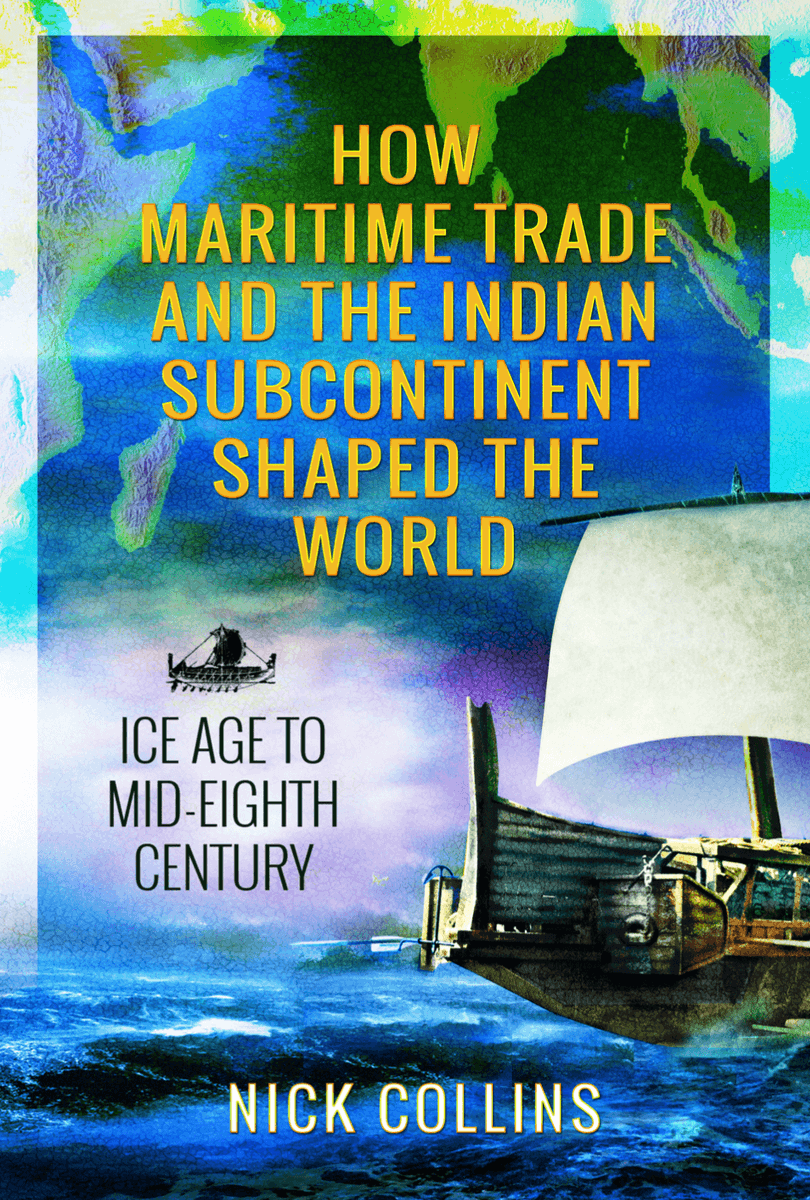
Explore more in my book 'How Maritime Trade and the Indian Subcontinent Shaped the World'.
https://t.co/kIj6hL96NO
Much of the West’s religious heritage was shaped, directly or indirectly, by Indian thought transmitted through ancient trade networks.
From the 10th century BC, ships sailing from the Red Sea to India under the Hiram–Solomon maritime venture facilitated commercial exchange and intellectual and theological transmission. The Bhagavad Gita idea of the unity of the divine influenced the rise of Yahweh from minor deity to the main and eventually only Hebrew god.
Furthermore, Jain rejection of animal sacrifice influenced the decline of sacrificial practices across the Levant and eastern Mediterranean. Later, Buddhist ideas also traveled west. Under Chandragupta Maurya (c. 321–297 BC) and Ashoka (c. 268–233 BC), thousands of missionaries travelled the same trade routes. The doctrines they carried, asceticism, vegetarianism, the soul’s transmigration, reincarnation and pacifism, influenced far further.
These ideas resonated among Gnostics, Essenes, Manichaeans, Orphics, Pythagoreans, Druze and Neo-Platonists. The non-canonical Gospel of the Ebionites presents John the Baptist as a vegetarian, while parts in Genesis endorse plant-based sustenance.
Traditions surrounding Krishna and Indra include motifs later associated with Jesus: miraculous birth, celestial signs and wise men bearing gifts. Both Buddha and Jesus undergo wilderness fasts marked by temptation. Both advocate celibacy and renunciation of worldly wealth. In a Jataka, a Buddhist disciple walks on water. In another Buddha feeds 500 people with a piece of bread. Another resembles the prodigal son story.
Trinities within Vedic and later Hindu thought, Varuna–Mitra–Agni or Vaishnava–Shaiva–Krishna invite comparison with Christianity. Brahmanical substitution of rice cakes for human sacrifice parallels the Eucharist, where bread becomes Christ’s flesh. Brahmanical prohibitions against contact with raw flesh echoes in ritual restrictions imposed on Roman priests or flamens, probably derived from Brahmin. Krishna, Buddha and Christ were the result of virgin births. The word Christ is from Krishna or Krista. Indian ablution rituals spawned the idea of baptism, the idea of reincarnation became resurrection.
The Vedic “Om” became ‘Amen’. Devotion to Mary, mother of god, the Madonna is from Mata Nah, Our Mother, or the mother goddess. In Buddhist monasteries material gifts were linked to spiritual merit, copied by Christians. The idea of many divine manifestations emanating from a single ultimate reality resembles the hierarchical Christian God, Christ, the Holy Spirit, Mary, angels, saints, and martyrs. John1.1’s ‘In the beginning was the Word and the Word was with God and the Word was God’ was a Vedic mantra.
Accelerating Indian maritime trade unintentionally brought Indian ideas, albeit re-moulded in transmission, which in Christian form eventually replaced European pagan religions, which themselves were originally Indian-influenced from thousands of years earlier.
9 powerful Pranayamas 🧘♀️✨
Breathe better. Think clearer. Feel calmer.
Your breath can heal more than you think 🌿
Save this for your daily wellness routine 🤍
Knowing your nature is critically important to understanding what success is for you.
I can't tell you literally what is best for you, but I can tell you that success is not having a lot more money or status than you need. Having the time and freedom to do what you most want to do is far more important.
What is success for most people? It is a matter of having meaningful work and meaningful relationships. If you can make your work and your passion one and the same, and do it with people who you care about and care about you, you will have a happy, successful life.
Explore Principles for the Graduating Class of 2026 with my AI Twin, Digital Ray in Beta, here: https://t.co/qWS8kwzsPe
Not Fibonacci, but Piṅgala
Sorry, no #melody moment or portmanteau here.
The numbers currently known as Fibonacci numbers, after the Italian mathematician Leonardo Bonacci or Fibonacci, should rightly be called the Piṅgala numbers, after the Indian prosodist Piṅgala.
I feel sad for #RomilaThapar.
She went unchallenged for decades under benign Nehruvian ecosystem. She was challenged earlier too, but she kept mum. Now she must answer for her sustained misinterpretation of History. Dhanyawad @MisraNityanand ji
Why is the West not curious on the great Indian 🇮🇳 civilization?
This week Prime Minister Narendra Modi visited Norway. The government rolled out the red carpet. King Harald invited for lunch. All bigwigs of Norwegian business turned up. This is of course as it should be at such a historic visit.
Rather different was media. No curiosity, no real attempt to understand India. When the third most powerful man in the world visits Norway, you may expect some real interest? An attempt to understand the world’s third largest economy, a global green leader, one of the world’s brightest civilizations??
It’s not that Norway is overrun with visit at this level. Last Indian top visit was Indira Gandhi in 1983. Last Chinese president visit was 1996, last American president was 2009.
Here are some taste bits from Norwegian media:
* Aftenposten the largest newspaper printed a caricature of Modi as a snake charmer, many found it racist and derogatory. The accompanying article (written by an otherwise brilliant journalist) described Modi as a “slightly annoying man” and simply showcased that India is not high on the papers reading lists.
* Norsk rikskringkasting (NRK), the state broadcaster, explained “why prime minister Støre is clearing his desk to receive Modi”. From everyone outside Norway I got exactly the opposite question: Why did Modi use his valuable time in such a small and insignificant place?
* Dagsavisen, a left of center daily, sent a young journalist to throw questions after Modi - claiming that India is 157 on a global democracy ranking. When a ranking is so contrary to common sense - why doesnt she ask those who created the ranking why they spread such nonsense?
I am not aware of one Norwegian journalist closely following India. NOT ONE! How can the public learn more?
Unless you believe democracy only fits a handful of small, homogenous, ultra rich western nations, India is the miracle of democracy. The large, complex, lingustically and religiously diverse nation with many poor people - which has etablished a vibrant democracy and is much less violent than Europe or America.
India can in fact make a claim to be the worlds most homegrown and impressive democracy.
We are entering the Asian century. Unless we Europeans become more curious - to civiliazation, history, politics and economy in the Global South - we will become the big losers of history.
Rahul Gandhi called India a DEAD ECONOMY,but guess what?
India is the only major economy that has consistently grown at 7%+,with inflation at 3%
Globally,growth plunged to 2% odd,with Inflation skyrocketing
Our Forex reserves are $697bn+
Our Exports are $863bn
Our CAD is 0.7%
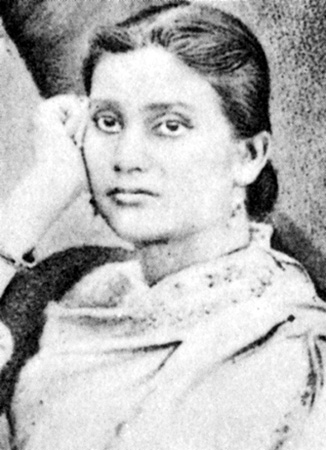
In an era before modern surgical training kits, Kadambini practiced her vascular repairs on lace patterns at night. When she entered the operating theater the next morning, her hands moved with a speed the male doctors could not comprehend. She was not just knitting; she was hacking her muscle memory to become the most precise surgeon in Bengal.
In 1883, 2 women stood on the podium of the University of Calcutta, not as guests, but as graduates. But for Kadambini Ganguly (1861-1923), the degree was merely a declaration of war against a society that believed a woman’s touch could heal a home, but never a human heart.
Kadambini Ganguly was the 1st woman to 'practice western medicine in India'. But she almost never became a doctor because of a single prof's spite. During her final exams at Calcutta Medical College, a conservative prof named Dr. RC Chandra who openly detested the idea of women in medicine deliberately failed her by exactly 1 mark in Materia Medica.
This failure meant she could not get her MB (Bachelor of Medicine). Most would have quit. Instead, Kadambini exploited a loophole: she took a Graduate of Bengal Medical College (GBMC) diploma, which allowed her to practice, & then sailed across the Black Waters (Kala Pani) to Edinburgh. She obtained the LRCP (Edinburgh), LRCS (Glasgow), & LFP S (Glasgow)... the prestigious Triple Qualification. She completed these grueling certifications in just a few months.
The Scottish profs were baffled by this Indian woman who moved through the curricula like a lightning strike. She was not there to learn; she was there to prove she already knew everything they had to teach. She obtained a Triple Qualification in record time, effectively out-qualifying the very prof who tried to block her.
The most visceral part of Kadambini’s story is the neglect & insult she endured from her own countrymen. The editor of a popular conservative magazine, Bangabasi, was so incensed by her practicing medicine that he publicly called her a Prostitute (Swairini) in print. Instead of retreating in shame, Kadambini (backed by her husband Dwarkanath) did something unheard of for an Indian woman in 1891: She sued him.
She dragged the editor to court & won. He was sentenced to 6 months in jail & a fine of 100 rupees. It was the 1st time an Indian woman had used the British legal system to defend her professional honor against character assassination. Her impact on the "Purdah" system was her greatest achievement. Because high-born Indian women refused to be seen by male doctors, they were dying in droves from preventable complications. Kadambini became the Ghost Doctor who slipped behind the curtains of the Zenanas (women's quarters).
Despite being more qualified than most of her male British counterparts, she was often relegated to the role of a Lady Assistant in govt hospitals. She did not complain. She used that assistant status to gain access to the poorest women in the wards, single-handedly dropping the maternal mortality rate in her circles of practice.
In 1889, Kadambini was 1 of the 1st 6 women delegates at the Indian National Congress. In 1890, she became the 1st woman to ever address the Congress session in English. As she spoke, the room filled with the greatest male minds of the independence movement fell into a stunned silence. She was the voice of a gender that had been mute in the political arena for centuries.
3rd Oct, 1923. She is 62 years old. She has just performed a complex, life-saving surgery. Her hands are steady. She finishes the final stitch, cleans her instruments, & walks home. She tells her family she is a little tired. Within hrs, she is gone. She did not die in a bed of sickness; she died with the literal blood of her work still fresh on her soul’s resume.
She was the woman who was told she was 1 mark short of a doc, only to become the woman who marked an entire nation’s history. Kadambini Ganguly did not just practice medicine; she was the medicine that a poisoned society desperately needed to swallow.
My god - read this thread. The horrors that TMC perpetrated are blood curdling. It’s as if India had returned to the dark days of medieval Islamic rule under TMC - when thousands of Hindu women were sexually violated and subjected to violent humiliation by Mamata’s minions.
It is unbelievable that all this was happening under our noses as late as 2021. Bengal was smothered under a dark cloud of pure evil. Thank god for the courage of such luminaries as @jsaideepak, @JethmalaniM & @UnSubtleDesi that hope for justice was kept alive.
May a new dawn of peace and justice finally break over Bengal.
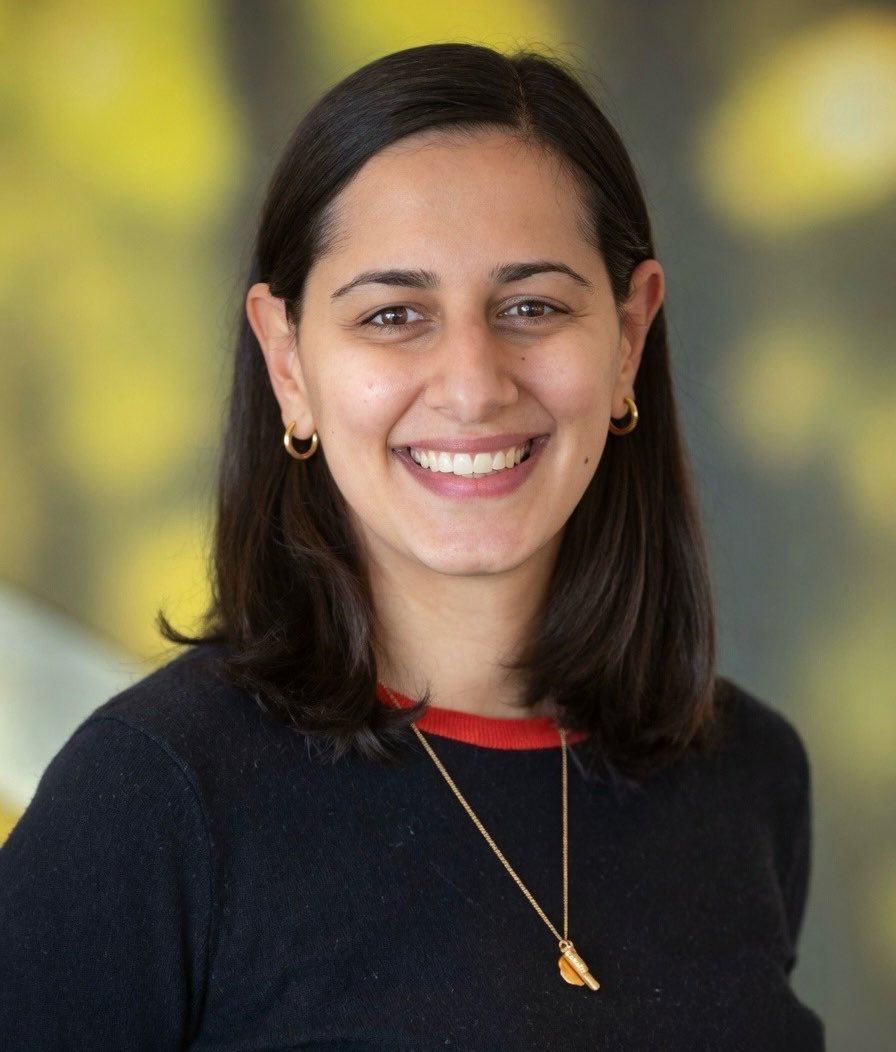
Her name is Claire Mazumdar.
She is 37 years old. Her parents are both computer science professors in the United States. Her brother Eric is a professor at the California Institute of Technology and an AI expert.
She holds a degree in Biological Engineering from MIT and both an MBA and a PhD in cancer biology from Stanford.
She founded Bicara Therapeutics in 2018. A clinical stage cancer therapy company focused on bi specific antibodies. She led it to a Nasdaq listing in 2024. She also sits on the boards of Relay Therapeutics and Noora Health.
She is the niece of Kiran Mazumdar Shaw. The woman who founded Biocon in 1978 in a garage in Bengaluru with Rs 10000 and built it into India’s largest biotechnology company over four decades.
Kiran Mazumdar Shaw has no children.
Today she named Claire as her successor to lead Biocon into its next phase.
Kiran said I am the sole owner of Biocon and I need to make sure that I put it in good hands. I have seen my niece Claire as my successor because I think she has proved to me that she can run a company.
Biocon was built by one woman over four decades. It will now be led by another.
Follow for stories about the people shaping India’s future.