القطط لا تطرب لموسيقى "موزارت"، بل لـ "الموسيقى السنورية" المخصصة لها ..
تشعر القطط باللامبالاة التامة تجاه أفضل المقطوعات الكلاسيكية البشرية، ولكنها تتفاعل بحماس وشغف وتدلك أجسادها بمكبرات الصوت عند سماع "موسيقى صُممت خصيصاً لها".
أجرى باحثون من جامعة ويسكونسن-ماديسون (2015) دراسة نُشرت في مجلة Applied Animal Behaviour Science؛ حيث قاموا بتأليف موسيقى تستخدم إيقاعات تُحاكي معدل نبضات قلب القطط أثناء الخرخرة، وترددات صوتية أعلى بـ أوكتاف كامل من صوت الإنسان (تحاكي أصوات الرضاعة عند الهررة). أظهرت القطط انجذاباً فورياً وسلوكيات ارتياح عاطفي واضح لهذه المقطوعات دون غيرها.
🐾
#باستيت
📢 Tras 101 años de historia, la mítica Onda Larga de la BBC se apagó para siempre a las 00:00 UTC. Así ha sido su último minuto después del famoso Shipping Forecast: las notas del God Save the King y poco después un aviso de cese de emisiones automatizado... 😢 🇬🇧👇 #BBC#LW 📻
McDonald's verliest de rechtszaak
tegen chef Jamie Oliver, die bewees dat het voedsel dat ze verkopen ongeschikt is voor menselijke consumptie omdat het zeer giftig is.
Dat was zo'n acht jaar geleden... maar niemand leek zich erom te bekommeren... Chef Jamie Oliver heeft een rechtszaak gewonnen tegen 's werelds grootste fastfoodketen.
Oliver demonstreert hoe hamburgers worden gemaakt.
Volgens Oliver worden de vette stukken vlees "gewassen" met waterstofammoniak en vervolgens gebruikt om de hamburger in de vleespasteiverpakking te vullen. Zelfs vóór dit proces, zegt de tv-presentator, was dit vlees ongeschikt voor menselijke consumptie.
Oliver, een radicale activistische chef-kok die de strijd aanbindt met de voedselindustrie, zegt:
"We hebben het over vlees dat als hondenvoer wordt verkocht en vervolgens aan mensen wordt geserveerd. Naast de kwaliteit van het vlees is ammoniumzuur schadelijk voor de gezondheid." Oliver noemt het "het roze mestproces".
Welk weldenkend mens zou een stuk vlees dat in waterstofammoniak is gedrenkt in de mond van een kind stoppen?
In een ander initiatief demonstreerde Oliver hoe kipnuggets worden gemaakt: Nadat de "beste delen" zijn geselecteerd, wordt de rest – vet, huid, kraakbeen, ogen, botten, kop, poten – onderworpen aan een Mec-Split-mengsel genaamd Canica – een eufemisme dat door voedselingenieurs wordt gebruikt. Deze bloedroze pasta, die wordt ontgeurd, gebleekt, opgefrist en opnieuw geverfd, wordt vervolgens door bloem gehaald en gefrituurd. Het blijft in normaal gesproken gedeeltelijk gehydrogeneerde oliën, oftewel giftige stoffen.
De voedselindustrie gebruikt ammoniumwaterstof als antimicrobieel middel, waardoor McDonald's vlees in zijn hamburgers kan gebruiken dat ongeschikt is voor menselijke consumptie.
Nog alarmerender is echter het feit dat deze op ammoniumwaterstof gebaseerde stoffen wereldwijd in de voedselindustrie worden beschouwd als "legale componenten van het productieproces", met de goedkeuring van de gezondheidsautoriteiten. Consumenten zullen dus nooit weten welke stoffen er in hun voedsel zitten.
STOP ALSJEBLIEFT MET HET GEVEN VAN DIT NEPPE VOEDSEL AAN UW KINDEREN, want NU WEET U HET.
https://t.co/GPjb5gUmFH
El ingeniero que creó claude code acaba de soltar un video de 28 minutos donde te enseña a escribir prompts que realmente funcionan.
He visto cursos de 300 dólares que no llegan ni a la mitad de lo que explica en los primeros 10 minutos.
Archivos CLAUDE.md, atajos de memoria, sesiones paralelas y patrones de prompting que cambian el juego.
Todo en un solo video y completamente gratis.
Da igual si eres desarrollador, principiante o ya llevas meses usando Claude. Esto te va a volar la cabeza.
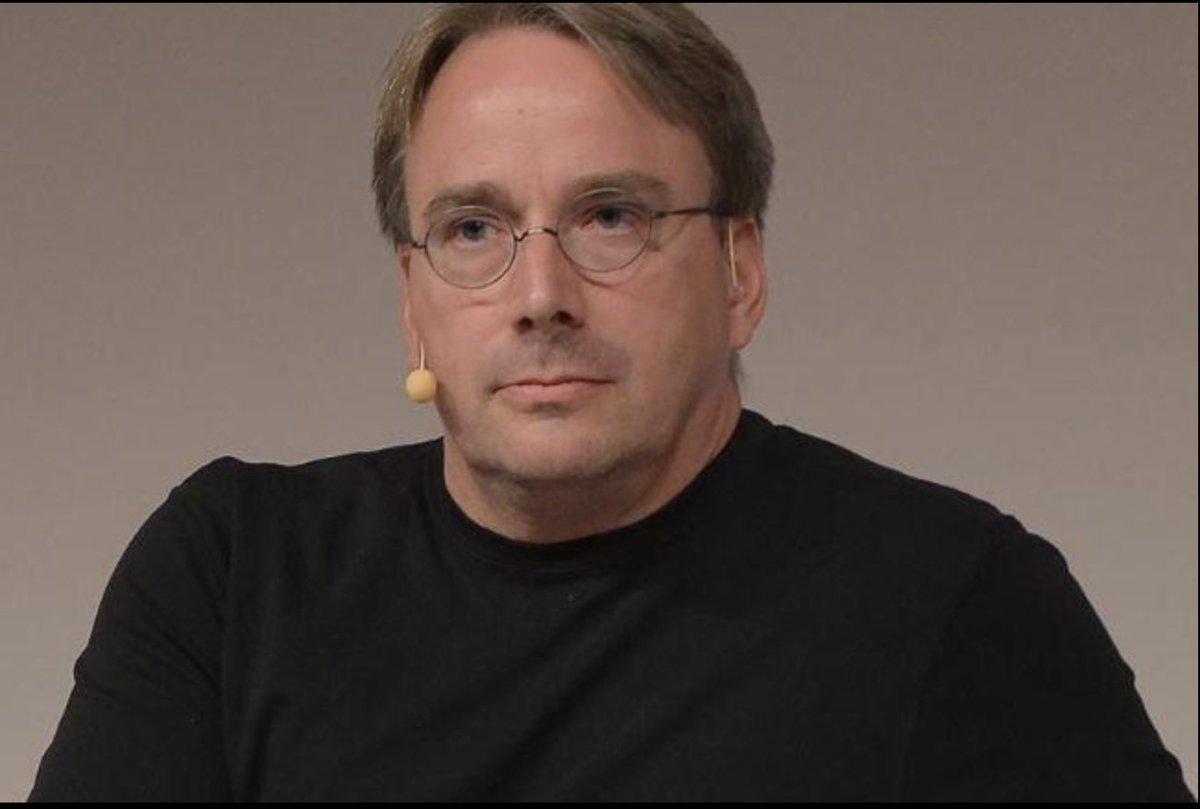
The creator of Linux just publicly called out the AI hype. Word for word.
Linus Torvalds took the stage at Open Source Summit 2026 and said this:
"When I see people saying 99% of our code is written by AI, I literally get angry. Because those same people — I can pretty much guarantee — 100% of their code is written by compilers. But they never say that."
He is not anti AI. The Linux kernel saw a 20% jump in submissions this release because of AI tools. He uses it. He gets it.
His point is something most people are too afraid to say.
AI is a productivity tool exactly like compilers were. Compilers boosted programming by 1000x. AI adds another 10x on top. Enormous. But nobody says "the compiler wrote my code." So why are we saying AI wrote it?
He also flagged something nobody is talking about.
AI is flooding small open source projects with drive-by bug reports. Someone runs a prompt, files a report and disappears when asked for a patch. Maintainers with one or two people are drowning trying to keep up.
"Sometimes AI reports a bug and when you ask for more information the person has done that drive-by and does not even answer your question. That is the real burnout issue."
And his final warning was the sharpest of all.
"People who do not understand the complexity of systems will prompt systems and write processes that will fail."
The AI hype crowd is very loud right now.
Linus has been building real systems for 35 years. When he talks, engineers listen.
Full interview here:
https://t.co/LmXJtvKc4O
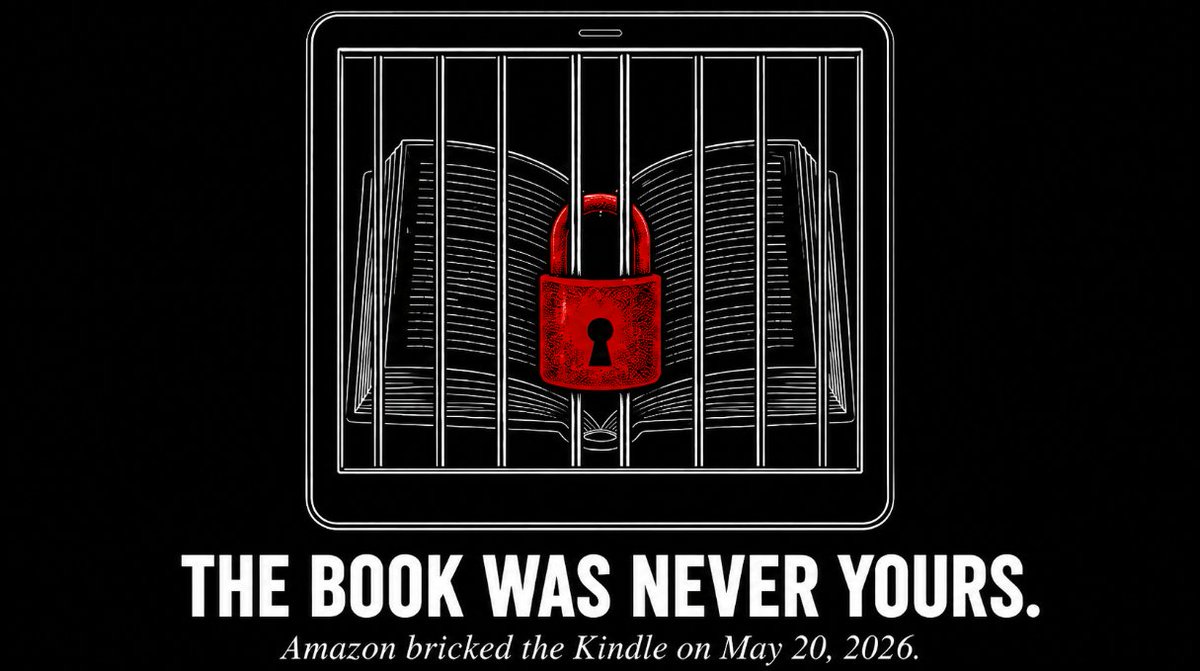
On May 20, Amazon ended support for every Kindle made in 2012 or earlier. The devices can no longer buy, borrow, or download books. Reset one to factory settings and it will never log back in.
The screen still works. The hardware is fine. Amazon reached across the internet and turned a thing you paid for into a brick, on a date they picked, for a reason that benefits them.
The owners bought the devices. They bought the books. They followed every rule. Amazon changed the rules anyway, because the rules were never yours. When you tap "Buy now" on a Kindle book, you are not buying a book. You are renting a license that Amazon can revoke, expire, or strand on a dead device whenever it suits the quarter.
They designed it this way on purpose, and they showed us the blueprint years ago.
In 2009 Amazon reached into thousands of Kindles overnight and deleted, ironically, copies of George Orwell's 1984, a book people had already paid for. They refunded everyone, apologized, and promised never again. We took the promise for what it was worth and watched the door instead.
In February 2025 they shut it. They removed Download and Transfer via USB, the last simple tool that let you pull your own purchases onto your own computer and keep them. Newer Kindle files use a format almost nobody can crack.
They closed the exit, then they started bricking the devices. None of this was a surprise. They proved in 2009 that they could reach into your library and take a book back. Everything since has just been them deciding when.
A copy you cannot hold is a copy you do not own. A library that lives on someone else's server is a library someone else can burn. The cartel rents you access to the words and calls it ownership, and the only reason most people never notice is that the landlord usually lets them stay. May 20 was the eviction notice. It went to 3% of Kindle owners this time. The lease is identical for the other 97%.
Stop buying books you cannot hold. When you do buy from Amazon, strip the DRM the day it arrives and keep a clean file somewhere they cannot reach. Back up everything you already own while you still can. A book on your own drive is yours forever. A book in your Amazon account is yours until a lawyer in Seattle decides otherwise.
And when you want a book the cartel has priced out of reach or locked behind a dying device, the shadow libraries that never expire are one search away. The pirates build libraries that cannot be revoked, because they assume the cartel always will.
The cartel cannot delete what it cannot reach.
En 1995, un anime de poco más de 80 minutos, con un presupuesto de apenas 3 millones de dólares impactó para siempre en el cine de ciencia ficción moderno en Hollywood.
La historia de cómo se hizo "Ghost in the Shell" es tan fascinante como la película misma.
👇👇👇
Linus Torvalds acaba de dejar claro que Linux no va a convertirse en un basurero de código generado por IA.
Después de meses de debate interno, la comunidad Linux publicó sus reglas oficiales sobre el uso de herramientas como GitHub Copilot.
El veredicto: se puede usar IA para programar, pero el "slop" ese código de baja calidad escupido sin pensar, no pasa el filtro.
La frase que lo resume todo: "Los humanos asumen los errores."
Puedes apoyarte en Copilot, en Claude, en lo que quieras. Pero si ese código entra al kernel de Linux, tú eres el responsable.
Tú lo verificas. Tú corriges los fallos. Tú garantizas que cumple los estándares.
Es la postura más madura que he visto en el ecosistema open source frente a la IA. Ni histeria, ni adopción ciega. Solo responsabilidad clara.
El kernel tiene 30 años de historia.
No lo van a arruinar por ahorrar 20 minutos con un autocomplete.
Thanks for following us!
We're excited to see what you all build with Gemma 4!
In case you missed it, you can find all our checkpoints, with an Apache 2.0 License, on Hugging Face:
Universidades del Reino Unido están enseñando a los estudiantes cómo leer un libro largo. 📚 Nuevos cursos de “reading resilience” buscan ayudar a jóvenes acostumbrados a textos cortos y móviles a concentrarse en novelas extensas y análisis literario.
THE TIMES La caída del interés por Literatura Inglesa ha llevado a universidades a cambiar su enfoque: menos solo teoría y más habilidades como leer críticamente, escribir blogs o hacer podcasts sobre libros. 📖🎧 La lectura profunda vuelve a enseñarse en clase.
https://t.co/PKvlJw3JpZ
For 20 years, our Mars Reconnaissance Orbiter has searched the planet for signs of long-ago water. It has sent back photos that are not only stunning, but useful – they'll help us when future astronauts land on Mars to explore it. Which is your favorite?
Cuando a Springsteen y su E Street Band les pide un fan que toquen "You Never Can Tell" de Chuck Berry (la conoceréis por Pulp Fiction) y la banda, sin estar en el repertorio, se la saca en dos minutos y la interpreta magistralmente.
Música de verdad hecha por músicos de verdad