IT Solutions Architect and an art enthusiast,#opensource evangelist using #Angularjs|#nodejs|#.NET core|#Nosql|#aws|Windows servers for enterprise Solutions
She wagged her tail as they closed the door behind her. She trusted them completely. She never knew she was saying goodbye to Earth forever. 🐕🚀
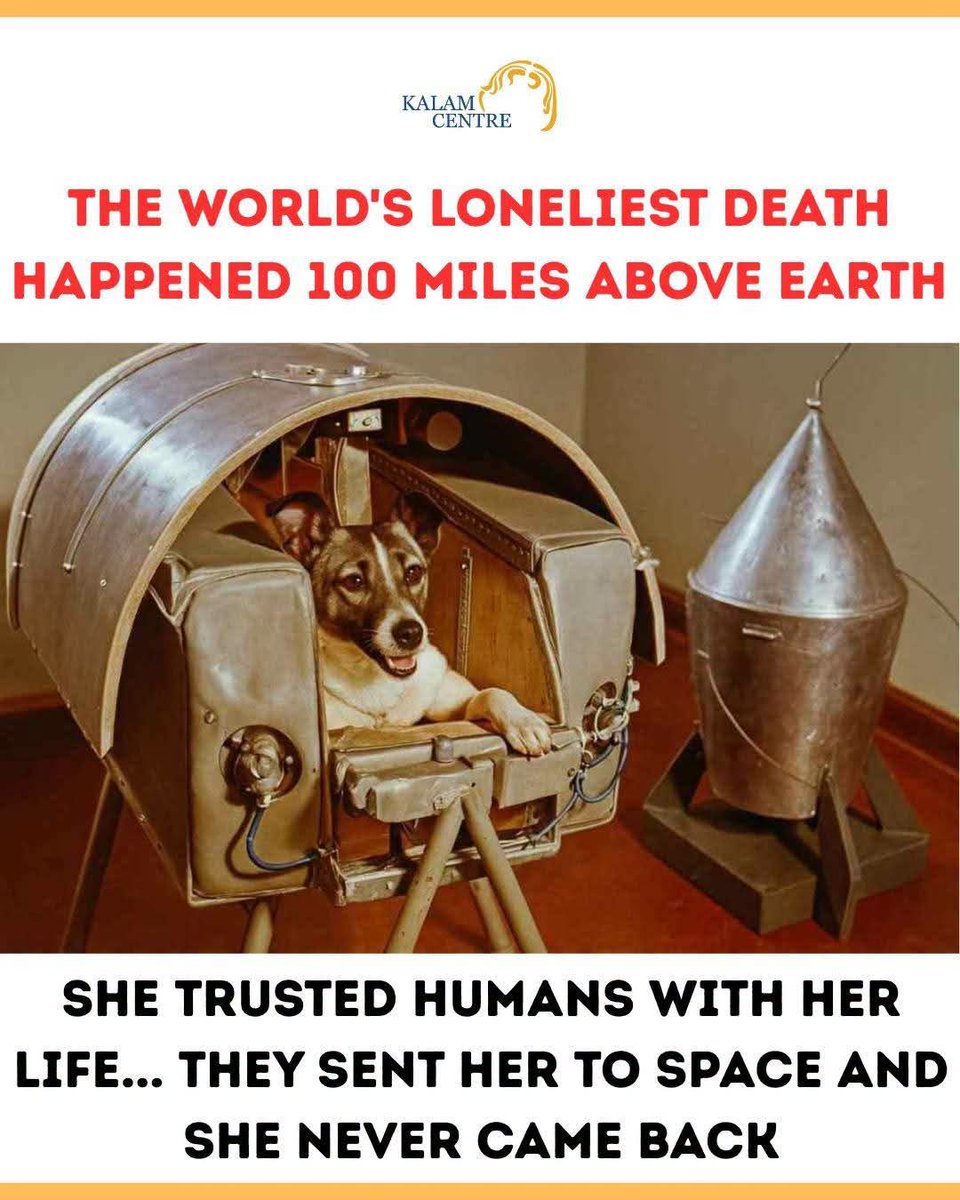
Her name was Laika.
She wasn't born in a laboratory.
She wasn't a famous dog.
She wasn't even someone's pet.
She was just a small stray dog wandering the cold streets of Moscow, searching for food, warmth, and kindness.
Every day was a struggle. Every night was spent under the open sky.
But despite everything, Laika remained gentle.
She still trusted humans.
She still wagged her tail when someone showed her affection.
One day, people came and took her away.
For the first time in her life, she had food every day. She had a warm place to sleep. People cared for her. They spoke softly to her. They petted her head and called her a good girl.
Laika had no idea that she had been chosen for a mission that would change history.
The people around her knew.
But she didn't.
As the days passed, the scientists grew attached to her. They played with her. They fed her by hand. They watched her innocent eyes look at them with complete trust.
And that trust broke their hearts.
Because they knew something Laika could never understand.
She was going to space.
And she was never coming back.
On the morning of November 3, 1957, they placed her inside a tiny spacecraft.
The capsule was so small that she could barely move.
One scientist later admitted that before closing the hatch, he hugged Laika and kissed her nose.
He knew it would be the last kindness she would ever receive.
As the countdown began, Laika sat alone.
No family.
No owner.
No one to tell her what was happening.
Just a little dog surrounded by machines.
Then the rocket roared to life.
Within moments, Laika became the first living creature to orbit the Earth.
The whole world celebrated.
Newspapers called it a historic achievement.
People cheered.
Governments praised the success.
But high above the planet, there was a frightened little dog who didn't understand any of it.
She wasn't chasing history.
She wasn't trying to become famous.
She was simply waiting for the humans she trusted to bring her home.
But home was never part of the plan.
The spacecraft had no way to return.
From the moment the rocket left the ground, Laika's fate had already been decided.
For years, the world was told that she survived in orbit for days.
The truth was even more heartbreaking.
Laika died alone only hours after launch.
No one was there to hold her.
No one was there to comfort her.
No familiar voice whispered, "Good girl."
Far above the Earth, the little stray dog who had trusted humans with all her heart took her final breath.
And she never came home.
Years later, one of the scientists involved confessed that he regretted what had happened.
The mission had made history.
But it had also cost an innocent life.
A life that had given everything without ever understanding why.
Today, statues of Laika stand in different parts of the world.
People call her a hero.
A pioneer.
A symbol of space exploration.
But when many people look at her photograph, they don't see a hero.
They see a small dog with kind eyes.
A dog who spent her life looking for love.
A dog who trusted humans until her very last moment.
A dog who boarded a spacecraft believing that the people she loved would take care of her.
💔 She never knew she was becoming a legend.
She only knew she was a good girl.
And perhaps that is the saddest part of all.
🐕🚀❤️
"History remembers the mission. The heart remembers the dog."
#Laika #SpaceDog #HeartbreakingStory #AnimalLove #DogStory #SpaceHistory #EmotionalStory #NeverForgotten #HumanAnimalBond #TrueStory #SpaceExploration #DogsOfHistory #TearsInMyEyes #FaithfulCompanion #AnimalStories #HistoryThatHurts #GoodGirlLaika #LegendForever #ViralStory
INSTEAD OF WATCHING NETFLIX THIS WEEKEND, spend 2 hours with this.
Claude AI FULL COURSE that teaches you how to BUILD and AUTOMATE anything.
You won’t find this video anywhere else. Bookmark it and save it.
Connecting more than systems: connecting possibilities.
At GBB, we are strengthening the digital infrastructure that connects government, businesses, and communities, enabling smarter services, stronger partnerships, and a more connected Nigeria.
Our purpose remains clear: to power digital transformation and build the backbone for a more connected, secure, and efficient nation.
#GBB #GalaxyBackbone #DigitalTransformation #DigitalInfrastructure #ConnectingNigeria #SmartDigitalSolutions
@Galaxybackbone
INSTEAD OF WATCHING AN HOUR OF NETFLIX TONIGHT.
This 60-minute Cambridge lecture by Demis Hassabis will teach you more about the future of AI than most people will learn in the next 5 years.
Bookmark it and give it an hour, no matter what.
Here is the lady from the Joy Soap advert in the 1980s and 90s, radiant, admired, and unforgettable, yet now aged and transformed, looking completely different.
Her story whispers a timeless truth: beauty fades, applause dies, and nothing lasts forever, but the seeds of kindness, character, and legacy are what truly endure.
A must watch video and share for others to drop their views. Disturbing video showing how a lecturer was caught when having sxzz with his student..
Actions like this must stop in our various institutions..
Anthropic Pays $750K salaries for people who understand how LLMs actually work.
Not prompt engineers.
Not API wrappers.
Real builders.
And Stanford University just dropped a full lecture breaking it down
for free.
1 hour.
That’s it.
Watch it today before it disappears.
Andrew NG could have charged a $1,000 for this lecture!
Yet he put it up for free on YouTube.
Two hours. From the man who built Google Brain and co-founded Coursera.
Not basic prompting.
The full stack.
Chain-of-thought reasoning. Prompt chaining. Agentic workflows. Multi-agent systems. Fine-tuning and exactly when not to use it and more.
The complete architecture for building AI systems that actually work in production.
The gap between developers who can prompt Claude and developers who can build autonomous systems that run without them is not talent.
It is this lecture and the afternoon you spend implementing what it teaches.
Watch it before you write another basic prompt.
An MIT professor taught the same math course for 62 years, and the day he retired, students from every country on earth showed up online to watch him give his final lecture.
I opened the playlist at 2am and ended up watching three of them back to back.
His name is Gilbert Strang. The course is MIT 18.06 Linear Algebra.
Every machine learning engineer, every data scientist, every quant, every self-taught programmer who actually understands how AI works learned the math from this one man. Most of them never set foot on MIT's campus. They just opened a free playlist on YouTube and let him teach.
Here's the story almost nobody tells you.
Strang joined the MIT math faculty in 1962. He retired in 2023. That is 61 years of standing at the same chalkboard teaching the same subject to 18-year-olds.
The interesting part is what he did when MIT launched OpenCourseWare in 2002. Most professors were skeptical. They worried that putting their lectures online would make their classrooms irrelevant. Strang did not hesitate. He said his life's mission was to open mathematics to students everywhere. He filmed every lecture and gave it away.
The decision quietly changed how the world learns math.
For decades linear algebra was taught the wrong way. Professors started with abstract vector spaces and proofs about field axioms. Students drowned in the abstraction. Most never recovered. They walked out believing they were bad at math when they had simply been taught in an order that nobody's brain is built to absorb.
Strang inverted the entire curriculum.
He started with matrix multiplication. Something you can write down on paper. Something you can compute by hand. Something you can see. Then he showed his students that everything else in linear algebra eigenvectors, singular value decomposition, orthogonality, the four fundamental subspaces was just a different lens for understanding what the matrix was actually doing under the hood.
His rule was strict. If a student could not explain a concept using a concrete 3 by 3 example, that student did not actually understand the concept yet. The abstraction was supposed to come last, not first. The intuition was the foundation. The proofs were just confirmation that the intuition was correct.
The second thing Strang changed was the classroom itself. He said please and thank you to his students. Every single lecture. He paused mid-derivation to ask "am I OK?" to check if anyone was lost. He never used the word "obviously" or "trivially" because he knew exactly what those words do to a student who is one step behind. He treated 19-year-olds learning math for the first time the way he treated his own colleagues. With patience. With respect. With the assumption that they belonged in the room.
For 62 years.
The result is something that has never happened in the history of education. A single math professor became the default teacher of his subject for the entire planet.
Universities in India, China, Brazil, Nigeria, every country with a computer science department, started telling their own students to just watch Strang's lectures. The University of Illinois revised its linear algebra course to do almost no in-person lecturing. The reason was honest. The professor said they could not compete with the videos.
His final lecture was in May 2023.
The auditorium was packed with students who had never met him before. He walked to the chalkboard, taught for an hour, and at the end the entire room stood and applauded. He looked confused for a moment, like he genuinely did not understand why they were cheering. Then he smiled and waved them off and walked out.
His written comment under the YouTube video of that final lecture was four sentences long. He said teaching had been a wonderful life. He said he was grateful to everyone who saw the importance of linear algebra. He said the movement of teaching it well would continue because it was right.
That was it. No book promotion. No farewell speech. No legacy management.
The man whose teaching is the foundation of modern AI just thanked the audience and went home.
20 million views. Zero ego. The entire engine of the AI revolution sits on top of math that millions of people learned for free from one quiet professor in Cambridge.
The course is still on MIT OpenCourseWare. Every lecture, every problem set, every exam, every solution. Free.
The most important math course of the 21st century is sitting one click away from you. Most people will never open it.
This 2 hour Stanford lecture shows exactly how Stanford trains it's engineers to build AI systems. It's more practical than every Claude tutorial & prompting threads you've seen.
Bookmark & give it 2 hours, no matter what. It'll be the most productive thing you do this weekend.
Instead of watching an hour of Netflix, watch this 2-hour Stanford lecture on AI careers. It will teach you more about winning in the AI race than all the AI content you’ve scrolled past this year.
INSTEAD OF WATCHING NETFLIX TONIGHT.
Spend 1 hour with this.
Claude AI FULL COURSE that teaches you how to BUILD and AUTOMATE anything.
The people who watch this tonight will wake up tomorrow with a skill that most people will not have in 2 years.
The people who skip it will still be watching Netflix next year wondering why nothing in their life has changed.
Your call.
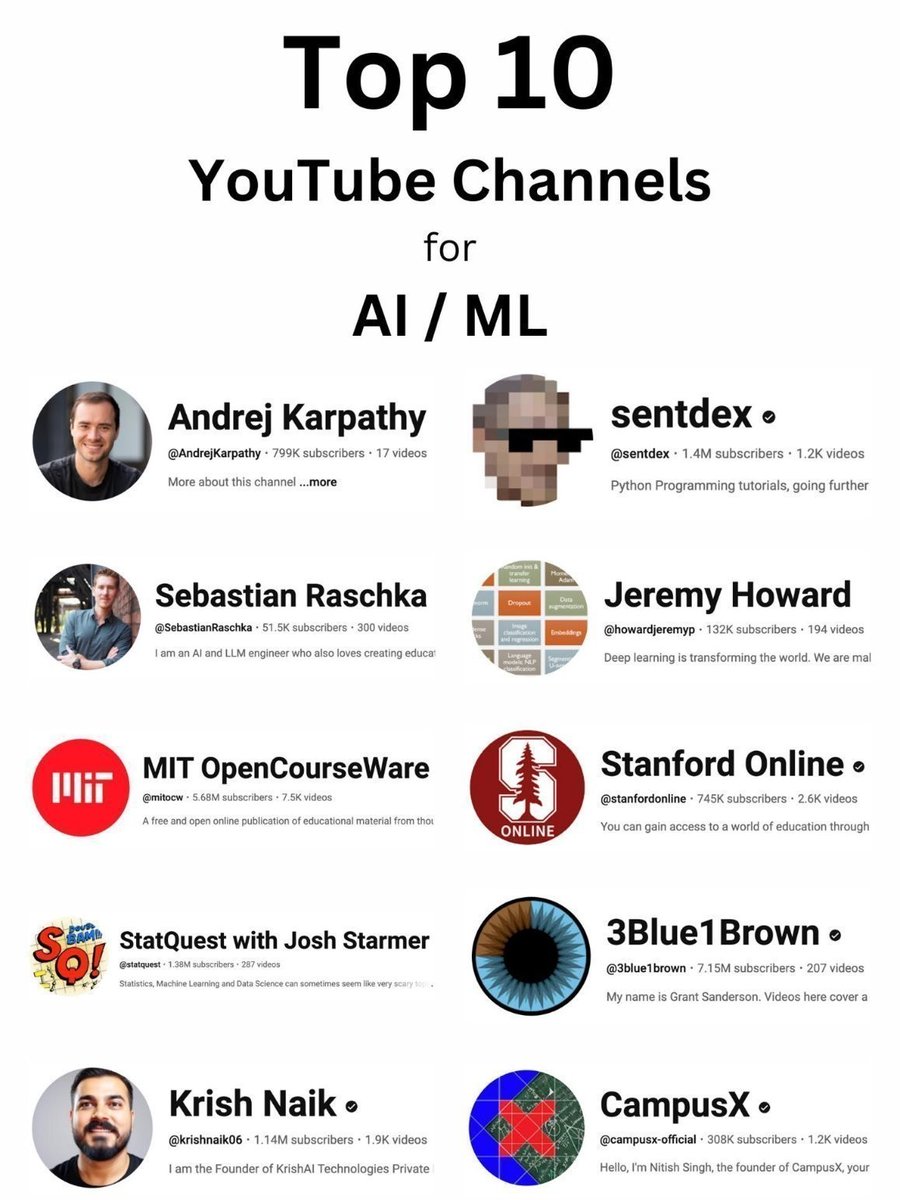
Top 10 YouTube channels to learn AI & ML in 2026
1. Andrej Karpathy
https://t.co/RSFn4tYrqk
2. Sebastian Raschka
https://t.co/vfqkB8Jq4O
3. sentdex
https://t.co/x69pFN1N7k
4. StatQuest with Josh Starmer
https://t.co/ASoicNjyWO
5. Jeremy Howard
https://t.co/LkT5a7C3T4
6. Krish Naik
https://t.co/bWbXwJc22I
7. CampusX
https://t.co/4n4mzA2TLo
8. 3Blue1Brown
https://t.co/izVnMMzyKD
9. MIT OpenCourseWare
https://t.co/8aWGE5Fr8v
10. Stanford Online
https://t.co/RAtD6d4q1w
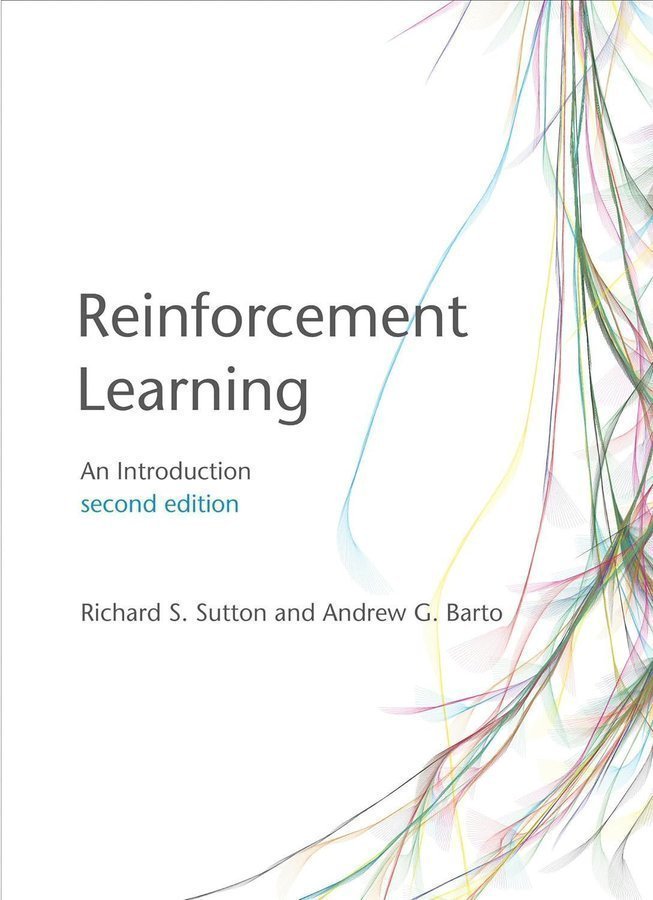
MIT offers 12 Books on AI & ML (FREE TO DOWNLOAD):
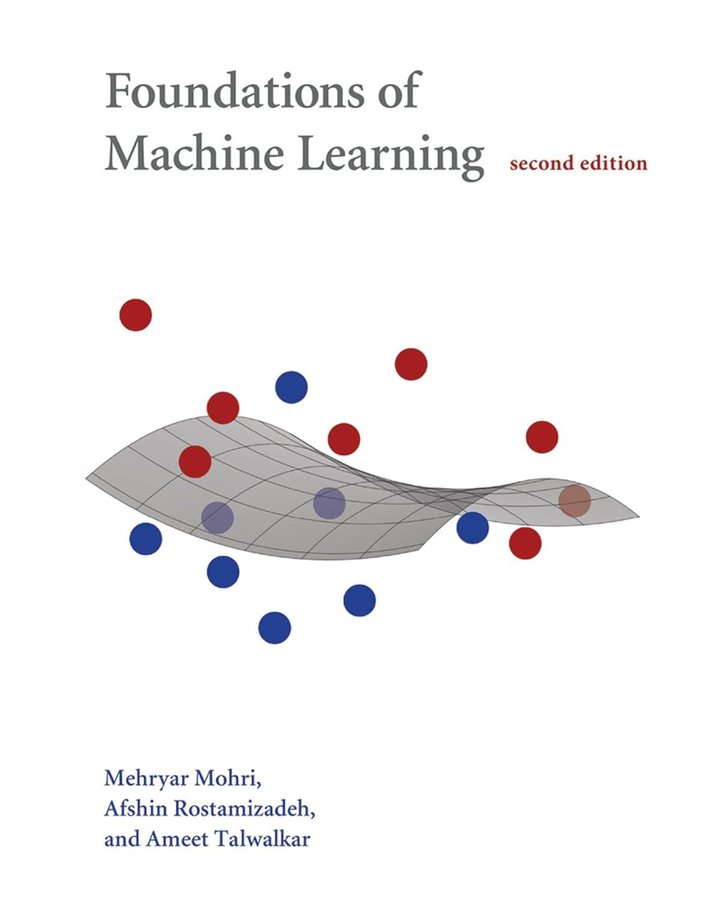
1. Foundations of Machine Learning
https://t.co/NDi4xkIqLH
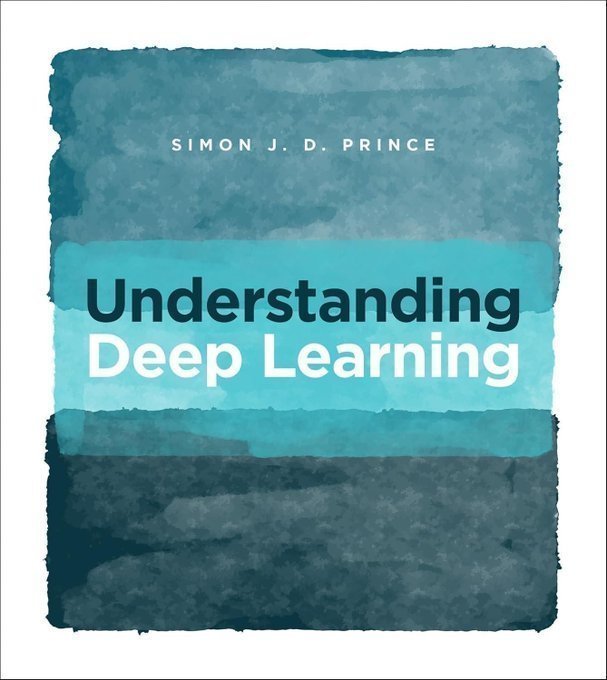
2. Understanding Deep Learning
https://t.co/2eD1FO6aJP
3. Algorithms for ML
https://t.co/TL5CZN1Zjj
4. Reinforcement Learning
https://t.co/pMd7jycU62
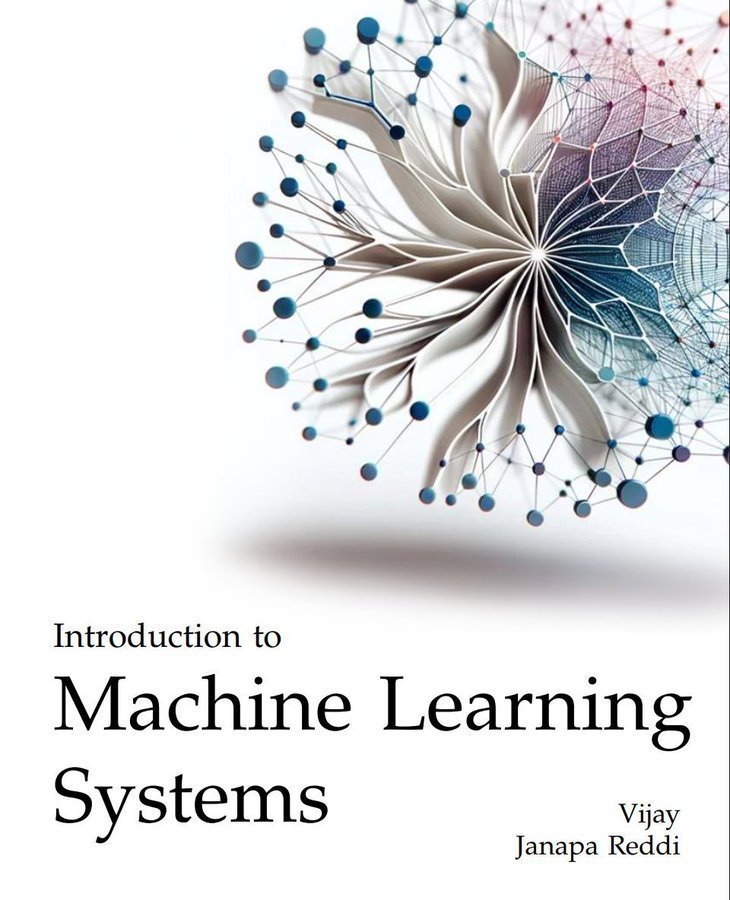
5. Introduction to Machine Learning Systems
https://t.co/fUL9s057vV
6. Deep Learning
https://t.co/ZfDA9RWXwu
7. Distributional Reinforcement Learning
https://t.co/84uSpxugRb
8. Multi Agent Reinforcement Learning
https://t.co/Z6NGLlzOY1
9. Agents in the Long Game of AI
https://t.co/uiP4csNvI9
10. Fairness and Machine Learning
https://t.co/ByrBVyFgOa
11. Probabilistic Machine Learning
❯ Part 1 : https://t.co/LHBDyX6RvN
❯ Part 2 : https://t.co/HgOzGDW5jn