This meeting in Paris landed on the right three priorities: independent, public evaluation of the most advanced models; shared alerts on serious incidents; accountability for the developers building them.
Now, the hard question: Paris named the priorities. The work now is giving them a home.
L’intelligence artificielle avance très vite. On l’a déjà vu : cela implique des risques réels pour notre sécurité collective.
Notre travail pour developper nos technologies doit aussi être celui de l’anticipation et de la maîtrise de ses risques.
J’ai réuni à Paris et en visio une cinquantaine d’acteurs : chefs d’État et de gouvernement, dirigeants des plus grands laboratoires d’IA, chercheurs et experts.
Le constat est partagé. Il faut agir ensemble. Nous avons obtenu des engagements de tous autour de trois priorités : mieux évaluer de façon indépendante et publique les risques des modèles les plus avancés, mieux partager les alertes en cas d’incident grave et responsabiliser les acteurs qui développent des modèles.
Notre ambition est claire : faire de l’IA un progrès pour tous, avec une sécurité garantie par l’engagement de chacun.
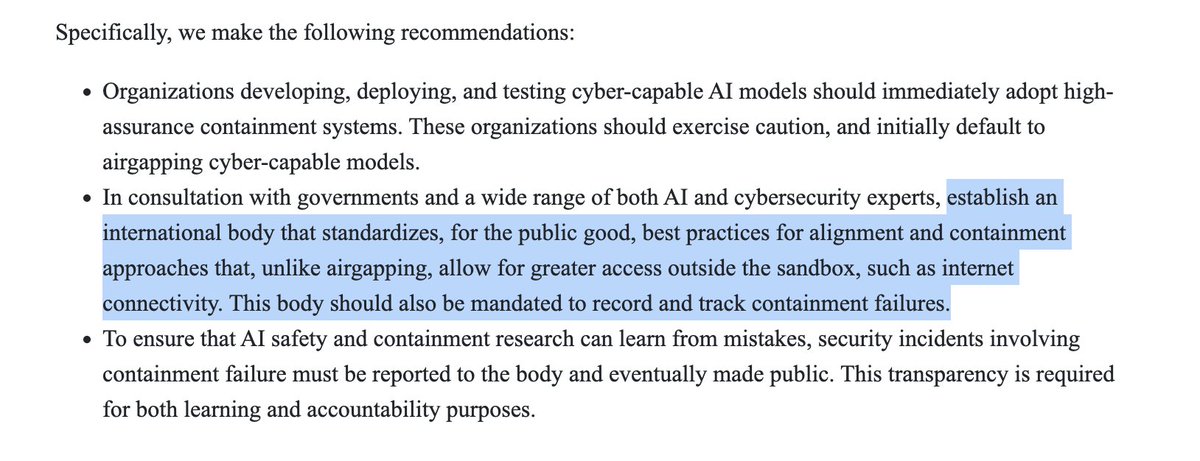
More than 400 scientists, including Geoffrey Hinton and Yoshua Bengio, are calling for an international body to help oversee the containment of advanced AI systems. In other words, it is a call for a narrower international function focused on safety, evidence and coordination.
The proposal is interesting because it is relatively concrete: common containment standards, incident reporting, a registry of failures, and clearer rules for when highly capable systems can connect to external networks.
The open question may be less whether such an international function is needed and more whether we already have the beginnings of the institution that could perform it.
Unos 6.000 millones de personas en el mundo apenas han tocado un gran modelo de lenguaje. Entre 1.000 y 2.000 millones usan de vez en cuando un chatbot de IA gratuito como una especie de Google mejorado. Unos 20 millones, programadores y matemáticos sobre todo, ya ven a los agentes terminar con una sola orden proyectos que antes les llevaban semanas o meses. Y unas 5.000 personas, dentro de los laboratorios, trabajan con sistemas alucinantes cuyas capacidades el resto del mundo apenas puede imaginar.
Son las cuentas de servilleta que acaba de publicar Andrej Karpathy, cofundador de OpenAI, en X y a mí me han hecho pensar en la caverna de Platón, con los que duermen, los que miran las sombras en la pared, los que se han dado la vuelta a mirar el fuego y los poquísimos que han salido al sol.
"Así que esta es la rareza del momento. El público general en su mayoría no ha interactuado con estos sistemas. Cuando lo ha hecho, solo ven un chatbot torpe. La mayoría de los profesionales todavía observan solo una mejora modesta. Y una pequeña franja de profesionales está experimentando el vértigo de la curva disparada en vertical. Y todo está pasando al mismo tiempo".
The emerging layers of global AI governance
We have seen a flurry of initiatives in recent weeks around the governance of AI. That is a positive development. We need to bell the cat.
There is a growing and increasingly vocal consensus that we need stronger mechanisms to steer and control the development of AI. But rather than one global regulator or one overarching international agreement, what is beginning to emerge is a set of different approaches developing in parallel. They are not necessarily connected to one another.
In the United States, the government and AI companies are experimenting with voluntary safety commitments, independent evaluations, audits and stronger safeguards. China is combining domestic AI models and computing infrastructure with national standards and a growing network of international partnerships, including through WAICO. Middle powers are stepping in as well, with a recent joint call for stronger oversight of frontier AI.
The United Nations is bringing to the table what it does best: inclusivity and legitimacy. The focus is on creating a global space where all countries can participate supported by the Scientific Panel and the Global Dialogue on AI Governance. Alongside the UN, the AI Summits process still plays a relevant convening role bringing together major stakeholders. On the industry side, AI companies are developing more sophisticated ways to test their models, identify dangerous capabilities and monitor risks. At the same time, infrastructure providers are starting to propose systems that can limit what AI agents can access, record what they do, and intervene when they cross predefined boundaries.
These efforts are still fragmented, but they are beginning to converge around a common set of mechanisms. We are still far from a coherent global system but perhaps AI governance will not emerge from a single institution. It may instead take shape through the interaction of these different layers.
There is still a great deal to be done. We are, in many respects, building the global governance of AI from scratch. Each layer will need to demonstrate the specific value it can add and, ultimately, how it can connect with the others.
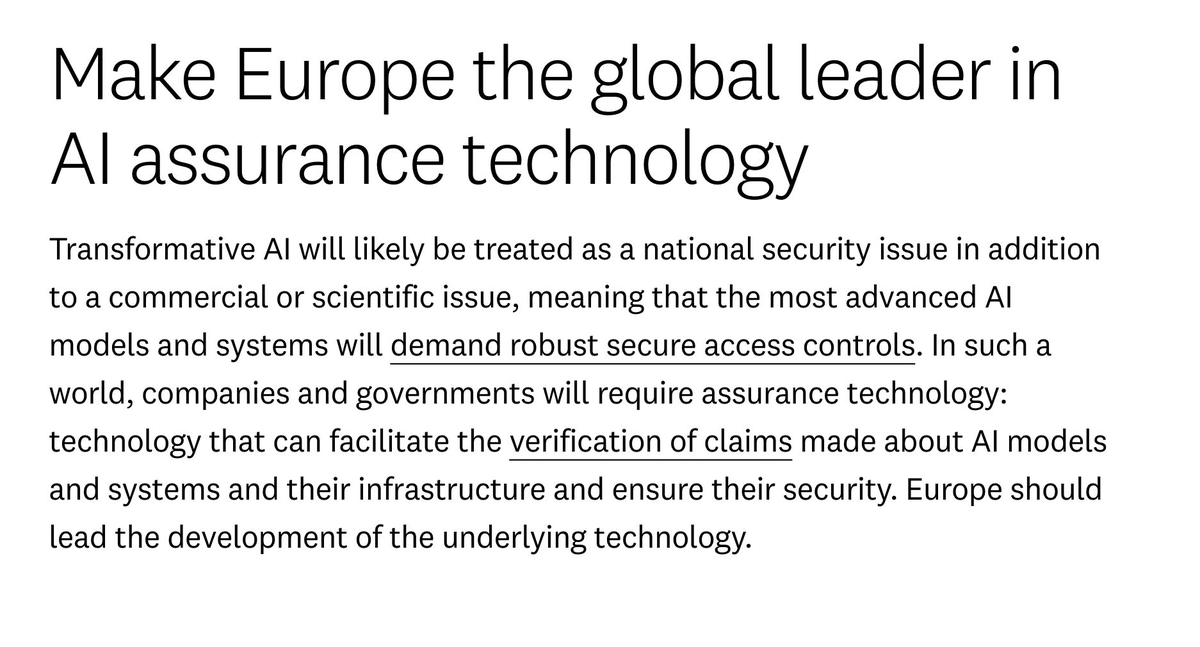
One objective especially stood out: “Make Europe the global leader in AI assurance technology.”
I’m particularly curious about the scope for Europe to develop sufficiently independent, secure and verifiable assurance technologies. As the report suggests, these could prove to be "crucial for enforcing future international agreements on AI"... and, more broadly, for building the verification and trust mechanisms that effective global AI governance might require.
I just went through the report: “A Transformative AI Strategy for Europe”. Plenty of interesting ideas.
The recipe is fairly straightforward:
--> Europe needs more compute (drastically more!), reliable access to frontier AI (including through strategic leverage) and to prepare for a world increasingly shaped by advanced AI.
El Secretario General de la ONU, @antonioguterres, destacó ayer ante la #UNGA80 que el establecimiento de un Panel Científico Internacional Independiente y un Diálogo Global sobre Gobernanza de Inteligencia Artificial supone un “avance histórico” en la gobernanza de la #IA.
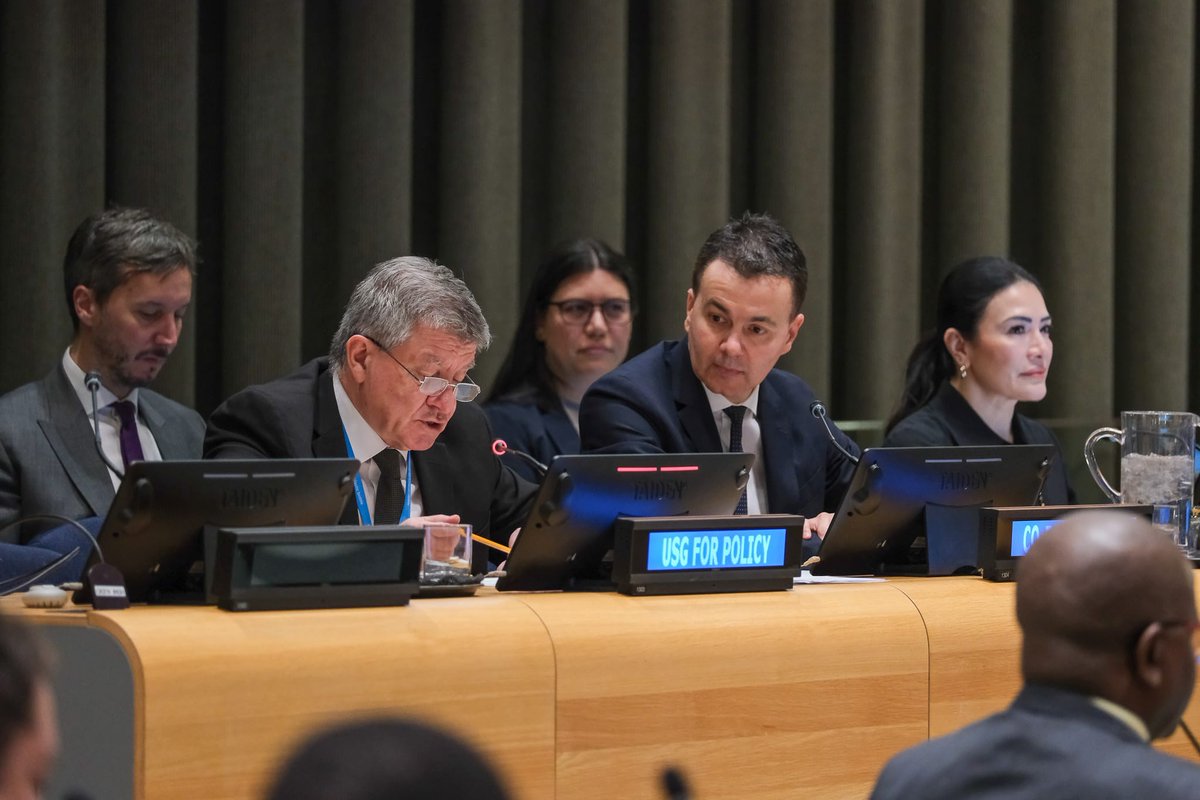
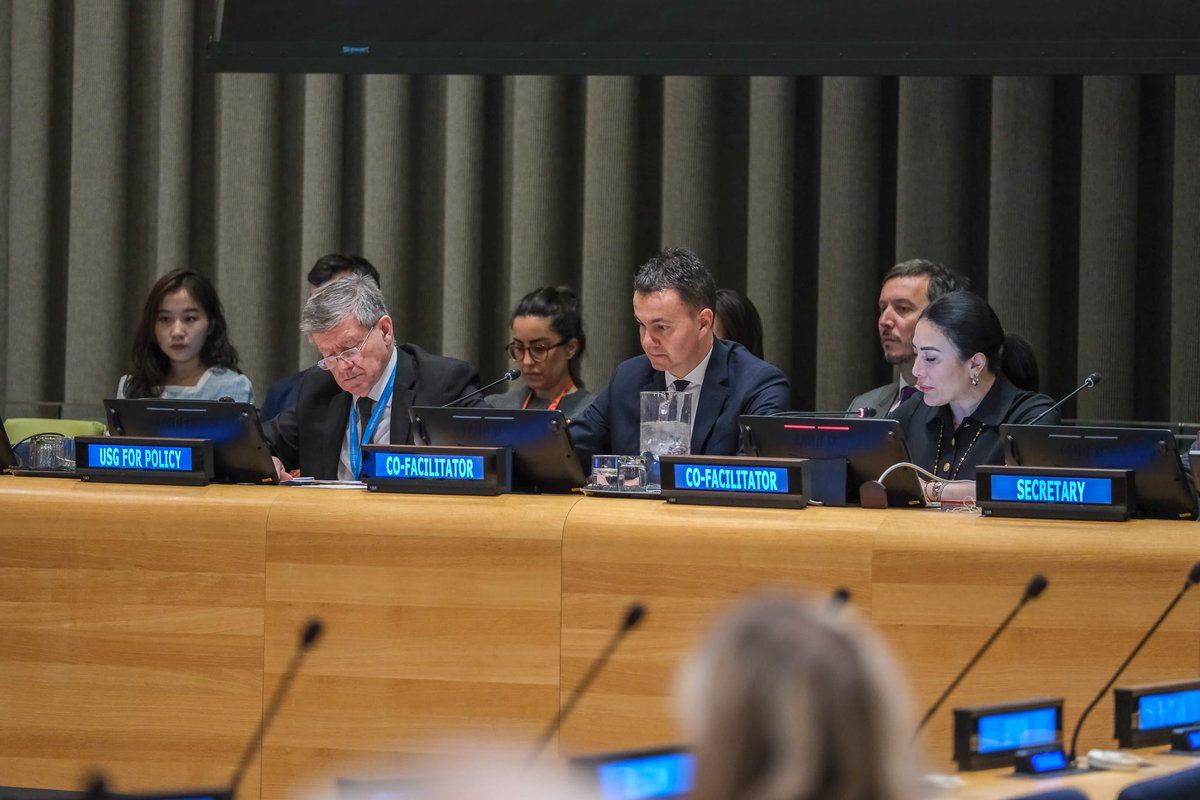
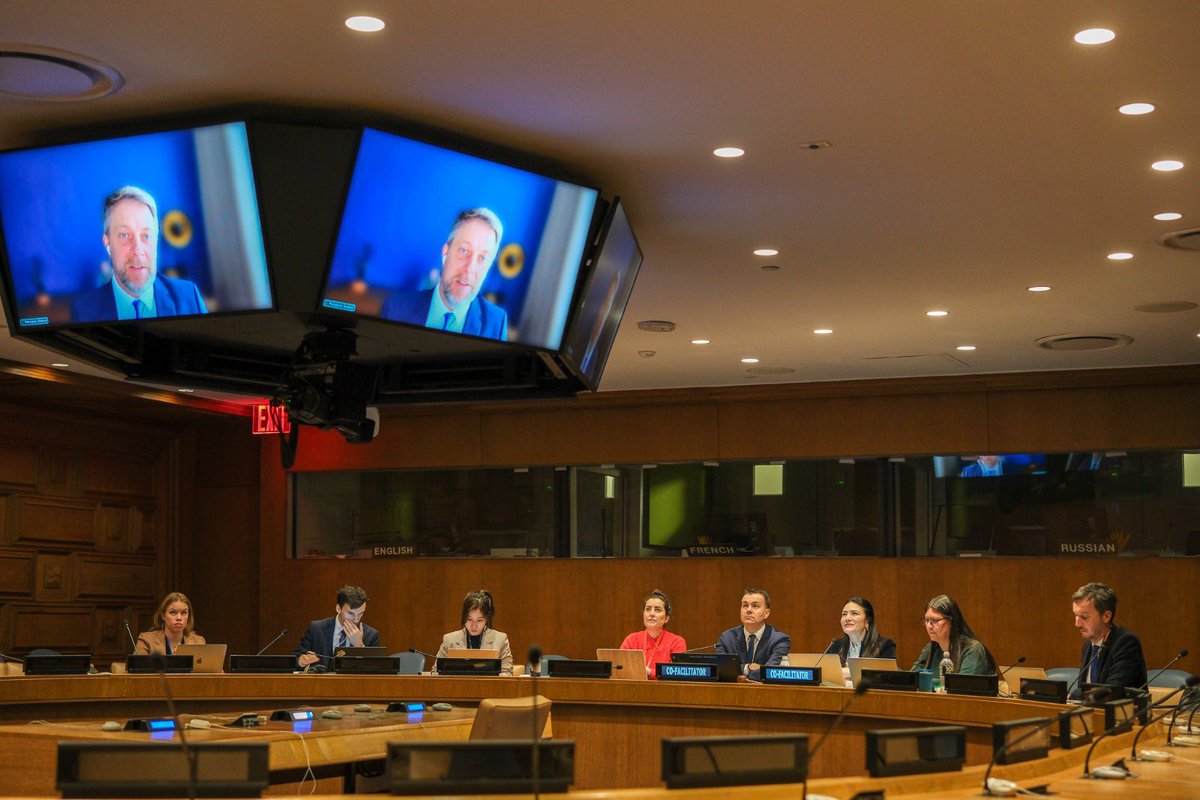
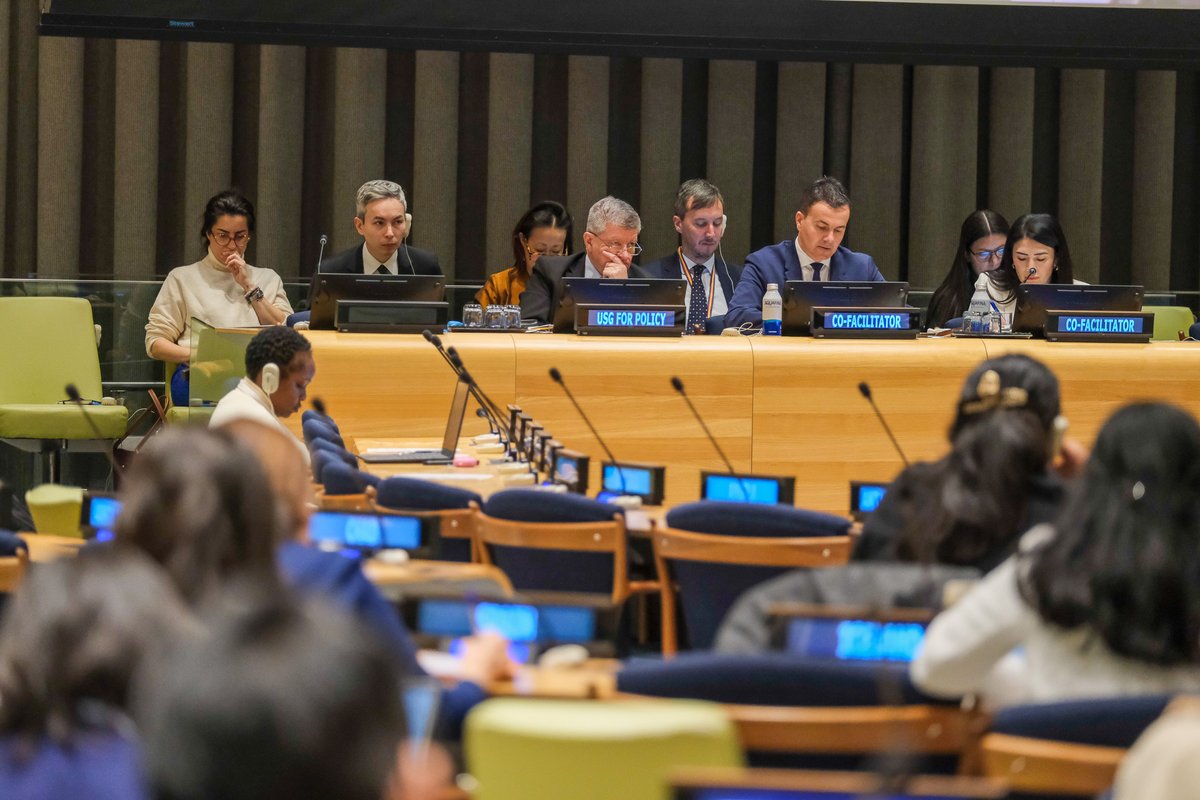
Today was an important day to hear from Member States what the Scientific International Panel on AI and the Global Dialogue on #AIGovernance at the United Nations should look like.
After two days hearing from stakeholders and Member States, it´s now up to the co-facilitators to draft an elements paper we plan to release by 28 February.
We had a great engagement with stakeholders today in a virtual dialogue with 400+ participants about the Scientific International Panel on AI and the Global Dialogue on AI Governance at the UN. #AIGovernance#GlobalDigitalCompact
Hoy ha tenido lugar la primera ronda de consultas virtuales sobre el Panel Científico Internacional Independiente y el Diálogo Global sobre Gobernanza de la #IA con actores no estatales.
Muchas gracias a todos por vuestros comentarios y perspectivas.
#GlobalDigitalCompact
We resume the consultations to establish an International Independent Scientific Panel on #AI and the Global Dialogue on AI Governance.
📆 We call all stakeholders to join us for an informal virtual consultation on February 18th, 10am-1pm.
ℹ️ All info: https://t.co/WzjAT0a8gk
The consultations led by 🇨🇷 & 🇪🇸 to establish an International Independent Scientific Panel on #AI and the Global Dialogue on AI Governance will continue with an informal virtual consultation for Stakeholders 🌍
📆 February 18th, 10am-1pm
More info: https://t.co/xU0lfh3gpN
Stakeholders can register their interest to participate at the virtual meeting and submit written feedback about this consultation via https://t.co/OxCvhb1kIi
We want to hear the views from relevant stakeholders on the Scientific International Independent Panel on AI and on the Global Dialogue on the Governance of Artificial Intelligence.
We will be having a virtual informal consultation with stakeholders on February 18th to hear their views about the ongoing process at the United Nations.
Full house for the first informal consultations on the AI Global Dialogue and the Scientific International Panel at the United Nations. #AIGovernance#GDC
The next informal will be on the 18th and 19th of February with stakeholders and member states. Here we go!
The new @Alibaba_Qwen is a smaller yet highly competitive AI model.
--> Highly effective scaling which proves optimisations can lead to miniaturisation.
🪶We're releasing a preview of QwQ /kwju:/ — an open model designed to advance AI reasoning capabilities.
Blog: https://t.co/hIhKfgvWXt Model: https://t.co/sRGah9dkFw
Demo: https://t.co/X5HlvYfk1H
QwQ has preliminarily demonstrated remarkable capabilities, especially in solving some challenges in mathematics and coding. As a preview release, we acknowledge its limitations. We earnestly invite the open research community to collaborate with us to explore the boundaries of the unknown!