@kiityc This is so true. Also women in lower socioeconomic groupings care for longer and in higher intensity roles compared to higher income carers who can look to the market to pay for replacement care. We need a care led economy.
My parents' Iraqi neighbour cooks them beautiful meals. He tends to their garden without being asked. The Syrian family over the road drop me at the train station when I visit. Their Bangladeshi neighbours serve in the police and ambulance service #hopenothate#quietactivism
“What's your evidence that integration (of asylum seekers) isn't working?”
“I've seen it recently with the marches through London, where I saw some people who simply did not share British values.”
Robert Jenrick conflates issue of immigration with pro-Palestine marches
Look forward to introducing social work students @uni_essexhealth to this book by @Jeremydixon2000. Congratulations on its publication https://t.co/zqFMClUsdL
My research suggests that people in Iower socioeconomic groupings are not only more likely to become carers compared to those in higher incomes categories, but they are also more likely to find themselves in higher intensity caring roles over longer time periods.
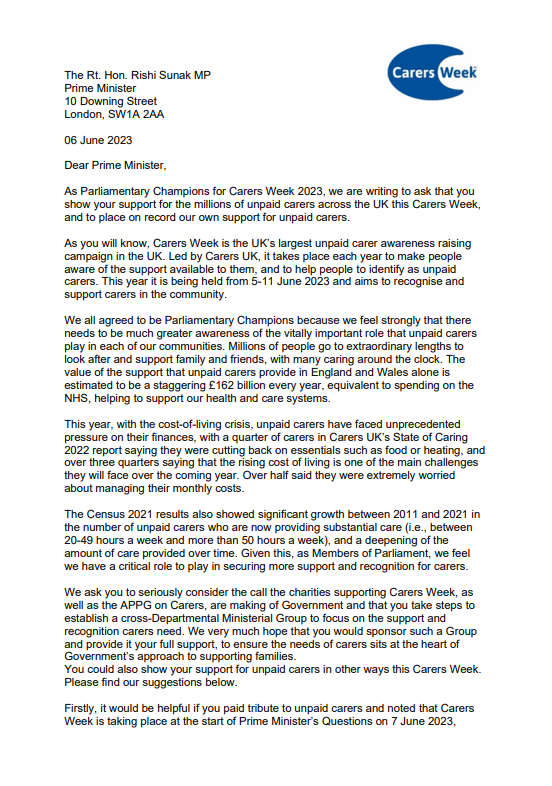
This #CarersWeek, I signed a letter to @rishisunak calling for more support for unpaid carers. 7000+ people in Gosport provide care for a loved one, saving the NHS thousands, but also taking a toll on their own well-being.
Parent carers reported similar in my research, that their caring identities were often overlooked by services. Assumptions were made about their ability to care because they had PR. Many had left employment because the stress of managing both became intolerable #CarersWeek
⭐️ #CarersWeek ⭐️
Parent carers (parents of children with special educational needs and disabilities) are often not recognised as carers - by professionals or sometimes even by the parent themselves. This can mean that they miss out on vital (but limited) resources and support.
We found managing a caring responsibility with employment really difficult. Many countries offer carer 'salaries' in recognition of this, e.g. Sweden. The UK would benefit from a care led economy #CarersWeek2023@WEP_UK
During #CarersWeek, we'd like to highlight the recent legal progress that will help a huge amount of #UnpaidCarers in employment
The Carer's Leave Act 2023, led by @wendychambLD, will become law and give employees the right to take unpaid leave from work to care for loved ones
A number of carers who took part in my study reported the unjust nature of their caring responsibilities. "What about my human rights? Where do I fit in?" "I'm looking for a job that fits around the care when really the care should fit around my job" #CarersWeek2023
I'm tweeting findings from my PhD study during #CarersWeek2023 . The majority of carers receive advice and information as an outcome of carers' assessments (55% in 2019/2020). Raises questions over efficacy of the assessment process in achieving outcomes (defined by carers).
It's #CarersWeek2023 Carer personal budgets are often framed as increasing choice and control over how needs are met. Carers I spoke with felt PBs had little impact on their QoL. Bartlett (2009) suggests they are window dressing for welfare state retrenchment.
It's #CarersWeek2023. How can public bodies manage the complimentary tension between supporting carers' wellbeing yet relying hugely on their good will for the provision of care of support? My PhD research suggests integrated family budgets as a possible way forward.
Carers I spoke with in my research felt that they were 'holding the health and social care system' together. They felt taken for granted. Assumptions made about their ability and willingness to care.
54% of carers have left their job to care.
No one should be forced to choose between their job & caring for a loved one.
#CarersWeek celebrates compassion and highlights the challenges faced.
We are sharing their stories along with resources & advice: https://t.co/VD9CYY73wu
Labels can be a mixed blessing. If the term carer holds no meaning for you in the context of your caring relationships then you are more likely to miss out on valuable support.
The 2023 #CarersWeek report that found 73% of #UnpaidCarers in the UK have not identified as a carer
Carers often aren’t supported to recognise their caring role quickly enough and they could miss out on the crucial financial, practical and emotional support they are entitled to
Eligible carers can also receive personal budgets under the Care Act. As one carer told me: "it's a token, a bribe to keep you doing the expensive care for free." Caring is a human rights issue.
It's #CarersWeek2023. Up to 500,000 UK carers miss out on up to £4,000/yr carers allowance - many unsung heros so PLEASE SHARE this...
- Care 35hr+/wk for someone on Attendance Allowance, or some on Personal Independence Payment or Disability Living Allowance; spend 35+ hours a week helping with everyday tasks like washing, cooking and shopping; and earn less than £139/wk (after tax) or have a low state pension you may be eligible for the Carer's Allowance payment.
- Care under 35hr+ week you may be due Carers Credit to boost your NI years towards your state pension. Here is Carer's UK's factsheet for more info https://t.co/WCjE2165rr
Due to programme expansion, we have social work lecturer vacancies at the University of Essex. We are a lovely team: caring and considerate. Recent SWE inspection described our leadership as 'strong.' Please give us a look. We would love to hear from you. https://t.co/Xouyqgrr0A
@LucyPearce13 I am in the exact same position! The comments here have been so helpful. I need to learn how to manage my own anxiety at a perceived lack of engagement with revision!! You're not alone...
@neilmcrowther Conradi (2020) has an interesting paper on the dynamics of caring as both an ethical and political process. It exists simultaneously as a loving, relational experience and one that can be exploitative in the context of welfare state retrenchment.
@StellaK_Charity Absolutely @StellaK_Charity health and social care professionals care deeply about family carers. I remember my own social work practice. Support for carers was not counted in workload allocation. I struggled with high caseloads. Sadly this was our personal experience of caring.
Caring is both an equalities and human rights issue. My PhD research found that increased carers' rights (introduced by the Care Act) are having little impact on carer wellbeing and health. Available and affordable care for the 'cared for' would significantly improve wellbeing.
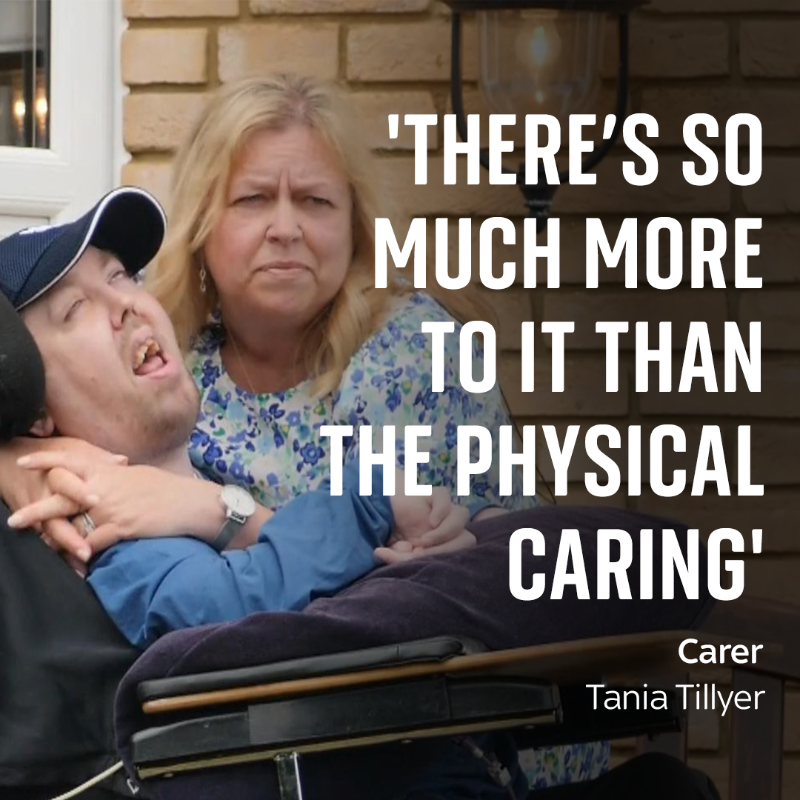
Tania Tillyer has spent almost all her adult life caring for her son.
Without unpaid carers like Tania the country’s social care system would collapse - and the care comes with rising financial, mental and physical pressures