📢 From gut–brain signalling to AI: Emerging directions in inflammatory bowel disease
New insights from the European Crohn’s and Colitis Organisation Congress 2026 highlight the expanding scope of care for Inflammatory Bowel Disease.
Key themes included the role of the gut–brain axis, evolving safety data across therapies, the growing use of AI to support clinical decision-making, and new molecular approaches to defining disease remission.
Read more: https://t.co/OywtAVb3NG
#ECCO2026 #Gastroenterology #PrecisionMedicine See
🦃 This Thanksgiving, we're taking a moment to celebrate the people, partnerships, and shared purpose that continue to drive us forward.
As 2026 draws to a close, we're reflecting on another year of meaningful collaboration, shared achievements, and progress in advancing medical education worldwide.
To our Editors-in-Chief, editorial boards, medical societies, expert faculty, valued partners and inspiring Future Leaders, thank you for your continued trust, expertise and commitment. Your contributions are invaluable in helping us deliver high-quality medical education to healthcare professionals around the world.
Here's to gratitude, continued progress, and the people who make it all possible. 🧡
Happy Thanksgiving, from all of us at Touch! 🍂
Not yet part of our community? Follow us to stay connected:
https://t.co/l0kd1bxcOo
#Thanksgiving #MedicalEducation #HealthcareProfessionals #Teamwork #Gratitude #MedEd
🧬 EAACI 2026 spotlight: Advances in hereditary angioedema (HAE)
From gene-editing therapies and oral treatment options to next-generation long-acting prophylaxis, EAACI 2026 showcased continued progress in the management of hereditary angioedema.
Explore the key clinical trial highlights and what these emerging therapies could mean for the future of HAE care.
Read more: https://t.co/N67FCQKT2s
#EAACI2026 #HereditaryAngioedema #HAE #Immunology #RareDisease #ClinicalTrials
🧬 Could releasing the ‘brake’ on T cells improve bispecific efficacy?
New preclinical findings presented at EHA 2026 explore CD5 inhibition as a potential strategy to enhance T-cell engager activity across a range of cancer models.
The research suggests that targeting T-cell-intrinsic mechanisms could offer a new way to amplify anti-tumour responses – raising questions about how these findings might translate into future therapeutic approaches.
🔎 Explore the findings and Prof Yizhen Li’s expert perspective: https://t.co/JiSaFOieT3
#EHA2026 #Immunology #TCells #BispecificAntibodies #Haematology
💡How does frailty influence long-term outcomes in rheumatoid arthritis?
Dr Elena Myasoedova discusses new findings from a retrospective-based cohort study presented at EULAR 2026, exploring the incidence of frailty in rheumatoid arthritis and the factors that may increase risk over time.
In this Q&A, Dr Myasoedova explores the clinical significance of these findings, the importance of identifying modifiable risk factors, and how recognizing frailty can help inform long-term risk stratification and management in RA.
Read the full interview:
https://t.co/TWQQljxl4s
#EULAR2026 #Rheumatology #RheumatoidArthritis #Frailty #AI
💡Could precision medicine redefine the future of connective tissue disease care?
Dr Alina Dima shares her key highlights from EULAR 2026, exploring advances in patient stratification, emerging B-cell-targeted therapies and progress towards achieving long-term remission in rheumatic diseases.
In this Q&A, she discusses the potential of CAR T-cell therapy and bispecific T-cell engagers, highlights promising research in systemic sclerosis, and reflects on the value of scientific collaboration and networking at this year's congress.
Read the full interview to discover her key takeaways from EULAR 2026:
https://t.co/UpLYv18EgS
#EULAR2026 #Rheumatology #ConnectiveTissueDisease #SystemicSclerosis
Can non-pharmacological care transform outcomes for patients with lupus and systemic sclerosis?
Dr Ioannis Parodis shares the key messages behind the EULAR recommendations for personalized non-pharmacological management of systemic lupus erythematosus and systemic sclerosis.
In this Q&A, he discusses the importance of patient education, psychosocial support and individualized lifestyle interventions, and explains why integrating these strategies alongside pharmacotherapy is essential for improving long-term outcomes.
Read the full interview to explore the recommendations and their potential impact on clinical practice:
https://t.co/skyqhTId9D
#EULAR2026 #Rheumatology #Lupus #SystemicSclerosis #PatientCare
🫁 As the 2026–2027 respiratory virus season approaches, new evidence and developments are shaping the future of respiratory syncytial virus (RSV) prevention.
Recent updates explore vaccine effectiveness against hospitalization, maternal immunization, infant protection through long-acting monoclonal antibodies, investigational pediatric and combination vaccines, and evolving approaches to dosing.
With new clinical findings, real-world evidence, surveillance data, and regulatory developments emerging, what could the next phase of RSV prevention look like?
Explore the latest advances and key developments: https://t.co/1eBb1CCwcI
#RSV #Vaccines #Immunology #RespiratoryInfections
🔬 Could immune biomarkers help predict inflammatory bowel disease (IBD) years before symptoms develop?
At UEG Week 2026, UEG Rising Star Dr Arno R. Bourgonje (University Medical Center Groningen) discusses emerging research into antibody signatures and B-cell profiles that could help identify biological changes preceding an IBD diagnosis.
In this interview, he explores how immune profiling may support earlier detection, risk stratification, and more personalized approaches to IBD care, as well as the potential for identifying opportunities to intervene before clinical disease develops.
🔗 Read: https://t.co/CKmHArc57v
#UEGWeek2026 #IBD #PrecisionMedicine #Biomarkers #Immunology #Gastroenterology
👀 Not following us yet? Here’s what you’re missing…
Our social channels are where you’ll find the stuff worth stopping your scroll for.
🎓 Keep up with expert-led medical education
🔬 Explore the latest clinical insights and developments
🎥 Hear directly from leading healthcare professionals
🌍 Connect with perspectives from across the global medical community
📚 Discover educational content designed to support your ongoing learning
🔔 Be among the first to see our latest videos, articles and expert discussions
And that’s just the beginning.
We’re building a community we want you to be part of; so don’t just scroll past…
👉 Hit follow and come join us.
Already following? Tag someone who should be too! 👇
#MedicalEducation #MedEd #HealthcareProfessionals #MedicalLearning #ClinicalEducation #Healthcare
🌱 Could early-life environmental exposures influence the risk of developing inflammatory bowel disease (IBD)?
At UEG Week 2026, Dr Karl Mårild (University of Gothenburg) discusses insights from prospective Scandinavian birth-cohort studies exploring how factors during early life may be associated with IBD risk later on.
In this interview, he examines emerging findings on early-life stress, diet, and broader health-related behaviors, highlighting the importance of understanding potentially modifiable risk factors.
🔗 Watch the full interview: https://t.co/A43ygqdyxf
#UEGWeek2026 #IBD #InflammatoryBowelDisease #IBDResearch #Gastroenterology
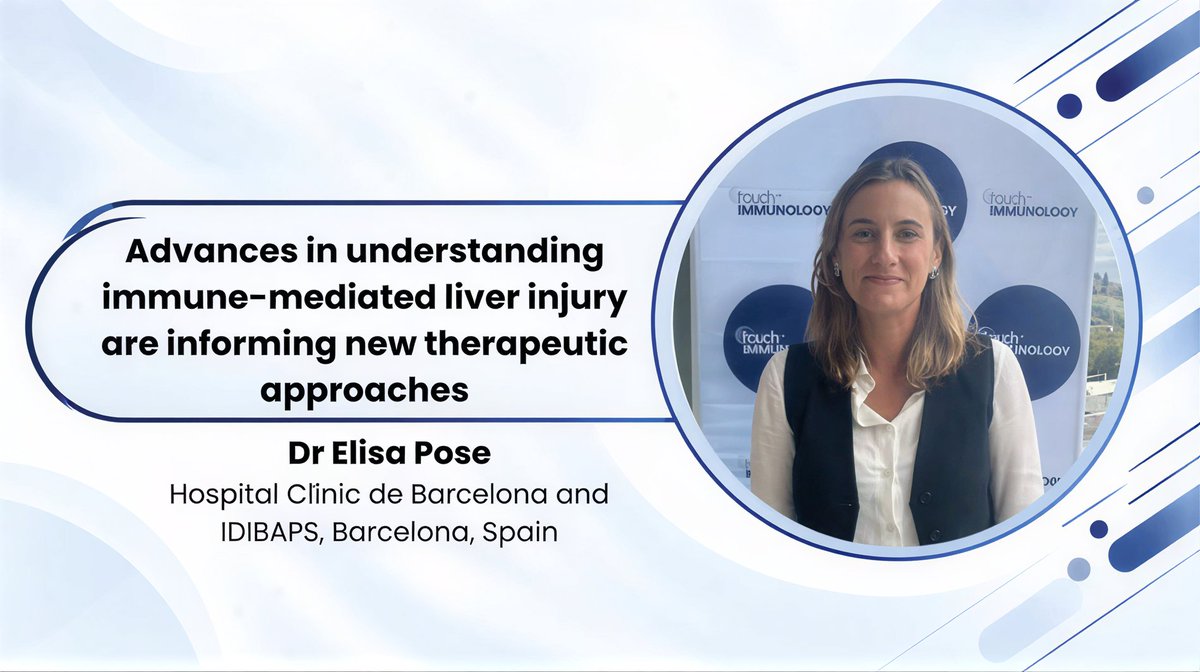
🧬 How is a better understanding of immune dysregulation shaping emerging treatments for liver disease?
At UEG Week 2026, Dr Elisa Pose (Hospital Clínic de Barcelona and IDIBAPS), a UEG Rising Star, discusses the role of inflammatory pathways in chronic liver disease, with a particular focus on alcohol-related liver disease.
In this interview, she explores how innate and adaptive immune responses, alongside the gut–liver axis, contribute to liver injury and fibrosis, and how these mechanisms could inform new therapeutic approaches in alcohol-related hepatitis.
🔗 Watch the full interview: https://t.co/kfRmY85dyQ
#UEGWeek2026 #Hepatology #LiverDisease #AlcoholRelatedLiverDisease #Immunology #Gastroenterology
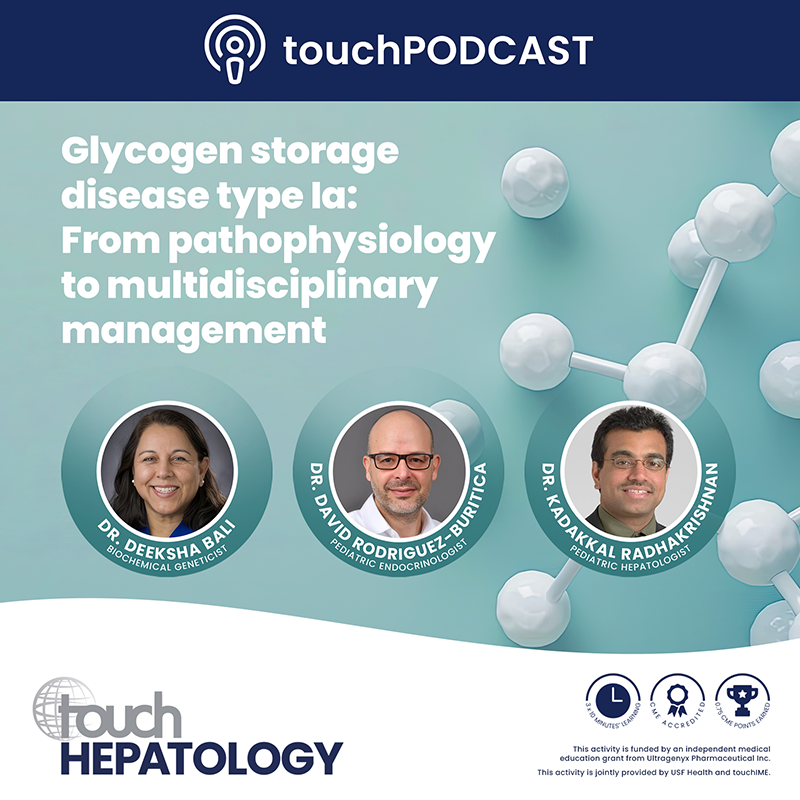
🤝 Why does GSDIa care require a multidisciplinary approach?
Join Dr. Kadakkal Radhakrishnan as he explores care coordination, long-term monitoring, and how emerging gene therapies may shape future management.
🎓 Watch now & earn CME credit: https://t.co/1pSmIcdmEO
🔎 What does long-term cancer risk look like for people diagnosed with inflammatory bowel disease (IBD) during childhood?
At UEG Week 2026, Dr Karl Mårild (University of Gothenburg) discusses findings from a nationwide study involving approximately 12,000 patients with pediatric-onset IBD and 120,000 matched comparators.
In this interview, Dr Mårild explores what the findings mean for patients and families, the potential implications for childhood cancer surveillance, and why international research is needed to guide long-term monitoring strategies.
🔗 Watch the full interview: https://t.co/k3PXyOO3UJ
#UEGWeek2026 #IBD #PediatricIBD #CancerRisk #Gastroenterology
🩺 How can education and consensus-based guidance strengthen specialist inflammatory bowel disease (IBD) nursing?
At UEG Week 2026, Simona Radice (Humanitas Clinical and Research IRCCS, Milan, Italy) and Tobias Mooslechner (President of CED-Nursing Austria) discuss the evolving role of IBD nurses and the importance of translating recommendations into everyday clinical practice.
In this joint interview, they explore the latest N-ECCO consensus, the IBD nurse curriculum, key gaps in specialist nursing education, and the practical challenges of embedding evidence-based standards into multidisciplinary care.
Discover how continued education and clearer nursing competencies could help support more consistent, high-quality care for people living with IBD.
🔗 Watch the full interview: https://t.co/EFzIJLggKr
#UEGWeek2026 #IBD #IBDNursing #CrohnsDisease #UlcerativeColitis #Gastroenterology
🔬 Early-life exposures and IBD risk: what can Scandinavian birth cohorts tell us?
At #UEGWeek2026, Dr Karl Mårild (University of Gothenburg, Sweden) discussed how prospective Scandinavian birth cohorts are helping to clarify the link between early-life environmental factors and later inflammatory bowel disease (IBD) risk.
📊 Key takeaways:
🔹 Higher diet quality in early childhood and the teenage years was consistently associated with a lower risk of later IBD
🔹 Short breastfeeding duration was not associated with later IBD risk, an important finding to avoid unnecessary concern for parents
🔹 Children with the healthiest overall habits (physical activity, diet quality and healthy weight) had a lower risk of later IBD
🔹 Future research will need to combine environmental, genetic and biomarker data to understand individual risk
💡 The key message: Identifying potentially modifiable early-life habits could open new avenues for IBD prevention.
🎥 Watch the full interview with Dr Mårild on touchIMMUNOLOGY:
https://t.co/NfRKauolIJ
#UEGWeek2026 #IBD #PediatricGastroenterology #Epidemiology #Gastroenterology #ClinicalResearch @my_ueg
🩺 The evolving role of the IBD nurse: From consensus to clinical practice
At #UEGWeek2026, we spoke with Simona Radice (Humanitas Clinical and Research IRCCS, Milan, Italy) and Tobias Mooslechner (President, CED-Nursing Austria) after their joint nursing session with N-ECCO.
🔬 Key takeaways:
🔹 Specialist IBD nurses are increasingly central to multidisciplinary care, with a role extending well beyond treatment administration
🔹 The 3rd N-ECCO Consensus provides nursing guidance on advanced therapies, perioperative support, bowel urgency and incontinence, pain, reproductive health and inclusive care
🔹 How the IBD nurse curriculum and consensus guidance work together to define nursing competencies
🔹 Practical and organizational barriers still need addressing to implement standards into routine clinical practice
Full interview available here: https://t.co/EFzIJLggKr
#UEGWeek2026 #IBD #IBDNursing #NECCO #CrohnsDisease #UlcerativeColitis #Gastroenterology #NursingEducation
🩺 How is GSDIa managed today, and what do emerging therapies offer?
Join Dr. David Rodriguez-Buritica as he explores current care, the daily burden of dietary therapy, and novel genetic and molecular approaches.
🎓 Watch & earn CME credit: https://t.co/wxB73rhgnI
#GSDIa #MedEd