When you like $SIVE, you will love these Swedish small-cap stocks (High RSK/HIGH RWRD!)
$ACCON $BEAMMW $VIDH $TERRNT
Acconeer AB
Market Cap in Euro: approx. €104.9 million
Key Partners & Customers: Nexty Electronics (major distributor in Asia), Alps Alpine, Digi-Key, $GFS $AMKR (manufacturing partners).
With the A121 sensor, Acconeer holds a technological monopoly on the world’s smallest, most precise, and most energy-efficient pulsed radar chip.
Unlike cameras, radar protects privacy. The sensor can measure distances, gestures, and even a person’s heartbeat/breathing in a room with millimeter precision.
2026 catalysts:
Acconeer reached a historic milestone and became EBIT-positive (profitable) for the first time since the second half of 2025. This removes the existential risk from the table.
Massive revenue growth: In its latest Q1 2026 report, the company announced its third consecutive record quarter with product sales growth of 71% year-over-year.
The “A2 design win”: The market is currently waiting for the first major breakthrough of the next chip generation (A2). A large automotive contract for in-cabin monitoring (which will become mandatory in new EU vehicles from 2026/2027 onward) is considered the biggest lever to achieve the company’s revenue target of over SEK 300 million by 2027.
BeammWave AB
Market Cap in Euro: €11.0 million
Key Partners & Customers: Nitto Denko, Cadence, Saab (defense project), MetaSpace Fund (new institutional major investor).
As the industry transitions to higher 5G frequencies (millimeter wave / mmWave) and the upcoming 6G standard, traditional analog antennas fail because they consume too much power and signals become blocked. BeammWave solves this global problem with digital beamforming directly on the chip (ADP1 platform).
They digitally direct radio beams exactly where the smartphone needs them.
2026 catalysts:
The “cleanup” of the share price: In May 2026, BeammWave completed a combination of a targeted institutional capital injection (SEK 20 million) and a rights issue (SEK 51.7 million). Capital raises usually pressure the stock short term, but BeammWave is now fully financed for upcoming mass production.
Expansion into South Korea: In March 2026, BeammWave significantly expanded its sales network into South Korea. South Korea is the global epicenter of 5G/6G infrastructure and home to tech giants like Samsung.
Involvement in 6G architecture: Management announced in May that BeammWave is now actively helping shape the global reference architecture for the upcoming 6G standard. Any news regarding the first commercial design win in the IoT or smartphone sector could multiply the share price given the company’s tiny market capitalization.
Vidhance AB
Market Cap in Euro: €6.0 million
Key Partners & Customers: $QCOM MediaTek, Xiaomi, Motorola, Vivo, Oppo, ASUS.
Vidhance (formerly Imint) offers a pure software solution. Its algorithms stabilize videos in real time at a very high level. Since the software already runs on more than 50 million smartphones, Vidhance has an asset-light business model: every new contract translates into nearly pure profit (gross margin), since no factories need to be built.
2026 catalysts:
Qualcomm breakthrough in March 2026: On March 2, 2026, Vidhance announced the successful completion of a reference integration with the high-end “Qualcomm Snapdragon Wear Elite” chip. Qualcomm dominates the global smartwatch and wearables market.
Breaking out of the smartphone niche: Through the Qualcomm integration, Vidhance is now positioned as the standard software partner for the next generation of smartwatches, action cameras, and smart glasses (AR/VR). The market is currently underestimating the leverage of this wearables platform entirely (despite a market cap of only €6 million).
Terranet AB
Market Cap in Euro: approx. €26.2 million
Key Partners & Customers: $NVDA Inception program & DRIVE Orin integration), exclusive evaluation agreements with leading automotive electronics groups.
BlincVision is positioned as the “airbag of the future” for autonomous driving (ADAS). While conventional LiDAR or camera systems react too slowly, Terranet’s technology detects hazards in urban traffic (for example, a child suddenly running out from behind a parked car) in under 5 milliseconds and initiates braking immediately.
2026 catalysts:
CEO insider buying (May 2026): On May 21, 2026, CEO Markus Johansson personally purchased 1,000,000 shares on the open market and announced plans to continue increasing his position because he sees “massive potential in the current phase.”
From MVP to volume production: After presenting its functional prototype (MVP) in 2025, Terranet’s official focus for 2026 is on customer projects and preparing for commercial volume production with automotive manufacturers.
New evaluation agreements: In April 2026, Terranet signed another memorandum of understanding for evaluation with an unnamed global leading electronics company. Once these testing phases turn into a fixed supply contract with a major automotive OEM, a revaluation of the stock could become unavoidable.
Mark my words. Not financial advice.
Instead of watching an hour of Netflix, watch this 2 hour hour Stanford lecture will teach you more about how LLMs like ChatGPT and Claude are built than most people working at top AI companies learn in their entire careers.
The reality is:
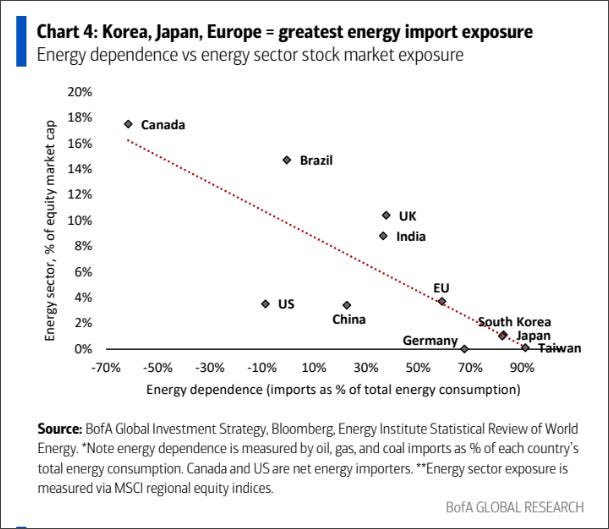
If you like commodities, you should also appreciate resource-rich economies — and their currencies.
Canadian “peso” poised to outperform while it remains one of the most heavily shorted currencies in the world today.
You don’t need to tell me you disagree — I know this view is about as contrarian as it gets.
Great chart from my friend @RonStoeferle
I am a woman from a small village in northern Iran.
Jailed for protesting.
Beaten for showing my hair.
Expelled from parliament for exposing their corruption.
Forced into exile.
My sister was paraded on state TV to publicly disown me.
My brother was imprisoned as punishment.
My mother was interrogated to stop her from expressing love for me.
Assassins were sent to New York, three times, to kill me.
And now I’m supposed to sit next to them at the U.N. Security Council.
Thanks @USAmbUN for finally giving me a seat, so I can call out the regime, and the U.N. leadership that still legitimizes it.
This is my full address to the UN Security Council about
#IranRevoIution2026 and a massacre unfolding in Iran.
My Thesis for the Privacy Narrative
For the better part of a decade, the prevailing narrative in both traditional finance and crypto was that ''transparency is a virtue''. We were conditioned to believe radical openness is the default state of the future, and that only those with something to hide (criminals, tax evaders, paranoiacs) would ever demand privacy.
I think that era is ending.
As we enter 2026, the market is already showing a rotation that most people are still ignoring.
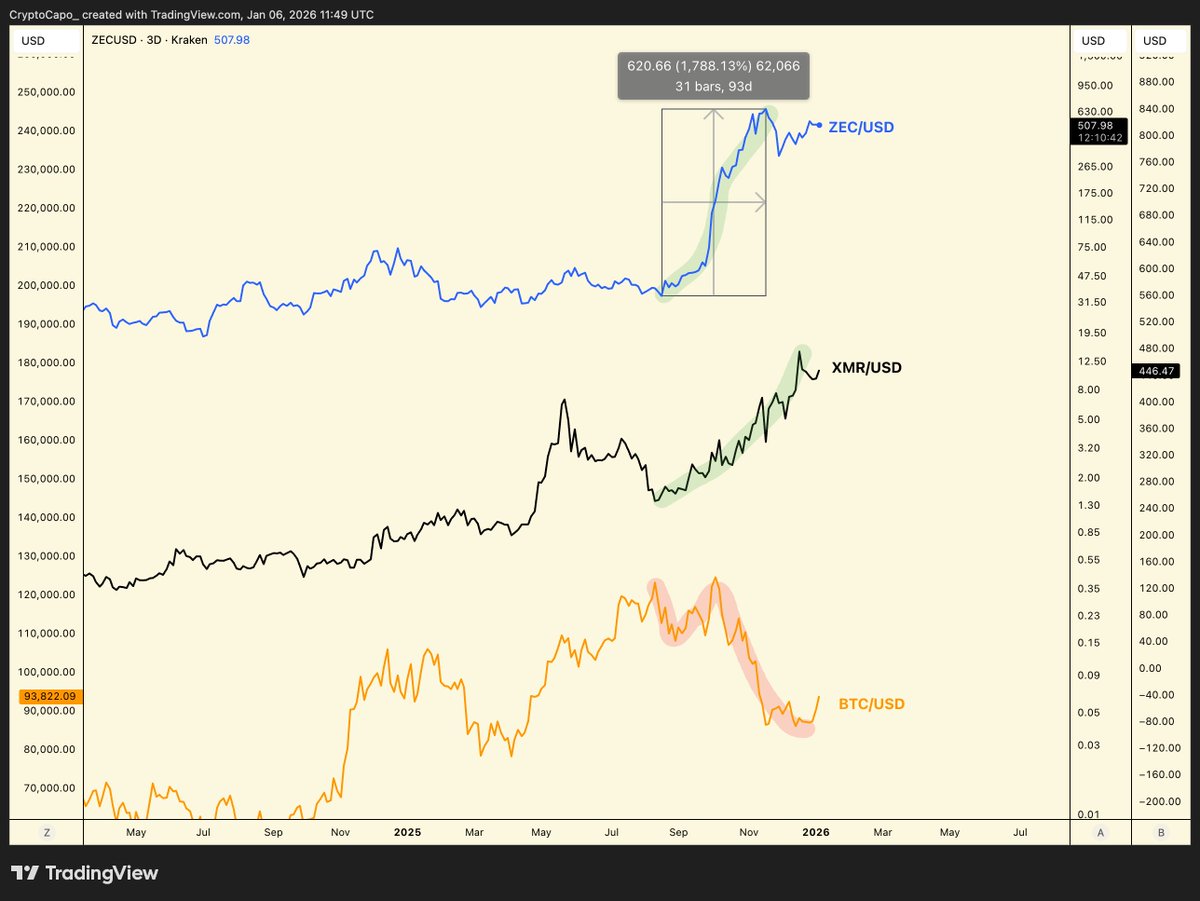
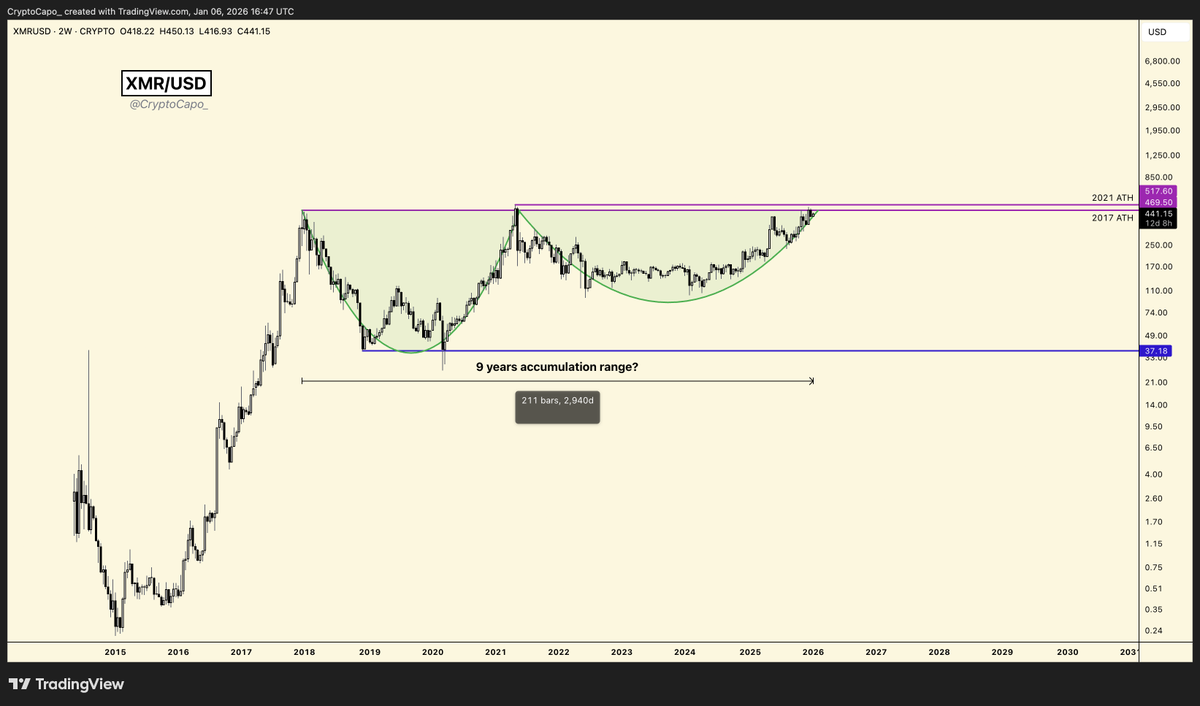
Take this chart as an example:
$ZEC printed an 18x to 20x move in roughly 3 months (Aug to Nov 2025), and is now consolidating. $XMR has also doubled in price in the same timeframe. All of this while #Bitcoin has retraced from the all-time high of $125k to a local low of $81k. This means money has been rotating, and it’s a clear sign of strength for privacy coins.
But… why is this happening?
Privacy is no longer a luxury. The social contract regarding money is being broken. Money is transitioning from being a tool of freedom to becoming a tool of surveillance.
Money is constantly evolving. Now digital money is becoming more integrated, more automated, and more connected to rules and systems. That trend is largely unavoidable.
CBDCs are part of that conversation. With 137 jurisdictions, representing 98% of global GDP, exploring Central Bank Digital Currencies (#CBDCs), the debate is no longer if they will arrive, but when and how. While CBDCs offer some benefits, like offering clear efficiency gains for central banks, their underlying programmable nature introduces the structural capacity for unprecedented oversight.
The design specifications of many pilot programs include features that could theoretically allow for expiration dates on funds, negative interest rates to enforce spending, or spending limits based on social metrics (social credit score). Even the potential for such control is altering the risk profile of holding cash within the traditional system. As these architectures get closer, the market is beginning to price in the demand for alternatives where money cannot be programmed or restricted by a central issuer. Not predicting a dystopian future, but hedging about the technological capabilities of it is always a smart choice.
This is also being accelerated by the systematic ‘’War on Cash’’. As governments eliminate physical cash, through withdrawal limits and the stigmatization of paper money, a massive vacuum is created. We already saw in Canada that a supposedly democratic government was willing to freeze the bank accounts of citizens for peaceful protest.
However, the argument for privacy extends far beyond that. There is a fatal flaw in the ''transparency'' narrative that the crypto community is only now starting to price in: security. Living in a ''Glass House'' is dangerous. With the advent of AI and advanced chain analysis, ‘’transparency’’ is a synonym for vulnerability. For example, if you pay for a coffee with Bitcoin on a public ledger, the barista can theoretically see your entire net worth, your income, and your home address. High net-worth individuals are realizing that total transparency makes them targets.
This is amplified by the reality of corporate espionage. Major corporations are less likely to move their supply chains to a public blockchain like Ethereum or Solana. Why? Because they cannot afford to have their competitors see exactly who they pay, how much they pay, and when their supply chains falter.
The market data confirms this rotation. We are seeing the DEX/CEX ratio hitting all-time highs as users seek non-custodial, private ways to trade.
Not to forget the technicals, which I consider even more important than fundamentals. #Monero remains the main privacy coin. There’s probably better privacy tech out there, but there are other factors that make it number one by market cap (though temporarily slightly surpassed by ZEC).
As I’ve been posting these last weeks, $XMR chart is one of a kind. With a massive bullish pattern that resembles similarities with the silver chart just before the breakout.
If we get a clean breakout, I see $1,000 as a minimum target. And if that happens, it likely pulls the entire privacy narrative with it.
Here's the bottom line:
-Privacy is being repriced as infrastructure, not just ideology.
-The world is building more digital control surfaces, whether people admit it or not.
-Cash is fading, reporting is expanding, and on-chain transparency is becoming a liability for both individuals and businesses.
-When a narrative concentrates into a small group of assets, moves can be violent.
I think 2026 is a year where the privacy theme can dominate for months, and potentially longer.
Security. Fairness. Sovereignty. Resilience.
And one last reminder: none of this is a call to live in fear. Privacy is a tool, not a lifestyle. Protect your optionality, but don’t forget to disconnect sometimes. Touch grass. Keep your mind clear. That’s an edge too.
Disclaimer: This is just my opinion and does not constitute financial advice.
BlackRock and Ripple are NOT competitors
They’re creating tokenized economy under different names
Ripple builds the tech. BlackRock funds it. SEC clears the way.
I was SHOCKED after analyzing LEAKED documentation
Here’s the exposure they don’t want you to see👇🧵
@Bardissimo Synd att du blivit så cynisk. Personer som kan vara våldsamma på det här sättet sprider skräck omkring sig. Du som analytiker borde ju känna till våldets mekanismer. https://t.co/wCoTYK2s9F
Hydrogen-powered cars, using fuel cells, offer a clean and efficient alternative to traditional vehicles. They emit only water vapor, making them eco-friendly and ideal for reducing carbon footprints. Refueling takes just 3–5 minutes, similar to gasoline cars.
#hydrogen