Intel CEO 陳立武用創投老兵的眼光重新打造 Intel。他談到改造企業文化、與美國政府及 Elon Musk Terafab 合作、代工業務的展望、半導體投資的門道,以及為什麼 CPU 在 agentic AI 時代重新變得搶手。
「如果你看十年後,誰會是贏家?就是那些清楚定位、專注於一個利基領域,又找到對的夥伴,並且有能力把公司規模化的公司。」Lip Bu Tan 這樣定義他眼中的勝利者。
#改造企業文化:問責與速度
接手 14 個月,Lip Bu Tan 把改變文化列為首要任務。「我想推動更多的問責,而且決策必須更快。我太習慣新創公司的文化了,做事是光速般的快,而面對那種一層又一層會議的官僚體系,我必須改變它。」
他的方法是回到客戶身邊。「客戶很高興,他們覺得 Lip Bu 這個人很謙遜、願意傾聽,然後解決他們面對的一些問題,試著讓客戶滿意。」
身為工程師出身,他做了一個關鍵決定。「從第一天起,我就決定所有工程部門都直接向我報告。我想知道哪裡出了問題,哪些是我需要修正的。」
他總結改造的核心:傾聽客戶、讓客戶滿意、確保有對的產品、簡化產品線,並且為未來五到十年建立明確的藍圖與願景。
#Intel的十年願景:從爬、走,到跑
Lip Bu Tan 用一套節奏來描述他的經營哲學。「我一直相信的是,首先你要爬,而且要謙遜,傾聽客戶;接著決定開始走;最後在春天決定開始跑。這是我一步一步做事的文化。」
第一步是強化資產負債表。「老實說,這個資產負債表某種程度上很糟糕。」他對於美國政府成為大股東感到高興,並向川普總統解釋了其中的道理。「TSMC 剛起步時,台灣政府就是股東之一。你看日本、看新加坡,這是政府應該提供的基礎建設支持。」
他也提到老朋友的支援。「Jensen Huang,我的老朋友,他也投了 50 億美元支持我,他那 50 億現在變成 250 億,甚至更多。」另外 SoftBank 的孫正義也伸出援手,他過去曾是 SoftBank 的董事。
強化財務體質之後,他專注於產品,並簡化產品線、傾聽客戶,推動下一代的領導級產品。
#CPU在agenticAI 時代重新搶手
一個產業趨勢的轉變讓 Lip Bu Tan 感到幸運。「現在 agentic AI 和推論用的 CPU 變得需求非常高。過去訓練端的 CPU 對 GPU 比例大概是1:8,現在我看到可能是1:4,甚至更高。我很高興 CPU 重新變得重要。」
他從 AI 模型開發者那裡得到佐證。「他們說在強化學習方面,以及在協調所有 agent 的速度方面,CPU 其實表現更好。���以某種程度上,我很高興現在我的 CPU 需求非常高。」
#晶圓代工業務的挑戰
代工是一門資本密集且不容易的生意。Lip Bu Tan 點出幾個關鍵條件。「你必須擁有所有正確的 IP 才能支援客戶。舉例來說,如果是行動裝置相關的,你就得有低功耗的 IP 組合,沒有這些你就無法服務他們。」
這更是一門信任的生意。「如果有人要把訂單給你、要你生產晶圓,萬一良率不好,他們在營收上就會慘賠。」因此他特別專注於良率、缺陷密度與週期時間,確保能以高品質、可靠的方式服務客戶。
他的目標是走向 full stack。「最終你必須真正進入 full stack,不只是矽晶片,你還需要軟體。有些客戶要求我給他們整個機櫃,那是一套你必須打造的系統。」
招募人才這件事,他親力親為。「順帶一提,���有的招募都是我自己來,沒有獵頭公司幫忙。有時候手上有一本厚厚的通訊錄,知道該打電話給誰,是件好事。」
#與Musk合作Terafab
Lip Bu Tan 對 Elon Musk 評價極高。「我想我們都同意,他是本世紀最好的創業家之一,甚至可能就是最好的。」
兩人有共同的看法。「半導體基礎建設其實沒有跟上 AI 的成長。你需要產能、需要生產力、需要乾式效率,這些都是他和我都認為缺了一塊的地方。」
他很欣賞 Musk 的工作風格。「他非常不按常理出牌,他基本上會質疑每一個步驟,質疑為什麼要用這種傳統方式做事。某種程度上這非常令人耳目一新,我喜歡跟有不同意見的人一起找出最好的路徑。」
關於 Terafab 的本質,他解釋 Musk 決定要自己蓋一座晶圓廠。「我們很高興能跟他合作,確保我們能一起工作,運用我們的一些技術和製程,讓他能更快、更迅速地進入量產。他是一個很好的團隊,我每週都跟他合作,跟他共事真的很新鮮。」
Musk 甚至提過一些非傳統的想法,例如希望能在無塵室裡抽菸。「我想我不會走那麼遠,也許無塵室的某些部分可以這樣做。但這是一種開放的心態,我們也願意傾聽,看看能不能做到。」
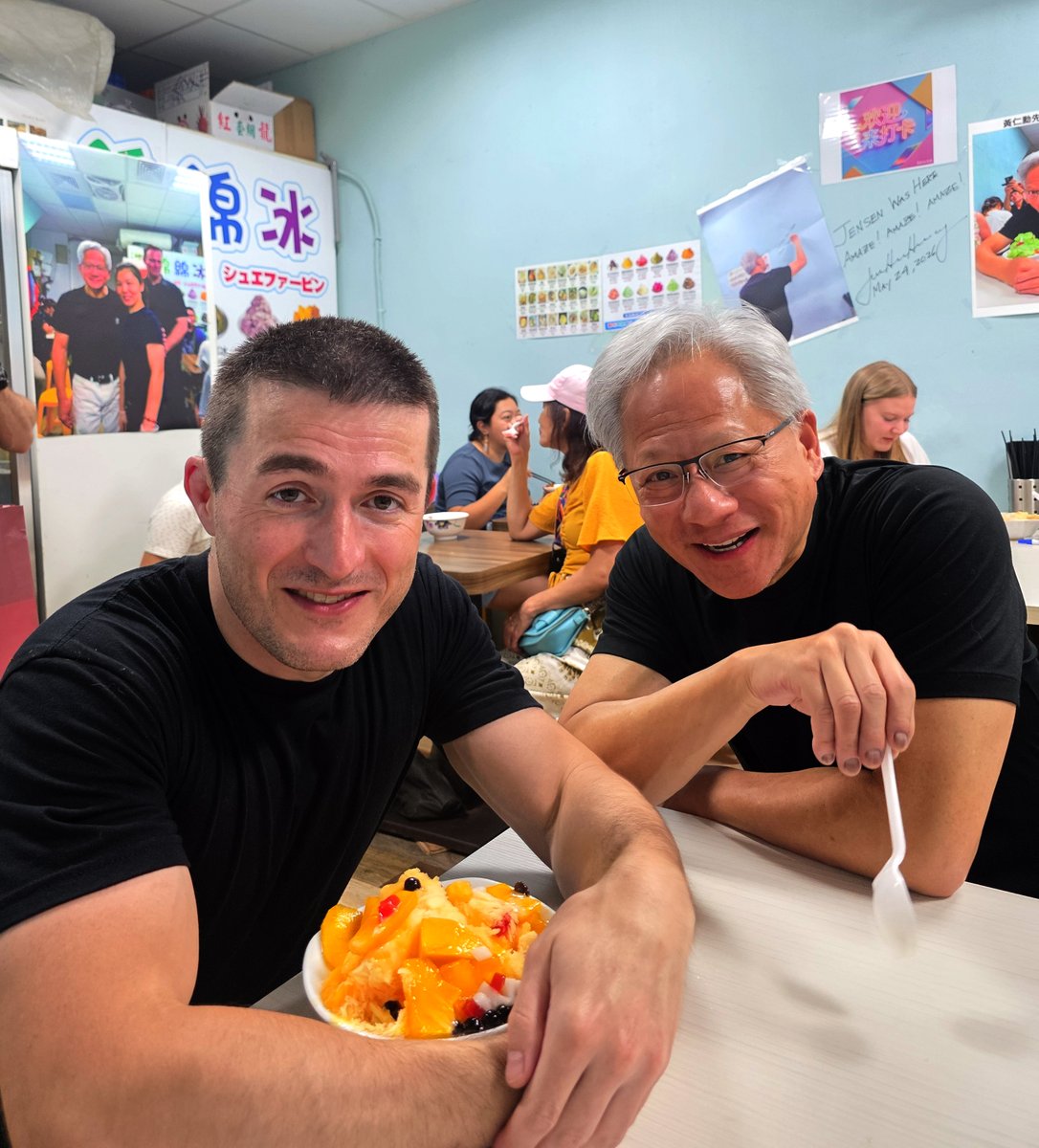
I got to spend all day today with Jensen in Taiwan: talking with thousands of engineers and eating street food at a night market. Jensen is received as a rockstar in Taiwan, like it's Beatles in the 60's. It's mind-blowing and fun to watch. But most importantly, through all the interactions and all my conversations with him, he remained the same humble, kind, thoughtful, funny guy he always was, even as a kid who went to these same night markets many years ago.
Btw, we tried a crazy amount of different street food. It's legit some of the most delicious food I've ever had. I can't wait to share video of it, including a ton of our conversations and hangout. When I can pause for a moment from all the travel to edit the video, I'll post it.
Can't wait to continue talking to Jensen and engineers at Computex this week, and exploring more of Taiwan, and of course roaming the night markets for some more delicious street food.
Days like these, even more than usual, I feel like the luckiest kid in the world.
Love you all! ❤️
本周真的是滿地科技巨頭在台灣
Taiwan and @anduriltech Join Forces
The Ministry of Economic Affairs (MOEA) held a signing ceremony for the Taiwan-US Drone Cooperation Memorandum of Understanding today (3rd). The MOU was co-signed by Liu Ka-ju, Chairman of the Metal Industries Research & Development Centre (MIRDC), and Palmer Luckey, founder of the major US defense technology company @anduriltech , with Chiu Chiu-hui, Director General of the Industrial Development Administration of the MOEA, serving as witness.
In the future, both parties will center their efforts on key drone technologies, focusing on deep cooperation in areas such as AI autonomous systems, drone manufacturing, supply chain localization, and the construction of non-Red supply chains. This initiative aims to further enhance the international cooperation capacity and global supply chain competitiveness of Taiwan's drone industry.
Taiwan and the U.S. join forces to capture the drone blue ocean! Metal Industries Research & Development Centre (MIRDC) forms an alliance with a U.S. defense tech giant, bringing major orders to over 10 Taiwanese manufacturers. (Photo: Anue News)
Anduril Industries is one of the most representative defense technology companies in the United States, founded in 2017 by Palmer Luckey, the founder of the virtual reality (VR) company Oculus. The company has long collaborated with the U.S. Department of Defense, the U.S. Department of Homeland Security, and several allied governments. It is dedicated to developing drones, autonomous combat systems, the AI command and control platform Lattice, and advanced sensing technologies. Its products are widely used in border surveillance, counter-drone defense, intelligence, surveillance, and reconnaissance (ISR), and autonomous combat missions, making it a key leader in the global autonomous systems and defense technology sectors.
The Administration for Industrial Development (AID) stated that the Memorandum of Understanding (MOU) signed between MIRDC and Anduril aims to facilitate cooperation in AI drones. This includes promoting joint R&D, technical exchange, manufacturing optimization, and industrial localization. The scope of cooperation covers key drone technology R&D and manufacturing optimization, AI application technology development, supply chain integration, localized production, and the strengthening of "non-Red" supply chains.
Taiwan possesses a complete industrial foundation in ICT, precision machinery, metal processing, electronic components, and system integration. In recent years, the AID has continuously promoted the integration of Taiwan's drone industry into the international market. Currently, it has facilitated over 10 domestic companies in securing trial production or mass production orders from Anduril in fields such as drone airframe structures, payload equipment, and propulsion systems.
The Ministry of Economic Affairs stated that the two parties will collaborate on key drone technology R&D, AI application technology, manufacturing process optimization, supply chain integration, and localized production. This partnership will help domestic companies align with international market demands for drones and autonomous systems. Furthermore, through the research institute platform, it will facilitate technical upgrades, quality validation, manufacturing optimization, and industry matchmaking, enhancing Taiwan's pivotal position in the global trusted supply chain.
HTML is the new markdown.
I've stopped writing markdown files for almost everything and switched to using Claude Code to generate HTML for me. This is why.
Just dropped a 2 hour Claude Design masterclass where I go from nothing, to a brand with guidelines, a pitch deck, landing page, mobile app prototype, and a launch video.
All built in Claude Design.
🧵 My tips for getting the best results out of Claude Design! I’m on the verticals team at Anthropic which means I serve 7 different products. Claude Design makes it possible!
1. Set up your design system and your core screens. An hour of setup and refinement here is worth it
Claude Design 實戰七招:Anthropic 內部設計師 Ryan Mather 的使用心得完整翻譯+解說
Claude Design 昨天跟著 Anthropic Labs 同步推出之後,Anthropic 內部的 verticals team 設計師 Ryan Mather 在 X 上發了一串實戰 tips。verticals team 的意思是一個人同時服務多條產品線,他自己就服務 7 個不同產品,能撐住這個產量的關鍵工具就是 Claude Design。下面把整串 thread 完整翻譯,每一點再補一些脈絡跟科普說明。
Tip 1:先把設計系統跟核心畫面設好
先把設計系統(design system)跟核心畫面設定好,在這個階段花一小時做設置跟調整是值得的。
說明: 設計系統指的是一份定義色彩、字型、按鈕樣式、間距、元件庫的規範文件,產品團隊共用,確保不同畫面視覺一致。核心畫面則是那幾個最常出現的頁面(登入、首頁、設定)。Ryan 的重點是,Claude 跟其他 AI 一樣,第一步給的脈絡越明確,後面產出的品質越穩。先花一小時把 design system 跟核心畫面餵給它,後面每一次生成都會在這個基礎上延伸,視覺一致性自動保持,省掉之後逐張修圖的時間。
Tip 2:跟工程師即時一起迭代
跟工程師即時一起迭代,我通常一個會議裡就能跟一位工程師把新功能設計完,因為 Claude 畫 mockup 超快,我們的對話可以保持在比較高的層次,邊玩概念、邊談限制條件,邊看著東西成形。
說明:傳統的軟體設計流程大致是「設計師畫稿、開評審會、修改、再評審、交給工程師、工程師實作後對稿」,來回通常要一兩週。Ryan 描述的新流程把這段壓到一個會議,兩個人坐在一起,邊討論概念邊看 Claude 即時產出 mockup,討論的層次可以停留在「這個功能要解決什麼問題、有哪些約束」而不是「這個按鈕要放哪」。這代表設計師跟工程師的協作粒度從「文件交接」變成「對話中即時定案」。
Tip 3:用 Comment 工具做快速精準修改
用 Comment 工具做快速精準修改,粗稿出來後可能有幾十個細節想調,用嘴描述所有要改的地方很難講清楚,那就不要用嘴描述了,直接點選元件做評註。
說明:Point and crit 是設計工作室的黑話,指「指著東西評論」的動作,傳統在實體海報或畫布上做。Claude Design 的 Comment 工具把這動作搬進 AI 產品的介面,滑鼠點到哪個元件,評註就附在那個元件上。為什麼這比用嘴講重要,因為自然語言描述 UI 修改的效率極低,你說「右上角那個按鈕再小一點、顏色淡一點、跟左邊那個拉開一點距離」,還要確認 Claude 聽懂的是��是你指的那顆。點選元件直接給指令,資訊損耗幾乎是零。
Tip 4:請 Claude 幫你的點子做影片 demo
請 Claude 幫你的點子做影片 demo,整體來說,Claude Design 幾乎什麼你想得到的事都做得到,老實講,它比較接近 Claude Code 的使用體驗,離一個以畫布為核心的設計工具比較遠。
說明:這一點可能是整串 thread 最關鍵的定位宣告。以畫布為核心的設計工具指 Figma、Sketch 這類在無限畫布上拖拉元件的軟體,使用者的心智模型是「我在排版」。Ryan 的觀察是 Claude Design 不屬於這個類別,它的心智模型是「我跟一個會做東西的助手對話」,所以除了靜態稿還能做影片 demo、互動原型、甚至客製小工具。把它當 Figma 的升級版會用不出它的力氣,當 Claude Code 的設計版才對味。
Tip 5:用 connector(特別是 docs 跟 Slack)
使用 connector(特別是 docs 跟 Slack),設定好之後,你可以��出像這樣的指令:「請讀一下產品檢討會議的筆記,做一份簡報探索裡面提到的所有問題的不同設計方案」,然後出去散步、呼吸一下新鮮空氣,回來用清醒的眼睛看成果。
說明:Connector 是 Claude 的外部資料源連接器,可以接 Google Docs、Slack、Notion、Linear 等工具,授權之後 Claude 能直接讀取那些地方的內容。Ryan 舉的例子很有代表性,會議紀錄本來是一份只有當事人會回頭翻的 Google Doc,接上 connector 之後 Claude 可以自己去讀,把散落的討論點轉換成一份探索性簡報。這代表「整理會議結論 → 產出設計方向」這段工作從幾小時壓到幾分鐘,人力負擔從「讀、想、做」變成「下指令、散步、驗收」。
Tip 6:請 Claude 臨時做客製的小工具
請 Claude 臨時做客製的小工具,大原則是,不要用畫布工具的思路來用 Claude Design,它是另一種動物,有另一種超能力,大膽實驗、玩開一點,你會發現自己設計的速度會把過去的工作方式甩開好幾圈。
說明:這一點呼應 Tip 4。傳統設計工具的使用場景是「生產設計稿」,傳統設計工具的使用場景是「生產設計稿」,Claude Design 能生產的是「任何解決設計問題的東西」,包含臨時的小工具。舉例來說,如果你在設計一個色彩選擇器,可以請 Claude 先做一個互動的色彩預覽 prototype 讓你自己玩,邊玩邊調整選擇器的規格,而不是憑空想像使用者會怎麼用。這個能力在傳統設計軟體需要工程師配合才做得到,在 Claude Design 裡是設計師一個人就能完成的動作。
Tip 7:知道什麼時候要慢下來、親手做
知道什麼時候要慢下來、親手做,新圖示、小插畫、命名,這些細節永遠會帶來不成比例的衝擊,人很容易被 agentic 設計的超高速吸進去,知道什麼時候要慢下來本身就是一門藝術。
說明:這是整串 thread 的反論,也是��有深度的一點。Ryan 提到的三樣東西都是「小但關鍵」的設計元素,新圖示代表品牌符號、小插畫是產品人格、命名決定使用者第一印象。這類東西的共通點是決策空間極小、但品質天花板極高,AI 能快速生出可用版本,但要做到「讓人記住」還是人在定奪。Agentic designing 指的是大量使用 AI 代理自動執行設計任務的工作方式,速度誘惑大,但他提醒在這三類細節上要刻意降速、親手做、親手改。這不是對 AI 工具的懷疑,是對「什麼適合自動化、什麼不適合」的清醒判斷。
結尾補充
Ryan 在 thread 最後補了四則:
他最喜歡 Claude Design 的一點,是它讓設計過程變得很*愉悅*,可以嘗試更多發散的點子,對每個點子的執著也比較鬆。這句話值得想一下,設計工作的心理負擔往往來自「花了兩小時做的稿捨不得丟」,工具加速讓每個點子的沉沒成本降低,決策更誠實。
他感謝 nateparrott 跟團隊做出這個產品,Nate Parrott 是 Claude Design 的���心開發者,同時也是整個產品氣氛的塑造者,Ryan 特別提到 Nate 的 whimsy(奇想)跟玩心帶進整個開發過程,從使用者感受得出來。
P.S. Ryan 自己也貢獻過幾個 PR 到 Claude Design,檔案畫面、指令輸入元件(composer)跟其他一些雜項,只是那些程式碼現在全都被改掉了,他用這件事當自嘲。
最後他預告 Claude Design 正式上線之後會分享更多 tips 跟小技巧,幫大家把工具用到極致。
---
📷 請訂閱我的 Threads / Facebook / 電子報「狐說八道」
#Anthropic #ClaudeDesign #Flomerboy #生成式AI #設計工作流 📷