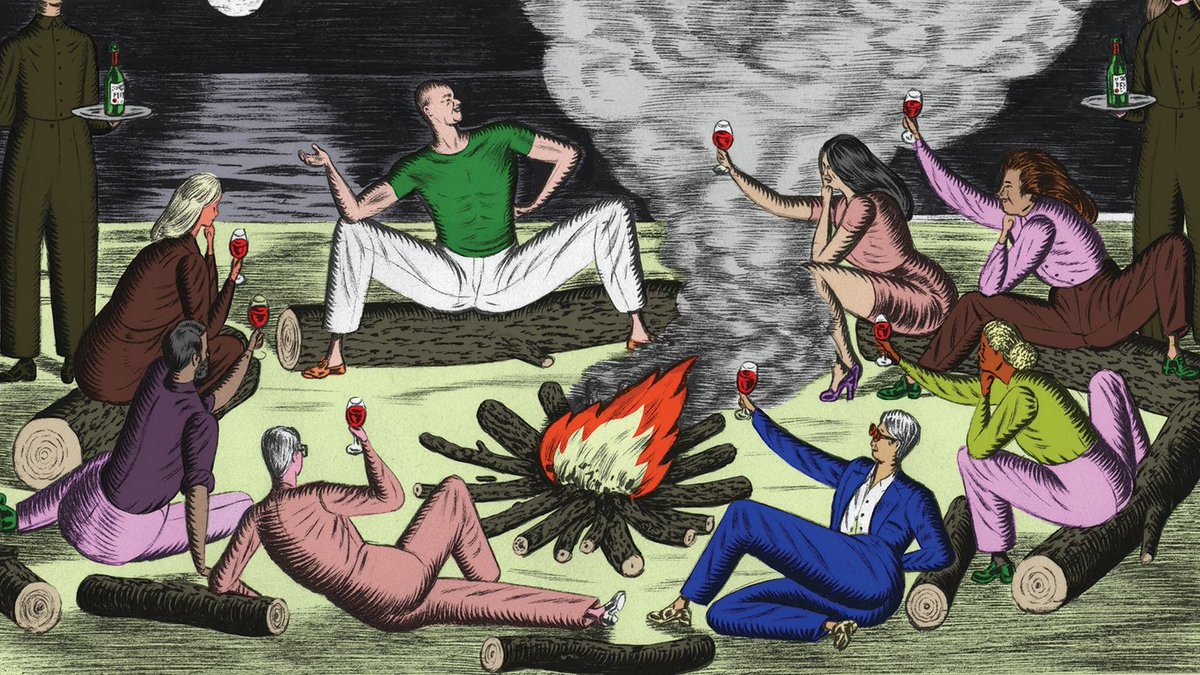
If FX is moving on-chain, not every flow can be visible by default.
That was the point Varun @GandalfTheBr0wn , co-founder of @hibachi_xyz, made when Kappa Lab CBO Kiran @kiranxyz_ asked how privacy is shaping Hibachi’s institutional conversations.
Hibachi is building a stablecoin-native FX exchange, with spot and derivatives markets designed for conversion and hedging.
FX is largely an institutional market. Banks, financial institutions, PSPs, and cross-border providers move large volumes, and many do not want every transaction publicly indexed and auditable in real time.
Hibachi’s model is hybrid: an offchain central limit order book for fast matching, with ZK proofs used to verify settlement and system integrity on-chain.
Privacy, without removing verifiability or self-custody.
A useful framing for why stablecoin-native FX may need a different market structure than a fully transparent on-chain DEX.
👉 Watch the full episode here: https://t.co/6lCTCVIvkx
FX does not just need faster settlement. It needs better price discovery.
Our CBO @kiranxyz_ framed it simply: if stablecoins improve FX settlement, and onchain rails improve speed, where does @hibachi_xyz create its edge?
Varun’s answer: price discovery.
“You basically pay what they tell you to pay.”
That’s how Varun @GandalfTheBr0wn, co-founder of Hibachi, describes the legacy structure of FX.
Pre-stablecoin, the market was more of a walled garden, with access concentrated around the major banks and interbank rails that handled settlement.
There was no single transparent orderbook for FX in the way Nasdaq or LSE has for equities. If you were a broker, a PSP, or anyone outside that network, you often took the quotes you could access.
Hibachi is rebuilding this onchain: a stablecoin-native FX exchange with a transparent CLOB, designed to bring open, orderbook-based price discovery to global currency markets.
👉 Watch the full episode here: https://t.co/6lCTCVHXuZ
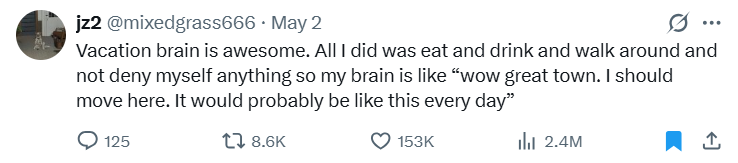
after you realize you can just choose to opt into vacation brain anywhere anytime your life will improve immeasurably. you will be reborn as an unstoppable force of nature. the fruits of everything are yours. you can just eat them
Partner Spotlight Series, Episode 3 is live!
We sat down with @hibachi_xyz co-founders Varun ( @GandalfTheBr0wn ) and Thibault ( @ayotibo ). Hibachi is a ZK-secured onchain exchange, originally built for perpetuals, and now building the first stablecoin-native FX venue on @circle 's @arc.
🚨 The framing that anchored the conversation: "FX is the largest market in the world." And crypto has barely served it.
Varun's take: a lot of what gets lumped into "RWA" deserves to be its own category. FX in particular is massive and structurally underserved.
In this episode we cover:
→ Why Hibachi pivoted from perps to FX
→ The legacy structure of FX: a "walled garden" with no real price discovery
→ Hibachi's hybrid CLOB + ZK architecture, and why institutional FX needs privacy
→ The Fire Liquidity Provider (FLP) vault, operated by Kappa Lab
→ The Circle x Arc partnership and what USDC as gas unlocks
👉 Watch the full episode here: https://t.co/6lCTCVIvkx
#crypto #defi #hibachi #fxexchange
you need to be delusionally optimistic
negative thinking poisons your brain and leads to congitive decline
whereas positive thinking, and gaslighting yourself into thinking everything is amazing, ACTUALLY makes your life amazing too.
you must be a silly goose
You dont want a yacht. You dont want a big house. You dont want a super car, a $40,000 watch, or shoes you worry about getting dirty. You want free will.
You want to wake up naturally on a Tuesday and you want to go to bed when you’re done having fun. You want to say yes to everything that excites you without having to request time off. You want to go to the the gym at noon, in absolutely no hurry. You want to spend 18 hours a day doing what you love. You want to be exactly where you desire being, always. You want to spend as much time with the people you care about as possible.
You’re saying you wanna be rich? In what?
There’s no overstating how extraordinary this Atlantic article is, given the author and the outlet.
As a reminder Bob Kagan is:
- The co-founder of Project for the New American Century, probably the single most imperialist Think Tank in Washington (which is quite a feat)
- A man who spent his entire life advocating for American military interventions, especially in the Middle East, and a vocal advocate of the Iraq war. He started advocating for intervention in Iraq before 9/11, which speaks for itself...
- The husband of Victoria Nuland, an extremely hawkish former senior U.S. official (a key architect of U.S. policy in Ukraine, with the consequences we all witness today)
- The brother of Frederick Kagan, one of the key architects of the Iraq surge
In other words, we ain’t exactly looking at some sort of anti-imperialist peacenik. This is quite literally the guy Dick Cheney called when he needed a pep talk.
And the man is writing in The Atlantic, the most reliably pro-war mainstream media outlet in the U.S. (also quite a feat).
So when HE writes that the U.S. “suffered a total defeat” in Iran that has no precedent in U.S. history and can “neither be repaired nor ignored,” it’s the functional equivalent of Ronald McDonald telling you the burgers aren’t great: it means the burgers really, really aren't great.
Extraordinarily (and somewhat worryingly, for me), his arguments for why this is such a defeat are virtually the same as those I laid out in my article “The First Multipolar War” last month (https://t.co/tbnOpdYqux).
Here they are 👇
1) Vietnam/Afghanistan were survivable, this isn't
He agrees that this war - and the U.S. defeat - is fundamentally different in nature from previous U.S. interventions.
Where I wrote that the wars in Vietnam and Afghanistan didn’t change the equation much in terms of power dynamics (“in the grand scheme of things, the giant walked away with little more than a bruised ego”), Kagan writes that “the defeats in Vietnam and Afghanistan were costly but did not do lasting damage to America's overall position in the world.”
And when I wrote that “it’s painfully obvious that the Iran war is of a qualitatively different nature” from these, he writes that “defeat in the present confrontation with Iran will be of an entirely different character.”
Same point.
2) Iran will never relinquish Hormuz and uses it as selective leverage
When I wrote that Iran has turned “freedom of navigation” on its head by establishing “a permission-based regime” through the Strait of Hormuz, Kagan arrives at the same conclusion: “Iran will be able not only to demand tolls for passage, but to limit transit to those nations with which it has good relations.”
He also agrees that “Iran has no interest in returning to the status quo ante,” when I myself cited Iran’s parliament speaker Ghalibaf in my article, saying: “The Strait of Hormuz situation won’t return to its pre-war status.” Same point and virtually the same words.
3) Gulf states will have to accommodate Iran
He agrees that most Gulf states will have no choice but to accommodate Iran, effectively making Iran into a, if not THE, dominant regional power.
Kagan writes “the United States will have proved itself a paper tiger, forcing the Gulf and other Arab states to accommodate Iran.”
On my end, I wrote that “the Gulf monarchies will eventually have to choose between two security propositions. One where they stay aligned with a distant superpower that [can’t protect them]. The other proposition being: make peace with the regional power that just proved it can hit [them] whenever it wants.” Which is not much of a choice…
4) Military impossibility to reopen Hormuz
Kagan writes that “if the United States with its mighty Navy can't or won't open the strait, no coalition of forces with just a fraction of the Americans' capability will be able to, either.”
On my end, in my article I cited Germany’s defense minister Boris Pistorius: “What does Trump expect a handful of European frigates to do that the powerful US Navy cannot?”
The exact same argument.
5) Global chain reaction
Kagan agrees that this is a global strategic failure that fundamentally changes the U.S.’s position in the world. As he puts it: “America's once-dominant position in the Gulf is just the first of many casualties… America's allies in East Asia and Europe must wonder about American staying power in the event of future conflicts.”
You’ll have guessed it, I wrote essentially the same thing: “Think about what it says if you’re Saudi Arabia, quietly watching your American-built defenses fail to protect your own refineries. Or any European country now facing the worst energy shock since 1973, caused not by your enemy but by your ally, and realizing that said ‘ally,’ supposedly in charge of ‘protecting’ you, couldn’t even protect Israel’s most strategic sites - when it’s the country with which it’s joined at the hip. I’m not even speaking about China or Russia who are seeing their worldview being validated on almost every axis simultaneously.”
6) Weapons stocks depleted, credibility shattered
Kagan: “just a few weeks of war with a second-rank power have reduced American weapons stocks to perilously low levels, with no quick remedy in sight.”
Me: “America’s most advanced weapons systems are much more vulnerable than previously thought - not theoretically, but in actual combat.”
Kagan: “America's allies… must wonder about American staying power in the event of future conflicts.”
Me: “The U.S. security guarantee has been empirically falsified in real time.”
-----------
So, yup, Bob Kagan and I agree on nearly everything. I need a shower 🤢
Reassuringly though, we still differ on a few fundamental aspects.
First of all, arguably the most important one, the moral aspect. In typical neocon fashion, his article contains not a word about the human cost of this war - not the 165 schoolgirls, not the devastation inflicted on Iranians during 37 days of bombing, not the toll this war is taking on the entire world through its devastating economic consequences (the economic devastation on ordinary people worldwide is referenced only as a political problem for Trump). For him, this is purely a strategic chess problem, morality and people don’t figure in his mental map.
For me, the moral bankruptcy of this war isn't separate from the strategic failure - it is the strategic failure. Much like Gaza can only be a failure because of its sheer abjectness.
Secondly, there is not an instant of reflection in the article on how we got there. Which is unsurprising because he personally, alongside his wife, his brother, and every co-signatory of every PNAC letter, spent a generation pushing for exactly this kind of confrontation. The man spend 30 years advocating for military dominance in the Middle East and hostility towards Iran, thereby forging them as an adversary and facilitating this very war that he now says has “checkmated” America.
I know introspection has never been the neocon forte but at some point you have to stop setting houses on fire and then writing op-eds about how surprising the smoke is.
Last but not least, we differ on what should be done. This is the funniest part of Kagan’s article - showing that the man is decidedly beyond salvation. On one hand he calls this a “checkmate” by Iran, and a U.S. defeat that can “neither be repaired nor ignored,” yet an the other hand his solution for it is… surprise, surprise… a bigger war still!
He writes that what’s to be done is “engage in a full-scale ground and naval war to remove the current Iranian regime, and then to occupy Iran until a new government can take hold.”
The arsonist's solution to the fire is a bigger fire ¯\_(ツ)_/¯
For my end, this was the conclusion of my previous article:
"There is almost a Greek tragedy quality to U.S. actions lately where every move taken to escape one’s fate becomes the mechanism that delivers it. The U.S. went to war to reassert dominance - and proved it could no longer dominate. It demanded allies send warships - and revealed it had no real allies. It waged forty years of maximum pressure to break Iran before this moment came - and instead forged the very adversary now capable of meeting it. It started the war in part to have additional leverage over China - and handed the world the spectacle of begging China for help. The prophecy was multipolarity. Every American action to prevent it reveals it instead."
I wouldn’t change a word. The only thing that's changed since I wrote it is that even the arsonists now smell the smoke.
Src for the Atlantic article: https://t.co/ItED9WS9Kn
“I’m buying spot Anthropic on the Solana blockchain” has to be one of the funniest phrases I’ve heard this week.
There is nothing spot about this.
Brother you are 4 layers of financial abstraction and broker crime away from touching an actual Anthropic share certificate.
Your “spot” position is a tokenized receipt for possible future economic exposure to a Cayman SPV that owns shares in another Delaware SPV that maybe owns rights to future equity pending transfer approval.
You are approximately Anthropic-adjacent at best
Every asset is making new highs, except for Crypto.
Live Cattle are up +525% since 2022 and just hit an ATH.
We are getting outperformed by Cows.
You can’t make it up 💀
Noah Hawley attended Jeff Bezos's private Campfire retreat in 2018. His wife broke her wrist. He told Bezos directly - not as complaint, just as human information from one husband and father to another. Bezos looked horrified, an aide materialized instantly, and he was whisked away.
No "I'm so sorry." No "do you need anything." Just escape.
Hawley's thesis in The Atlantic is not that the ultra-wealthy are evil. It is something more precise and more unsettling: that moral reasoning develops through consequences, and the environment of extreme wealth systematically removes consequences from a person's life. When you can buy your way out of any mistake, fire anyone who disagrees with you, and exist in a social circle entirely composed of people who need something from you - the basic mechanism by which humans learn that other people are real goes dark.
This is different from classic narcissism, which typically masks insecurity. What Hawley is describing is something rarer: a self-definition in which the individual has genuinely grown to the size of the universe and the universe has contracted to fit. Elon Musk calling empathy "the fundamental weakness of Western civilization." Trump asked about checks on his power saying the only thing that could stop him was his own morality. Peter Thiel concluding that freedom and democracy are incompatible.
These are not poses. They are the logical endpoint of a psychology shaped by years of operating in a world that never pushed back.
The Bezos encounter is the piece's sharpest detail because it is so small. He was not cruel. He was not contemptuous. He simply could not locate, in that moment, the impulse to respond like a person who understood that another person's wrist hurt.
The idea of "one shotting" an app using AI is a fugazi.
If you had to describe my app and all the edge cases I have solved over the years, it would be a prompt the size of a small book, and my app isn't even that complicated.
The people promoting creating a business overnight with AI are just selling a get rich quick pipedream. Those grifters are present in every cycle.
AI has completely transformed how I work, but you can't push a button and make money. Doesn't work like that.






![RnaudBertrand's tweet photo. There’s no overstating how extraordinary this Atlantic article is, given the author and the outlet.
As a reminder Bob Kagan is:
- The co-founder of Project for the New American Century, probably the single most imperialist Think Tank in Washington (which is quite a feat)
- A man who spent his entire life advocating for American military interventions, especially in the Middle East, and a vocal advocate of the Iraq war. He started advocating for intervention in Iraq before 9/11, which speaks for itself...
- The husband of Victoria Nuland, an extremely hawkish former senior U.S. official (a key architect of U.S. policy in Ukraine, with the consequences we all witness today)
- The brother of Frederick Kagan, one of the key architects of the Iraq surge
In other words, we ain’t exactly looking at some sort of anti-imperialist peacenik. This is quite literally the guy Dick Cheney called when he needed a pep talk.
And the man is writing in The Atlantic, the most reliably pro-war mainstream media outlet in the U.S. (also quite a feat).
So when HE writes that the U.S. “suffered a total defeat” in Iran that has no precedent in U.S. history and can “neither be repaired nor ignored,” it’s the functional equivalent of Ronald McDonald telling you the burgers aren’t great: it means the burgers really, really aren't great.
Extraordinarily (and somewhat worryingly, for me), his arguments for why this is such a defeat are virtually the same as those I laid out in my article “The First Multipolar War” last month (https://t.co/tbnOpdYqux).
Here they are 👇
1) Vietnam/Afghanistan were survivable, this isn't
He agrees that this war - and the U.S. defeat - is fundamentally different in nature from previous U.S. interventions.
Where I wrote that the wars in Vietnam and Afghanistan didn’t change the equation much in terms of power dynamics (“in the grand scheme of things, the giant walked away with little more than a bruised ego”), Kagan writes that “the defeats in Vietnam and Afghanistan were costly but did not do lasting damage to America's overall position in the world.”
And when I wrote that “it’s painfully obvious that the Iran war is of a qualitatively different nature” from these, he writes that “defeat in the present confrontation with Iran will be of an entirely different character.”
Same point.
2) Iran will never relinquish Hormuz and uses it as selective leverage
When I wrote that Iran has turned “freedom of navigation” on its head by establishing “a permission-based regime” through the Strait of Hormuz, Kagan arrives at the same conclusion: “Iran will be able not only to demand tolls for passage, but to limit transit to those nations with which it has good relations.”
He also agrees that “Iran has no interest in returning to the status quo ante,” when I myself cited Iran’s parliament speaker Ghalibaf in my article, saying: “The Strait of Hormuz situation won’t return to its pre-war status.” Same point and virtually the same words.
3) Gulf states will have to accommodate Iran
He agrees that most Gulf states will have no choice but to accommodate Iran, effectively making Iran into a, if not THE, dominant regional power.
Kagan writes “the United States will have proved itself a paper tiger, forcing the Gulf and other Arab states to accommodate Iran.”
On my end, I wrote that “the Gulf monarchies will eventually have to choose between two security propositions. One where they stay aligned with a distant superpower that [can’t protect them]. The other proposition being: make peace with the regional power that just proved it can hit [them] whenever it wants.” Which is not much of a choice…
4) Military impossibility to reopen Hormuz
Kagan writes that “if the United States with its mighty Navy can't or won't open the strait, no coalition of forces with just a fraction of the Americans' capability will be able to, either.”
On my end, in my article I cited Germany’s defense minister Boris Pistorius: “What does Trump expect a handful of European frigates to do that the powerful US Navy cannot?”
The exact same argument.
5) Global chain reaction
Kagan agrees that this is a global strategic failure that fundamentally changes the U.S.’s position in the world. As he puts it: “America's once-dominant position in the Gulf is just the first of many casualties… America's allies in East Asia and Europe must wonder about American staying power in the event of future conflicts.”
You’ll have guessed it, I wrote essentially the same thing: “Think about what it says if you’re Saudi Arabia, quietly watching your American-built defenses fail to protect your own refineries. Or any European country now facing the worst energy shock since 1973, caused not by your enemy but by your ally, and realizing that said ‘ally,’ supposedly in charge of ‘protecting’ you, couldn’t even protect Israel’s most strategic sites - when it’s the country with which it’s joined at the hip. I’m not even speaking about China or Russia who are seeing their worldview being validated on almost every axis simultaneously.”
6) Weapons stocks depleted, credibility shattered
Kagan: “just a few weeks of war with a second-rank power have reduced American weapons stocks to perilously low levels, with no quick remedy in sight.”
Me: “America’s most advanced weapons systems are much more vulnerable than previously thought - not theoretically, but in actual combat.”
Kagan: “America's allies… must wonder about American staying power in the event of future conflicts.”
Me: “The U.S. security guarantee has been empirically falsified in real time.”
-----------
So, yup, Bob Kagan and I agree on nearly everything. I need a shower 🤢
Reassuringly though, we still differ on a few fundamental aspects.
First of all, arguably the most important one, the moral aspect. In typical neocon fashion, his article contains not a word about the human cost of this war - not the 165 schoolgirls, not the devastation inflicted on Iranians during 37 days of bombing, not the toll this war is taking on the entire world through its devastating economic consequences (the economic devastation on ordinary people worldwide is referenced only as a political problem for Trump). For him, this is purely a strategic chess problem, morality and people don’t figure in his mental map.
For me, the moral bankruptcy of this war isn't separate from the strategic failure - it is the strategic failure. Much like Gaza can only be a failure because of its sheer abjectness.
Secondly, there is not an instant of reflection in the article on how we got there. Which is unsurprising because he personally, alongside his wife, his brother, and every co-signatory of every PNAC letter, spent a generation pushing for exactly this kind of confrontation. The man spend 30 years advocating for military dominance in the Middle East and hostility towards Iran, thereby forging them as an adversary and facilitating this very war that he now says has “checkmated” America.
I know introspection has never been the neocon forte but at some point you have to stop setting houses on fire and then writing op-eds about how surprising the smoke is.
Last but not least, we differ on what should be done. This is the funniest part of Kagan’s article - showing that the man is decidedly beyond salvation. On one hand he calls this a “checkmate” by Iran, and a U.S. defeat that can “neither be repaired nor ignored,” yet an the other hand his solution for it is… surprise, surprise… a bigger war still!
He writes that what’s to be done is “engage in a full-scale ground and naval war to remove the current Iranian regime, and then to occupy Iran until a new government can take hold.”
The arsonist's solution to the fire is a bigger fire ¯\_(ツ)_/¯
For my end, this was the conclusion of my previous article:
"There is almost a Greek tragedy quality to U.S. actions lately where every move taken to escape one’s fate becomes the mechanism that delivers it. The U.S. went to war to reassert dominance - and proved it could no longer dominate. It demanded allies send warships - and revealed it had no real allies. It waged forty years of maximum pressure to break Iran before this moment came - and instead forged the very adversary now capable of meeting it. It started the war in part to have additional leverage over China - and handed the world the spectacle of begging China for help. The prophecy was multipolarity. Every American action to prevent it reveals it instead."
I wouldn’t change a word. The only thing that's changed since I wrote it is that even the arsonists now smell the smoke.
Src for the Atlantic article: https://t.co/ItED9WS9Kn](https://pbs.twimg.com/media/HIBa-IQacAAr9O1.jpg)