The @USOCC has published its final rules for implementing the #GENIUSAct. It sets out requirements for stablecoin issuers under its supervision, along with rules for custody activities at OCC-supervised banks.
For US banks, this establishes a clear framework for one form of regulated #digitalmoney. Many will now be weighing #stablecoins, #tokeniseddeposits, or both.
Whichever route they take, the same questions follow: how these assets connect to existing systems, how they move between institutions, and how #payments can be programmed and settled synchronously.
That's where Quant steps in; creating corridors for the world's digital money.
Read the full release here: https://t.co/nH6Q1Yzc9q
The rule and the Act will take effect on 18 January 2027. The OCC will confirm separately when it opens applications, and rules on AML and sanctions will follow in a separate rulemaking with the US Treasury.
There's a lot w $QNT Tokenized Deposits
• UK GBTD live
• US TCH OCMI
• Japan DCJPY
But there's more VERIFIED work behind the scenes:
✅ECB Digital Euro
✅LACChain Settlements
Quant has shown these 2 architectures in their presentation with LACChain
These aren't just speculation,
Rather they were presented with the LNET Foundation as a whole.
These developments weren't brought up in headlines
Sure, we heard Quant partnering with LACChain or how Quant had been selected for the Digital Euro
But much of the details for both developments had stayed relatively hidden until now.
Couple key points worth mentioning here:
• Digital Euro use case presented the same marketplace solution we saw go live with UK GBTD recently
• Work with LACChain was around tokenized deposits in 2023, far before they became mainstream in finance
It seems like the work with Quant and LACChain have especially been in depth over the years.
What was developed here wasn't just tokenized deposits though.
They had developed an mDapp on Overledger for LACChain clearing and settlement.
–––––
This REALLY goes to show the overall architecture expertise of Quant Network over the years.
Orchestration had been their game plan from Day 1
Only now we're seeing it unveil to the World of Finance in real-time.
Quant was playing 4D Chess all along♟️
Tokenised deposits have moved quickly from concept to execution. A couple of years ago, a single US bank issuing its own #tokeniseddeposit was a talking point.
Today, a growing number of banks are building their own, and the question facing the industry has changed.
In this article, we explore how tokenised deposits differ from #stablecoins, where they are gaining traction, how #settlement models vary across networks, and what banks are learning as they move from pilot to production: https://t.co/PCdx9aG0eD
#DigitalMoney
The infrastructure problem holding regulated finance back from #blockchain now has an answer.
Public L1s lack the controls institutions need.
Private permissioned networks solved that, but created silos.
Fusion sits above both, connecting existing ledgers without bridges, without wrapped tokens, without new points of failure. Every asset class. Every network. Under institutional control.
Read more: https://t.co/QvwllATbSj
#QuantFusion #TokenisedFinance #Interoperability
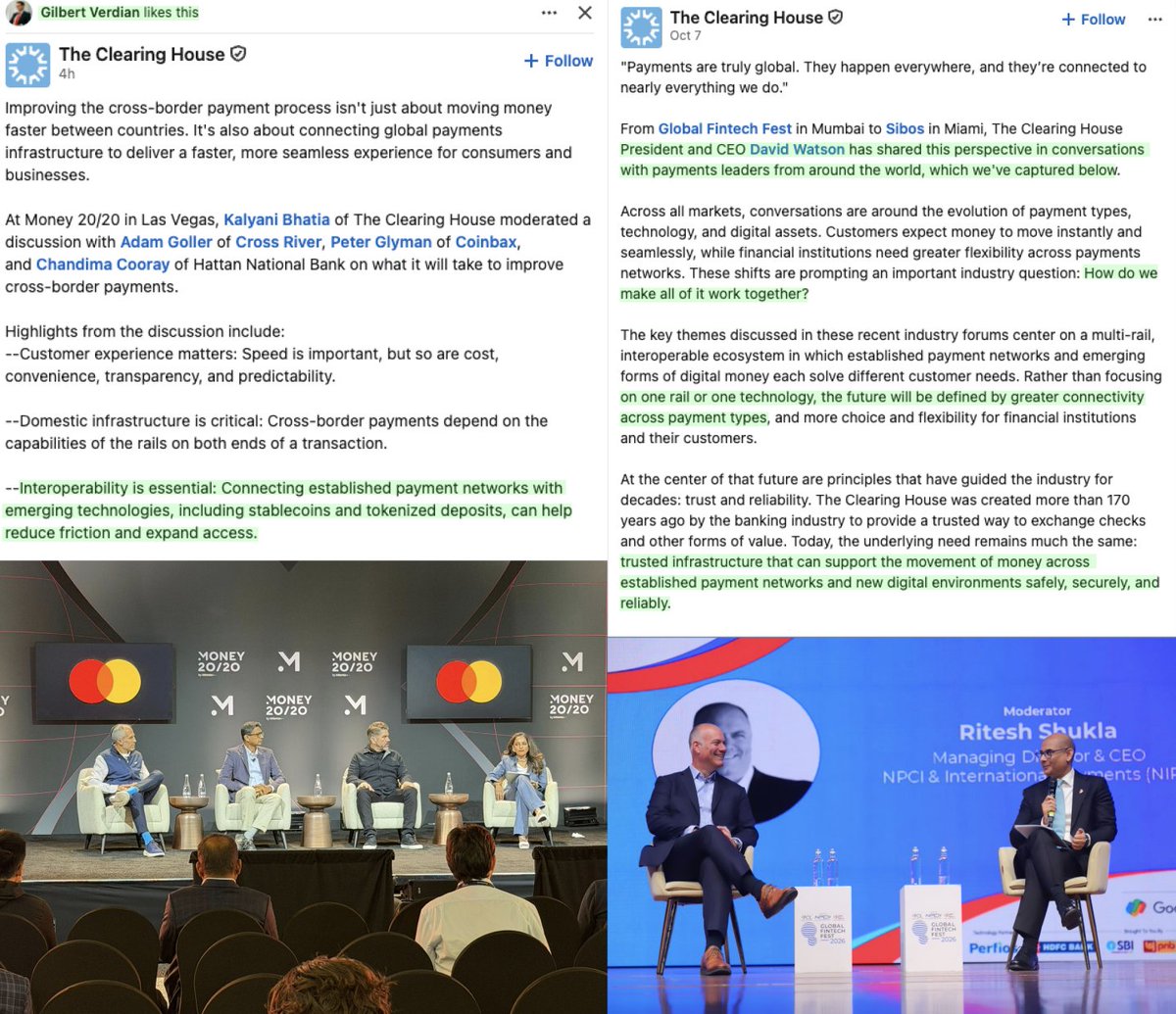
The Clearing House attending some key finance events
ONE point they keep discussing:
INTEROPERABILITY
Almost like they've found their solution. But I QUANT figure out what it is🤔
$QNT
So it was 2021 and those million dollar NFT headlines had me intrigued enough to try and figure out what the big deal was. I happened upon these animations, scrolling shifting characters and glyphs. Very cool looking, but somehow they were also this floating 3d mega-structure? A thread about how i explored the terraforms
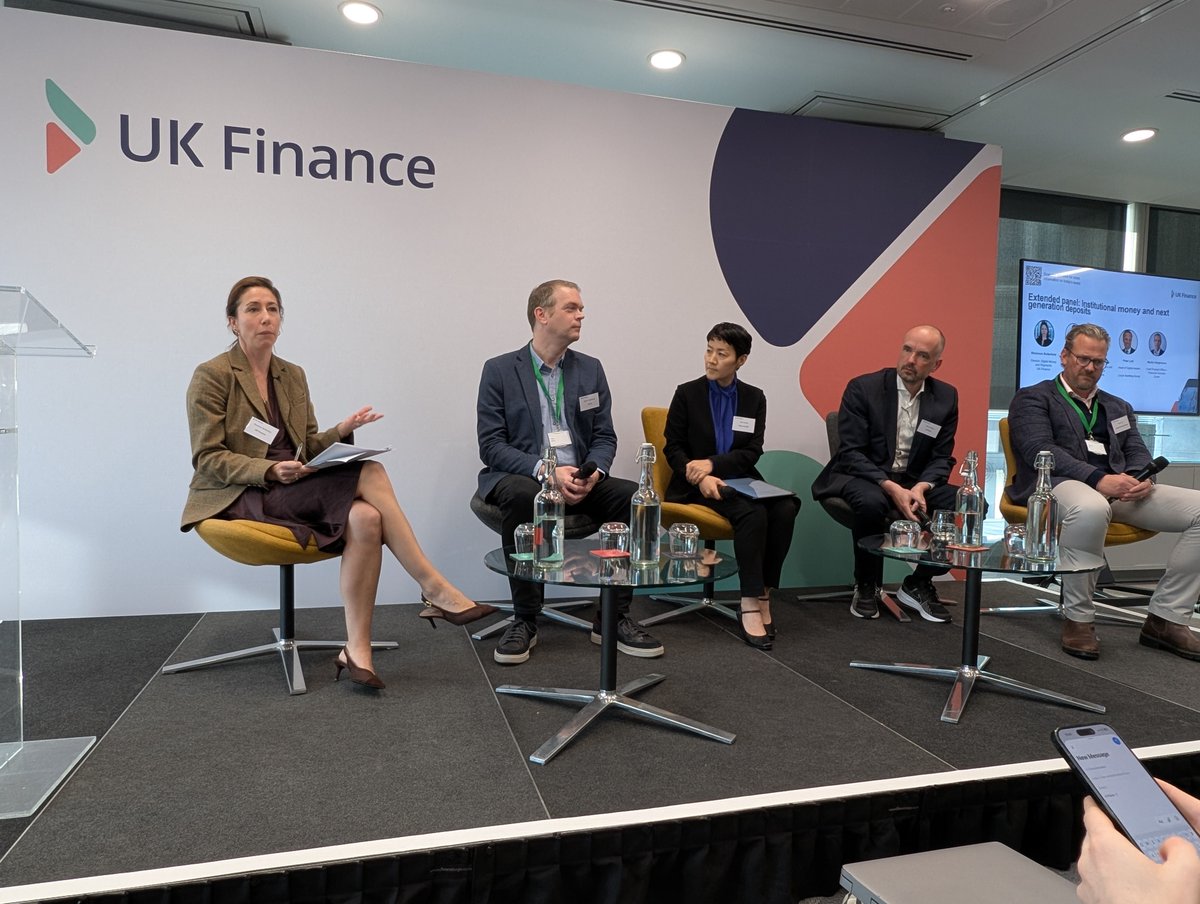
Yesterday at @UKFtweets's Tokenised Markets and Money Conference 2026, our Chief Product Officer, Martin Hargreaves, joined a panel exploring how #tokeniseddeposit initiatives from the UK, Japan, the US and Germany can connect across borders.
“Connecting tokenised deposit networks across borders comes down to standards, rulebooks and overlapping participation to create commercial corridors. It’s a more complex journey than #stablecoins, but tokenised deposits bring advantages stablecoins don’t, so it’s worth the work,” said Martin.
Thanks to @UKFtweets for hosting. Look out for our key takeaways article next week.
#DigitalAssets #ProgrammableMoney
$QNT READ THIS 2 TRILLION TIMES AND UNDERSTAND THE MAGNITUDE OF THIS!!
💥💥💥
CHIPS (The Clearing House) clears ~$2T+ daily in high-value USD payments among 43 major banks, including JPMorgan, Bank of America, Citi, Wells Fargo, HSBC, Deutsche Bank, Barclays, and BNP Paribas.
Banks and payment infrastructures have invested in new rails and standards. Yet #settlement still lags behind messaging.
Most #crossborderpayments settle sequentially: leg one, then leg two. In the gap between them, risk, cost, and failed settlement can creep in.
Synchronised settlement closes that gap. Both legs settle together, or neither does.
Live deployments across the UK, Europe, and Latin America show it’s already possible.
https://t.co/H12RIQySKe
What Quant Network is building will revolutionize the global financial system.
And we’re only beginning to see the scale of it.
ethereum:0x4a220e6096b25eadb88358cb44068a3248254675
🔥NEW $QNT Update is LIVE
In this 1 Hour long Deep Dive I uncover some key recent details across Quant
• SWIFT SIBOS Discussions
• More hints to DCJPY
• Connections w TD Bank
• Capgemini Partner Details
• LSEG x UK GBTD
Tokenised deposits have moved quickly from concept to execution. Issuing them inside one bank is now well understood. The harder part is moving them between banks, across borders and onto the settlement rails the financial system already relies on.
In our latest article, our Chief Product Officer, Martin Hargreaves, looks at how #tokeniseddeposits and #stablecoins do different jobs, where use cases are taking hold, from intragroup liquidity to the cash leg of securities transactions, and how funds earmarking could connect regional networks: https://t.co/PCdx9aG0eD
#Programmability #DigitalMoney
Quant’s bank network is built for tokenized deposits. Here’s how they differ from stablecoins
@TCHtweets, which runs the US RTP and CHIPS payment systems, picked @quantnetwork to build its On-Chain Money network. It’s set to open to US banks in the first half of 2027.
A tokenized deposit is ordinary bank money recorded on a blockchain. Canada’s bank regulator confirmed in September that it remains a deposit, so holders keep a claim on the bank, and the token is tied to the bank’s health.
A stablecoin comes from a separate issuer that backs it with reserves. The GENIUS Act bars those issuers from paying holders interest, but exchanges can still pay rewards. The CLARITY Act would ban rewards on balances, though it stalled in the Senate in September.
Tokenised assets are ready to move. If the cash leg doesn’t move with them, the risk stays.
Our recent paper with Murex shows how #programmablesettlement synchronises cash and asset across ledgers, while teams keep working in MX.3.
Read the paper here: https://t.co/We0Jbjm8mC
#Tokenisation
Quant has partnered with Dentsu Soken to support tokenized deposits and bank-issued stablecoins in Japan. Dentsu Soken builds settlement systems for Japan's leading financial institutions, including one compatible with BOJ-NET.
@quantnetwork