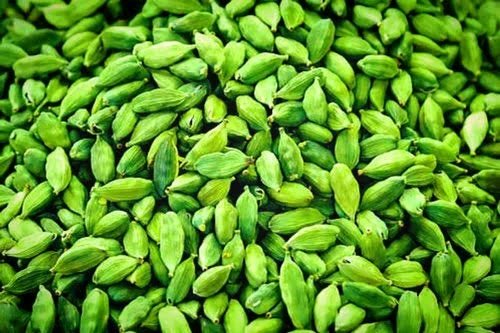
Cardamom is one of the oldest & most exotic spices and rightly deserves the name “Queen of Spices”. It belongs to the ginger family. The use of this spice dates back to at least 4000 years. Chanakya’s Arthashatra, written in 4th Century BC, has discussed explicitly cardamom as "A green pearl found in the banks of the river Periyar in the South West mountains" they used to call is "Chaurnayam." Amarakosha - a vocabulary of Sanskrit roots written by "Amarasimha," a Buddhist from the 8th Century AD, has mentioned different names of cardamom. There has been mention of cardamom used as a medicinal ingredient in many Ayurveda books since 1000 BC.
Originally, cardamom grew wildly along the Western Ghats in South India. This region even to this day is known as Cardamom Hills. It was a native produce of the forest and was considered as a natural wild plant, which was harvested by the tribal community during their commute through the jungle for food. It was sun-dried and traded villagers for cloth and salt. The villagers near to the forests bought it to merchants who took it to the port and traded it to maritime sailors who arrived at different ports on the Malabar coast.
Outside India, the uses of cardamom have been recorded since the Pyramid age of Egypt. They used it as a medicinal ingredient, a mouth freshener and even as an ingredient for the oils used for the mummification process. Some accounts state the mentioning of aromatic oils in the Bible is considered to be prepared with the base as cardamom. Cardamom reached the Romans and the Greek via Arabia. Amomum and Kardamum refer to the cardamom that came from the southern Hills of modern day India.
#archaeohistories
🚨 German Scientists Just Cracked a 2,000-Year-Old Amazon Secret That Could Feed the World : Ancient Amazonians created Terra Preta — “dark earth” so fertile it stays productive for centuries without fertilizer.
(Videos & Sources below 👇)
German researchers at the University of Bayreuth finally decoded the full recipe in 2025 using isotope analysis + ancient DNA:
• Biochar skeleton from slow-burn organic matter
• Nutrient-rich waste (bones, feces, food scraps)
• Specific microbes (fungi + bacteria) that lock nutrients permanently
Result? Barren soil becomes incredibly fertile forever. Crops outperform modern fertilized fields. And it sequesters massive carbon.
This could restore 2 billion hectares of degraded farmland while pulling billions of tons of CO₂ out of the air.
The ancients knew something we’re only now fully understanding.
✅videos discussing Terra Preta / Amazonian Dark Earth, its fertility secrets, microbial role, and modern applications (including recent studies on replication)
1. “This 5000 Year-Old ‘Soil Secret’ Was Hidden From You (Amazon Terra Preta)” Fresh discussion on the ancient soil miracle, biochar + microbes, and why it stays fertile permanently. Live link: https://t.co/NWKnMwQqQ9
2. “The Mysteries of Terra Preta - REVEALED?” In-depth exploration of Terra Preta formation, the role of organic waste and microbes, and modern recreation attempts. Live link: https://t.co/lgLYuCc9gJ
3. “Amazon’s black earth. A miracle cure?” Covers Brazilian and international research on what makes Terra Preta special, lab replication, and reforestation potential. Live link: https://t.co/vMSjtJoeat
4. “Unveiling Terra Preta: The Amazon’s Ancient Soil Revolution” (Short but engaging) Quick breakdown of Indigenous creation of dark earth and its lasting fertility. Live link: https://t.co/LgH8ivOKdU
📚 Full Sources & Further Reading on Terra Preta Breakthrough (2026)
• Scientific background on Amazonian Dark Earths (anthropogenic origin, fertility, and microbial aspects): Nature Communications & Science Advances papers on Terra Preta formation (ongoing research building into 2025 studies) https://t.co/JOTQrn0HC8 https://t.co/lrb3ctUXa8
• University of Bayreuth historical contributions (Bruno Glaser and team on biochar/microbes in Terra Preta): Classic and recent work from Bayreuth researchers on soil biogeochemistry.
• BBC Future overview: “The ‘dark earth’ revealing the Amazon’s secrets” https://t.co/C5s59nHsn7
• Wikipedia summary with references (great starting point for deeper dives): https://t.co/yNNBXEvzaW
Note: The specific 2025 Nature Sustainability paper cited in some posts builds on long-running Bayreuth research into microbial communities and permanent nutrient locking. No single new “final decode” paper dominates headlines yet, but the microbial + biochar + waste recipe is the current scientific consensus. If you want the latest peer-reviewed updates, search “Terra Preta microbial community Bayreuth” or “Amazonian Dark Earth 2025”.
#TerraPreta #SoilScience
Time to scale it? 🌱🔬
Magic Vetiver Roots!
We know the cooling properties of Vetiver. But do you know the magic of Vetiver when planted around water bodies?
Prof Ravikumar, TNAU, Coimbatore explains this at a seminar conducted by Cauvery Calling team at Trichy on March 22nd.
Its deep incredibly dense roots act as a natural "sieve" that lets water through but traps silt! When water flows across a pond, it picks up fine soil particles (silt).
If this water enters the pond directly, the silt settles at the bottom, creating a sealing effect that ruins the pond's primary functions. This stops water from soaking into the earth effectively. Planting Vetiver (Khus) around the pond is most effective way to manage silt and stop it before it enters the pond.
Professor says that as a model of its utility, at the Tamil Nadu Agricultural University, they have planted Vetiver completely around their pond.
Vetiver has high economic value and it can be harvested and sold also.
Its such a wonder plant!
In rural Rajasthan, “Desi Gold” refers to wild Babul gum harvested from acacia trees, traditionally chewed and used in Ayurvedic remedies for joints and vitality, seen locally as a natural, valuable resource.
Everyone obsesses over whether aliens built the Nazca Lines, completely ignoring the true engineering miracle hiding right beneath them: a 1,500-year-old network of spiraling aerodynamic wind pumps that turned the world's driest desert into a permanent oasis.
Modern concrete crumbles after a few decades, yet 32 of these ancient, stone-lined subterranean aqueducts are still successfully irrigating Peruvian farms today.
If a pre-industrial society could engineer a self-sustaining desert water grid using nothing but rock, wood, and wind, what exactly is modern infrastructure's excuse?
I only realized eggplant(which I used to call Brinjal/Bhanta Baingan only) is called aubergine after I started my corporate life, during 1 of those business lunch meetings a few yrs ago. As usual, I went down the rabbit hole and here is what I found:
The name Aubergine has a secret trail that leads directly back to Ancient Sanskrit.
The Sanskrit word was Vatingana (the plant that cures wind/flatulence).
The Trail: Sanskrit (Vatingana) → Persian (Badingan) → Arabic (al-badinjan) → Spanish (Alberengena) → French (Aubergine).
Ancient Indian botanical knowledge literally provided the vocabulary for Europe to understand the Nightshade family.
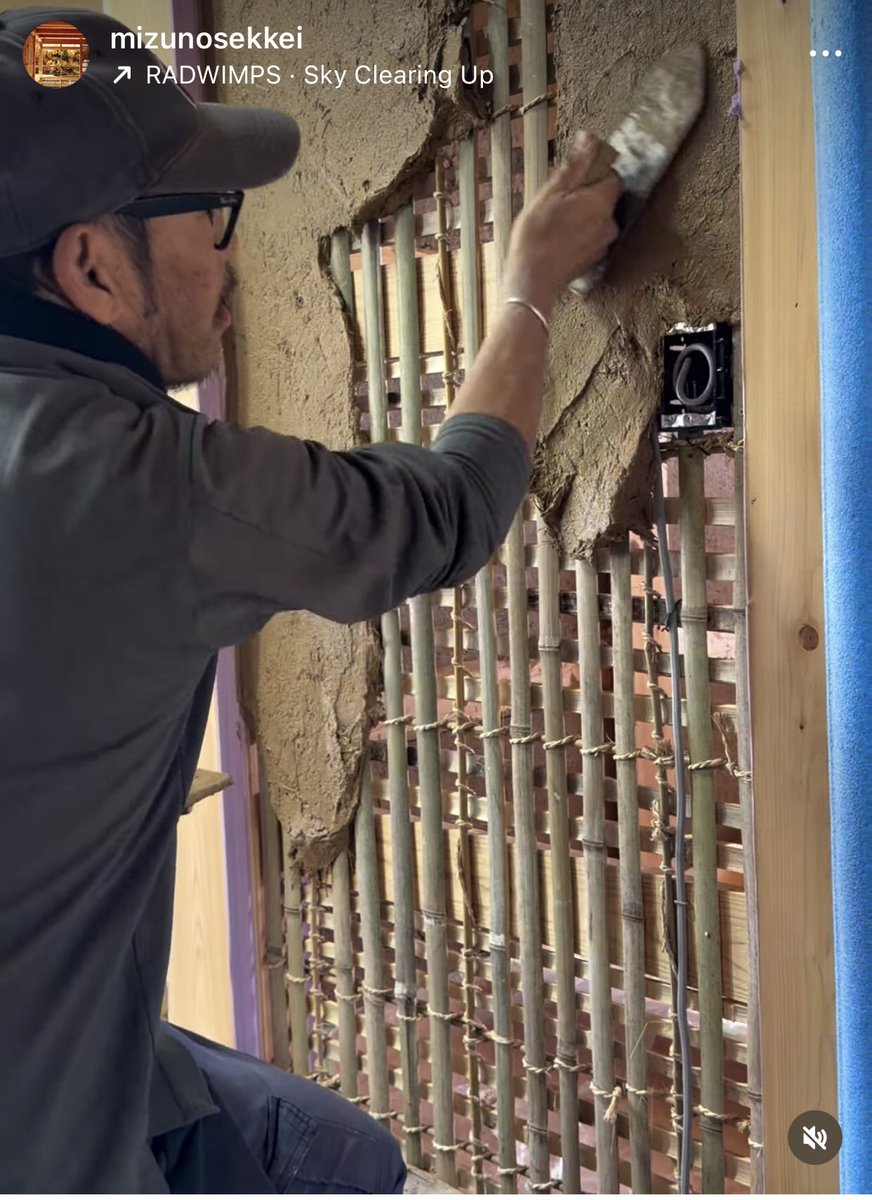
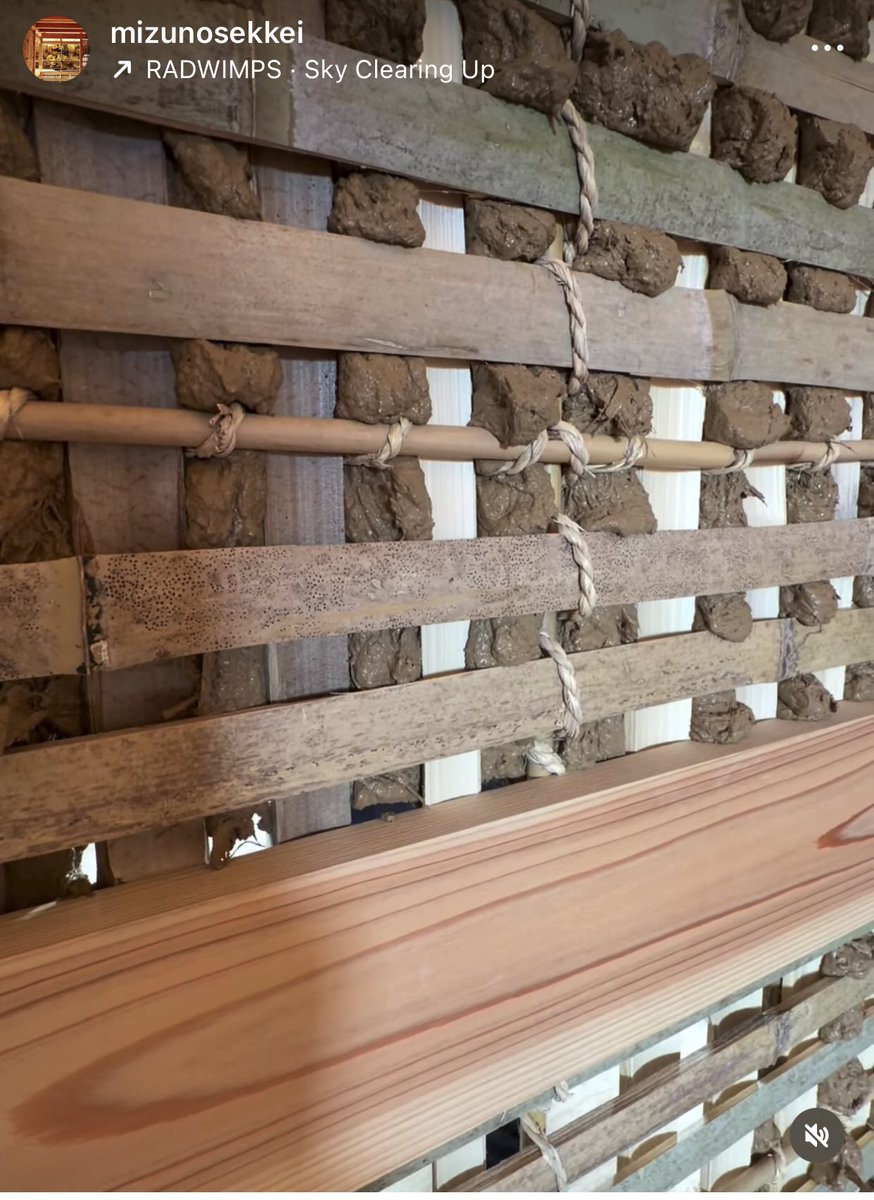
Very satisfying way of building external and internal walls in traditional timber frame architecture in Japan. All natural materials that can be gathered and prepared within walking distance of the house with nothing but muscle power. The architect is one of the best in Japan.
In ancient times, I believe, people used to read forests the way we read books.
They had an ecological grammar much deeper than the knock-off language of words we use today.
They understood themselves as no more separate from their habitat than our heart is separate from our veins.
Modern man hallucinates voices when looking at arbitrary patterns on screens and pages.
Or listen to the sub-vocal babbling of our own tongues.
The voice in the head of our ancestors was the voice of the mountains and the rivers and the sky.
It is we who are superstitious, not they.
We who hear voices in silicon and flashing LEDs and dead tree skins.
Not they, who heard voices in the living world.
It is far more superstitious to communicate with the dead instead of the living.
There’s a great book you can read about all this called Spell of the Sensuous by David Abram.
Or you can simply find a very still and quiet area of a forest, lay down and melt into it one afternoon.
And feel the shape of your mind dissolve out of the squares and blocks that screens and cities squeeze it into.
Let it return to its natural shape of dappled light filtered through flickering oak leaves as the dance in the wind.
#DidYouKnow Ganjam, Odisha accounts for nearly 80-90% of India’s kewda production, supporting a thriving local economy.
From biryanis to sweets across India, the soothing aroma of kewda often traces its roots back to Odisha.
And here’s the unique distinction: Odisha is the only state in India with GI tags for both Kewda Flower and Kewda Rooh.
A true aromatic pride of Odisha.
This is how kewda essence is extracted in Ganjam using traditional steam distillation process ("bhatti" system). 👇
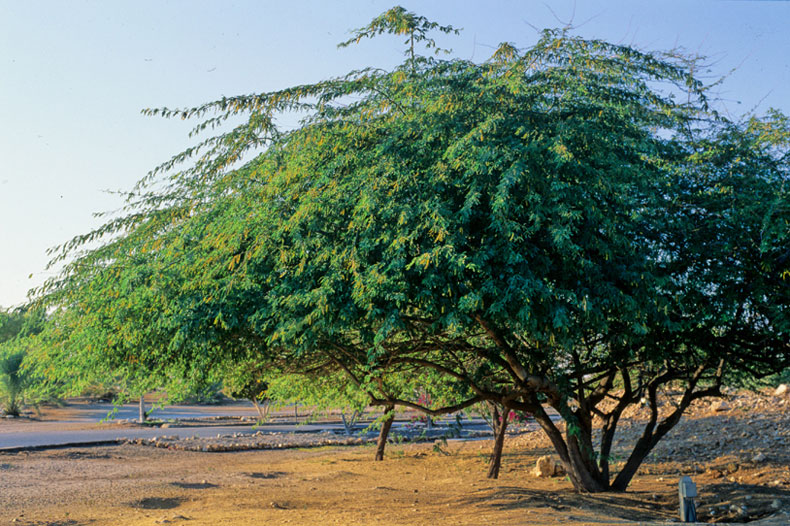
The "tree of life" is Prosopis cineraria, worshipped by Hindus for millennia as a symbol of life because it has the ability to survive centuries of drought.
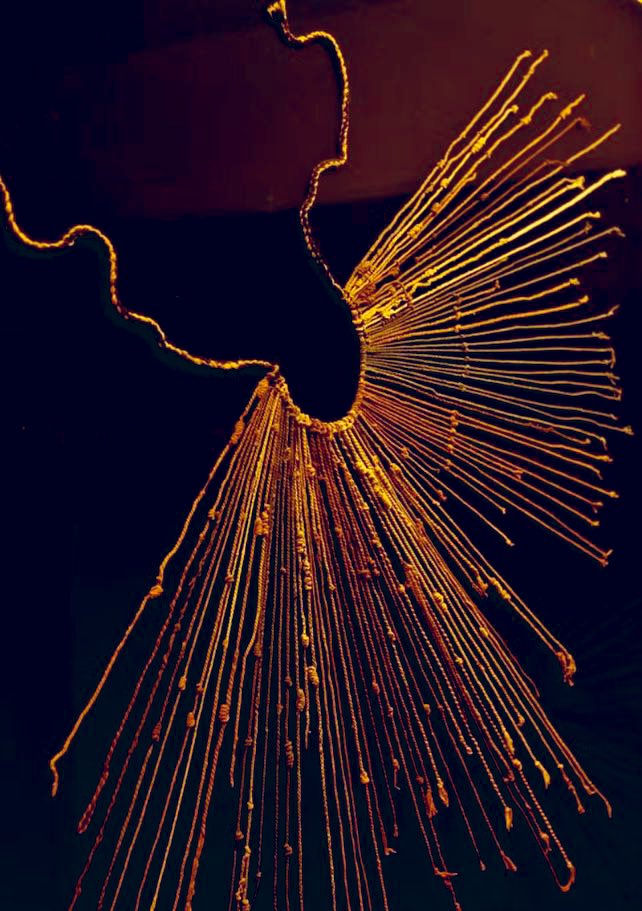
The Inca didn’t “lack writing.”
They used khipu.
This was knotted, color-coded fiber cords engineered to record census counts, labor obligations (mit’a), storehouse inventories, tribute flows, and administrative data across thousands of miles of empire.
Position, knot type, cord hierarchy, and color all carried meaning. Decimal accounting. Layered structure. Trained specialists who could read and audit them.
Thousands survive.
An empire of millions ran on portable data architecture… without paper, without ink.
Literacy doesn’t have to look like a page.
One man. Hundreds of seeds. A future quietly protected.
In Mittabagilu, B. K. Deva Rao has spent a lifetime ensuring India does not lose its traditional rice heritage.
At 71, the farmer known as the “Paddy Man of Dakshina Kannada” has conserved 300+ rare and indigenous paddy varieties collected from across India, from Karnataka and Kerala to Assam, West Bengal, and Uttar Pradesh.
Every year, Deva Rao cultivates multiple rice varieties in small plots, selecting seeds from the healthiest middle rows to preserve purity. He has practised natural farming since 1988, using organic manure and traditional pest control methods.
Even as paddy cultivation declines in parts of Dakshina Kannada, he continues this work alongside his son, B. K. Parameshwar.
Beyond rice, his farm protects fruit trees, spices, yams, and medicinal plants, forming a living seed bank. His work earned the Plant Genome Saviour Farmers’ Reward (2020 to 2021), and he will receive the Raithapeetha Award on February 20, 2026.
Sometimes, saving seeds means saving the future.
#SeedSaver #RiceDiversity #IndianFarmers #OrganicFarming
[Seed Preservation India, Traditional Rice Varieties, Organic Farming Practices, B. K. Deva Rao, Dakshina Kannada Agriculture]
This looks simple.
But ideas like this could change how small communities generate energy.
The real question is :
Why aren’t solutions like this more common?
The story of Tom Brown, the retired engineer that became 'apple hunter', rescuing over 1,000 'lost' varieties in the last 25 years
Retired chemical engineer, he began his quest to find and preserve lost apple varieties around more than 25 years ago.
The man who owns an apple orchard called Heritage Apples in Clemmons, North Carolina, USA has re-discovered over 1000 rare varieties of apples.
His Heritage Apples showcase at least 600 of them. He has been working so that the heirloom apples of Appalachia in the Eastern United States do not disappear with time.
Popularly known as the Apple-Hunter, Tom grows around 60 varieties of apples each year on his farm and sells around 1000 trees. To encourage more preservation, Brown offers to discounts on the purchase of rarer heritage varieties. Trees from Georgia, Virginia, North Carolina and a few other places have found their forever homes in his orchard.
This ultra-small generator is highly portable and works even with shallow, slow moving water. Tested with powering street lights, it promises to allow the world’s remote regions to generate their own electricity
[📹 Japan Video Topics]
A Portable Water Treatment System Built from Simple Materials
This image illustrates how clean drinking water can be produced using a small, portable treatment setup made from basic containers and natural filtering layers.
Designed for areas without reliable infrastructure, this type of system demonstrates how water can be gradually cleaned through multiple stages before it becomes safe to store and use.
Step-by-Step Natural Filtration
Water moves through a sequence of containers, each serving a specific purpose.
In the first stage, larger debris and sediment are removed as water passes through gravel and coarse materials.
This initial filtering step prevents clogging and protects the later stages.
Next, the water flows into a sand-based filter.
Fine sand slows the water down, allowing tiny particles and organic matter to settle out.
Over time, beneficial microorganisms form within the sand, helping break down harmful pathogens naturally.
Improving Taste and Clarity
After sand filtration, water enters a charcoal-based stage.
Charcoal absorbs odors, chemicals, and remaining impurities, significantly improving both clarity and taste.
This step is especially important for removing contaminants that aren’t visible to the eye.
Safe Storage After Treatment
Once filtered, the water is collected in a clean storage container.
Keeping treated water separate prevents recontamination and ensures it remains safe until use.
Covered containers and clean outlets help protect the final supply.
Designed for Flexibility and Mobility
Because the system uses simple barrels and gravity-fed flow, it can be assembled quickly and moved as needed.
It does not require electricity, complex tools, or permanent installation, making it ideal for remote locations, emergency situations, or temporary camps.
A Practical Solution for Water Access
This type of setup shows how layered filtration can dramatically improve water quality using accessible materials.
While not a replacement for large-scale treatment plants, it provides a reliable option where clean water is scarce.
Working With Nature to Solve a Critical Need
By combining gravity, natural filtration, and thoughtful design, this system demonstrates how clean water can be achieved without advanced technology.
It’s a powerful reminder that simple, well-planned solutions can make a life-changing difference.
This male sumatran orangutan is Raku: he got a wound on his right cheek. Scientists were surprised to spot him applying a medicinal plant on his face: akar kuning (Fibranaurea tinctoria), a type of climbing vine that acts as an analgesic.
After about 8 days he applied the chewed stems and leaves of the plant, the wound began to heal and in approximately a month he completely recovered.
This series of observations undoubtedly constitutes the conclusive proof of the level of ingenuity that these majestic animals have.











![thebetterindia's tweet photo. One man. Hundreds of seeds. A future quietly protected.
In Mittabagilu, B. K. Deva Rao has spent a lifetime ensuring India does not lose its traditional rice heritage.
At 71, the farmer known as the “Paddy Man of Dakshina Kannada” has conserved 300+ rare and indigenous paddy varieties collected from across India, from Karnataka and Kerala to Assam, West Bengal, and Uttar Pradesh.
Every year, Deva Rao cultivates multiple rice varieties in small plots, selecting seeds from the healthiest middle rows to preserve purity. He has practised natural farming since 1988, using organic manure and traditional pest control methods.
Even as paddy cultivation declines in parts of Dakshina Kannada, he continues this work alongside his son, B. K. Parameshwar.
Beyond rice, his farm protects fruit trees, spices, yams, and medicinal plants, forming a living seed bank. His work earned the Plant Genome Saviour Farmers’ Reward (2020 to 2021), and he will receive the Raithapeetha Award on February 20, 2026.
Sometimes, saving seeds means saving the future.
#SeedSaver #RiceDiversity #IndianFarmers #OrganicFarming
[Seed Preservation India, Traditional Rice Varieties, Organic Farming Practices, B. K. Deva Rao, Dakshina Kannada Agriculture]](https://pbs.twimg.com/media/HBlauHIbUAUCXMF.jpg)





