writing will genuinely change your life more than motivation ever will. not in some cringe “manifest your dream life” way. i mean in a very real, practical way. most people never actually stop long enough to understand what’s going on inside their own head. they just react to life all day. scroll when they feel uncomfortable. distract themselves when things get quiet. jump from one dopamine hit to the next. but writing forces you to slow down for a second and actually look at your thoughts instead of running from them. and the weird part is you usually don’t even realize what you truly think until you start writing it down.
writing doesn’t just record your thoughts it creates them. ideas start flowing that you didn’t even know were there. patterns start showing up. emotions start making sense. problems become easier to solve because they’re no longer this giant fog floating around in your head. writing organizes your mind. every high performer, every sharp thinker, every person who just gets it, they all write. It keeps showing up as the common thread. not the expensive stuff. not the complex stuff. Just pen and paper. they write because feelings are vague but words are precise. every time they sit down and search for the exact word to describe what’s inside them, they become a sharper, more powerful communicator.
“people follow the person who can say what they mean and mean what they say. writing every day is how you build that muscle until it becomes second nature.”
over time, all that accumulated writing becomes a resource you can draw from forever. the more you write, the more material you have to solve problems, connect dots and think bigger.
the better you get at putting thoughts into words, the better you get at communicating in general. and honestly, communication controls a huge part of your life. like relationships, opportunities, business, confidence, influence, all of it comes down to how clearly you can express yourself. and no, you don’t need to be some amazing writer either. your grammar doesn’t need to be perfect. nobody cares. half the benefit comes from simply getting thoughts out of your head and onto paper.
some of the best writing advice i’ve ever heard was:
“write badly. just write.”
because the moment you stop trying to sound smart or perfect, your real thoughts finally start coming out.
even 30 minutes a day changes something in you. you become calmer because your mind isn’t carrying around a thousand unprocessed thoughts anymore. you become more self aware because you start noticing your own habits and emotional patterns. you become more articulate because you’re practicing turning feelings into language every single day.
if you write every day, your future self gets to sit down and read exactly how far you’ve come. i think that’s more valuable than any photo album.
who knows maybe one day all that writing becomes a book, a course, something you give your children. at the very least, it becomes proof that you were here, that you grew, that you tried.
that’s one of the coolest parts about it. writing lets you watch yourself evolve with time.
seriously. start writing. doesn’t matter if it’s in a notebook, your notes app, twitter wherever. just sit, think about your thoughts and write.
just sit down for 30 minutes and let your mind speak for once. and watch yourself becoming unstoppable.
Adam Carolla has an old line about how if you want to destroy somebody’s life, just give them free rent in a shitty little house. You’ll come back 30 years later and find them still living in that shitty little house, because it was just too good of a deal for them to go out and do all the things that they would’ve otherwise done to improve their lives.
BREAKING: Marco Rubio just said the quiet part out loud.
Americans work 40+ years…
Pay taxes.
Follow the rules.
Build the country.
Then retire on $800, $900, maybe $1,000 a month.
Meanwhile, new arrivals can allegedly receive more support from the same system they never paid into.
Read that again.
The people who built America are being pushed to the back of the line.
This is not compassion.
This is a government priority problem.
America First was never just a slogan.
It was a warning.
Who comes first?
The taxpayer… or the system?
@0xexpt This is exactly the sort of thing your current suppliers have and even with no batch numbers and peptaura still backs them after tests show they sent wrong compounds.
This paragraph by C.S. Lewis hits so hard:
“Good and evil both increase at compound interest. That is why the little decisions you and I make every day are of such infinite importance. The smallest good act today is the capture of a strategic point from which, a few months later, you may be able to go on to victories you never dreamed of. An apparently trivial indulgence in lust or anger today is the loss of a ridge or railway line or bridgehead from which the enemy may launch an attack otherwise impossible.”
Of Nobel Prize winners in the 20th century, here are the percentages of atheists/agnostics by prize: Literature (35%), Medicine (8.9%), Chemistry (7.1%), Economics (5.2%), Physics (4.7%), and Peace (3.6%). For the outstandingly talented religious faith and reason seem to coexist.
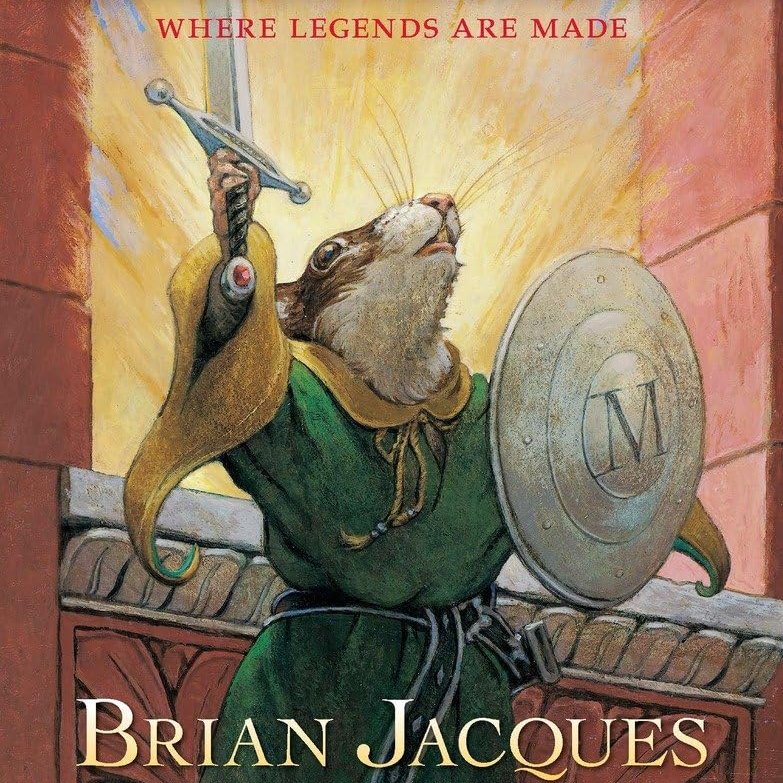
Brian Jacques explains why he does not have sympathetic villains in his Redwall series:
"When I was a boy, morality was taught in school and in church but I think that is no longer true to the extent that it used to be. I try to create very clear moral signposts of what is right and what is wrong. The children who read my books are generally at an age where they need to have things spelled out in 'black and white,' without ambiguity. I often tell my readers that my baddies are bad and my goodies are good. I won't have sympathetic baddies and schizophrenic goodies in my books."
Should more writers do this?
I’m noticing a lot of foreigners who seem to not understand why we’d risk hundreds of lives, spend millions of dollars, and sacrifice several aircraft to rescue one guy. And the reason they don’t understand is also the reason people can’t be made American by a piece of paper.
The story behind the New York Times’ 1903 claim that human flight was between one and ten million years away is even worse than it looks.
Once you understand the backstory, you realize that the New York Times story is not really about flight at all but about how elites and credentialed “experts” mistake their own failures for the boundaries of possibility.
The New York Times did not dismiss the possibility of powered flight at random. There was a very specific reason behind it. At the time, America’s most prominent scientific authority, Smithsonian Secretary Samuel Langley, had been showered with large amounts of taxpayer funding to build an aircraft, the Langley Aerodrome. Despite all the money, institutional backing, and elite prestige, Langley and his team could not get it to fly, culminating in a series of very public failures, the last on December 8, 1903.
So when the New York Times declared that flight was millions of years away, what it was really saying was that if the most credentialed and well-funded “experts” cannot do it, then it cannot be done.
A mere nine days later, the elites’ proclamation of impossibility lay in ruins. Two totally unknown bicycle mechanics from Ohio achieved the first powered flight using improvised parts, a few hundred dollars of their own money, and sheer persistence.
The story of flight is, at its core, a story of the triumph of American individualism over elite credentialism. The fact that it was the New York Times that inadvertently delivered the proof is the most fitting conclusion imaginable.
There is a species of ant that approaches the edge of another colony, kills a single worker, and then takes on the dead ant’s scent.
For ants, scent is everything. Wearing that scent, the intruder walks in with no resistance. The workers pass by without concern.
The intruder moves inward, toward the queen, then It sprays the queen with a different scent that makes the workers turn on her. Then they surround her and kill her.
The intruder does not need to fight anyone. The colony does the work itself.
Once the queen is gone, the intruder reproduces. The true invader is no longer an intruder. It is the future.
This is how ideological takeover works.
A destructive foreign ideology takes the scent of familiar ideas and walks in as if it belongs.
It speaks the native vocabulary, justice, equality, compassion, rights, progress. It uses these words and quietly changes what they point to.
Then it moves inward.
It alters how foundations are perceived. Responsibility is made to smell like cruelty, law like oppression, borders like hatred, tradition like danger, history like guilt.
At that point, the civilization turns on itself.
Its courts, universities, churches, media, and bureaucracies begin treating their own foundations as threats. They believe they are defending the system.
They are enforcing what now smells legitimate. They do not see the intruder because it sounds exactly like them.
And when the founding principles are finally removed, discredited, dismantled, erased, the foreign ideology does not need to conquer anything. It inherits what is left.
The queen is gone. The colony is no longer itself.
The most effective conquest is the one that convinces a society that its own foundations are the enemy, and that killing them is an act of virtue.