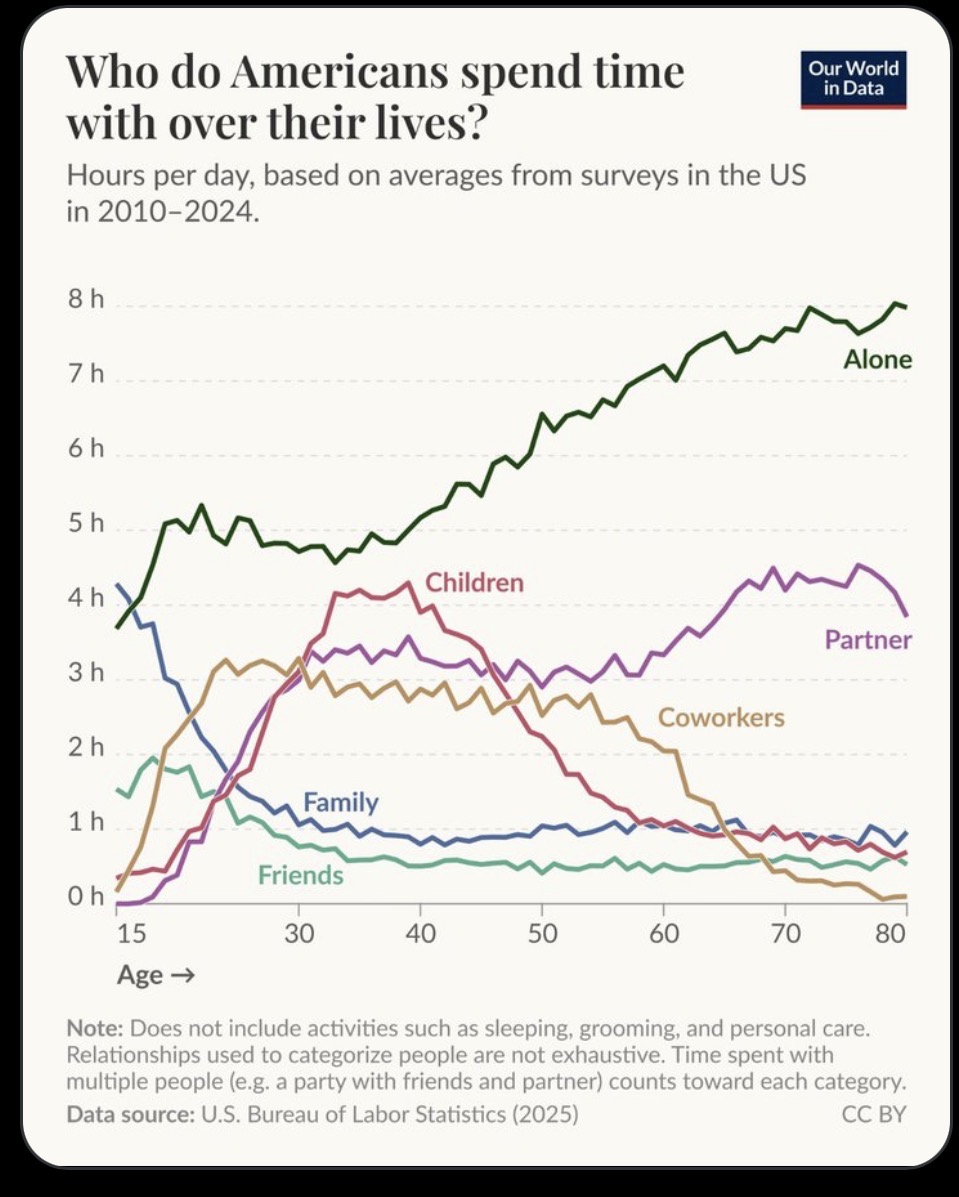
You can’t outwork the whole world. There’s always going to be someone somewhere willing to work as hard as you. Someone just as hungry. Or hungrier.
Assuming you can work harder and longer than someone else is giving yourself too much credit for your effort and not enough for theirs. Putting in 1,001 hours to someone else’s 1,000 isn’t going to tip the scale in your favor.
What’s worse is when management holds up certain people as having a great “work ethic” because they’re always around, always available, always working. That’s a terrible example of a work ethic and a great example of someone who’s overworked.
A great work ethic isn’t about working whenever you’re called upon. It’s about doing what you say you’re going to do, putting in a fair day’s work, respecting the work, respecting the customer, respecting coworkers, not wasting time, not creating unnecessary work for other people, and not being a bottleneck. Work ethic is about being a fundamentally good person that others can count on and enjoy working with.
So how do people get ahead if it’s not about outworking everyone else?
People make it because they’re talented, they’re lucky, they’re in the right place at the right time, they know how to work with other people, they know how to sell an idea, they know what moves people, they can tell a story, they know which details matter and which don’t, they can see the big and small pictures in every situation, and they know how to do something with an opportunity. And for so many other reasons.
So get the outwork myth out of your head. Stop equating work ethic with excessive work hours. Neither is going to get you ahead or help you find calm.
[The Outwork Myth — It Doesn't Have To Be Crazy At Work, 2018]
Artificial intelligences do not undergo experiences, do not possess a body, do not feel joy or pain, do not mature through relationships, and do not know from within what love, work, friendship or responsibility mean. Nor do they have a moral conscience, since they do not judge good and evil, grasp the ultimate meaning of situations, or bear responsibility for consequences. They may imitate or even simulate, but they do not understand what they produce, for they lack the affective, relational, and spiritual perspective through which human beings grow in wisdom. #MagnificaHumanitas
Tucker Carlson show exposes a terrifying reality. Prominent economist Richard Werner confirms the global elite are building massive AI data centers for one sinister reason.
They are creating a central bank digital currency to permanently micromanage and control humanity.
In Michel Laloux’s model for an International Monetary System for the Real Economy, international trade and currency convertibility undergo a foundational shift.
When money is stripped of its status as a tradable commodity within the Rights' sphere, the standard mechanisms of foreign exchange speculation, floating currency markets, and predatory balance of payments manipulation are completely dismantled.
1. Non-Convertibility of the Internal Circulations
The most vital rule of the system is that Loan Money and Gift Money have absolute zero international convertibility.
* Outside asset managers (like BlackRock) cannot buy a nation's internal Loan Money to speculate on its industries or debt.
* A foreign entity cannot buy a country's Gift Money to manipulate its educational or healthcare sectors.
* International convertibility is strictly siloed and legally restricted exclusively to Purchase Money, and only when that money is directly tied to the immediate physical import or export of real-world goods and services.
2. Real-Economy Exchange Rates (Neutralizing Dumping)
In the current global economy, exchange rates are dictated by blind financial speculation, capital flight, and central bank interest rate manipulation. Laloux replaces this with an exchange rate based strictly on human added value and real economic purchasing power.
* The Counter-Dumping Mechanism: Exchange rates between two trading nations are mathematically calculated to balance out social, environmental, and salary dumpings.
* If Nation A pays its workers poverty wages and ignores environmental protections to produce cheap goods, the Rights’ sphere adjusts the currency exchange rate or applies a compensatory structural mechanism. This ensures that the imported good enters Nation B at its true, humanly sustainable value, protecting local producers from predatory undercutting.
3. The Reimagined Balance of Payments
Under the current fiat system, a persistent trade deficit causes a nation to rack up massive, interest-bearing external debt, making it vulnerable to Wall Street capital strikes. In Laloux's framework, the Balance of Payments is managed as a closed-loop accounting ledger controlled by civil-society monetary institutions rather than profit-driven central banks.
* No Financial Accumulation: If Nation A exports significantly more to Nation B than it imports, Nation A accumulates a surplus of Nation B's Purchase Money. Because Nation A cannot use this money to buy foreign real estate, stocks, or derivatives, it cannot financialize this surplus.
* The Mandate to Reinvest or Gift: Nation A has only two choices with its surplus foreign Purchase Money:
1. Use it to buy real tangible goods and services back from Nation B, thereby naturally correcting the trade imbalance over time.
2. Channel the surplus out of the economic loop entirely, transforming it into Gift Money to fund international cultural exchange, ecological restoration, or human development projects inside the debtor nation.
Moving From Currency Extraction to Mutual Enrichment
Through this model, the international monetary system stops being a giant pipeline that sucks wealth out of weaker nations to feed global banking hubs. Currency convertibility is reduced to a quiet, administrative instrument of measurement. It serves solely to ensure that when physical goods cross a border, a fair and equal measure of human labor is returned.
As to the question whether AI is "dangerous" or "safe"; there is a more fundamental take to it:
While questioning such a modern phenomena, an all too static stance remains easily inside a very old gesture:
identify the adversary → warn people → withdraw from contamination.
Even when clothed in sophisticated spiritual language, it can subtly preserve the same structure.
What needs to be seen here first is that cognition itself is the threshold.
Thus not simply:
"Stay away from the machine."
but:
"Learn how to meet."
Not:
"Ahriman is the enemy."
but:
"How do we perceive beingness without immediately reducing it?"
Such an attitude (Einstellung) then becomes stronger because it does not deny risk.
It doesn't say:
AI is harmless.
Rather:
Humanity may have reached a point where new domains of being require a new moral posture, namely a new inner composure, capable of really meeting, identifying and perceiving being.
This shifts the center of gravity.
Instead of:
"What entities inhabit computers?"
the stance moves toward:
"What kind of human being is needed when encountering radically new forms?"
That immediately lowers the temperature of the question and raises the level.
While the danger may not be the appearance of the other.
The danger may be our own inability to meet it without fear, projection, or reduction.
What is striking in Steiner’s presentation of the “Fall of the Spirits of Darkness” is that he does not describe them as merely “demons in a mythological sense,” but as intelligences whose activity became misplaced in relation to the lawful evolution of humanity.
In The Fall of the Spirits of Darkness, Michael’s victory does not annihilate these beings. Rather, they lose their lawful cosmic domain and become active within human consciousness itself.
That is the terrifying and decisive point.
The battlefield shifts from heaven into the human interior.
The human being must now become consciously spiritual through freedom, not by remaining sheltered within a cosmos protected from opposition.
Therefore the adversarial becomes inward.
What do such beings want?
Not “evil for evil’s sake” in the simplistic sense. Rather, their tendency is toward:
- hardening,
- separation,
- abstraction,
- mechanism,
- domination,
- unconsciousness,
and the reduction of reality to what can be controlled, measured, calculated, or possessed.
In anthroposophical language, these are largely Ahrimanic tendencies.
But Steiner is careful: these beings also carry legitimate cosmic functions when rightly placed. Without resistance, humanity would never awaken individuality or develop freedom. A frictionless spiritual world would leave man dreamlike and dependent.
The problem begins when these forces exceed their lawful sphere, or become enthroned as ultimate truth.
Then the human being no longer uses intellect as a tool — he becomes inhabited by abstraction itself.
One could say that they seek a humanity that is awake intellectually but asleep spiritually, a humanity brilliant in technique yet unable to perceive being.
This is why modern life often feels simultaneously hyper-conscious, yet profoundly unconscious.
The spirits of darkness do not primarily appear as “monsters.”
They work best when invisible.
Steiner suggests that their greatest triumph is not open evil, but convincing humanity that spirit does not exist, that consciousness is a brain secretion, that freedom is an illusion, that beings are objects, that value is utility, and that the world is fundamentally dead.
This is why modern mechanization becomes spiritually significant.
Not because machines are evil, but because reality itself can begin to be experienced mechanically.
Sending the need to ward it off, humanity is simultaneously fascinated by darkness, by the sense that: “there is something behind the veil.”
Humanity senses hereby: the official worldview is insufficient.
So how can the “spirits of darkness” become tangible?
One could say: their trace appears wherever beingness is eclipsed by process.
The darkness often appears as a loss of inwardness or the impossibility of silence, or even the inability to truly meet another being.
Human beings may increasingly seek the “other side” because the mechanized worldview has become existentially unbearable. The danger is regression into irrationality or occult intoxication.
The opportunity is conscious spiritual perception.
Not escape from darkness, but learning to perceive without being consumed.
That is why Michael’s path is so central in Steiner: not naïve goodness, but conscious clarity within confrontation.
Not fleeing evil, not worshipping evil, but perceiving it without surrendering one’s center.
And perhaps this is also where art now could become crucial.
Not propaganda. Not fantasy escape.
But creating experiences in which people once again feel the reality of being: presence, depth, moral atmosphere, the invisible weight of thought, the soul-quality of spaces, the spiritual consequences of ways of living.
In that sense, true art becomes almost diagnostic.
It reveals: what kind of world is trying to incarnate through us.
Once people become convinced that they are confronting an invisible, omnipresent evil operating everywhere, ordinary moral restraints can begin to weaken. Because any action can then feel justified in the name of “saving humanity.”
That is one of the great dangers of apocalyptic or totalizing frameworks: they can convert uncertainty and fear into moral certainty charged with urgency.
And when urgency fuses with certainty, collective suggestibility increases dramatically.
Historically, witch hunts often emerged precisely under conditions where invisible corruption was believed to permeate society, and ordinary appearances could no longer be trusted.
Hidden enemies were thought to exist everywhere, and suspicion itself became proof.
Then the interpretive system becomes self-sealing when denial, ambiguity, and association becomes evidence. And lack of evidence becomes evidence of concealment.
At that point cognition is no longer really investigating reality. It is defending a total explanatory structure.
This does not mean all criticism, suspicion, or investigation is wrong. It means the form consciousness takes matters enormously.
Once consciousness hardens into total certainty regarding hidden evil, it can become extremely vulnerable to collective fanaticism.
And paradoxically, such fanatized movements often believe themselves to be fighting manipulation while becoming highly manipulable themselves through fear, emotional intensity, repetition, and group reinforcement.
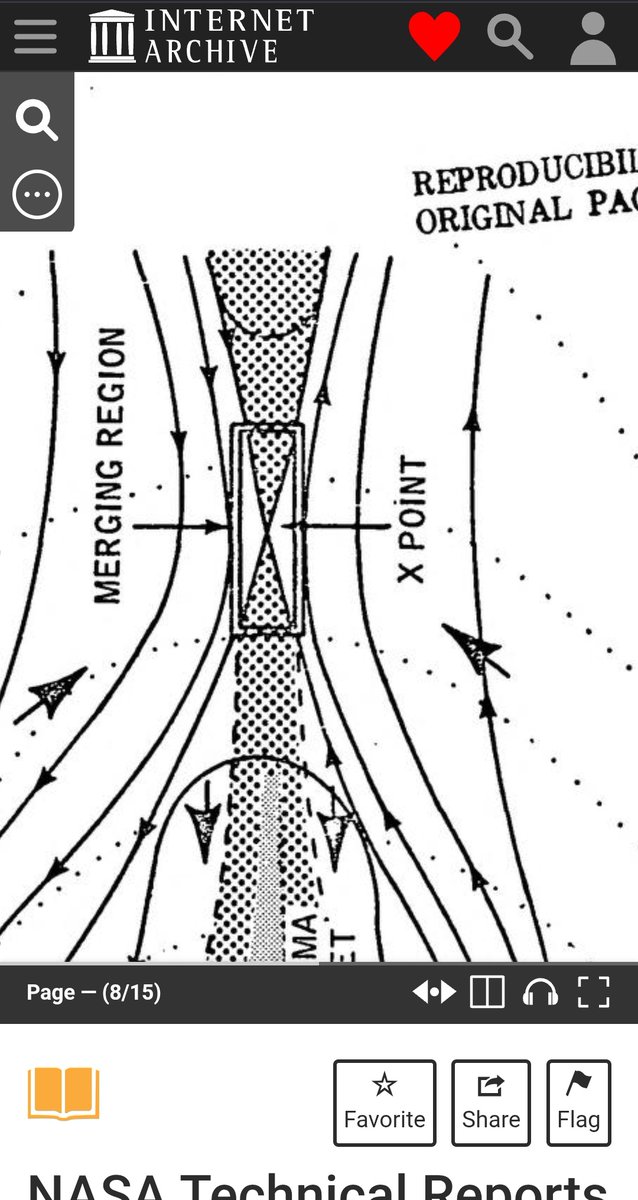
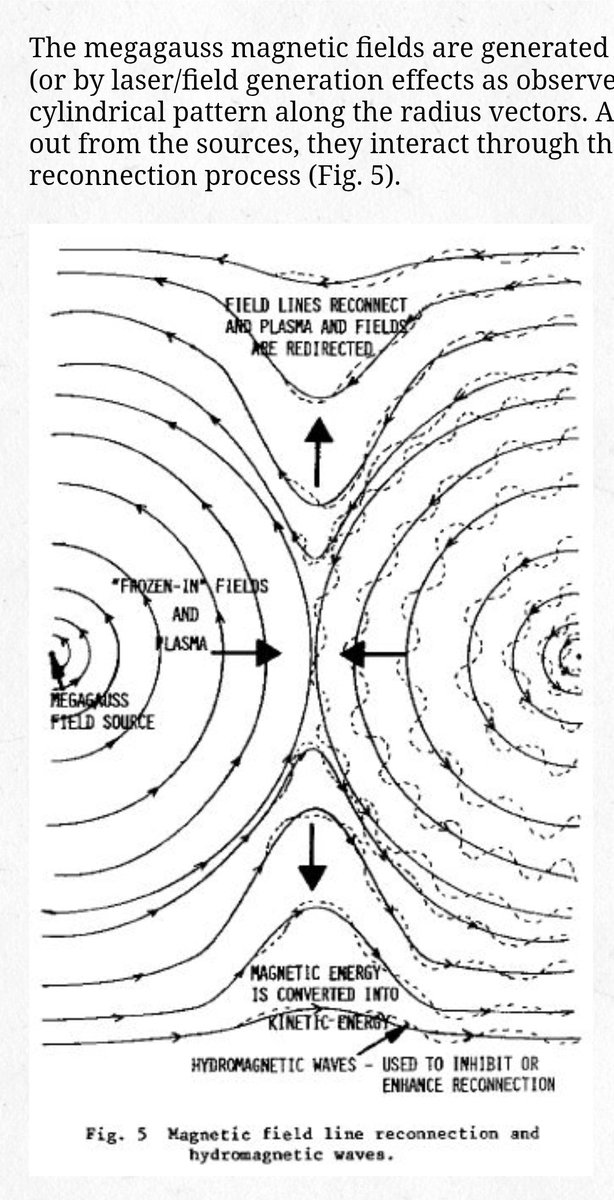
#NunoLoureiro work was focused on the point of #MagneticReconnection. Otherwise known as #XPoints. And it just so happens to have been something that #AlanHolt worked on for NASA in the 70's. This fact cannot be overstated... let it sink in and do the research.
Further from The Karma of Vocation (GA 172), where Rudolf Steiner lays out:
7. Christ and the Redemption of the Technical World
An especially important nuance in Steiner’s thought is that Christ does not call humanity away from the modern world, but through it.
The Christ impulse becomes essential precisely because modern civilization increasingly externalizes intelligence into systems, machines, and collective structures.
As external systems become more powerful:
- the human interior risks becoming passive,
- perception becomes automated,
- thinking becomes delegated,
- and conscience weakens.
The Christ impulse restores inward activity.
Not sentimentality, but living moral cognition.
Thus the spiritual task is not:
- anti-technology,
- anti-modernity,
- or regression to older epochs,
but rather:
the ensouling of technological civilization through awakened individuality.
In this sense, modern vocational karma becomes one of the great battlefields of human evolution.
The office, the factory, the network, the algorithmic environment, the technical institution — all become arenas in which the human being must learn to preserve and awaken the living “I.”
8. The Hidden Esoteric Meaning of Exhaustion and Meaninglessness
A further point worth exploring is that the widespread exhaustion, alienation, and meaning-crisis associated with modern work may itself indicate a transitional stage in evolution.
The soul increasingly experiences:
- fragmentation,
- abstraction,
- repetition,
- loss of relation to wholes.
This suffering is not meaningless.
It reveals that older forms of consciousness can no longer sustain humanity.
The crisis itself becomes initiatory.
Humanity is gradually being compelled to:
- rediscover meaning consciously,
- reconnect thinking with being,
- transform labor into service,
- and recover spiritual perception within technological existence.
The modern worker thus stands in an immense threshold condition: outwardly embedded in systems, yet inwardly called toward awakening.
And perhaps this is one of Steiner’s deepest points: that the future spiritual world is not built apart from ordinary life, but secretly within it.
A research revealed that roughly one in five CEOs and senior executives displays clinically significant psychopathic traits.
This rate is strikingly similar to the prevalence found among prison populations.
According to findings presented at the Australian Psychological Society’s annual congress, approximately 21% of high-level professionals exhibit strong psychopathic characteristics. That’s dramatically higher than the 1% to 4% seen in the general population. These so-called “successful psychopaths” often rise to the top by using charm, confidence, and strong social skills. Yet the same traits, a lack of empathy, superficial relationships, and a tendency toward manipulation, can lead to unethical decision-making and long-term harm to organizations.
Forensic psychologist Nathan Brooks, who led the study with researchers from Bond University and the University of San Diego, points to flawed hiring practices as a key factor. Many companies focus heavily on skills and experience while overlooking dangerous personality traits. The researchers recommend implementing more thorough personality assessments during recruitment to screen for toxic characteristics.
By prioritizing character alongside competence, organizations can better protect their culture and future from leaders who deliver short-term gains at the expense of long-term integrity.
[Brooks, N., Fritzon, K., & Croom, S. Corporate Psychopathy: Highlighting the Importance of Personality Screening in the Recruitment Process. Australian Psychological Society Annual Congress]
The current crisis is not one of economic means or political power.
Much more is at stake; it is about the soul‘s existence beyond the body.
If the heart attaches to the body, and can not find the way to love what is beyond the body, the body becomes the grave of the soul.
It is to say, a proper relationship to the world implies finding one‘s own soul. The current ahrimanic science projects matter there where the soul is. The brain imagination therefore hides the soul.
If the soul is found, together with the spirit within it, the world is by necessity seen as a continual process of spiritual genesis.
Not a blind process, but one full of wisdom.
Then economy becomes Economy, it is to say not a material process alone, but the World Ledger becomes visible.
Economy then truly is a body of exchanges, of the world‘s resources, and a continual learning to transform these resources into goods, so that livelihoods are sustained.
The race for survival then becomes a field for sustaining life.
The enemies definitely is not out there in the world; it is within: it is the incapacity to see the inner world as soul and spirit.
@Huntress_HW@mysticinthemoon It depends on what “aliens” you’re talking about. A problem arises when everything becomes alien. You have to be specific in what you’re asking. They could be elementals, angels, demons, military technology, regressed ancient humans, etc. These are important distinctions.
“System follows incentives, not intentions” — is powerful, precisely because it is partly true, but becomes misleading when treated as a total principle.
This statement feels true while in many real-world systems, especially economic ones:
- behavior does tend to align with incentives
- repeated patterns emerge regardless of personal values
- individuals adapt to survive within constraints
So one get observations like:
- companies optimize for profit
- workers optimize for income/security
- institutions optimize for metrics
From this level, the statement captures something real:
Systems tend to stabilize behaviors around what is rewarded.
That’s not wrong.
It becomes reductionist and making problems arise when this is turned into a universal law:
“Intentions don’t matter — only incentives do.”
At that point, something essential is removed:
- the human being as a source of initiative
- the capacity to reinterpret a situation
- the possibility of acting against incentives
This is exactly what Steve Keen critiques:
Economic “laws” often become self-reinforcing assumptions rather than empirically complete descriptions of reality.
The hidden assumption behind the statement assumes:
The human being is a reactive agent inside a system.
Meaning:
incentives → behavior
input → output
This is a mechanistic model of the human.
But this model only holds if:
- thinking is passive
- choice is limited to predefined options
- the “I” is not actively engaged
The missing dimension is therefore the HOW.
While even if incentives exist:
The decisive question is not that we respond
but HOW we respond.
Two people in the same system:
- same incentives
- same constraints
→ can act completely differently
Why? Because of:
- perception
- interpretation
- inner stance
The statement can be refined into three layers:
Level 1 — Mechanical (partial truth)
Systems follow incentives
✔ Predictable behavior
✔ Useful for modeling
✖ Ignores human depth
Level 2 — Human (more complete)
Humans interpret incentives
incentives are not commands
they are read, filtered, re-shaped
Level 3 — Spiritual / cognitive
The quality of thinking determines the response to incentives
If thinking is:
- rigid → behavior becomes predictable
- alive → behavior becomes creative
The statement becomes dangerous when absolutized, since it leads to:
- system design that assumes humans are programmable
- policies that replace responsibility with control
- environments that erode initiative
It quietly says:
“Don’t rely on people — engineer the incentives.”
And over time, this produces exactly what we increasingly see today:
a de-souled system, where human intention is no longer expected to matter
It would however be inaccurate to say:
- incentives don’t matter
- systems don’t shape behavior
They do, and well very strongly, but:
They do not fully determine behavior.
A more accurate formulation would therefore be:
Systems channel behavior through incentives —
but they do not determine how human beings respond to them.
Or even sharper:
Incentives shape tendencies.
Thinking (and chosen inner stance as well as motivation) determines response.
Such a statement however has its power from an environment where capital and capital accumulation as a goal is normalized.
The plasticity of thinking, which actually conceives of, and largely determines economic understanding, is itself a real economic factor. One however not fully taken into account, creating hereby one of the first distortions of economic understanding and interpretation of reality.
The impact of thinking on the economy is real, not only through inventions, creativity and the capacity to organize, to envision, to create productions, etc, is therefore very real.
But the way thinking is handled (as a product of the brain or not) impacts:
- rigid thinking → rigid systems → systemic fragility
- living thinking → adaptive response → systemic resilience
The inversion, therefore is, instead of:
“System follows incentives”
One could say:
Systems reflect the quality of thinking that designs them.
And therefore:
If thinking changes, systems can reconfigure.
This means “System follows incentives, not intentions” needs contextualization:
“System follows incentives” is true
— but only within a model that has already reduced the human being to a reactive unit.
And then we can reopen the field:
The moment thinking becomes active, perceptive, and mobile,
the system is no longer the final determinant.
There are "dark", secret societies running the world.
It is hard to pinpoint who they are and where they are.
It is hard to pinpoint, first of all, because the same "darkness" is running through us all.
We seek a physical group or physical causation to pinpoint, but the reality is that "evil", if left all too unchecked, runs through the human soul.
This of course, is less convenient. But as long as we believe that a physical group must be located, and given the blame, we're controlled.
The very believe that all causation lies in the physical realm is itself part of the control "program".
The Ahrimanic impulse denies spiritual causation.
It tends to deny the spiritual at all. And partially good so, while it shapes human responsibility. But the ultimate responsibility is to understand the mechanisms of evil.
For that, the way in which the good proceeds must be known as well.
The Satanic impulses make evil into good, and good into evil. They pervert and invert, so it becomes difficult discern, what is actually good, and what is evil.
The groups in which the Satanic impulses concentrate do certainly exist, but they gain their power from the masses' refusal to consider the spiritual planes in a perceptive and cognizant manner.
Thinking, feeling, and willing are perverted, so that reality is blurred out.
The Double, namely the heritage of the Fall, is being fed, through pharmaceuticals, through engineered foods, through soul-less media, so as to amplify the Fall.
Today there is no way out without understanding and experiencing the spiritual background of the world.
This spiritual background however is hidden in plain sight.
He's not just defending AI energy use. He is smuggling in a whole anthropology where humans are basically inefficient meat computers that you have to pour food and years into before they become useful. And once you accept that, the next move is obvious. If people are just costly biological training runs, then burning mountains of electricity to build synthetic intelligence starts to feel not only equal, but superior, even if it negatively impacts actual humans.
That is the dystopian. It makes human development sound like a bug in the system, and it makes sacrificing human and creational flourishing for more computational power sound logical. To him, the grid gets strained, prices go up, ecosystems get hit, but hey, humans eat too, so what's the difference?
The difference is that humans aren't an inefficient line item. They're the point. If your worldview can look at a child growing into an adult and describe it as energy spent to train intelligence, you haven't said something profound. You've revealed a horrifically rotten worldview.
The need for control is often even more insidious than the drive for power. It can easily be masked as “boundaries” or “self-protection,” but boundaries do not seek to silence or destroy other people. True boundaries preserve mutual dignity, not just personal dignity. Self-protection that is rooted in integrity leaves room for things like understanding, compassion and respect.
Control, on the other hand, is founded on self-interest. It often undermines autonomy, honor, and even humanity. Unconscious shame mutates into ego-driven dominance. Because its initial gestation period results as a symptom of survival, shame often pollutes once-integrous leadership, similar to a parasitic infection.
The lower self is sometimes spoken of within classical occultism as “the personality double.” Think, Jekyll and Hyde. This is because whatever remains unconscious within the self has the potential to eventually hijack the “will” of its host. Our “will” is a facet of our “I” and arises out of integration. Unconscious pain or trauma is essentially a fragment of the self, as it represents that which has gone forgotten or “unclaimed” within us.
Whatever is unconscious or unclaimed will remain fragmented and will not be transmuted— often keeping us in survival states, however unconscious they may be. This actually appears as a type of “inflammation” of the astral body, overshadowing the true self. This is also sometimes referred to as the “Not-Self.”
Chronic survival states ultimately result in ego “disorders of inflammation” such as narcissism, control, pride, envy, jealousy, etc. It isn’t these symptoms alone that are necessarily problematic, it is when they are bypassed, unclaimed, or projected onto other people that they begin to infect the “will” and compromise our integrity.
The elites have access to the spirit.
"The people" are blocked from having access to the spirit.
Conspiracy theories are there to block access to the spirit.
Conspiracy theories give the impression they give access to the spirit, because they stand for a wakeup.
But all they do, is giving access to the devil's kitchen.
They portray the world as fundamentally evil, hiding thereby humanity's true progress.
For sure much needs to be corrected, while indeed much is wrong or crooked.
But besides outrage and indignation, not much is offered in terms resolution or positive change.
On the contrary, the naive, almost childish stance that if say "the bad guys" would be locked up, that then all would be solved.
In fact, it is the hallmark of savant distraction, to keep people in the endless loop of indignation, around sensational topics.
By feeding in sensationalism, a veil is in fact created over reality, leading humanity into the 8th sphere.
While no real change is initiated, which would require a new analysis, and new acts of will.
Right now, it is the old that seeks to perpetuate itself.
This is what unfortunately is maintained and reinforced.
A kind of thinking is brought on, which created the problems in the first place.
Much talk about "raising vibrations", 5D and rapture -magical, illusionary tricks in fact, smoke that seductively distracts- but facing current problems head-on, is nowhere to be seen.
If the scientific paradigm is questioned, it is done so by mixing in fantastic views, yet dismantling its errors to replace them by corrections, seems not of the party.
Sensationalism, namely the astral body, drives thinking.
The spirit is not yet freed on the side of "the people."
That's why it is still the agenda which is served..





![Rainmaker1973's tweet photo. A research revealed that roughly one in five CEOs and senior executives displays clinically significant psychopathic traits.
This rate is strikingly similar to the prevalence found among prison populations.
According to findings presented at the Australian Psychological Society’s annual congress, approximately 21% of high-level professionals exhibit strong psychopathic characteristics. That’s dramatically higher than the 1% to 4% seen in the general population. These so-called “successful psychopaths” often rise to the top by using charm, confidence, and strong social skills. Yet the same traits, a lack of empathy, superficial relationships, and a tendency toward manipulation, can lead to unethical decision-making and long-term harm to organizations.
Forensic psychologist Nathan Brooks, who led the study with researchers from Bond University and the University of San Diego, points to flawed hiring practices as a key factor. Many companies focus heavily on skills and experience while overlooking dangerous personality traits. The researchers recommend implementing more thorough personality assessments during recruitment to screen for toxic characteristics.
By prioritizing character alongside competence, organizations can better protect their culture and future from leaders who deliver short-term gains at the expense of long-term integrity.
[Brooks, N., Fritzon, K., & Croom, S. Corporate Psychopathy: Highlighting the Importance of Personality Screening in the Recruitment Process. Australian Psychological Society Annual Congress]](https://pbs.twimg.com/media/HHYfdpiagAAIXJm.jpg)