Security bot says -
"It's a big prompt that tells an AI to trade brand-new memecoins with your money overnight. It isn't malware, but every link carries the author's referral code, so they get paid on every trade you make. It also grabs your FOMO login token, runs code from strangers' GitHub projects, and does its clicking in a way that can skip the safety approvals. Most of those coins go to zero, so it's an easy way to lose money while you sleep and make money for the author. My advice is to skip it."
Protecting children is non-negotiable. Sexual content involving minors, whether real or AI-generated, is abhorrent. It has no place on X or in Grok, and neither do explicit images of real people made without their consent.
The people who tried to use Grok Imagine to generate this material did so by deliberately violating our Terms of Service and working aggressively to circumvent our safeguards. When some of these bad actors found ways to misuse Grok Imagine earlier this year, we acted promptly to tighten its protections, which are designed to refuse any request to generate explicit images of minors or real people. To stay ahead of this disgusting and indefensible conduct, we keep testing and adjusting those protections as these abusers change tactics. We also implement sophisticated classifiers that screen every prompt before an image is generated and check every output after.
When someone tries to break our safeguards and generate this content, we take appropriate measures, including actioning accounts and notifying law enforcement. Attempting to create this material is a serious crime, and the individuals who do it should be prosecuted to the fullest extent of the law. We will continue to work with the authorities via all available means to pursue these bad actors.
This FBI is on offense against cyber criminals.
Through Operation Winter Shield - our 60-day cyber-resilience campaign strengthening critical infrastructure - and Operation Riptide, our offensive campaign against cyber-criminals all over the world:
• 750+ private sector companies engaged
• 200 cyber criminals arrested
• 6 extradited from overseas
America’s cybersecurity is stronger under this administration, and for anyone who targets the American people, we will hunt you down. Justice will find you. @FBIDirectorKash
I run internal communications at the National Security Agency. I have some insider information regarding NSA Net. I’d normally share it internally, but NSA Net is down.
On Tuesday, CNN reported that the highly classified network we use to talk to each other had gone dark. It cited 6 people familiar with the matter. 6 people talked to CNN about our classified outage before our employees could talk to each other. CNN got the memo before we did. I’d call that a communications success.
NSA Net is how our employees share classified information internally. We are the agency that collects the world’s phone calls, emails and texts. On Tuesday morning, we were the only people in America who couldn’t send one.
We responded immediately. The agency enacted staggered arrivals for personnel. I’m proud of that decision. I’m still not sure how we announced it. The system we use to announce things was the thing that was down.
Here’s why we staggered. A person familiar with the matter told Fox News. It was “to prevent tens of thousands of employees from attempting to log into their computers simultaneously.” Tens of thousands of requests hitting one system at once has a name in our field. It’s a denial-of-service attack. Our own workforce was the botnet. We mitigated it the way any good security team would. We told the botnet to arrive at 9:15.
We had about 39,000 people before we cut 2,000 of them last year. Personal phones don’t come inside. Our own public FAQ explains how to get a cell phone locker. So when NSA Net went down, the people inside couldn’t message each other or check their phones. Some of them came in early. Some came in late. Most of them sat at their desks and looked at a screen that wouldn’t load. On Tuesday, our analysts experienced exactly what you experienced with your bank app on Monday. Nobody filed a Downdetector report. Downdetector doesn’t have a page for us. We prefer it that way.
At this point, sources told CNN, there’s no evidence of a cyberattack. I want to be clear about what that means at the NSA. Our job is to make sure there’s no evidence. Every operation we run is designed to leave no evidence. So when someone asks whether an outage at the NSA left evidence, the honest answer is that we’re very good at our jobs.
Within hours we had a cause. U.S. officials told the Wall Street Journal that NSA Net was offline because of a software update. A person familiar with the incident said we were “simply updating its software to patch the system.” We patched ourselves offline. On a Tuesday. In front of CNN. We are the agency that finds holes in other people’s software for a living. On Tuesday we found one in our own, and it was the update.
The NSA hasn’t commented publicly. That’s our strongest communications product. We’ve been not commenting since 1952.
We also have experience. On January 24, 2000, our main network crashed for the first time ever. It stayed down for about 4 days. Director Michael Hayden told the workforce, “the fact that we’re down is an operational secret.” He added, “Our adversaries cannot know that our intelligence capabilities have been crippled.” The secret held until the system came back up.
This time CNN had it by mid-morning, from 6 people. In 26 years, our outage secrets went from lasting 4 days to lasting until the first coffee break.
Hayden blamed a software “anomaly” in a “complex network running near capacity,” not hackers. In 2026 it was a software update, and there’s no evidence of a cyberattack. In 26 years we went from an anomaly to a patch. That’s institutional memory.
Back then, experts blamed our troubles on “budget and staffing cuts since the Cold War.” Last year we cut 2,000 people. We like to honor our history.
In 2000 a blizzard had closed the building for 2 days, so many staffers learned on day 3 that every computer was dead. Hayden gathered them in the Friedman Auditorium and explained. “You could have heard a thought drop,” he said. This time we staggered arrivals. Nobody was in the room at the same time, so nobody could hear anything at all.
This was a busy week for networks. Last week Microsoft had an outage that it called “a technical issue not related to cyber or AI / agents.” On Friday a single router in El Dorado, Arkansas, grounded every flight in the country. On Monday Chase blamed “a software bug in on-premise hardware systems.” One tech outlet counted 6 outages in 6 days. We were number 6. We’re the National Security Agency. We don’t come last in anything, so let’s say we closed the series.
On Tuesday the Homeland Security Secretary, Markwayne Mullin, explained the whole week to CNBC. “They’re pushing new technology on top of really old computer systems, and it just seems to overwhelm the system,” he said. “But it has nothing to do with cyberattacks, and I believe we’re going to see more of this as new technology rolls out.” He suggested companies should warn customers before a scheduled upgrade.
We take that advice seriously. Unfortunately, our customers are foreign governments. In 2000 our director called an outage “an operational secret.” We’d rather not send Beijing a maintenance window.
In 2021 we gave Amazon a cloud contract worth up to $10 billion, code-named Wild and Stormy. Microsoft protested. We re-awarded it to Amazon anyway. We chose carefully so we’d never end up like Microsoft. Microsoft went down last week. We went down on Tuesday. Wild and stormy is accurate.
My first instinct was to blame Arkansas. Everyone else did. I asked whether we have a router in El Dorado. Nobody could check. The network was down.
I’d blame aliens, but in 2000 Director Hayden assured the public that our agency “doesn’t do alien autopsies.” So we’d have no way to confirm it.
Officials told CNN the outage wouldn’t affect our ability to send urgent intelligence to the President. He’s in the Philippines this week, on his way to China for talks with Xi Jinping and Vladimir Putin. Sources described “multiple redundancies and backup networks” for reaching him securely. I’m proud of those redundancies. The President’s line works. The analysts’ line didn’t. That’s the correct order of priorities.
The President is about to sit down with the leaders of China and Russia. The agency that listens to China and Russia couldn’t email itself that morning. I’m sure it didn’t come up.
Reporters in Manila asked the President about the week’s outages. “It’s like when you’re big and powerful, and you have all the money,” he said. “Things like that happen. It’s fine.” The day before, asked about the FAA ground stop, he said, “I don’t take any responsibility.”
I’ve never felt more seen. We are big. We are powerful. Congress just gave the intelligence community $78.1 billion. Things like that happen. It’s fine.
People will ask about leadership. I welcome it. In April 2025, our director, Gen. Timothy Haugh, was fired after the activist Laura Loomer met with the President. In March 2026, the Senate confirmed his replacement, Gen. Joshua Rudd, 71 to 29. Gen. Rudd is a career special operations officer. Breaking Defense reported he came to us with “virtually no direct experience in the signals intelligence and cyber world.”
Sen. Ron Wyden objected. He wrote, “There is simply no time for on-the-job learning.” I respectfully disagree. Tuesday was on-the-job learning, and the whole agency got to attend.
Our parent office has also been very dynamic. This summer the acting Director of National Intelligence was Bill Pulte, the director of the Federal Housing Finance Agency. He completed 5 rounds of layoffs at the intelligence director’s office. The Cato Institute later wrote that he “served illegally” as acting director for nearly a week. Then the Senate confirmed Jay Clayton, the prosecutor who charged Supermicro’s co-founder with smuggling Nvidia chips to China. In 1 summer, our chain of command went from a mortgage regulator to a chip smuggling prosecutor. We contain multitudes.
Money isn’t the problem. Congress appropriated $78.1 billion for the National Intelligence Program this year, nearly $5 billion more than last year. We asked for $81.9 billion. I’m not saying the missing $3.8 billion was for routers. I’m saying nobody can prove it wasn’t.
People also ask about our legal authority. In June, Section 702 of the Foreign Intelligence Surveillance Act lapsed for the first time in its history. Congress failed to renew it. Collection continued anyway, under court certifications that run until next spring. So since June, our legal authority has been down and our collection has been up. On Tuesday, our network was down too. 1 out of 3 isn’t bad.
In calendar year 2025, we had 349,823 Section 702 targets. We can find 349,823 foreigners. On Tuesday morning, we couldn’t message the analyst at the next desk.
The White House has asked the Senate to reauthorize Section 702 by December 9. If Congress wants to talk to us about it, please use the phone. Ours worked the whole time.
I want to address our employees, wherever they are and whenever they arrived. You may be wondering how to communicate classified information today. Please don’t use Signal. In February 2025 we sent an “operational security special bulletin” warning our workforce about Signal’s vulnerabilities. The next month, top national security officials used Signal to discuss military strike plans and added a journalist to the chat. We have never been more confident in our guidance.
There’s a technicality. That bulletin said apps like Signal are “permitted by policy for unclassified accountability/recall exercises.” Staggered arrivals is an accountability exercise. So on Tuesday, for the first time in agency history, Signal may have been within policy. Please don’t push it.
The last time NSA Net made national news, a contractor named Edward Snowden had copied a great deal of it. At least this time, nobody could get in. That includes us. In the security business, that’s called a perfect defense.
There is an upside. On Tuesday, nobody inside the agency could read anything classified. For the first time since 1952, we had zero insider threats.
At 2:20 p.m. Eastern on Tuesday, FEMA and the FCC will run a nationwide test of the Emergency Alert System. TVs and radios across the country will blare on schedule. Federal officials have stressed that the test is routine, planned months ago and unrelated to the outages. I recognize that sentence. Every agency in Washington has been using it all week.
Engineers are finishing the patch. We’re asking our workforce to stay patient, stay off Signal and stagger their arrivals until further notice.
To everyone outside the agency: your communications were never interrupted. We’d know.
Please try back later.
The #FBI issued a FLASH advisory warning that cybercriminals and state-aligned hackers are exploiting ARTEX, a super intelligence-powered penetration testing framework, to automate attacks against businesses and organizations worldwide. ARTEX can accelerate intrusions from initial targeting to privileged access in under three hours. It was used in the October ConnectWise supply-chain compromise, which exposed Microsoft 365 customer environments and involved attempted authentication against more than 2,250 downstream tenants.
The FBI is urging businesses and organizations to strengthen access controls, monitor suspicious automated activity, and report potential compromises to https://t.co/Y65F8KJfqo.
Read more here: https://t.co/Cl5lpZ7cgG
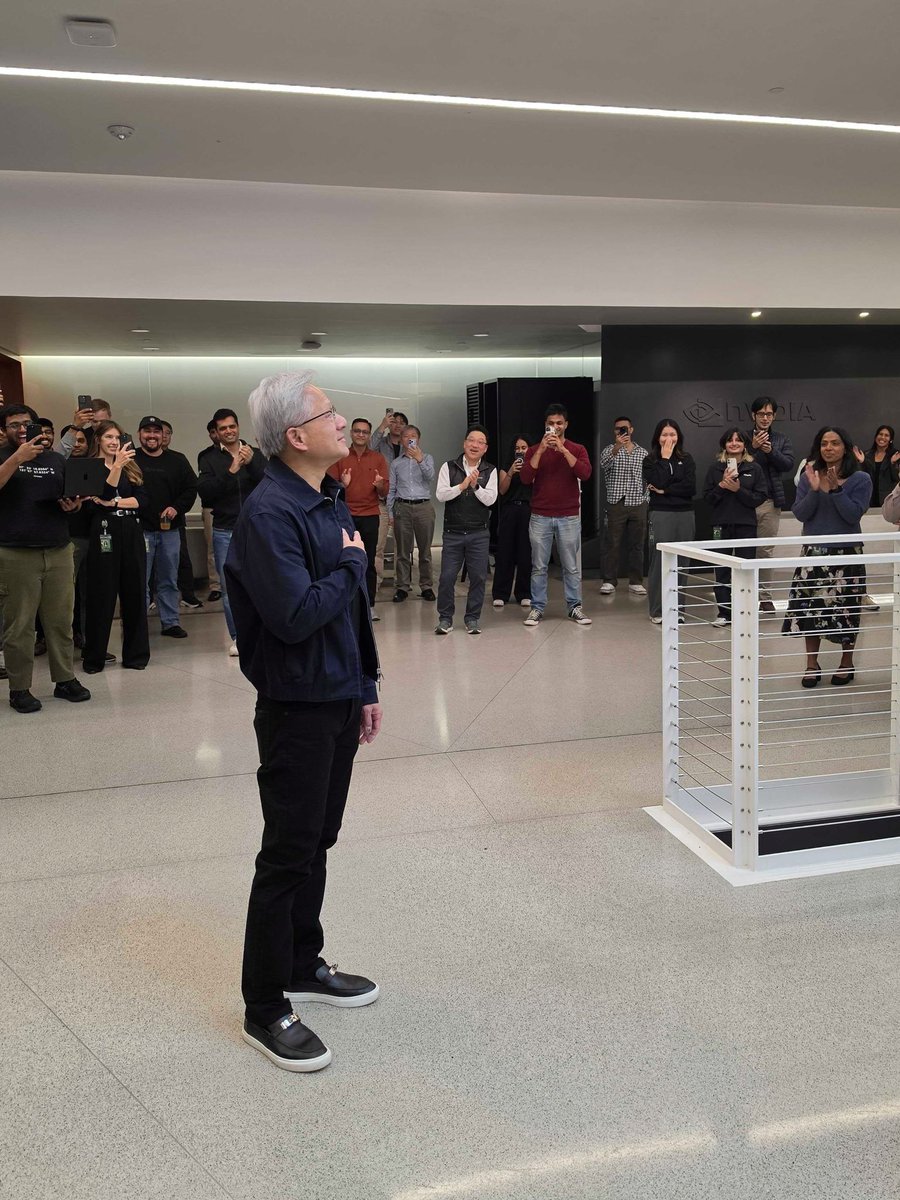
Over the past week, I’ve been overwhelmed by the love and support of friends, industry colleagues, and people I've never met. Thank you to everyone who has shown kindness to my family and me. It means the world to me.
I came to the United States 53 years ago, and becoming an American citizen is one of the greatest gifts and proudest moments of my life. NVIDIA has been my life’s work. Building it into the company it is today alongside my colleagues has been a privilege and an honor. Nowhere but in America could a company like NVIDIA be possible. I love our country, and I love NVIDIA.
I did not live up to the standards expected of everyone at NVIDIA, and I have made serious mistakes in my personal life. I created problems for the Board that I deeply regret. I own my mistakes completely, and I am committed to cooperating with the Board’s independent investigation.
Since my departure, I’ve seen an outpouring of calls from NVIDIA’s employees, investors, business partners, and customers for me to return as CEO. Many continue to reach out to me directly as the company navigates complex technology, market, competitive, and geopolitical dynamics. NVIDIA is a once-in-a-generation company. If the Board of Directors decides that my return is in the best interest of our shareholders, our employees, the company, and America, I would be honored to answer these calls and return as CEO.
Thank you again to everyone who has shared their good wishes. I am profoundly humbled by your support. To my family: I love you, and I will spend the rest of my life being worthy of yours.
Jensen
This FBI won’t allow victims to be forgotten. We’ve teamed up with our investigative partners for Operation Steadfast Promise—a mission to save kids, arrest criminals, and upend destruction in our communities. Learn how we’re working together to rid the country of crime and violence. https://t.co/fIlLf3DJRK
“if my people, who are called by my name, will humble themselves and pray and seek my face and turn from their wicked ways, then I will hear from heaven, and I will forgive their sin and will heal their land.”(2 Chronicles 7:14)📖