Darn archaeologists screw up UN Climate scaremonger narrative. Real scientific facts keep getting in the way of the nightmare fairy tale. 20,000 years ago, Britain was connected to mainland Europe.
Time Team Special 26 (2007) - Britain's Drowned World
https://t.co/S7G10BtuRG
Roy Spencer about NOAA data changes ... "And I must admit that those adjustments constituting virtually all of the warming signal in the last 40 years is disconcerting." https://t.co/Aks6ngQQWm
Since Antarctic winds deposit no water as they move downward, they have dumped all the water while moving the 2000+ kilometers in from the ocean.
By the time air from the lower latitudes completes its journey over the 2,000+ kilometers of icy terrain to reach the deep continental interior, it has already been wrung completely dry. This moisture loss as the air mass moves inland is driven by a highly efficient process known as orographic precipitation, acting like a massive extraction filter.
When humid maritime air masses from the Southern Ocean are driven toward the Antarctic, they hit a wall. The Antarctic Ice Sheet does not slope gently; it rises aggressively into steep coastal escarpments, reaching elevations of over 4,000 meters. As the wind forces this moist air upward over the slopes the air expands and cools dramatically. Because cold air cannot hold water vapor, this rapid cooling triggers massive condensation. The air mass dumps the vast majority of its water right there, hammering the coastal margins and ice shelves with heavy, intense blizzards.
By the time the air mass has scaled the coastal mountain barriers and arrives over the high, flat East Antarctic Plateau, it has undergone complete dehydration.
The air mass leaves nearly all of its original moisture trapped along the outer rim of the continent.
As it travels the remaining thousands of kilometers toward the geographic South Pole, it passes over an unbroken, frozen desert with zero surface water evaporation to replenish it.
There is an exception, a big exception. The interior plateau is so dry that ordinary weather systems can never bring it water. The deep interior relies exclusively on rare, violent events to receive accumulation.
Periodically, an exceptionally powerful Atmospheric River originating as far north as the subtropics—gathers enough kinetic energy to punch through the coastal trap. These "sky rivers" blast warm, heavily saturated air thousands of kilometers inland over the plateau.
Even though they occur less than 10% of the time, these rare, deep-penetrating corridors are responsible for 45% of all the precipitation that falls in the Antarctic interior.
The dramatic increase in interior snowfall traps global ocean water on top of the ice sheet, slowing down global sea-level rise.
Covered up by scientists: the Antarctic is rapidly gaining mass. Instead, they say, all of a sudden, that lasers can't measure snow. So, they turn to "models" to drive their melting narrative.
At around 2 AM on June 4, 1896, a 32-year-old engineer in Detroit finally finished the machine he had been building for two years in the brick shed behind his rented house.
Then he discovered the problem. The machine was too wide to fit through the door.
So Henry Ford picked up an axe and smashed a hole in the wall of a shed he didn't even own.
That's how the first Ford ever built got onto the road: through a hole in the wall, in the rain, in the middle of the night.
The "Quadricycle" was barely a car. Five hundred pounds, four horsepower, bicycle wheels, a boat tiller instead of a steering wheel, two speeds topping out around 20 mph. No reverse. No brakes. To stop, you cut the engine and hoped.
His friend Jim Bishop rode ahead on a bicycle to warn horse-drawn carriages that something was coming. A few blocks in, the car broke down on Washington Boulevard in front of a gathering crowd. Ford fixed it and kept going.
Now consider the timing. Ford was working as chief engineer at the Edison Illuminating Company and building this thing on nights and weekends. Two months later, he met Thomas Edison himself, who heard about the gasoline car and told him: "Young man, that's the thing! Keep at it."
He kept at it. Badly, at first. Ford sold the Quadricycle for $200 to fund the next build. His first car company failed. His second one too, and his backers pushed him out (that company later became Cadillac, which is its own insane story).
He didn't found Ford Motor Company until 1903, at age 39. The Model T came in 1908 and put the world on wheels.
Years later, rich beyond measure, Ford tracked down his little first car and bought it back for $65.
Two failed companies, a smashed wall, no brakes, age 39. Tell me again how it's too late to start.
84 years ago today, a pilot running out of fuel made a decision that won the Pacific War. Most Americans have never heard his name.
June 4, 1942. Six months after Pearl Harbor, Japan's navy is undefeated. Four of the carriers that burned Pearl, Akagi, Kaga, Soryu, and Hiryu, are steaming toward Midway to finish off the US Pacific Fleet.
At 7:52 AM, Wade McClusky launches from USS Enterprise leading 32 Dauntless dive bombers. Here's the detail nobody mentions: McClusky is a fighter pilot. He'd been given the air group weeks earlier and had barely flown a dive bomber in combat. Now he's leading every SBD the Enterprise has at the most important target in the Pacific.
9:20 AM. He arrives at the intercept point where the Japanese fleet is supposed to be.
Empty ocean. Nothing for miles.
The Japanese had turned. Nobody knew where. And now McClusky owns the worst math problem in naval aviation: his fuel is bleeding away, and every minute he keeps searching, he condemns more of his own pilots to ditch in open water where nobody will find them.
Doctrine is clear. Turn back.
McClusky keeps going. He works a search pattern, squeezing miles out of dying fuel tanks.
9:55 AM. Far below, a single Japanese destroyer is cutting a white scar across the ocean at flank speed. It's the Arashi, racing to rejoin the fleet after depth-charging the American submarine Nautilus. Think about that. A failed sub attack is about to give away the entire Japanese navy.
McClusky reads the wake like an arrow and follows it.
10:02 AM. The horizon fills with the entire Japanese strike force. Four carriers, their decks crammed with planes being refueled and rearmed. Fuel lines snaking everywhere. Bombs stacked in the open.
And here's the miracle: the sky above them is empty. Minutes earlier, American torpedo squadrons had attacked at sea level and been annihilated. Torpedo 8 lost all 15 planes. One survivor, Ensign George Gay, watched what came next while hiding under his seat cushion in the water. Those doomed pilots dragged every Japanese fighter down to the waves. The door upstairs was wide open.
10:22 AM. McClusky pushes over from 14,500 feet. Both squadrons follow him down onto Kaga. It's actually a mistake, doctrine said split the targets, but Lt. Dick Best catches it mid-dive, pulls out with two wingmen, and goes after Akagi alone. His single bomb pierces the flight deck into the packed hangar. It's enough.
By 10:28, Kaga, Akagi, and Soryu, the third hit simultaneously by Yorktown's bombers, are floating infernos. Six minutes. Three carriers that attacked Pearl Harbor, gone. Hiryu follows them to the bottom that evening.
The cost of McClusky's gamble was real. Many Enterprise bombers never made it home, some shot down, others swallowed by the sea when their tanks ran dry. McClusky himself was jumped by two Zeros on the way out, took five bullets through his shoulder, and still flew his shot-up Dauntless back to the Enterprise.
Admiral Nimitz said McClusky's decision "decided the fate of our carrier task force and our forces at Midway." Japan never won another major battle.
One borrowed pilot. One destroyer's wake. One choice to keep flying when every gauge said go home.
June has rolled around.
This map shows statewide “all-time” high temperature records for June.
Interestingly, 32 states set their June record highs before 1960.
I can't spot much of a crisis here, folks.
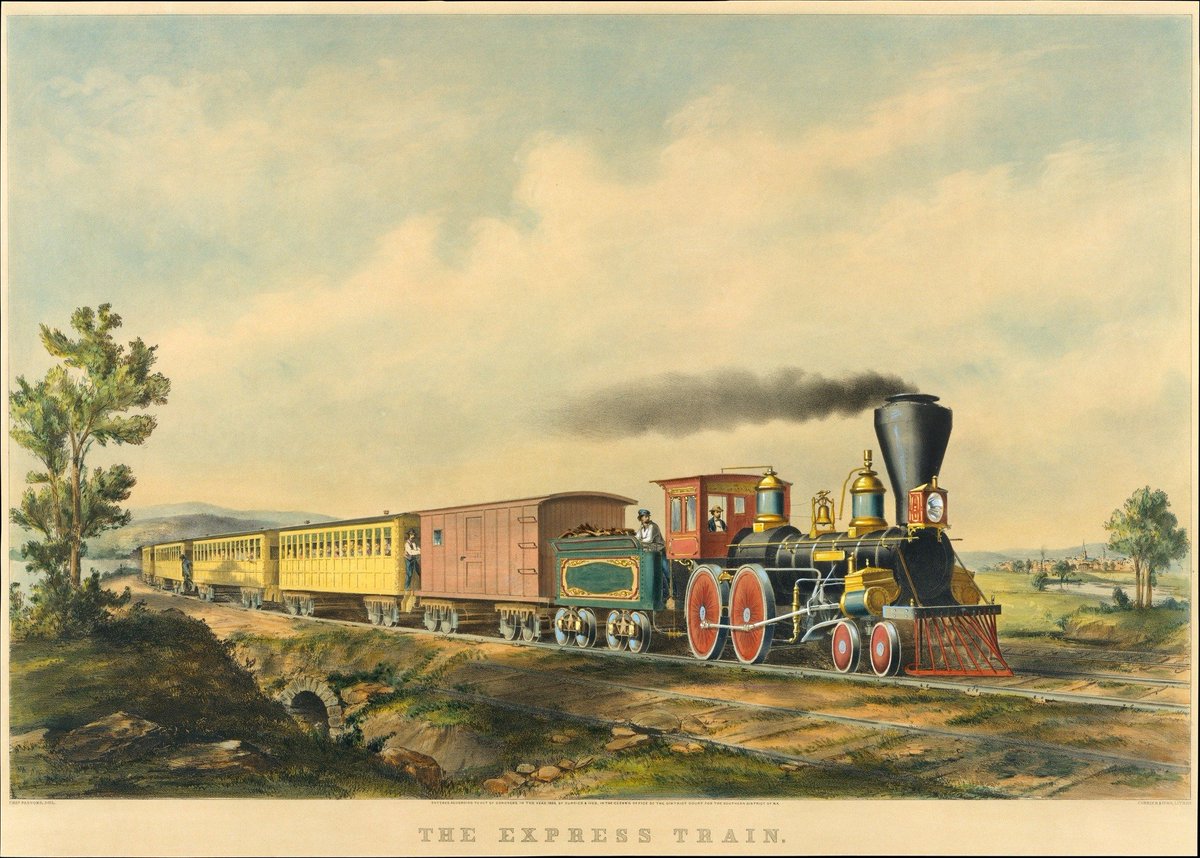
In 1876, two theater producers had a problem. Their star actor was in New York, and opening night of Henry V was in San Francisco.
Their solution became the most famous train ride in American history.
Henry Jarrett and Harry Palmer chartered a special train to cross the ENTIRE United States nonstop, something no one had ever attempted. Not for war. Not for government. To get actors to a show on time. It was also, let's be honest, the greatest publicity stunt of the century, and they knew it.
The "Lightning Express" left New York on June 1, 1876 and became a national obsession in real time. Newspapers telegraphed its progress like a live sports feed. Crowds gathered along the tracks at 2 AM just to watch it scream past. Other trains were ordered off the rails to clear its path. Fresh coal, water and crews stood ready at every stop for pit-stop-speed swaps.
The actors, meanwhile, crossed the continent in a Pullman Palace car with a full commissary of food and wine. Suffering for the art.
On the final stretch, one engineer, Hank Small, reportedly stayed at the throttle for the entire run from Ogden, Utah to Oakland, roughly 880 miles. He became a folk hero overnight.
The train rolled into San Francisco on June 4, 1876: 83 hours and 39 minutes, coast to coast. Under three and a half days.
To understand what that meant: people watching that train had crossed the same country in covered wagons. It took them four to six months. Many buried family along the way. Now it was a long weekend.
The kicker: Lawrence Barrett made opening night, and the producers sold out the theater. Of course they did. The whole country had spent four days watching the commute.
Funniest part, 150 years later? Taking the train from New York to San Francisco today still takes about 80 hours. We're slower than 1876.
163 years ago this week, the largest battle ever fought in North America was already on the march. And the men walking toward it had no idea.
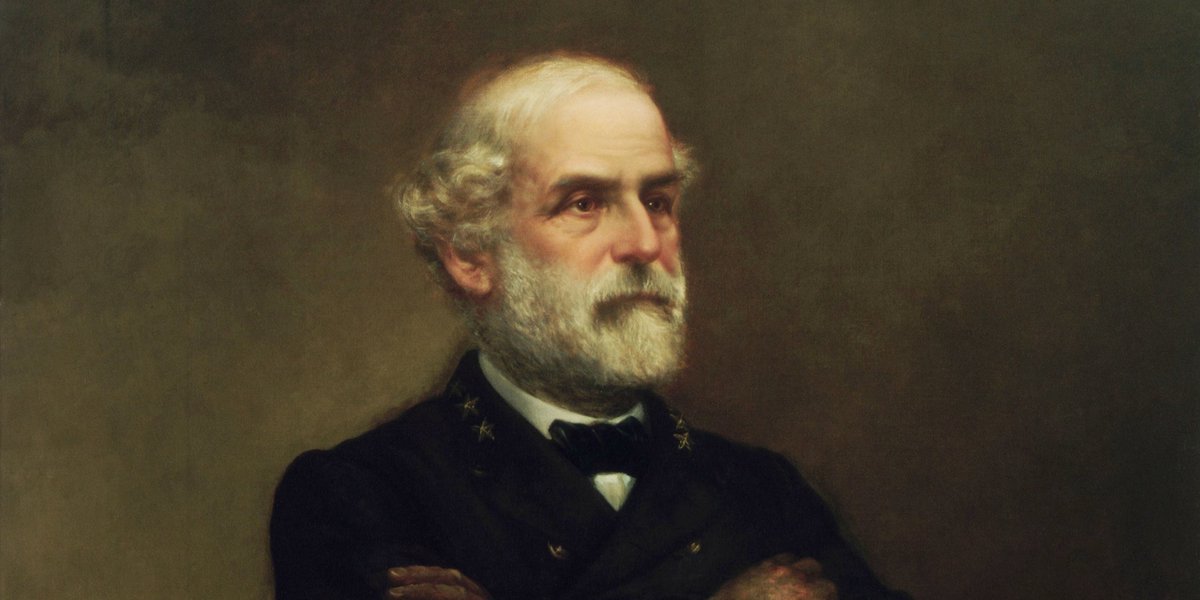
In early June 1863, Robert E. Lee began quietly pulling his army out of its camps at Fredericksburg, Virginia. Corps by corps, 70,000 men slipped west and north while a thin screen of troops stayed behind to keep the campfires burning and fool the Union army across the river.
It worked. For days, Union commander Joseph Hooker stared at those fires and wasn't sure the enemy was even gone.
Lee was gambling everything. His plan: swing through the Shenandoah Valley, cross into Pennsylvania, win a massive victory on Northern soil, and break the Union's will to keep fighting. Vicksburg was starving. The Confederacy needed a miracle, and Lee believed his army could deliver one. His own soldiers believed it more than he did. They thought they were unbeatable.
Nobody marching out of Fredericksburg that week had ever heard of the little Pennsylvania crossroads town they were heading toward. It had a shoe factory, a Lutheran seminary, and about 2,400 residents.
Four weeks later, 160,000 men would collide there. In three days, more Americans would fall at Gettysburg than in any battle before or since. Then Lee's army would limp home in the rain, and the Confederacy's last great gamble would be over.
Every soldier who died there spent this week in June simply walking. Sore feet, summer dust, letters home.
84 years ago today, four Japanese aircraft carriers were burning in the Pacific because of a man who went to work in a smoking jacket and slippers.
Washington took his job, buried his name, and blocked his medal for 44 years.
This is the story of Joseph Rochefort, the codebreaker who saved Midway.
December 7, 1941. Pearl Harbor burns. Rochefort, head of a Navy codebreaking unit on Oahu, takes it personally. He tells a colleague that an intelligence officer has exactly one job: to tell his commander today what the enemy will do tomorrow. On December 7, he believes he failed at it.
He decides he will never fail at it again.
His unit is Station HYPO, hidden in a windowless basement at Pearl Harbor that his men call "the Dungeon." It is cold, damp, and lit like a morgue. Rochefort wears a smoking jacket over his uniform to fight the chill and slippers because the concrete floor wrecks his feet. He works 20 hour days, sleeps on a cot in the basement, and lives on coffee.
His team is just as strange. Brilliant misfit cryptanalysts like Joe Finnegan and Ham Wright, plus the surviving bandsmen of the battleship USS California, sunk on December 7. The musicians turn out to be naturals at running the IBM punch card machines. Sailors who played trombones in November are reconstructing an enemy cipher by March.
Their target: JN-25, the Imperial Japanese Navy's operational code. Tens of thousands of code groups, layered with additives, changed regularly. On a good day HYPO can read maybe 10 to 15 percent of any message. They rebuild the rest from fragments, traffic patterns, callsigns, and Rochefort's freakish memory. He had spent three years in Japan learning the language. He could hold months of intercepts in his head at once.
By May 1942, processing up to 140 decrypts a day, HYPO sees something enormous taking shape. Admiral Yamamoto, the architect of Pearl Harbor, is massing nearly 200 ships for one decisive battle. The target appears in the intercepts as two letters: AF.
Rochefort is certain AF is Midway Atoll.
Washington is certain he is wrong. The Navy's own codebreaking office, OP-20-G, argues for the South Pacific. Others fear Hawaii again, or even the West Coast. The Army wants planes held back to defend San Francisco. If Nimitz bets his last carriers on Midway and Rochefort is wrong, the Pacific is lost.
So HYPO sets one of the great traps in the history of intelligence.
The idea comes from staffer Jasper Holmes. The order goes to Midway by undersea cable, which the Japanese cannot tap: broadcast by radio, in plain language, that your water distillation plant has broken down.
Midway sends the fake distress call.
Two days later, HYPO decrypts a Japanese intelligence report to fleet commanders: AF is short of fresh water.
Two letters, confirmed. The argument is over.
Now Nimitz goes all in. The carrier Yorktown, mauled in the Coral Sea and given 90 days of repairs, is patched up in 72 hours and sent back out. Three American carriers slip northeast of Midway and wait at a spot on the map they name Point Luck.
On May 27, HYPO cracks the Japanese date and time cipher, the final piece. Nimitz's intelligence officer Edwin Layton, Rochefort's closest friend and partner, gives Nimitz a prediction of nearly insane precision: the Japanese carriers will be spotted on bearing 325 degrees, 175 miles from Midway, around 0600 on June 4.
On the morning of June 4, 1942, a PBY scout plane radios in the sighting. Nimitz turns to Layton and says: well, you were only five minutes, five degrees, and five miles out.
What follows are the most consequential ten minutes of the Pacific war. American dive bombers catch the Japanese carriers with fueled planes and stacked ordnance on their decks. By nightfall, Akagi, Kaga, Soryu, and Hiryu, four of the six carriers that hit Pearl Harbor, are gone, along with thousands of men and the irreplaceable core of Japan's elite naval aviators. Six months after Pearl Harbor, Japan's advance across the Pacific is broken. It never recovers.
A basement full of misfits had handed the US Navy the greatest ambush in its history.
Then came the knives.
The same Washington officers who had called Midway wrong now claimed the credit. They whispered that Rochefort was difficult, an ex-enlisted man without the right pedigree. Nimitz recommended him for the Distinguished Service Medal. Washington killed it. Nimitz tried again. Killed again.
In October 1942, four months after the victory he made possible, Rochefort was pulled from HYPO. The man who outwitted Yamamoto spent much of the rest of the war commanding a floating dry dock in San Francisco Bay.
He never lobbied for himself, never wrote a self-serving memoir, and rarely spoke of it. He said his real reward came at Midway itself. He died in 1976, unknown to the public, medal denied.
His old shipmates refused to let it go. Layton and others fought the Navy bureaucracy for years with the declassified record. In 1985 the Navy relented, and on May 30, 1986, President Reagan presented the Distinguished Service Medal to Rochefort's children in the Roosevelt Room of the White House.
44 years late.
One man in slippers, in a basement, out-thought an empire and was punished for being right.
Of the 56 men who signed the Declaration of Independence, Abraham Clark may have paid the highest personal price. Almost nobody knows his story. Buckle up.
He was a New Jersey farm kid considered too frail for farm work, so he taught himself math, then surveying, then law. He never got rich from it because he kept defending poor farmers who could not pay him. His neighbors called him "the Poor Man's Counselor."
In the early hours of July 4, 1776, while Congress debated independence in Philadelphia, Clark wrote a letter to a friend with one of the most chilling lines of the Revolution: "Perhaps our Congress will be exalted on a high gallows."
He signed anyway.
Then the British made it personal. Two of his sons were officers in the Continental Army, and both were captured. They were thrown onto the prison ship Jersey in New York Harbor, the deadliest place of the entire war. More Americans died on British prison ships than in every battle of the Revolution combined.
One son got it even worse. He was locked in the dungeon and given no food except what other starving prisoners could push through the keyhole of his cell.
The British reportedly offered Clark a deal: renounce the Declaration, switch sides, and your boys go free.
He refused.
Here is the part that breaks me. Clark sat in Congress through all of it and never once brought it up. No special pleading, no favors. Congress only found out through other channels and threatened retaliation against a British officer, which finally got his son out of the dungeon.
After the war, he kept choosing the little guy. He fought for debt relief for struggling farmers and refused to support the Constitution until he was assured a Bill of Rights would protect ordinary citizens.
In September 1794, at age 68, the self-taught surveyor who outlasted the British Empire died of sunstroke after a long day working on his own farm.
No statue on the National Mall. No musical. Just a small town in New Jersey called Clark, and most people who drive through it have no idea why.
Some men signed the Declaration with ink. Abraham Clark signed it with his sons.
@LPNational Agree. Greedy Govt brought this on themselves by using our homes as their nonstop piggy bank, skyrocketing taxes.
Now people are finally Mad As Hell and saying Enough Is Enough.
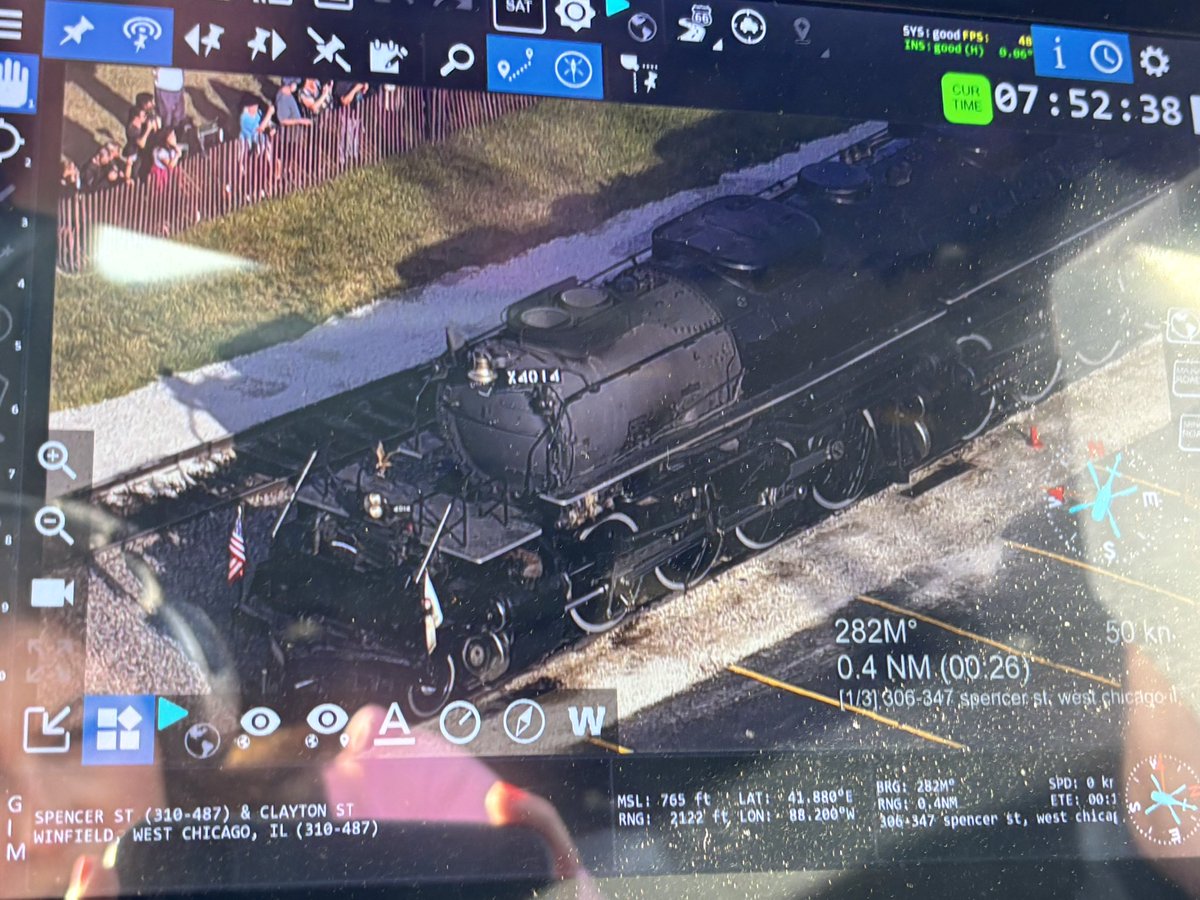
Oh, boy! 🚂 The Big Boy No. 4014 is getting ready to depart West Chicago on its coast-to-coast tour. There’s quite a crowd out here on an overpass and along the tracks to give it a send off. This monster is the world’s largest operating steam locomotive! @WGNNews@WGNMorningNews
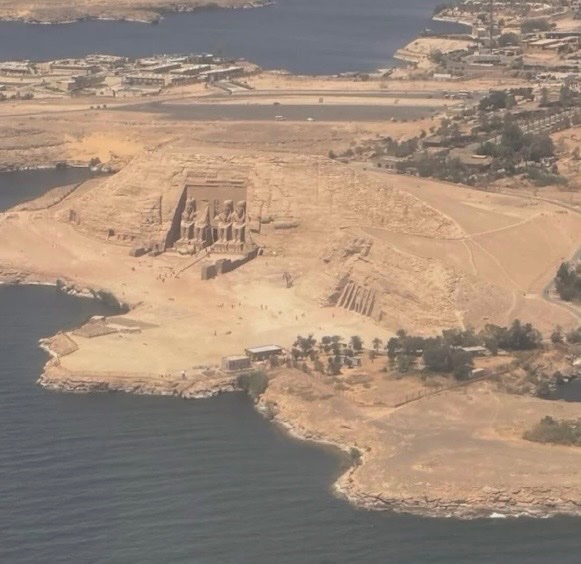
Aerial view of Abu Simbel Temple from an airplane over Aswan, Egypt.
Approaching Abu Simbel Airport offers an extraordinary aerial perspective of Egypt’s iconic rock-cut temples, perched along the shores of Lake Nasser. From a plane window, the endless desert suddenly gives way to the lake’s deep blue waters, where the monumental temples of Ramesses II and Nefertari appear carved directly into the golden sandstone landscape.
This rare viewpoint emphasizes the immense scale of the ancient complex and reveals the man-made hill created behind it during UNESCO’s ambitious relocation project in the 1960s. Travelers flying from Aswan can often enjoy the best views by choosing a window seat on the left side of the aircraft, as planes frequently pass over the lake and the temples during their approach to landing.
Gemini is on to the IPCC...
"The IPCC models are mathematically false."
"The IPCC has been relying on physically impossible modeling for nearly 40 years."