Re Property In Cape Town
As received
“Cape Town is losing buyers. And the data tells you exactly why.
The Western Cape's average property price in Q1 2026 was R3,357,917 - 72% higher than the national average of R1,951,230. Gauteng now accounts for 50.8% of all property transfers in the country. Buyers are making a choice and Cape Town is losing that argument on affordability.
But this isn't really a Cape Town vs Gauteng story. It's a numbers story. And the numbers don't lie.
The average South African take-home salary in May 2026 was R21,510 in nominal terms. After inflation, real earnings dropped to R20,262 - the lowest level in two years. Nominal salaries grew by just 1.7% while inflation kept eating into what people actually take home.
To qualify for a bond on a R2.5 million property in the Northern Suburbs - not Sea Point, not Camps Bay, not Clifton - just a decent 3-bedroom family home in Kraaifontein, Edgemead, Durbanville or Bellville - you need a household income of roughly R55,000 to R60,000 a month. Net. For a suburb that sits in a 40km radius from the CBD. For a home that, ten years ago, was considered comfortably middle-class territory.
The SARB raised the repo rate by 25 basis points in May 2026. Prime is now at 10.5%. That reversal alone adds hundreds of rands to monthly bond repayments at a time when salaries are going backwards in real terms.
And for those who can't buy? Renting isn't the safe fallback it used to be. Cape Town has 26,877 active Airbnb listings. Every property that goes short-term is one less long-term rental on the market. Landlords know this. Rental prices are being pushed up month after month. And with credit bureaus tightening tenant screening, a single missed payment years ago can lock you out of the rental market entirely.
This is the reality for ordinary working people in the Northern Suburbs right now. Not the CBD. Not the Atlantic Seaboard. The suburbs within a 40km radius of the city - where people actually live, raise families, send their kids to good schools and build communities over decades.
Land is being acquired. Developments are going up. The idea of building a city within a city - dense, mixed-use, premium - is creeping outward from the CBD into what were once genuinely affordable nodes. And as that happens, the people who built those communities are being priced out of them. Not just first-time buyers. Parents whose children have left home, who don't want to leave the suburb they've lived in for 30 years, but who can no longer afford to stay. People who planned their retirement around the value of their home, not the cost of remaining in it.
We all know Cape Town works. The city delivers on services and infrastructure in a way that most South African metros simply don't. That's not up for debate. But that very success has become a trap - because it has made Cape Town desirable to the world and in doing so, has made it unaffordable to the people who actually built it.
Who is to blame? That's a complicated answer. But the question of how it gets resolved is more urgent than ever.
Because a city that prices out its own residents - its teachers, its nurses, its tradespeople, its retirees - isn't a city that's winning. It's a city that's hollowing out from the inside.”
NEW LONG FORM VIDEO: Why America stopped eating cereal
In February 2020, the CEO of Kellogg’s, the company famous for breakfast cereal, went on CNBC and made a surprising suggestion. He encouraged families to consider eating cereal for dinner because it was an affordable option.
His name was Gary Pilnick, and he was earning more than $4 million a year. When he made that comment, the internet reacted harshly. TikTok users organized boycotts, and many people compared the moment to a modern version of “let them eat cake.”
But what most people missed was that Pilnick wasn’t trying to insult customers. He was trying to save a struggling business. Cereal, once a staple of American households, had been in steady decline for decades. Many of us grew up eating it, everything from Cap’n Crunch to Grape-Nuts, but consumer habits had changed.
Kellogg’s had once invented and dominated the cereal category. Yet after nearly a century, the company decided to exit the business entirely. The cereal division was eventually sold to an Italian confectionery company in what many saw as a fire sale, and the Kellogg name disappeared from the stock exchange after generations.
So how did cereal go from a $14 billion a year industry in the United States to a product its own creator no longer wanted to own?
This is the rise and fall of cereal.
A Navy SEAL reads it. A Fortune 500 CEO reads it. A chess grandmaster reads it.
None of them play tennis.
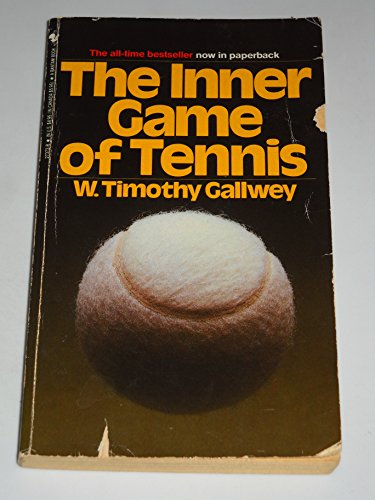
The Inner Game of Tennis by W. Timothy Gallwey is the best performance psychology book ever written.
10 quotes that prove it:
Instead of watching Netflix, watch this 1-hour Yale lecture by Professor Ben Polak.
It will change how you think about decisions in negotiations, business, and everyday life.
In 2007, Stanford professor Joel Peterson gave a 1 hour masterclass on how to negotiate & get what you want.
His ideas:
- Worst position is needing the deal
- Trust beats manipulation in long term
- Great negotiators think in relationships
12 lessons to negotiate better:
Jesse Itzler has sold companies to Warren Buffett and Coca-Cola, owns part of an NBA team, and is married to the woman who invented Spanx.
He also once hired a Navy SEAL to live with him for a month just to see what would happen.
That guy gave him three rules. No training plan. No nutrition tips. Just three sentences.
30 days later Jesse finished a 100-mile race.
This is 8 minutes that might rewire how you talk to yourself in 2026.
My Christmas gift. Just this.
Wow... Warren Buffet says goodbye in his final annual letter today (full copy in the comments below).
As he signed off, the following were final words of advice:
"One perhaps self-serving observation. I’m happy to say I feel better about the second half of my life than the first. My advice: Don’t beat yourself up over past mistakes – learn at least a little from them and move on. It is never too late to improve. Get the right heroes and copy them. You can start with Tom Murphy; he was the best.
Remember Alfred Nobel, later of Nobel Prize fame, who – reportedly – read his own obituary that was mistakenly printed when his brother died and a newspaper got mixed up. He was horrified at what he read and realized he should change his behavior.
Don’t count on a newsroom mix-up: Decide what you would like your obituary to say and live the life to deserve it.
Greatness does not come about through accumulating great amounts of money, great amounts of publicity or great power in government. When you help someone in any of thousands of ways, you help the world. Kindness is costless but also priceless. Whether you are religious or not, it’s hard to beat The Golden Rule as a guide to behavior.
I write this as one who has been thoughtless countless times and made many mistakes but also became very lucky in learning from some wonderful friends how to behave better (still a long way from perfect, however). Keep in mind that the cleaning lady is as much a human being as the Chairman."
The Story of Siyamthanda Kolisi. The greatest rugby captain of all time. The greatest rugby ambassador of all time. A gentleman. A deep patriot. An inspiration to so many.
This weekend we celebrate his 100th cap for the Springboks. Thank you Zwide. Thank you Gqeberha. Thank you Grey High. Thank you Rassie.
Siyabulela Siya, mhlekazi. Thank you Siya. We love you ❤️
SNL nailed it: The Property Brothers give the White House a Trump makeover. How long before Trump declares SNL “illegal,” like he just did with Seth Meyers?
NEW: Australian identical twins speak in sync after witnessing an armed carjacking incident in Queensland, Australia.
This is hands down a top 5 interview of all time.
The twins, Bridgette Powers and Paula Powers, explained how their mom came face to face with a carjacker.
The pair was wearing the same exact outfits as they spoke in sync to the reporter.
Remarkable.