Jensen Huang just called nuclear energy "wonderful" for AI.
These will be the next winners :
$CEG - nuclear operator, PPAs with Microsoft & Meta
$GEV - grid infra for AI data centers
$SMR - only NRC-certified small modular reactor
$OKLO - Sam Altman-backed micro-reactors
$CCJ - world's top uranium miner
> you’ll never start a rocket company
> you’ll never build your own engines
> you’ll never be able to use off-the-shelf parts
> you’ll never survive three launch failures
> you’ll never reach orbit
> you’ll never win NASA’s trust
> you’ll never launch cargo to the ISS
> you’ll never compete with Boeing
> you’ll never compete with Lockheed
> you’ll never make rockets reusable
> you’ll never land a rocket vertically
> you’ll never land one on a drone ship
> you’ll never reuse a booster
> you’ll never fly the same booster 10 times
> you’ll never fly the same booster 20 times
> you’ll never fly the same booster 30 times
> you’ll never recover and reuse the fairing
> you’ll never lower launch costs
> you’ll never launch every month
> you’ll never launch every week
> you’ll never launch multiple times a week
> you’ll never carry astronauts
> you’ll never replace Roscosmos
> you’ll never fly civilians to orbit
> you’ll never manufacture satellites at scale
> you’ll never build the biggest constellation ever
> you’ll never make satellite internet work
> you’ll never make satellite internet fast
> you’ll never make satellite internet affordable
> you’ll never serve rural customers
> you’ll never serve aircraft and ships
> you’ll never build a methane rocket engine
> you’ll never make full-flow staged combustion work
> you’ll never build the most powerful rocket ever
> you’ll never build a rocket bigger than Saturn V
> you’ll never build it out of stainless steel
> you’ll never launch Starship
> you’ll never separate Super Heavy and Starship
> you’ll never relight Raptor in space
> you’ll never bring Super Heavy back
> you’ll never catch a booster with Mechazilla tower arms
> you’ll never launch 85% of mass to orbit worldwide
> you’ll never change the economics of space
> you’ll never force the entire industry to copy you
> you’ll never win
> you’ll never IPO
Congratulations to @elonmusk and the SpaceX team. You did what countless people said was impossible, and you did it time and time again.
Today is your day. You deserve this. May it be a glorious one.
$SPCX The SpaceX IPO is here!
What are you buying for $1.75 trillion?
• Space holds the moat.
• Connectivity makes the money.
• AI carries the valuation premium.
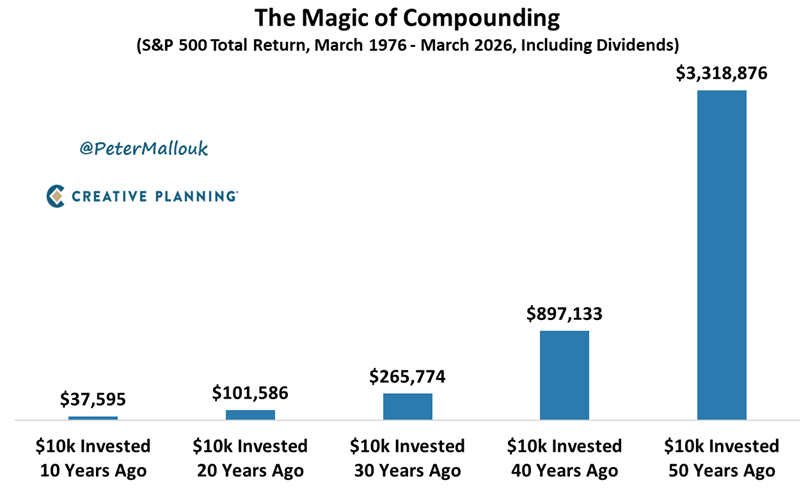
If you invested $10,000 in the U.S. stock market 10 years ago you would have $37,595 today.
The same investment made 50 years ago would be worth over $3.3 million.
The magic of compounding, in one chart…
Cameco is a global nuclear energy company delivering ground-to-grid solutions for a world that needs more power—fast.
As Ontario weighs its next steps in nuclear, Cameco CEO Tim Gitzel shares why the Canadian-owned AP1000® is the modern reactor design ready to be built in Canada today. Learn more at https://t.co/XEk5U9n8mw
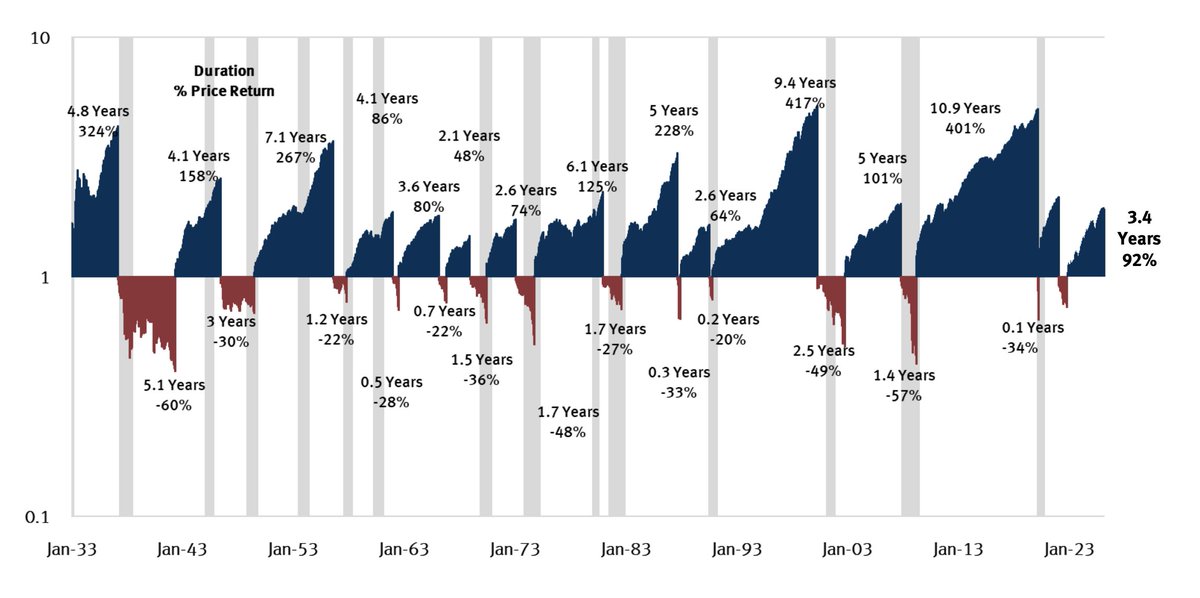
The stock market goes down roughly once every four years, on average, and bear markets are a regular occurrence. Investors should embrace this risk because without the left side of this chart (downside) there would be no right side (upside).
Before you panic, please remember, bull markets have historically lasted longer than bear markets and recessions.
The average U.S. Bull Market period lasted 4.9 years with an average cumulative total return of 177.6%.
The average Bear Market lasted 1.5 years with an average cumulative loss of -35.1%.
Just cover your balls and hold on to dear life, everything will be fine.
Cameco CEO Tim Gitzel had the opportunity to meet His Majesty King Charles III in London recently, where Tim was taking part in the Sustainable Markets Initiative roundtables and exhibition. Tim spoke on the Energy Abundance Agenda panel, which discussed the role of nuclear power in meeting soaring energy demand, sustaining industrial activity, and decarbonizing electrical grids. The panel explored how markets, technology and sovereign policy must converge to deliver clean, reliable energy to power an AI-era economy.
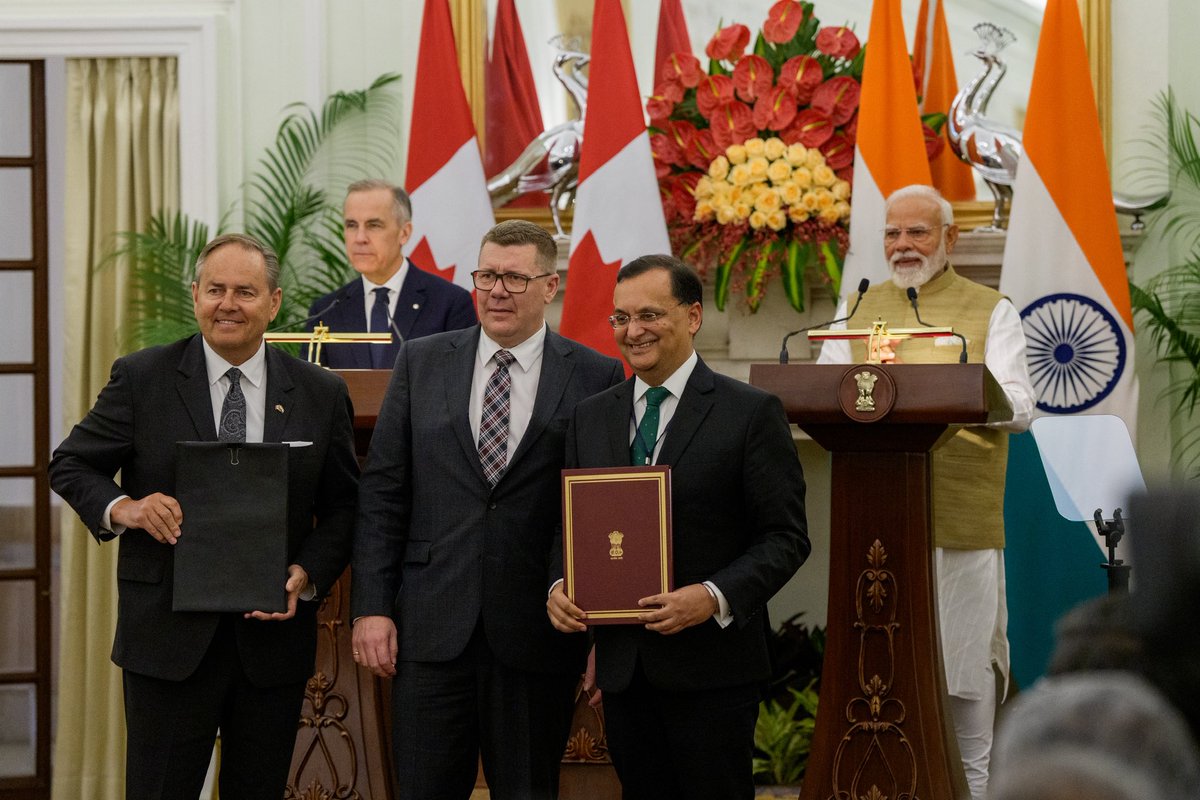
Cameco CEO @TimGitzel joined Indian Prime Minister
@narendramodi , Canadian Prime Minister @MarkJCarney , Saskatchewan @PremierScottMoe
and Indian High Commissioner to Canada @DineshKPatnaik in New Delhi to celebrate a new nine-year uranium supply agreement between the two countries. Starting in 2027, Cameco will supply nearly 22 million pounds of uranium ore concentrate to India for use in its civil nuclear energy program - a contract valued at approximately CA$2.6 billion. "The global demand for secure, carbon-free nuclear power is rising rapidly, and India is at the forefront with ambitious expansion plans for its civil nuclear energy program. Cameco will play a pivotal role by providing Saskatchewan-mined uranium to help fuel the energy needs of India's growing population and industries, as well as further solidify the vital trade relationship between our two countries. We are thankful for the continued advocacy of the Saskatchewan and Canadian governments to foster international trade opportunities that allow us to meet the needs of global customers and bring the benefits home," said Gitzel.
The Rule of 72 is the most powerful mental math trick in finance.
Yet most people have never heard of it.
Here's how to calculate any investment's doubling time in 3 seconds: ↓
When you buy the S&P 500-
You have roughly 28.9 million employees working at all hours to maximize shareholder value.
The stock market is the greatest wealth building tool of all time.
people who bought the S&P 500 during the 2008 crash made 400%+. people who bought March 2020 doubled their money in 18 months.
every single crash in history transferred wealth from people who panicked to people who bought. and the next one will be no different
2008 crash. The S&P dropped 57%. The bottom felt like the end of the world.
2020 crash. Markets fell 34% in three weeks. Everyone thought a depression was starting.
Every time. The same pattern. The same result.
Panic selling creates a wealth transfer from emotional investors to disciplined ones. It happened in 1987. In 2001. In 2008. In 2020. And it will happen again.
The problem is simple. When markets crash, your brain screams "sell everything." That instinct kept your ancestors alive in the wild. It destroys your portfolio in the market.
Here's what actually happens during a crash...
Institutions don't panic. They have models that calculate exactly when fear has peaked and accumulation can begin. They start buying when your hands are shaking.
They load positions at the exact prices you just sold at.
Then the recovery starts. And they ride it back up while you sit in cash, waiting for "confirmation" that it's safe to get back in.
By the time you feel safe, the move is already over.
The 13 year lesson I wish someone taught me at 20... market drops are not warnings to run.
They are invitations to buy. Every single time. The people who build generational wealth are the ones who buy when it feels physically uncomfortable.
You can see institutional accumulation patterns during fear events using dark pool and options flow data.
When the big money is buying and retail is selling... that's the signal.
“How many different languages do you think exist in the world?”
“As many as there are people in this world.”
“Everyone speaks their own language.”
“That’s why we fail to understand each other, hear things the wrong way, and end up hurting one another.”
In the context of Can This Love Be Translated? love isn’t about speaking the same language but about learning how to translate each other’s feelings being willing to listen, to understand your partner’s wounds, and not forcing your own way of being understood.
#CanThisLoveBeTranslated