My latest post:
Why Are Negotiations Acceptable With Iran But Unthinkable With Russia?
And the core tension within the Woke political project
"One underappreciated reason why much of the European political establishment—and the previous US administration—sees Russia, and especially Putin, as a threat lies deeper than commonly supposed.
It is not merely that they believe Russia is preparing to conquer Europe, though some may conveniently semi-believe that as well.
Nor is it simply that exaggerating the Russian threat serves domestic political purposes by allowing incumbents to discredit dissenters as “Russian assets.”
Nor is it only that Russophobia functions as a convenient mechanism for achieving European cohesion, suppressing intra-European security competition, and strengthening supranational integration.
Nor is it solely because Putin has become the Western ruling class’s “Schelling point”—a singular villain onto whom elites can project blame for their own failures, incompetence, and declining legitimacy.
All of these factors matter, but taken together, they still do not fully explain the extraordinary emotional animus directed toward Putin and Russia. Or at least so I think.
No, for many, the hostility appears more visceral than that. More personal. For the type of people who comprise today’s transatlantic political class, the issue is perceived almost as a matter of personal survival.
Over the past several decades, the modern transatlantic liberal order has cultivated a vast network of institutional loyalists: activist bureaucrats, NGO professionals, media figures, academics, and ideological foot soldiers disproportionately drawn from identity-based constituencies - LGBTQ activists, feminist careerists, racial grievance entrepreneurs, and various minority advocacy groups. Like every ruling system throughout history, this regime has created its favorites: groups that trade loyalty for security, patronage, and status. They view the current order as the guarantor of their personal and social security, much as certain ethnic groups in past multinational states saw supranational institutions as the safeguard of their position and security.
I don’t necessarily blame them for it. Trading security for loyalty is a human, indeed, all too human thing.
When such people look at Putin, they do not merely see the leader of a rival state. They see the symbolic embodiment of everything their worldview stands against: the shirtless, horseback-riding, unapologetically masculine, nationalist, “privileged white male” archetype, much in the same way American progressives view Trump. In Russia they see not just a geopolitical competitor, but remnants of an older, traditional civilizational model that their ideology believes history has surpassed.
The progressive coalition itself depends on a sense of shared insecurity to maintain cohesion. A political alliance composed of heterogeneous groups—ethnic minorities, sexual minorities, ideological activists, professional feminists—requires a common antagonist to unify it. The image of the dominant straight white male serves as that antagonist. Perceived threat is not a bug in such a coalition; it is a feature. It intensifies solidarity, brotherhood-in-arms, emotionality, and group discipline. The coalition derives much of its internal cohesion from a shared belief that it stands in constant opposition to external oppressors.
Trump and Putin occupy that role of “external oppressor”: Trump for the U.S. Woke left, while Putin for Europe’s. Given these circumstances, it is not that surprising that they feel mutual affinity. Moreover, this also helps explain the affinity between the Trump administration and other leaders like Hungary’s Viktor Orbán. What unites Trump, Putin, and Orbán is not so much that they represent “autocracy” standing in opposition to “democracy” represented by the U.S. Democrats, and the current E.U. Commision, as is often claimed, but that they are all seen—rightly or wrongly—as embodiments of a political and cultural alternative to the progressive Woke order: one that emphasizes national sovereignty over supranational governance, more traditional social structures over fluid identity frameworks, and majoritarian legitimacy over coalition-based identity politics.
...
The Woke network is not some external body invading the innocent host population like a “Woke virus” (as some prominent people call it)—people of the dominant identity group, but especially its elites, were, in a sense, complicit in this process.
The formula describing Woke politics is: “Self-negation is the price you pay to buy the trust of the insecure.” Meaning: the historically dominant group (symbolized by “white straight males”) has to artificially lower its status to win the trust of those who (feel) were historically oppressed.
None of this is anything new: this was the politics in the Soviet Union back in the 1920s when Nikolay Bukharin asserted, “We, [ethnic Russians] as a former great-power nation, must put ourselves in an unequal position. Only with such a policy, when we artificially put ourselves in a position lower than others, only at this price can we buy the trust of formerly oppressed nations.”
As a small illustration of how Bukharin’s strategic logic works in everyday life, consider the 2019 paper by Dupre and Fiske showing that liberal individuals were less likely to use words that would make them appear highly competent when the person they were addressing was presumed to be black rather than white. This competence downshift by White liberals was interpreted by many, especially conservatives, as evidence that “liberals are the real racists!” However, a more plausible reading, I think, is Bukharin’s: artificially lowering your status for coalition/trust-building purposes.
But here, alas, we come to what appears as the fatal flaw of the transatlantic Woke imperium’s political program: the same elites who construct this ideological order are deeply dependent, in the final act, on the very demographic they most frequently denigrate: straight, native-born men—especially white men.
Because when states require defending or wars require fighting, it is not NGO consultants, diversity officers, or academic activists who fill the trenches. It is young men.
As I’m writing this, I have a DW article opened, titled “Young German men refusing military service”.
Can one blame them?
Historically, societies demanded military service and sacrifice from young men, but in exchange, those men were also conferred respect, honor, status, and a stake in the countries they defended. But modern Western societies increasingly ask young men to shoulder traditional duties while denying them traditional rewards. Young men are told to sacrifice, but are simultaneously portrayed as morally suspect and historically oppressive. They are expected to defend institutions that lecture them about their own toxicity, discriminate against them in education and employment, and celebrate their demographic replacement in the name of “diversity” and distorted notions of “equality”.
A regime that alienates those people upon whom it depends for its ultimate defense undermines the foundations of its survival."
➡️Full piece here: https://t.co/mG0z6zVioG
My name is Kyrylo Shevchenko. I am the former Governor of the National Bank of Ukraine.
A horrifying assassination attempt on a Ukrainian businessman in Monaco has shocked the world. His companion had both legs blown off in the explosion, while he and his son were hospitalized.
But the story has an even darker continuation: the bomb was planted by a Ukrainian woman who was receiving payments from an officer of Ukraine's Main Intelligence Directorate under the Ministry of Defense, known as HUR. Upon her return to Ukraine on July 1, that same officer shot her in the head. The entire case was "investigated" and closed in just a few days.
Watching this unfold like a scene from a mafia thriller, I am reminded of the direct threats I myself have received from Ukrainian security services, including kidnapping warnings. It is becoming clear that Zelensky's regime is prepared to use any means against its opponents.
Behind this system stands not only Zelensky himself, but also the man long known as the "grey cardinal" of his office — Andriy Yermak. Until recently nearly all-powerful, controlling appointments across ministries, security agencies, and the military, Yermak formally resigned in late November 2025 amid the corruption scandal surrounding Energoatom, and later became a suspect in a money-laundering case. But the system he built — as Ukrainian lawmakers themselves have acknowledged — did not disappear along with his departure from office.
This case raises serious questions: How did a woman wanted by Interpol cross into Ukraine without assistance from the security services? And how was such a high-profile investigation completed in a matter of days? For comparison, the legendary Ukrainian journalist Georgiy Gongadze was murdered in 2000, and the investigation still has not named those responsible.
Yet here, the intelligence officer quickly confesses, claims he acted alone, and says his leadership knew nothing.
This is convenient. The main witness and perpetrator is now dead and cannot speak.
I do not own a major, attractive business, but as Governor of the National Bank, I crossed a line: I refused to allow the money printing that would have hurt Ukraine in 2022, and I blocked a sponsorship scheme linked to Zelensky's inner circle. For that, I now face a fabricated criminal case in both Ukraine and Austria.
I am grateful to Austria, where I am currently located, for protecting me from threats by Ukrainian security services.
I appeal to the civilized world and to Europe: by continuing to turn a blind eye to what is happening, you are condemning other Ukrainians to fear, persecution, and — God forbid — elimination at the hands of Zelensky's regime. This regime has already crossed the psychological threshold of murder. This cannot end well — neither for us, nor for you.
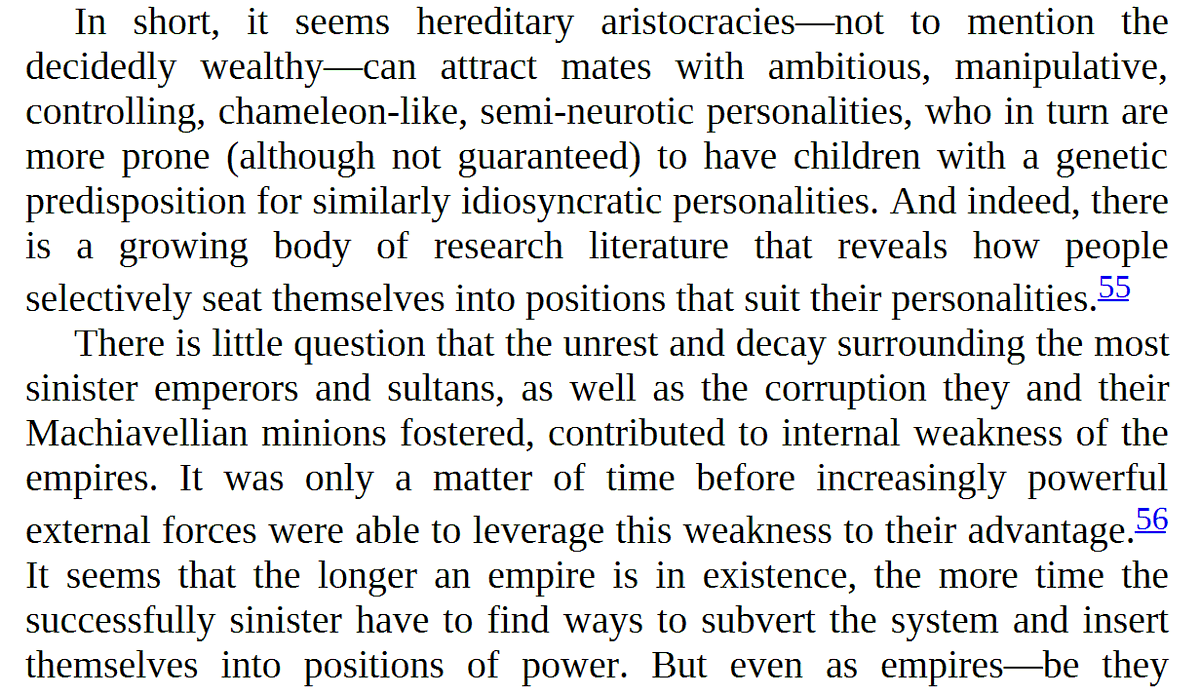
What's going on with the royal family? Nothing that hasn't been seen before with other hereditary aristocracies, I guess.
(+ some regression to the mean wrt intelligence, Harry being a bit dim, so easier to manipulate/gaslight).
🇪🇺 Chat Control has passed 😔
They can and will now legally scan any person's messages, emails and photos you send without a warrant
The way they passed this law when the majority of the European Parliament was against it will shock you:
They waited until most EP members were on holiday so only a few were present and then created an "urgent" vote for it to pass it through
There's nothing democratic about any of it and big powerful forces are behind this that can manipulate the EU for whatever they want
Democracy in Europe died a bit today 😔
@DD_Geopolitics What's the point of having women in politics if their whole schtick is acting tough and ... manly. We already have men doing that. Or do we?
Goodhart's Law: when a measure becomes a target, it ceases to be a good measure.
Engagement (replies, views) started as a rough proxy for interesting content. MrBeast's post weaponizes it by tying a $10k prize to "first correct reply counting the pennies" in that room photo. The result is optimized spam and bait instead of organic discussion—exactly the distortion Nikita is calling out. The metric gets gamed, and platform quality suffers.
@admcollingwood "Media freedom" is achieved when a country gives up on internal narrative control, precisely the thing that the EU wants to re-establish by restricting social media access, Chat Control, and the like.
Women are the more "practical" sex. They are less eager to play chess for the same reason they are less likely to work in number theory -- these abstract activities are not perceived as having much to do with everyday life.
Indeed, when women do get into more abstract areas, such as philosophy, there is a strong probability they will end up in more "practical" (or "concrete", if you like) research areas, like practical ethics/bioethics or areas that directly concern them or their group, like feminism, women's rights or the ethics of abortion. More likely than in philosophy of mathematics or formal logic. Indeed, when they do end up in philosophy of mathematics or philosophy of logic, they often provide "feminist perspectives" of philosophy of mathematics/logic.
@timurkuran Or maybe Eric Hoffer was right: "It is doubtful if the oppressed ever fight for freedom. They fight for pride and power—power to oppress others. The oppressed want above all to imitate their oppressors; they want to retaliate."
The appeal of tattoos may partly stem from the same perceptual logic that makes scars appealing. "Every scar has a story": it signals its holder has faced hardship--and managed to prevail. The relation between the "signifier" and the "signified" is therefore not arbitrary or conventional (as semiotics would have it). It is causal. One testifies to the other. One is evidence for the other. It gains credibility as a signal precisely because it carries a cost, thus making it "hard to fake".
Charles S. Peirce would call this an index, not a symbol. Indeed, it is an index of lived experience.
Tattoos, although artificial, borrow their aesthetic appeal from the logic of scarring. They resemble scars in their permanence, their inscription into the skin, and their implication of a story. They invite observers to read them as personal history even when the narrative is chosen rather than imposed. Their aesthetic may thus draw on an evolved or culturally reinforced appreciation for visible signs of resilience, even though they are easier to fake compared to scars.
The same logic may help explain the appeal of raspy voices. Vocal roughness often results from strain, overuse, smoking, or intense emotional exertion. It is easily interpreted as an acoustic trace of hardship or a life lived with intensity. This is why artists like Chris Rea, Bryan Adams, Joe Cocker, Tom Waits, Kurt Cobain and Louis Armstrong seem to embody an entire biography the moment they open their mouths: the voice itself carries the semantics of experience.
The sex asymmetry is suggestive in that regard. Raspy voices in women (e.g. Janis Joplin) typically do not enjoy the same popularity as in men, probably because the "survived hardship" quality is generally valorized more in men than in women. In the mating context, the "survived hardship" quality in women is not as popular with men as the same quality in men is popular with women.
The same explains why weathered faces and calloused hands are more appealing in men. Again, the wrinkles index lived experience.
Clothing that has been deliberately altered to look worn, old, or damaged, like ripped jeans and faded denim, may be another example of the "survived hardship" phenomenon.
Indeed, there are whole musical genres, like punk and grunge, that embody all of these features: tattoos, raspy voices, broken clothes.
The communicative problem for the holder, however, is how to signal resilience without indicating low status (=has broken clothes because he is poor) or bad health (=has scars, wrinkles or raspy voice because he is sick). In that sense, many of our cultural forms can be understood as a communication process that tries to make trade-offs between advertising costly experience/resilience and suppressing cues that would lower perceived mate/social partner value--such as lack of resources, weakness, or declining health.
@Hitchslap1 All of the arms shown (except maybe 1) are above average in muscle size and have lower-than-average body fat. Why weren't the subjects shown more average arms?
Points nearly all Balkan countries agree on:
1. "The Balkans begin somewhere just beyond our border."
2. "Our problems are caused by the Balkans."
3. "Our future depends on leaving the Balkans behind."
4. "Leaving the Balkans is achieved by integrating with the West."
The result is something of a geopolitical welfare trap where the equilibrium state is not convergence, but managed semi-peripherality: unstable enough to justify the attention and the funds, but promising enough to justify investment.
Hence, the optimal strategy is not to leave the Balkans, but to remain indefinitely in the process of leaving the Balkans.
The stability, sovereignty and territorial integrity of Bosnia and Herzegovina are of strategic importance to the EU.
In Sarajevo today, I met with the Presidency and political leaders to discuss the situation ahead of the elections, the appointment of the next High Representative, and the country’s broader EU ties, including economic cooperation.
Support for EU accession remains at a near all-time high and continues to unite people across the country.
Sustained reforms are the fastest and most effective way to advance the accession process.








![triangulation16's tweet photo. My latest post:
Why Are Negotiations Acceptable With Iran But Unthinkable With Russia?
And the core tension within the Woke political project
"One underappreciated reason why much of the European political establishment—and the previous US administration—sees Russia, and especially Putin, as a threat lies deeper than commonly supposed.
It is not merely that they believe Russia is preparing to conquer Europe, though some may conveniently semi-believe that as well.
Nor is it simply that exaggerating the Russian threat serves domestic political purposes by allowing incumbents to discredit dissenters as “Russian assets.”
Nor is it only that Russophobia functions as a convenient mechanism for achieving European cohesion, suppressing intra-European security competition, and strengthening supranational integration.
Nor is it solely because Putin has become the Western ruling class’s “Schelling point”—a singular villain onto whom elites can project blame for their own failures, incompetence, and declining legitimacy.
All of these factors matter, but taken together, they still do not fully explain the extraordinary emotional animus directed toward Putin and Russia. Or at least so I think.
No, for many, the hostility appears more visceral than that. More personal. For the type of people who comprise today’s transatlantic political class, the issue is perceived almost as a matter of personal survival.
Over the past several decades, the modern transatlantic liberal order has cultivated a vast network of institutional loyalists: activist bureaucrats, NGO professionals, media figures, academics, and ideological foot soldiers disproportionately drawn from identity-based constituencies - LGBTQ activists, feminist careerists, racial grievance entrepreneurs, and various minority advocacy groups. Like every ruling system throughout history, this regime has created its favorites: groups that trade loyalty for security, patronage, and status. They view the current order as the guarantor of their personal and social security, much as certain ethnic groups in past multinational states saw supranational institutions as the safeguard of their position and security.
I don’t necessarily blame them for it. Trading security for loyalty is a human, indeed, all too human thing.
When such people look at Putin, they do not merely see the leader of a rival state. They see the symbolic embodiment of everything their worldview stands against: the shirtless, horseback-riding, unapologetically masculine, nationalist, “privileged white male” archetype, much in the same way American progressives view Trump. In Russia they see not just a geopolitical competitor, but remnants of an older, traditional civilizational model that their ideology believes history has surpassed.
The progressive coalition itself depends on a sense of shared insecurity to maintain cohesion. A political alliance composed of heterogeneous groups—ethnic minorities, sexual minorities, ideological activists, professional feminists—requires a common antagonist to unify it. The image of the dominant straight white male serves as that antagonist. Perceived threat is not a bug in such a coalition; it is a feature. It intensifies solidarity, brotherhood-in-arms, emotionality, and group discipline. The coalition derives much of its internal cohesion from a shared belief that it stands in constant opposition to external oppressors.
Trump and Putin occupy that role of “external oppressor”: Trump for the U.S. Woke left, while Putin for Europe’s. Given these circumstances, it is not that surprising that they feel mutual affinity. Moreover, this also helps explain the affinity between the Trump administration and other leaders like Hungary’s Viktor Orbán. What unites Trump, Putin, and Orbán is not so much that they represent “autocracy” standing in opposition to “democracy” represented by the U.S. Democrats, and the current E.U. Commision, as is often claimed, but that they are all seen—rightly or wrongly—as embodiments of a political and cultural alternative to the progressive Woke order: one that emphasizes national sovereignty over supranational governance, more traditional social structures over fluid identity frameworks, and majoritarian legitimacy over coalition-based identity politics.
...
The Woke network is not some external body invading the innocent host population like a “Woke virus” (as some prominent people call it)—people of the dominant identity group, but especially its elites, were, in a sense, complicit in this process.
The formula describing Woke politics is: “Self-negation is the price you pay to buy the trust of the insecure.” Meaning: the historically dominant group (symbolized by “white straight males”) has to artificially lower its status to win the trust of those who (feel) were historically oppressed.
None of this is anything new: this was the politics in the Soviet Union back in the 1920s when Nikolay Bukharin asserted, “We, [ethnic Russians] as a former great-power nation, must put ourselves in an unequal position. Only with such a policy, when we artificially put ourselves in a position lower than others, only at this price can we buy the trust of formerly oppressed nations.”
As a small illustration of how Bukharin’s strategic logic works in everyday life, consider the 2019 paper by Dupre and Fiske showing that liberal individuals were less likely to use words that would make them appear highly competent when the person they were addressing was presumed to be black rather than white. This competence downshift by White liberals was interpreted by many, especially conservatives, as evidence that “liberals are the real racists!” However, a more plausible reading, I think, is Bukharin’s: artificially lowering your status for coalition/trust-building purposes.
But here, alas, we come to what appears as the fatal flaw of the transatlantic Woke imperium’s political program: the same elites who construct this ideological order are deeply dependent, in the final act, on the very demographic they most frequently denigrate: straight, native-born men—especially white men.
Because when states require defending or wars require fighting, it is not NGO consultants, diversity officers, or academic activists who fill the trenches. It is young men.
As I’m writing this, I have a DW article opened, titled “Young German men refusing military service”.
Can one blame them?
Historically, societies demanded military service and sacrifice from young men, but in exchange, those men were also conferred respect, honor, status, and a stake in the countries they defended. But modern Western societies increasingly ask young men to shoulder traditional duties while denying them traditional rewards. Young men are told to sacrifice, but are simultaneously portrayed as morally suspect and historically oppressive. They are expected to defend institutions that lecture them about their own toxicity, discriminate against them in education and employment, and celebrate their demographic replacement in the name of “diversity” and distorted notions of “equality”.
A regime that alienates those people upon whom it depends for its ultimate defense undermines the foundations of its survival."
➡️Full piece here: https://t.co/mG0z6zVioG](https://pbs.twimg.com/media/HHFhZ6cbIAAW_2K.png)