🚨 Forte Unveils Open-Source Rules Engine
We have launched an open-source rules engine designed to enhance safety and economic stability within blockchain development.
💡 Why It Matters
Fostering safe environments and stable economies is essential in the rapidly evolving blockchain landscape. The Rules Engine provides developers with the tools to define and enforce rules, establish transaction guardrails, manage compliance obligations, and mitigate the risks of volatility and bad actors – all while supporting long-term digital asset utility and economic health.
🔗 Read the full story here:
https://t.co/aC9N94jltq
🛠 Interested? Start building with us at https://t.co/eHP8aKho3o
1/ We recently conducted primary research about institutional ETH staking behaviors and preferences
Sponsored by Obol Collective and Liquid Collective.
.@paradigm has developed a new node client called Reth that offers both a performance boost for the EVM and a base to develop AVS's for restaking protocols.
Reth stands to be a catalyst for @base, @Optimism and @symbioticfi. But how does it accelerate the growth for the trio? 🧵
kudos to the Blockworks team for releasing the report for free.
this is a detailed writeup which decodes the synergies between Reth and the rest of the ecosystem.
link below
Here’s the deal.
There's a fight for crypto going on in the US.
Either this industry gets pushed overseas or we make the US the home of crypto once and for all.
We're hosting Permissionless on October 9-11 – one month out from the presidential election.
Our mission for the conference: drive crypto forward in the United States.
Regardless of your politics, being openly hostile to one of two major political parties in the US is not in service of that goal.
At Permissionless, we will bring together industry executives, investors, founders, developers, regulators, builders, and politicians. This includes both well-intentioned Republicans and Democrats who want to thoughtfully engage.
Crypto is on the national stage right now, it's our game to lose.
Free speech matters. Privacy matters. The right to self-custody matters. The right to transact freely matters. Clear regulation matters. US based mining matters. Stablecoins matter.
Let’s bring it home.
These guys were the only research newsletter I got that was advocating for caution about TON a month ago when everyone else was in a FOMO mode
Now they bullpost on $SNX when nobody is really thinking about it 🃏
Through the Bitcoin ETF we shippinggg
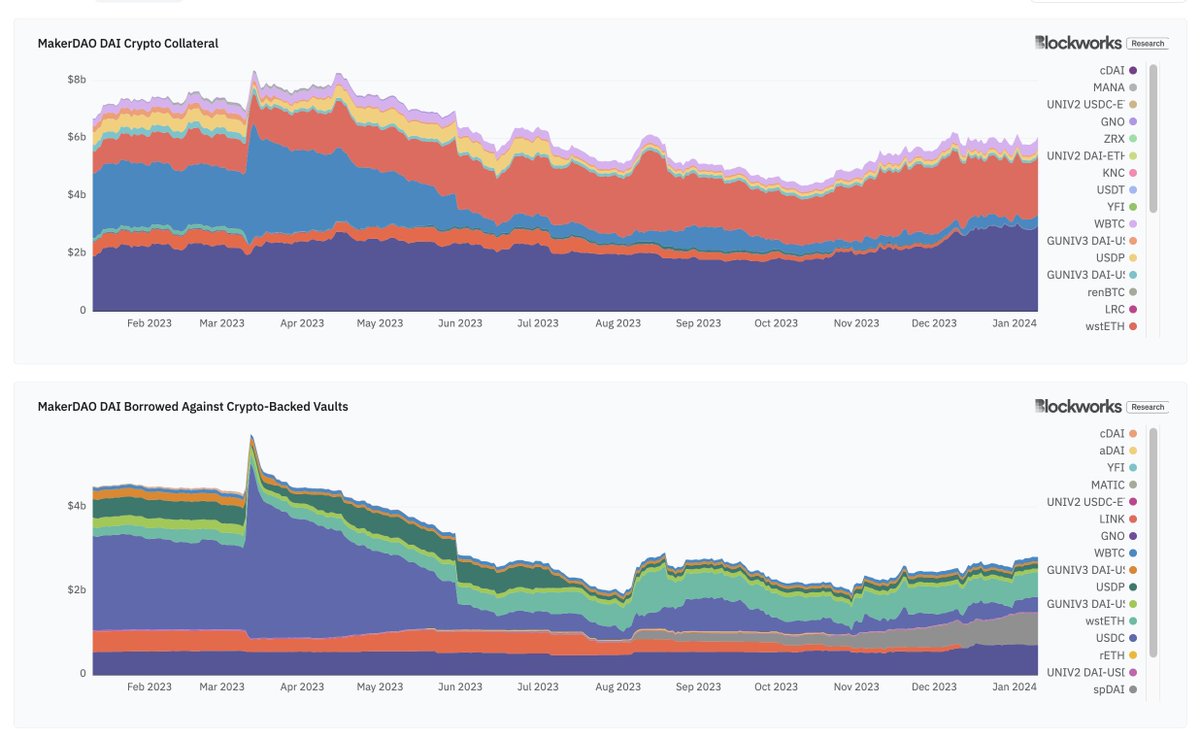
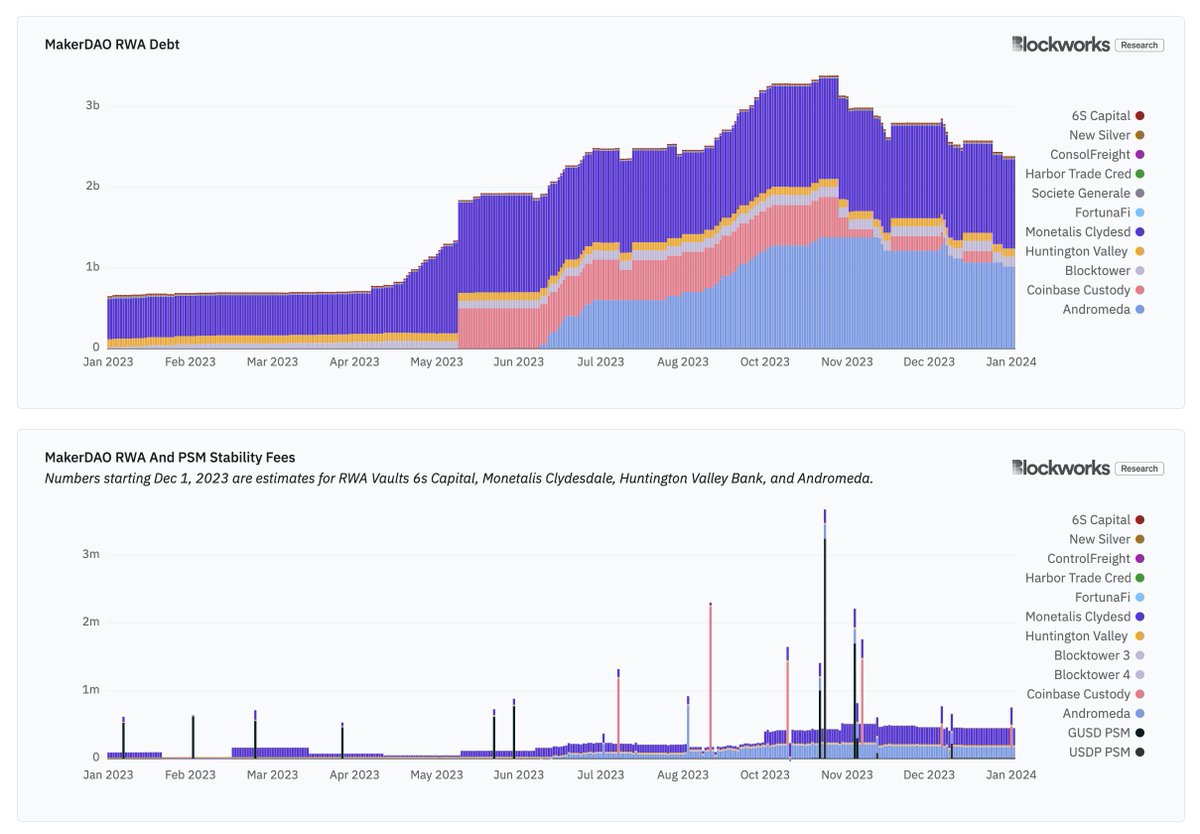
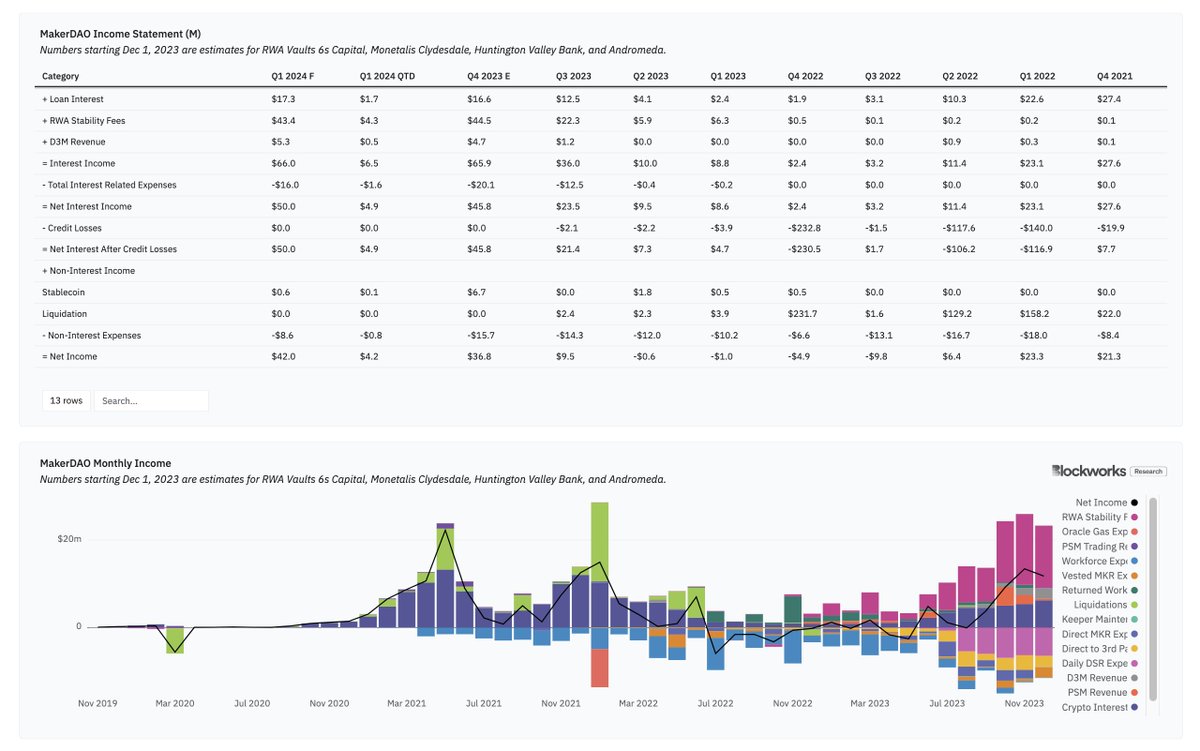
Maker dashboards are now live including:
1) Full financials
2) DAI metrics
3) RWA metrics
4) Spark Protocol metrics
I think these are now the industry's most in-depth @MakerDAO dashboards.
But let us know how we can make it even better.
Some thoughts on the Binance settlement, with the preamble that I think companies that don’t like certain laws should still comply with them while campaigning for change.
One interpretation of the government’s suit and the resulting mammoth settlement is that by refusing to implement compliance schemes like AML & CFT, Binance failed to stop money laundering and the financing of terrorism.
The problem with this interpretation is that vast sums of illicit flows still move through the companies who do comply. Banks, brokers and other types of (mostly non-crypto) intermediaries are the preferred route for tax and sanctions evaders, to the tune of over a trillion dollars a year.
A more accurate interpretation is that Binance refused to participate in the pretense of stopping illicit finance. They didn’t kick out the occasional bad actor or file endless suspicious activity reports. In other words, they didn’t play the game, didn’t pay their annual tithe to the AML-Industrial Complex (a cushy landing spot for ex officials) and didn’t kiss the ring, as it were.
You could see the Kabuki aspect of all this in the joint press conference held by various Important Government Officials yesterday. If you didn’t know the context and watched the whole thing on mute you’d think the Feds just brought down a major drug cartel or rounded up the remnants of ISIS, as opposed to finally extracting their pound of flesh from the preferred trading venue for Dogecoin.
This settlement was so important that it warranted an appearance by the Secretary of the Treasury, but not important enough for her to know how to pronounce the company’s name.
Also telling: most of the Tough Talk from the People in Suits was about the procedures Binance refused to follow, and notably NOT about the terrorism that Binance enabled.
The same goes for the unsealed settlement docs, full of shocking (not really) revelations like the time some dude in Washington traded $1400 worth of some coin with some dude in Iran. This from the same administration that released $10b to the Iranian government a week ago.
People who sincerely believe that crypto is some unique enabler of bad people doing bad things don’t understand how the rest of the financial system actually works.
One of the biggest banks in America still operates a division in Russia, and many of the world’s worst tyrants use America as their piggy bank. But that’s all considered OK because someobody did the paperwork.
Binance was wrong to lie to its customers and wrong for not being compliant. But that doesn’t mean it’s a bad company. Spend five minutes googling “banks facilitating money laundering” and you’ll find that financial firms with household names have been caught doing far worse things involving orders of magnitude more money, yet suffered much milder consequences.
If they’d been held to the Binance Standard there’d be hundreds of managing directors in jail and less money for shareholder buybacks (or lobbying). But the bankers were smart enough to never question the game.
Unlike FTX—a company whose psychopathic leader was beloved by half the people in that press conference not that long ago—Binance didn’t abscond with user money.
It did a reasonably decent job of onboarding tens of millions of poor, brown, and otherwise underprivileged people into the financial system, something the world’s compliant financial firms have chronically failed to do (which is OK—it’s not considered redlining when the AML department holds the pen).
Binance's net contribution to a more inclusive financial system is something to be commended. What remains to be seen is if firms like that can keep serving underserved populations now that they too have agreed to play the game, and do the paperwork.
Locked in for @Permissionless and I couldn’t be more excited to be back in Austin, TX 😎🙏🏾
One of the strongest web3 communities in the ecosystem 💪🏾
@bankless and @blockworks are going to be hosting one of the top conferences of the year 😎🚀
Who’s going ⁉️
We are pleased the U.S. Bankruptcy Court for the Southern District of New York agrees with 97% of Voyager customers who voted that our plan provides the best path forward for Voyager users to re-take control of their assets.
Our goal has always been to return customers their cryptocurrency on the fastest timeline possible and empower users to make their own decisions about their own assets.
We look forward to completing the transaction and welcoming Voyager customers to https://t.co/HrbX93eYuS where they can expect the highest levels of service and support.
1/ Today, @BinanceUS was selected highest and best bid in Voyager’s reopened bankruptcy asset auction. Once the deal is completed, Voyager users will finally be able to access their digital assets on the https://t.co/Wc26vMosC4 platform.
Read: https://t.co/gBK5m3kcYn
5) I know that there have been rumors in media of conflict between our two exchanges, however Binance has shown time and again that they are committed to a more decentralized global economy while working to improve industry relations with regulators. We are in the best of hands.
4) A *huge* thank you to CZ, Binance, and all of our supporters. This is a user-centric development that benefits the entire industry. CZ has done, and will continue to do, an incredible job of building out the global crypto ecosystem, and creating a freer economic world.
@Scarlet_beats It’s absurd how reminiscent and happy she is speaking about how she met someone who allegedly violently assaulted her for years. Survivors tend to fear their perpetrators, and even cower in their presence