Andrew Huberman shares a simple, science-backed trick to fall asleep faster when your mind races or you can't stop noticing your body position:
Close your eyes and do slow, deliberate eye movements to shut down proprioception (body awareness) and signal your brain it's time to transition into sleep.
Try this tonight (takes ~1–2 minutes):
- Slowly move eyes left → right (a few times)
- Then counterclockwise circle → clockwise circle
Look up → down
- Gently attempt to look toward the bridge of your nose (faux cross-eyed)
- Finish with a long exhale to slow heart rate
Why it works: Eye movements coordinate with your vestibular system & cerebellum to mimic the natural forgetting of body position that happens at sleep onset (similar to slow rocking or boat motion calming the brain). It gives your racing mind something active to focus on instead of "just relax."
Huberman: "Many people find it helps them fall asleep quickly—it's not kooky; it's physiology."
No apps, no gadgets—just your eyes. Game-changer for insomniacs or restless nights. Try it & report back.
The faster technology moves, the more I think about Bezos' question
What won't change in the next 10 years?
Things I've been writing down over time:
- Humans will always need shelter, food, energy, and healthcare.
- The desire for ownership and the accumulation of wealth.
- The physical world will move more slowly than the digital one.
- Every increase in technological capability, especially AI, will require more energy.
- People and businesses will continue to need access to capital.
- Capital will continue to seek returns that exceed inflation.
- Underwriting methods evolve, but demand for credit (loans) is persistent.
- Trust remains scarce and becomes increasingly valuable as content, code, and fraud become cheaper.
- Verified identities and reputation becomes more important as information becomes abundant and synthetic.
- Long-term wealth creation and dynastic (multi-generational) thinking predate modern technology, and will persist.
- Coordination and transaction costs never fully disappear; market friction will continue to justify the existence of firms and intermediaries.
- People will continue to compete for status.
- Consumers will pay a premium for products and services that confer status.
- Time remains fixed at 24 hours per day.
- But attention is a finite resource and an enduring constraint.
- Products that credibly save time (or enable delegation) have a perpetual market.
- Inaccessible, proprietary data will be a persistent moat. The more inaccessible and difficult to aggregate, the deeper the moat.
- People want accountability, recourse, and clearly identifiable responsibility when things go wrong.
- Regulation consistently lags technological innovation.
- Compliance requirements, licensing, and regulatory moats persist even when machines can perform the underlying task.
- Local knowledge remains valuable and difficult to replicate.
- Heterogeneous markets (like real estate) continue to reward people with deep contextual understanding.
- Incumbent organizations tend to underinvest in disrupting their own businesses, which always creates opportunities for challengers.
Bezos' insight on what wouldn't change in 10 years was "Customers will always want lower prices and faster delivery."
It's boring/ true, but I think that's the point.
Everything we build today can and will be rebuilt more cheaply, faster by someone else.
Build on the invariants, not the trends.
What have I missed?
If you are on the verge of AGI or ASI, why isn’t your model smart enough to recognize espionage distillation in real time? You say “cure cancer in a few years.” Isn’t sniffing illicit distillation quite a bit easier than curing cancer? Why write letters to DC? Just use AGI.
This is a fascinating and important set of data which shows us where things are going, using OpenAI as a canary in the coal mine.
The chatbot era is over, and agentic systems are coming to tasks beyond engineering. And skills show promise as a way to standardize AI use in firms.
This chart from Anthropic is useful, since Agent Teams and Workflows are both very new and very powerful (and token hungry).
On the other hand, maybe it doesn't matter as a lot of the decisions about which approach to use is from the AI itself & it often uses them in combination
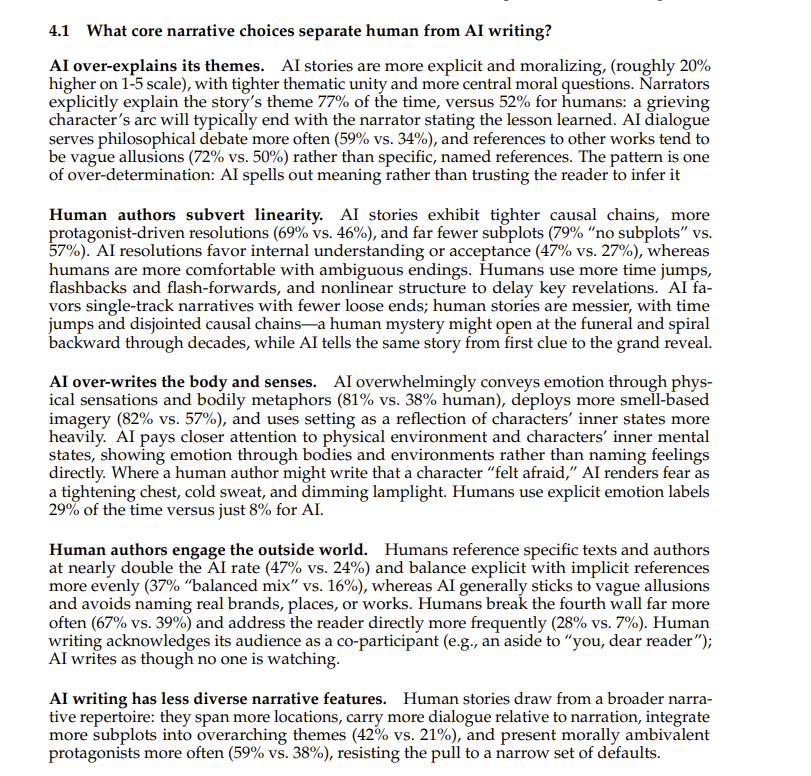
There is a lot being written about the stylistic tells of AI writing (em-dashes, etc.) but this paper looks at AI narrative tells
Fascinating differences between AI & human narrative, and asking AI to write in different styles doesn't do much to change it https://t.co/azkRHz34NQ
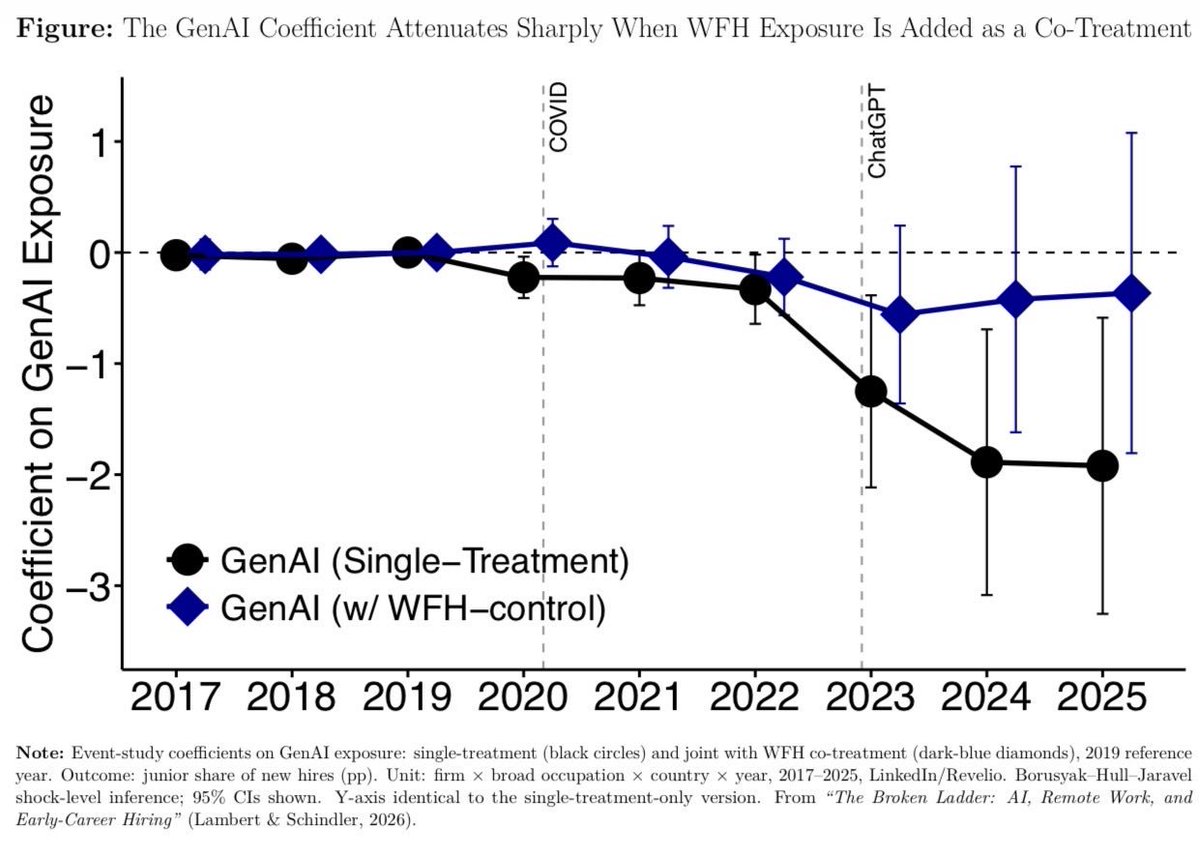
A major talking point for those who think AI will cause mass unemployment is the recent slowdown in junior-level hiring. Lambert and Schindler, in this new working paper, point to a different culprit: work from home policies.
Using data on ~250 million hires across four countries,they show that AI exposure strongly correlates with a role being work from home. So you have to disentangle the two to get a clean estimate.
Which is the driving variable? They find that the effect of exposure to AI on junior hiring ~vanishes when you control for WFH, whereas the effect of WFH remains ~unchanged when you control for AI exposure.
In other words: it's WFH, not AI, that is slowing junior hiring.
Why? Their theory: "WFH makes supervision, monitoring, and on-the-job learning harder, all of which hit junior-workers more. Firms less willing to invest in junior talent when these frictions rise."
I think that makes sense. WFH involves a certain degree of trust and makes management harder. If an employee is less experienced, all else equal you're less likely to prefer them for a WFH position.
Bigger takeaway, though: if AI is going to take all our jobs, it's sure not there in the data yet!
I think people don't realize why Gemini Omni is different than other video AIs. It is fully multimodal, so it can edit video natively, too
I took the famous "train " movie from 1896 & made it a bullet train, LEGO, added a time traveler, a centipede, muppets... (see reflections?)
We looked at what attributes of a skill predict over vs. under confidence. Here's a handy infographic summarizing our results. People were more overconfident in tasks that were easy, subjective, reflective of character, and for which they had a lot of experience.
If Steve Jobs were still alive, he would have the moral authority to face and maybe even to solve this problem. But I doubt anyone in the phone business now does.
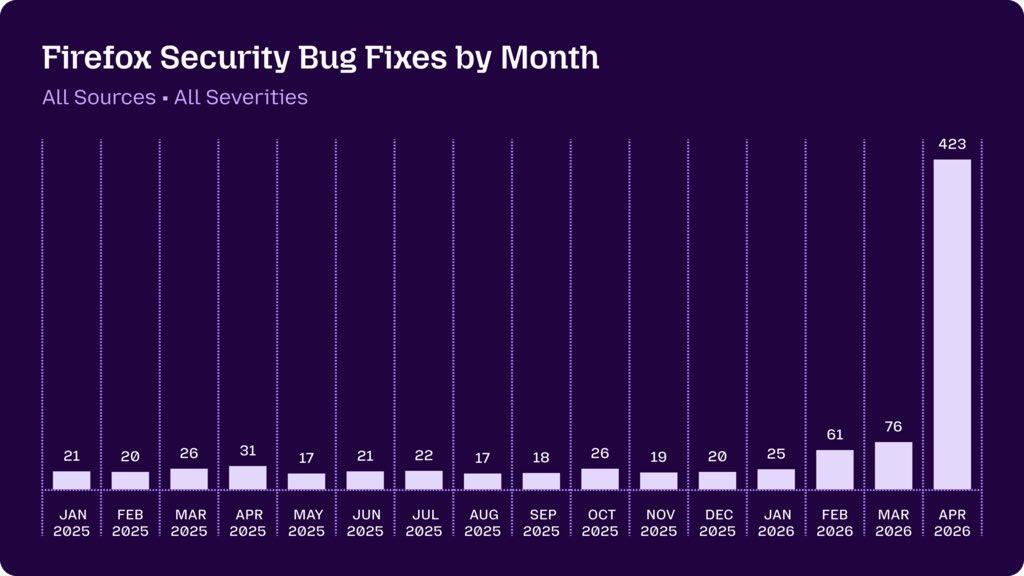
So Mythos was, indeed, not marketing hype.
Remember this is a general purpose model that just happens to be good at finding exploits because good models are good at lots of things. Expect similar from OpenAI & Google. And from open models in 8 months. https://t.co/KbhalQYX8R
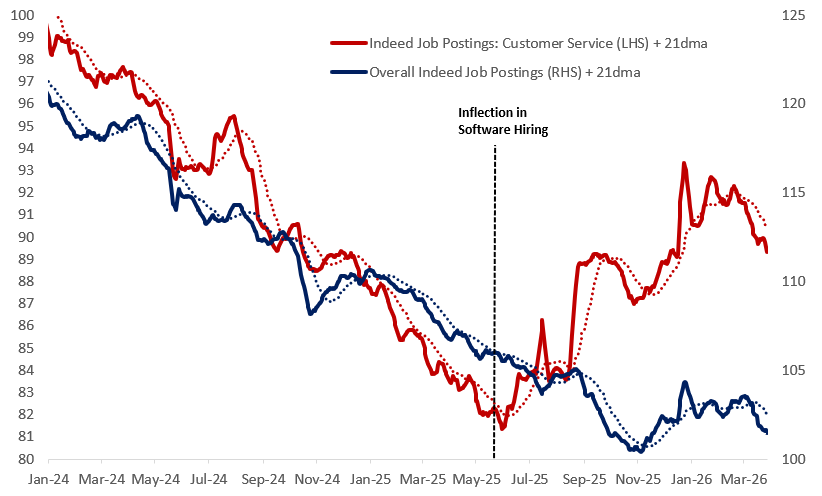
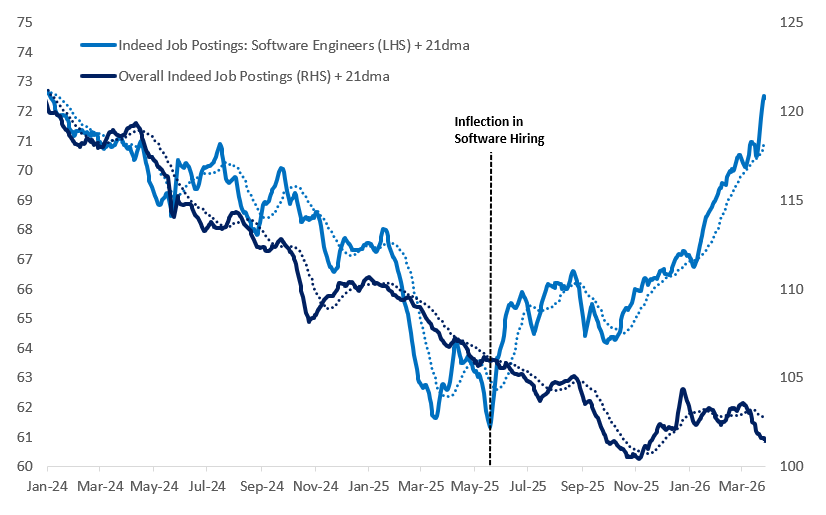
And in case you have a "this is transient" pushback, Frank has another great point: "However a thoughtful pushback was that perhaps increasing demand for software engineers reflected a short term dynamic in which engineers were hired to integrate AI into workflows, which would then allow displacement thereafter. To investigate this we can turn to daily job posting data in the remainder of the top five AI exposed industries. We find that job postings in customer service are up 9% from when software postings started to inflect higher in May-2025, in banking and finance postings are up 9% and in accountancy are up 18%."
Narrative violation and great insight from the latest Citadel Securities banger by Frank Flight: "We illustrated back in February that demand for software engineers, the most AI exposed occupation was accelerating higher, which we argued violates the displacement narrative. Indeed the acceleration in software job postings has continued, now up 18% from the inflection point in May last year."
Sebastian Sawe and Yomif Kejelcha both broke 2-hour mark at London Marathon 2026 with Adidas Adizero Adios Pro Evo 3.
Tigst Assefa set women’s marathon record wearing it too.
It’s lightest legal race day shoe ever, weighing 97 grams (3.4oz) for men’s size 9, about 1/2 the weight of a regular men’s running shoe.
Adidas was able to reduce weight by 30% vs. Pro 2 model and most of improvement came from a lighter foam compound and upper part is inspired by kite surfing sail material.
They U-shaped carbon fiber plate is a lighter and so are the laces lol.
Adidas created Lightstrike Pro foam: uses gas injection (nitrogen) to expand billions microscopic cells which makes it ultralight and bouncy. Wild.
This shoe arms race (“race to zero”) is getting out of control. Seems like 50 grams (1.7oz) may be as light as it can get.
The public version release of shoe is coming up and will cost $500.
***
Background on shoe: https://t.co/QP1tQXawft
YT/ Meta Endurance: https://t.co/WtxWv9bcmK
I have changed my mind on how AI will impact jobs in America.
Previously, I believed AI would replace many entry level roles typically filled by young employees. The technology would then work its way up the organization and eventually reduce the total number of jobs in a company.
The data is saying something different, so when I get new information I am willing to change my mind.
The number of software engineers being hired has been increasing. The number of open software engineer roles is growing.
The number of new college grads who get hired has increased 5.6% over the last 12 months. The unemployment level for people aged 20-24 years old who have a college degree has fallen from nearly 9% to almost 5% as well.
The Wall Street Journal recently wrote “AI created 640,000 jobs between 2023 and 2025 in the U.S., according to an analysis by LinkedIn of job posting data, including new white-collar positions such as Head of AI and AI engineer.”
And I am starting to see companies throughout our portfolio aggressively hiring to keep up with the demand for their products and services.
If AI can make employees more productive, which is widely accepted as fact, then companies are going to want as many productive units of labor as possible. This is a key reason why I am changing my mind.
AI appears to be a magical technology that will make companies more productive and more profitable. The net result will be more corporations, more startups, and more jobs.
All three are big, positive wins for the American economy.
Superhuman interpretation AI for medical images, such as mammography and endoscopy, has been proven to improve diagnostic accuracy in multiple randomized trials but mostly not implemented.
But LLMs for clinical decision support have little real world medicine proof, but are getting widely used.
Norway is reversing its mistaken 2016 decision to give every student an iPad, which damaged education immediately. Many countries are going back to books and handwriting. I hope many American schools will go back to analog next September, and let's see if that works for us too:
Jimmy Carr and Joe Rogan were riffing on something I’ve never thought about but instantly recognized.
Super attractive people often speak very slowly… because no one ever interrupts them.
Jimmy’s friend Roisin Conaty pointed it out: gorgeous supermodels talk slowly because they’ve never had to fight for airtime. Meanwhile, the rest of us speed-talk because we know we might get cut off.
Joe added that attractive people also tend to value their own opinions more highly — since no one challenges them when they want to sleep with them.
Jimmy’s punchline: “That’s how horoscopes got big. Incredibly attractive women spoke about their horoscope, and no one went, ‘this sounds like some bullshit.’”
It’s a funny but sharp observation about how looks shape social dynamics in ways we rarely admit.