24 hours to lift-off. 🚀
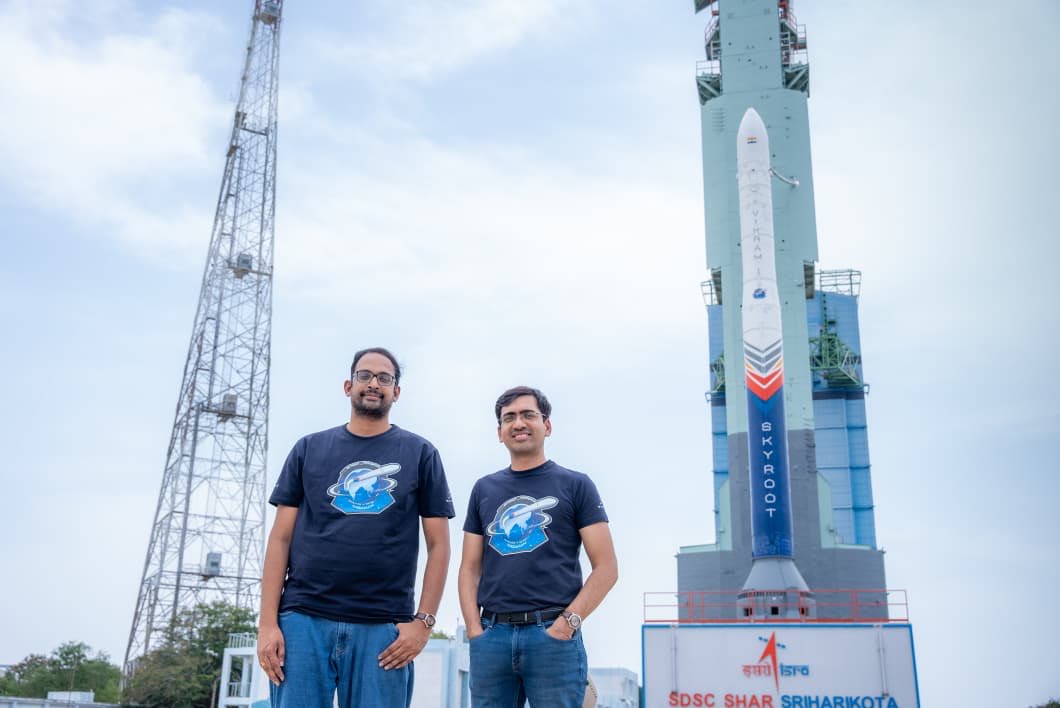
Eight years ago, @SkyrootA started with just two people with an idea.
There was no policy framework for private spaceflight in India, no real funding ecosystem for space startups, and we were taking on one of the world’s hardest engineering challenges. The odds of success seemed incredibly small.
Today, India’s first privately developed orbital rocket stands on the launch pad, ready for lift-off.
This moment belongs to every member of our team, our investors, the Government of India,@PMOIndia, @isro, @INSPACeIND, our partners, suppliers, customers, and everyone who believed in us long before this day.
We have done everything we possibly could.
Now we let physics do its job.
Whatever tomorrow brings, every second of flight will teach us something invaluable. Reaching the launch pad and attempting an orbital launch is a landmark milestone for India—and an achievement only a handful of companies worldwide have reached. Every milestone we cross will advance not just Skyroot or India’s space journey, but the global commercial space ecosystem.
Tomorrow, we take the next step. 🇮🇳🚀
ORBIT ACHIEVED. 🚀
Vikram-1 Test Flight-1 has reached orbit. India's first privately developed orbital rocket has completed its final burn and injected its payloads into a ~450 km orbit, making India the third country in the world with private orbital launch capability.
History is made. 🇮🇳
#Vikram1 #JourneyToOrbit #SkyrootAerospace
Let me explain what just happened today because it deserves so much recognition.
GalaxEye is a Bengaluru startup founded in 2021 by IIT Madras engineers. Today they launched Mission Drishti on a SpaceX Falcon 9. It is India's largest privately built satellite at 190 kg. And it carries a technology that no commercial satellite has ever carried before.
Normal satellites take photos of the Earth using optical cameras. Like your phone camera, but from 500 km up. The problem is obvious. Clouds. Night. Fog. Smoke. If any of these are in the way, the photo is useless. India has monsoon cover for 4 months a year. That is 4 months where optical satellites are partially or fully blind over large parts of the country.
The alternative is SAR. Synthetic Aperture Radar. Instead of taking photos with light, it sends radar waves down and reads what bounces back. Radar goes through clouds, through darkness, through smoke. A SAR satellite can image a flooded village at 2 AM during a cyclone when no optical satellite can see anything.
The problem with SAR is that the images look nothing like photos. They look like grainy black-and-white radar maps. A military analyst or a trained geospatial engineer can read them. A farmer, a disaster response team, or a city planner cannot.
Until today, if you wanted both optical and SAR data for the same location, you needed two different satellites, passing over at different times, at different angles. Then someone had to manually align and fuse the two datasets. Expensive, slow, and the data never perfectly matched because the satellites saw the same spot minutes or hours apart.
GalaxEye put both sensors on one satellite. Optical and SAR, fused into what they call OptoSAR. Three times more information than a single sensor. Processed onboard by an NVIDIA AI chip at 1.8 metre resolution.
Now in practice, during the next cyclone hitting Odisha, one satellite pass gives you a clear image of which villages are flooded, which roads are cut, and which buildings are standing. Day or night. Cloud or clear. In near real-time.
For defence, it means you can monitor a border area 24/7 regardless of weather. For agriculture, it means tracking crop health across an entire monsoon season without a single cloud gap. For infrastructure, it means monitoring construction progress on highways and bridges without waiting for a clear day.
GalaxEye tested their SAR tech on ISRO's POEM orbital platform. The satellite was tested at ISRO facilities. IN-SPACe provided regulatory clearance. NSIL, ISRO's commercial arm, will distribute the imagery globally. And it launched on SpaceX because ISRO's PSLV doesn't have the right orbit slot for this mission.
Yes, four IIT Madras graduates built a world-first satellite in 4 years in Bengaluru.
Take a bow!
My favorite podcaster just interviewed my favorite podcast guest, and the result was my favorite podcast episode ever. You likely won’t find a conversation with more wisdom per minute.
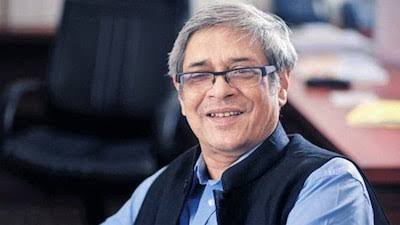
Bibek Debroy ji is one of India's finest brains, economists and Intellect. Hear his 7 minute beautiful description of the relevance of Veda, Vedanta, Mahabharata. India will miss #BibekDebroy ji. Om Shanti to him. 🙏
Ratan Tata my friend whom I admired immensely is no more. My 5 decades of relation with him became more intense during & after globalisation hit Indian industry like a tsunami. Indian businessmen were selling out. I met many of them, but found Ratan stunningly different. Why?
Did you know that an artificial neural network is designed to mimic the brain?
Inspired by biological neurons in the brain, artificial neural networks are large collections of “neurons”, or nodes, connected by “synapses”, or weighted couplings, which are trained to perform certain tasks. An artificial neural network processes information using its entire network structure. The inspiration initially came from the desire to understand how the brain works.
Learn more about this year’s physics prize awarded for work on artificial neural networks: https://t.co/QuIdxRvuEP
#NobelPrize
.@naval: First of all, I don't think of myself. I just want to be clear on that. And that's not a rule. It's just a habit I've kind of developed because I found that thinking about yourself is a source of all unhappiness and misery.
Self obsession is the root of all unhappiness.
What did Buddha do? Conquer the self. What does that mean? Means that he saw through the illusion of the separate self.
Did Buddha think about himself? Not for an instant. Anyone that you think of as an enlightened being does not think about themselves for an instant.
The happiest people in life when people are at their best is because they love something more than they love themselves. They love their children, they love God, they love their mission, what have you.
And all misery comes from rumination, from sitting around, being depressed, going in circles in your own head about me, me, me, me, me. Me is a disease.
And you need a concept of a me to be effective and to keep track of things. You have a memory, you have certain predilections, you have personality patterns. But the more you self obsess, the less happy you're going to be. I guarantee you that.
🇮🇳 India wins the 45th FIDE #ChessOlympiad! 🏆 ♟️
Congratulations to Gukesh D, Praggnanandhaa R, Arjun Erigaisi, Vidit Gujrathi, Pentala Harikrishna and Srinath Narayanan (Captain)! 👏 👏
Gukesh D beats Vladimir Fedoseev, and Arjun Erigaisi prevails against Jan Subelj; India secures at least a tie in their match against Slovenia, and clinches the gold!
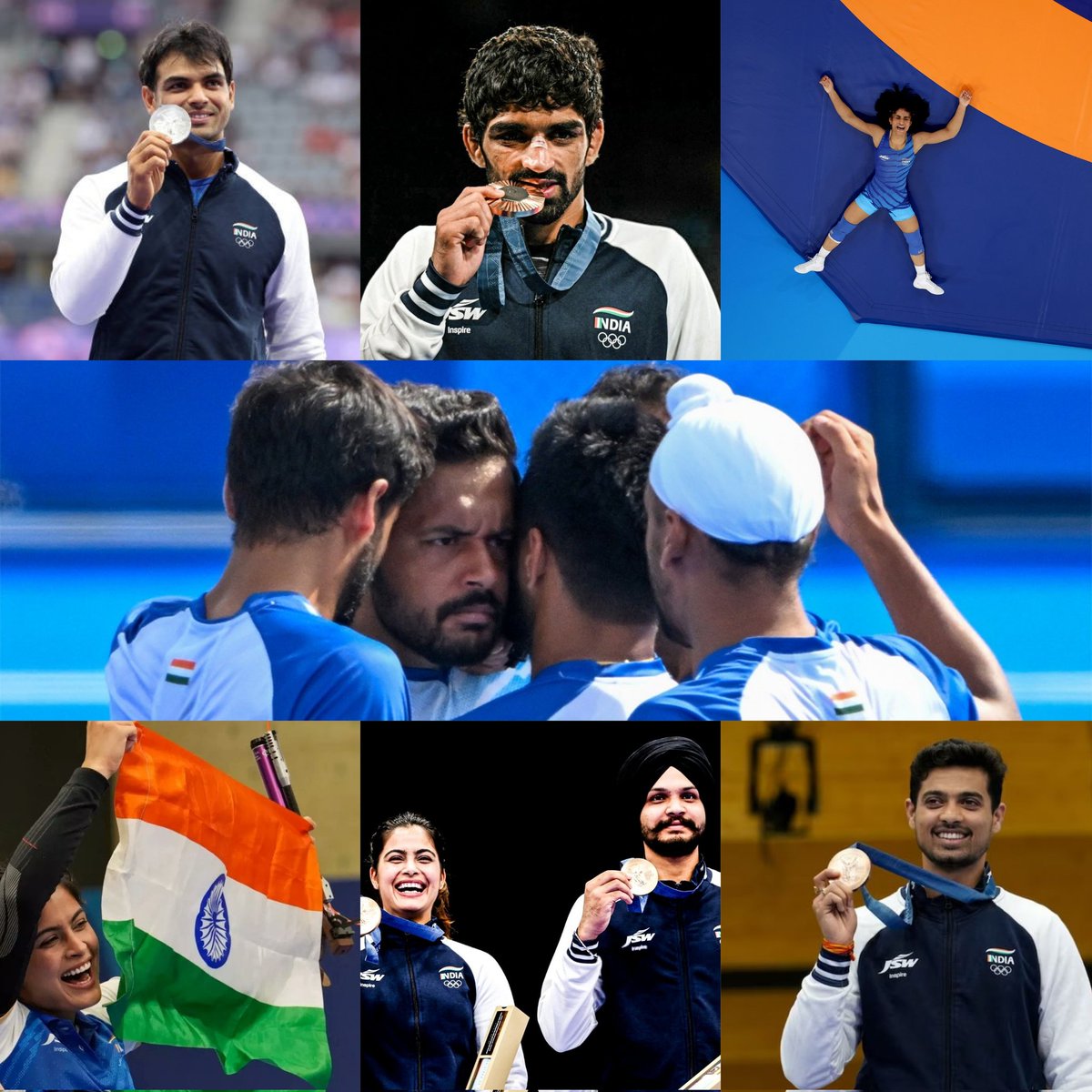
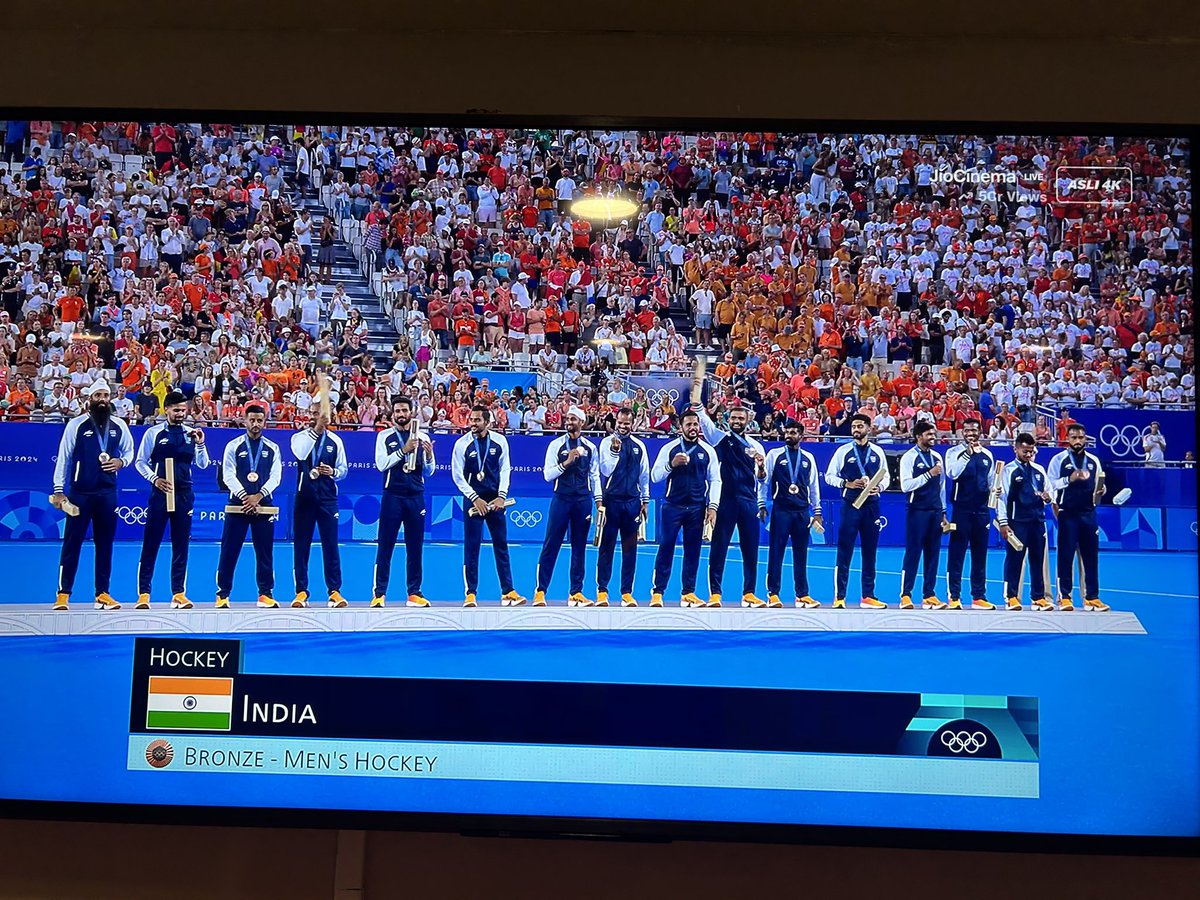
These medals aren't just personal triumphs – they're beacons of hope for countless others. Thank you for showing us the true meaning of strength, resilience, and sportsmanship. Your legacy will inspire generations to come. Bravo 👏
#MCStartupConclave | India will become the first country in the world to dissociate healthcare from wealth. India will prove to the world that wealth of the family has nothing to do with the quality of healthcare citizens will enjoy. It will happen in the next 5-10 years.” Dr Devi Shetty of Narayana Health at the Moneycontrol Startup Conclave. 🍎💵🩺
#DrDeviShetty #Health #Wealth #NarayanaHealth |
@NarayanaHealth
PM “ some people are against our growth .. they lead to anarchy and they destroy our nation .. they are the ones who are dreaming of destroying our country . We should see them . But our intention , our honesty , we will fight them “
Sarvam 2B is a 2 Billion parameter Indian language open source LLM based on 4 Trillion tokens built ground up by @SarvamAI . Now that is being Independent! Congratulations!