Big news: Kimi-K3 by @Kimi_Moonshot is now #1 in the Frontend Code Arena with 1679 pts, surpassing Claude Fable 5.
This is a 17-place jump from Kimi-k2.6 (#18 -> #1).
In Frontend, Kimi-K3 ranked #1 in 6 of 7 domains: Brand & Marketing, Reference-Based Design, Data & Analytics, Consumer Product, Simulations, and Content Creation Tools, landing #2 only in Gaming behind Fable 5.
The full model weights will be released by July 27.
Congrats to the @Kimi_Moonshot team on this major milestone!
Many of the major features in @yellowdex_ai like cloud sync and collaborative sharing is finally done.
The first iteration was pretty rough ngl. Spent almost a month writing and rewriting the design spec until all edge cases are covered.
While Opus4.8 and some Fable has been a huge help in listing out all possible sync edge case scenarios. It wasn’t the technical problems but product decisions that took up the most time and these decisions, AI couldn’t make it for me.
PHV drivers in Singapore always seem excited to share how they’re using AI with me. One of them tells me he’s using Fable. I’m like wtf uncle, what are you building?
Turns out he’s using it for TradFi trading. 😂 Makes sense that he’d want the best model.
Validation is a mirage.
“How do you validate if it’s going to work?”
“How do you know if people will buy it to not?”
“How do you validate product market fit?”
“How do you validate if a feature is worth building?”
“How do you validate a design?”
You can’t.
You can’t.
You can’t.
You can’t.
You can’t.
I mean you can, but not in spirit of the questions being asked.
What people are asking about is certainty ahead of time. But time doesn’t start when you start working on something, or when you have a piece of the whole ready. It starts when the whole thing hits the market.
How do you know if what you’re doing is right while you’re doing it? You can’t be. You can only have a hunch, a feeling, a belief. And if the only way to tell if you’ve completely missed the mark is to ask other people and wait for them to tell you, then you’re likely too far lost from the start. If you make products, you better have a sense of where you’re heading without having to ask for directions.
There’s really only one real way to get as close to certain as possible. That’s to build the actual thing and make it actually available for anyone to try, use, and buy. Real usage on real things on real days during the course of real work is the only way to validate anything. And even then, it’s barely validation since there are so many other variables at play. Timing, marketing, pricing, messaging, etc.
Truth is, you don’t know, you won’t know, you’ll never know until you know and reflect back on something real. And the best way to find out, is to believe in it, make it, and put it out there. You do your best, you promote it the best you can, you prepare yourself the best way you know how. And then you literally cross your fingers. I’m not kidding.
You can’t validate something that doesn’t exist. You can’t validate an idea. You can’t validate someone’s guess. You can’t validate an abstraction. You can’t validate a sketch, or a wireframe, or an MVP that isn’t the actual product.
When I hear MVP, I don’t think Minimum Viable Product. I think Minimum Viable Pie. The food kind.
A slice of pie is all you need to evaluate the whole pie. It’s homogenous. But that’s not how products work. Products are a collection of interwoven parts, one dependent on another, one leading to another, one integrating with another. You can’t take a slice a product, ask people how they like it, and deduce they’ll like the rest of the product once you’ve completed it. All you learn is that they like or don’t like the slice you gave them.
If you want to see if something works, make it. The whole thing. The simplest version of the whole thing – that’s what version 1.0 is supposed to be. But make that, put it out there, and learn. If you want answers, you have to ask the question, and the question is: Market, what do you think of this completed version 1.0 of our product?
Don’t mistake an impression of a piece of your product as a proxy for the whole truth. When you give someone a slice of something that isn’t homogenous, you’re asking them to guess. You can’t base certainty on that.
That said, there’s one common way to uncertainty: That’s to ask one more person their opinion. It’s easy to think the more opinions you have, the more certain you’ll be, but in practice it’s quite the opposite. If you ever want to be less sure of yourself, less confident in the outcome, just ask someone else what they think. It works every time.
PayNow masks your name when you send money. GrabFin, Wise, and YouTrip still show the recipient your full legal name.
Why? Why not surface a transaction ID instead? Legal names shouldn’t be doing AML work in a payments UI.
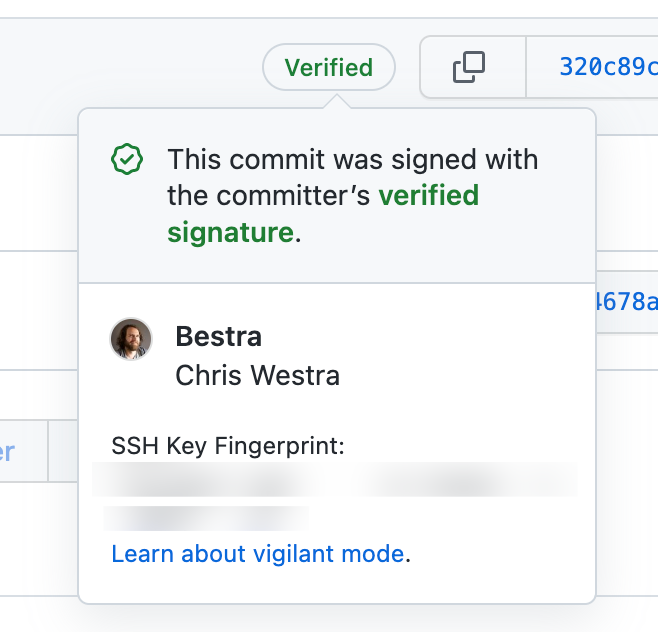
‼️ BREAKING: New research shows you can copy any signed GitHub commit into a second one that looks identical, without the author's secret key, creating a distinct commit with an identical tree, identical metadata, a valid signature, and a "Verified" badge from GitHub.
On GitHub, a green "Verified" badge is supposed to mean two things: a trusted author signed it, and its ID is a one-of-a-kind fingerprint for that exact code. A new Carnegie Mellon preprint from Jacob Ginesin says the second promise, the unique fingerprint, does not hold.
Why it matters: security teams and package systems (behind tools like Go, Nix, and GitHub Actions) trust that ID as a unique handle for code. Block or pin the "bad" version, and an attacker can re-issue the same signed code under a fresh, still-verified ID that slips past. The author says Git and GitHub have not fixed it.
PoC: https://t.co/b2CevCtpcd
Flake locks have a rev (git commit) and a narHash (hash of the source tree). The paper shows an attacker can mint a different valid rev for the same content. But it doesn’t matter.
@claudeai lol or you can just download GLM 5.2 and not have to deal with your nonsense. either sell a product on reasonable and certain terms or don't waste anyone's time. anyone who relies on this company is a fool
We heard you. And we agree.
In light of recent developments in physical media, GitHub is proud to announce that you can now obtain your public repo on CD-ROM.
Keep it. Lend it to friends. Pass it on to your children.
Your code is physically yours, forever. Until you lose it, let's be real.
Order yours today.
https://t.co/z041pdMH7h
This looks pretty relevant and helpful to devs out there.
Personally used opus 4.8 and gpt5.5 to implement larger features. And i do agree with the leaderboard ranking here.
https://t.co/ngUdUUy0se
introducing nano banana 2 lite: our fastest, most cost-effective gemini image model yet
built for high-velocity developer pipelines, it delivers text-to-image outputs in 4 seconds at just $0.034 per 1K-resolution image
swap it into your workflow today via ai studio and the gemini api