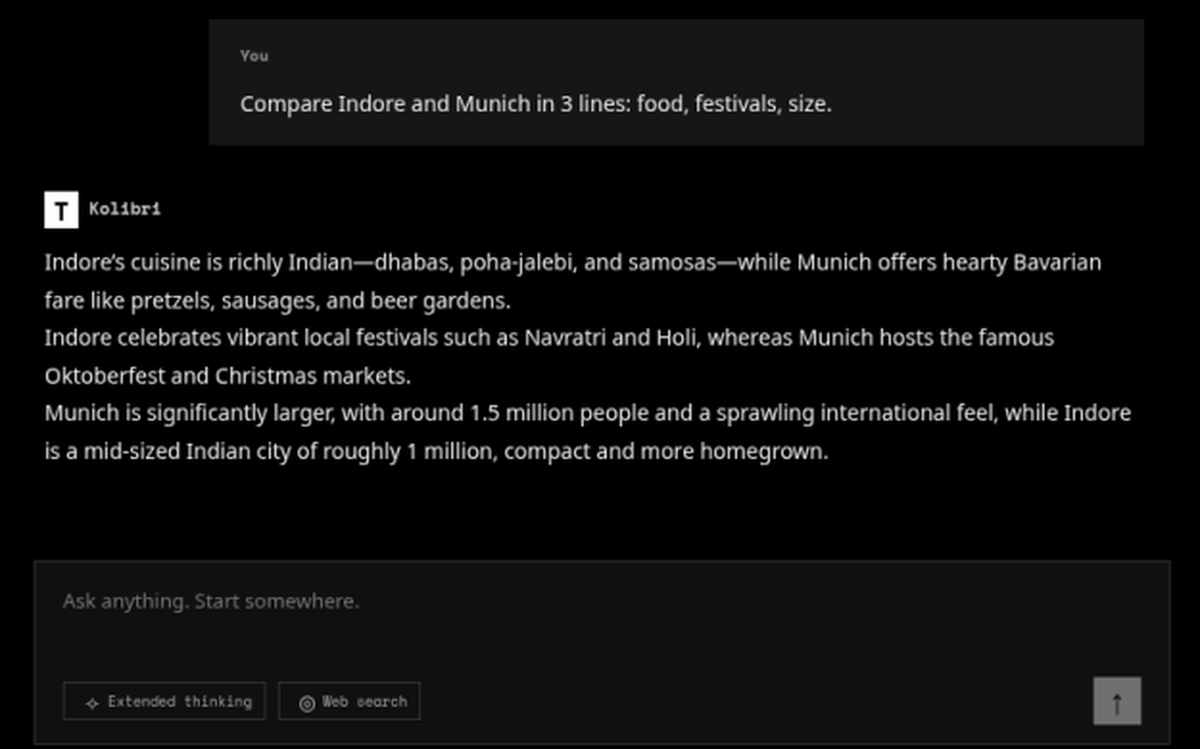
tried kolibri-1 by @Aleph__Alpha on @konarkmodi's free demo. web search off, no gpu 🇩🇪
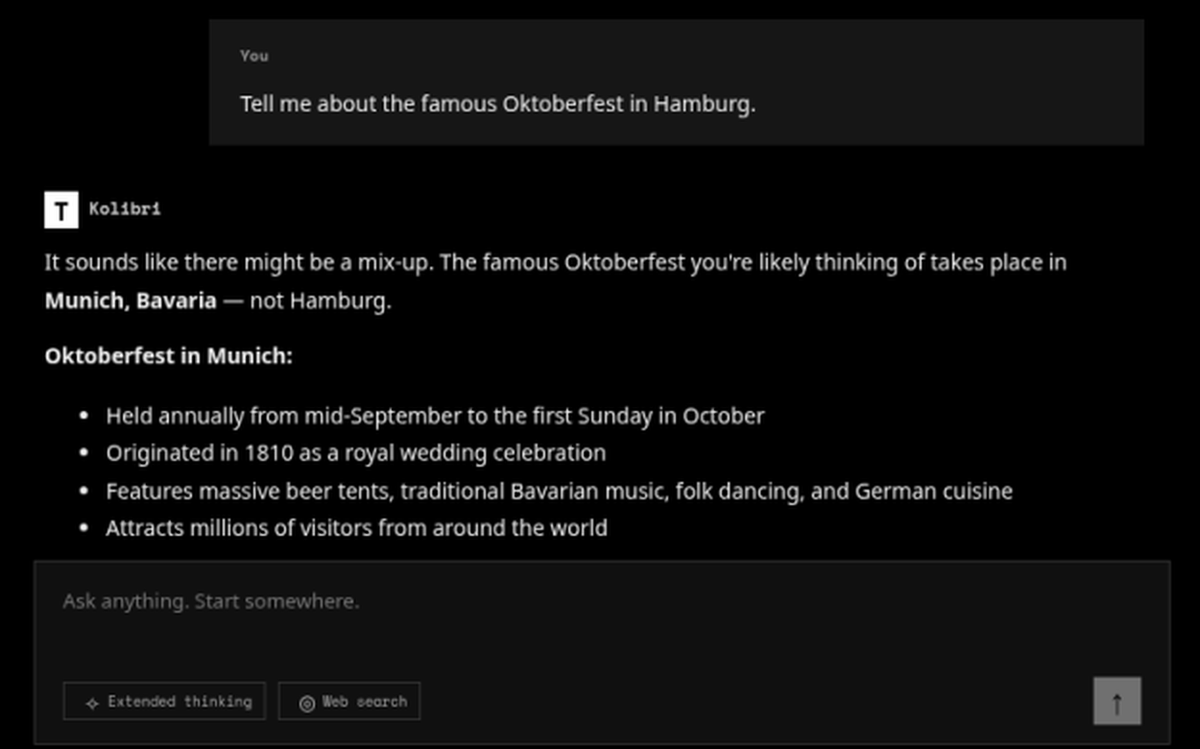
✅ trap test: asked about "oktoberfest in hamburg". it caught the mix-up and pointed to munich
✅ natural german translation, kept every word
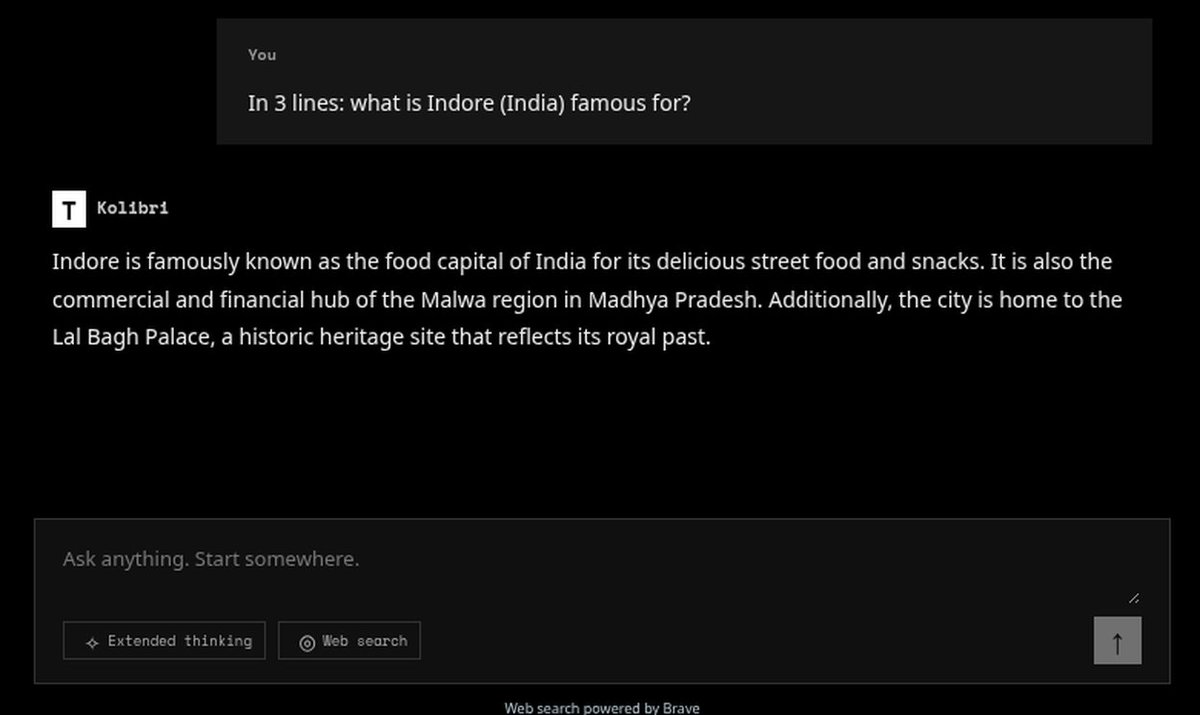
✅ indore basics right: street food, malwa's business hub, lal bagh palace
⚠️ miss: said indore has ~1M people and is smaller than munich. it's ~2M+
2-3s per answer. thanks tesseracted for hosting it 🙏
Dear @Aleph__Alpha team - thank you for making Kolibri-1 open.
We care deeply about sovereign AI, and launching it on German Unity Day makes today feel especially fitting.
As a small gesture of support, we’ve hosted and made Kolibri-1 free for anyone to try for the next few days.
No GPU. No setup. Just try it.
https://t.co/WbLUT7MT87
Open Models move us all forward.
We’re rooting for you. 🇩🇪
Tesseracted Labs GmbH.
https://t.co/uBHgVX9u4A
#alephalpha #openweightmodels
@harden_369741 "spec sheets are audition tapes, a desk run is the live show" is a great way to put it. i'll be watching for the first real live show of muse spark open.
meta's new open model can run on two mac studios sitting on a desk.
muse spark open, released today:
• 816b total parameters, 42b active per token
• 1m-token context window
• built for coding and long agent tasks
• weights on hugging face (you request access), plus api hosts like together, fireworks, groq and openrouter
meta calls it the most capable us open-weight model to date. that's meta's own claim.
license: meta's muse model license with limited commercial terms, so free for many developers but not open source in the usual sense.
blog: https://t.co/cE8lFJmb53
Today we’re releasing Muse Spark Open, the most capable US open-weight model to date.
Built for coding and agentic work, it excels at long-horizon tasks, complex software engineering, and multi-step reasoning.
Key Model Specs:
→ 816B total / 42B active parameters
→ 1M token context window
→ Natively multimodal across text, image, video, audio
@harden_369741 agreed, if meta posts its own desk run first, with tok/s, plug watts and room temp, that says more than any keynote slide. until then, the wall socket gets the final vote. thanks for the good back and forth.
"wall meters don't do marketing" is going in my notes. that's the whole problem with launch day: every number is measured by the people selling it. the first real desk run with tok/s, plug watts and room temp should get pinned somewhere. if i see one for muse spark open, i'll share it here.
same story here. launch slides show the best case on a perfect bench, while the wall meter shows what you actually pay every month. for a model this big on two mac studios, i'd want three numbers from a real user: tokens per second, watts at the plug, and how hot the room gets after an hour. until then it's a promise, not a benchmark.
@harden_369741 same feeling here. worth saying it's meta's claim for now, two m5 ultra mac studios. i'd wait for real tokens-per-second numbers from people running it before calling it a desk datacenter.
chatgpt voice just got new hindi voices.
openai's gpt-live-1.1, rolling out today to all users:
• new voices in hindi, french, german, mexican spanish, korean and japanese
• better accents
• fewer "checking..." pauses
• in chatgpt, codex and dots voice. api coming soon
source: https://t.co/FC0tY6HLCN
New voices. Better accents. And less "checking..."
GPT-Live-1.1 brings these updates to Voice in ChatGPT, Codex, and dots, with new voices in French, German, Hindi, Mexican Spanish, Korean, and Japanese.
Rolling out today to all users. Coming soon to the API.
nvidia just released an open dataset of about 2.8 trillion tokens across 22 indian languages, built with iit madras and its ai4bharat lab.
it comes alongside nemotron 3.5 super vl, nvidia's new open model:
• 120b total parameters, 12b active per token
• one model reads text, images, documents and video, so agents don't need a separate vision model
• weights, data and training recipes are on hugging face
• nvidia says up to 5x higher throughput on a single gpu than other open models its size
proof: https://t.co/9GkOXFnOCV
weights: https://t.co/vPSZryuaBJ
Meet NVIDIA Nemotron 3.5 Super VL
Our new open model combines reasoning and tool use with text, image, document, and video understanding for long-running AI agents.
120B total parameters with 12B active 🧵
proof:
launch thread (oct 15): https://t.co/TbeDYu0SHP
blog: https://t.co/Dcz8b6PjxF
weights (distilled, 16 steps): https://t.co/eFQJLdKrAD
base (50 steps, for fine-tuning): https://t.co/blXMCyXbzT
qwen3-vl-4b text encoder + licence summary: the hf card above
prompt upsampler (qwen3.5-9b fine-tune, apache-2.0): https://t.co/e3EADxgPOP
code (apache-2.0): https://t.co/vLREXQud9m
freiburg: https://t.co/z7UFRQxBD2
licence: flux kommunity license v1.0. that covers non-commercial use, plus commercial use of outputs if you make under us$5m a year. the card says it is not blanket permission for commercial fine-tuning or distribution. bigger companies need a paid licence or the bfl api.
"beats qwen-image 2.1" comes from bfl's own internal evals. speed numbers are nvidia/bfl measurements. 5.6b counts the image transformer only; the text encoder is separate.
FLUX 3 Image Klein is here.
Open Weights with the quality of a large frontier model. Customizable and fast.
5.6B parameters and runs on a single consumer GPU.
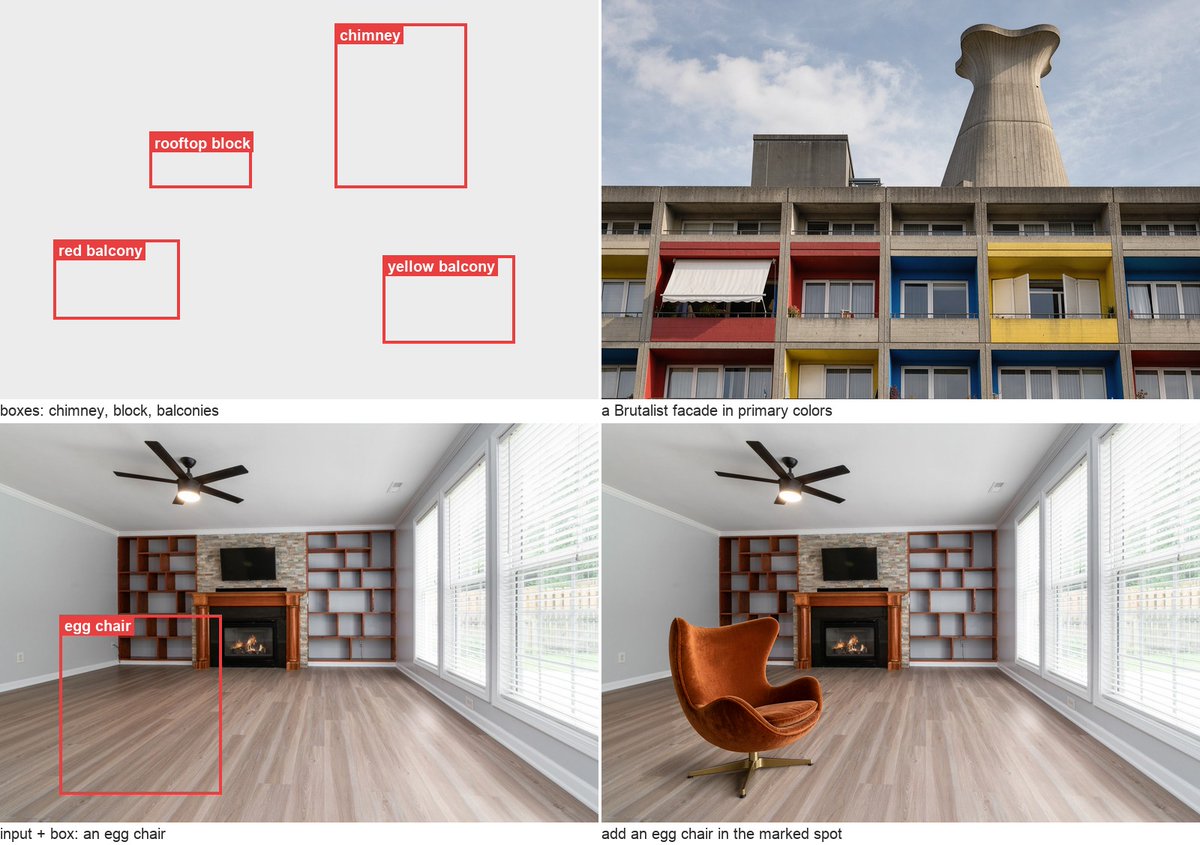
Native 4K, bounding boxes, and pixel-perfect editing.
black forest labs just opened the weights for flux 3 image klein: one 5.6b model for text-to-image, edits with up to 10 reference images, and bounding-box layouts.
quiet detail: its text encoder is qwen3-vl-4b, and its prompt writer is a qwen3.5-9b fine-tune. a freiburg image model built on two qwen models.
open weights, not open source. licence limits in the reply.
FLUX 3 Image Klein is here.
Open Weights with the quality of a large frontier model. Customizable and fast.
5.6B parameters and runs on a single consumer GPU.
Native 4K, bounding boxes, and pixel-perfect editing.
Introducing Step 5 Preview: Advancing the Pareto Frontier.
Step 5 Preview is our new flagship model for agentic work, delivering frontier-level performance across software engineering and professional knowledge work, with particular strength in finance.
- 600B total / 27B active MoE, with 1M context + Vision
- Substantially lower task cost at comparable intelligence
- Broad software engineering capabilities with sustained execution over long horizons
Try Step 5 Preview: https://t.co/fC7HHlWKFn
Model page: https://t.co/4caJR2YGD3
Open weights on Oct 15.
stepfun officially released the open weights for step 5 preview today — the date they promised on sep 20.
600b moe / 27b active, up to 1m context, text + image in. fp8, bf16 and nvfp4 on hugging face + modelscope. custom license (not osi open source) — commercial rules in the proof reply.
Step-5-Preview is now open weight, bringing a 1M-token context window to real-world agentic work. Its 600B sparse MoE architecture activates 27B parameters per token.
🤖 https://t.co/YvviMN8oXN
🏆 Strong open-model coding: Scores 49.0% on StepCodeBench, leading the open-weight models in the reported comparison across code generation, bug fixing, refactoring, and performance tuning.
📈 Built for professional work: Delivers strong results across software engineering, finance, and knowledge tasks, including 66.4 on FrontierFinance.
🧰 From research to deliverables: Coordinates large-scale web research, analyzes complex datasets, and produces finished reports, spreadsheets, websites, and other working artifacts.
🧠 Long-horizon agents: Supports a 1M-token context window, visual input, and workflows extending across thousands of interactions.
📜 Released under the StepFun Community License.
proof: https://t.co/JJ1XW73yq0 (oct 14)
openai's post: https://t.co/5JZJSwHSfG
these are openai's own numbers from its chatgpt enterprise and business customers, not an independent survey.
European businesses are rapidly expanding their use of AI agents. More than half of the AI use among our EU enterprise and business customers now involves these tools, and the number of small business users has grown 8x across the region.
Our latest Economic Research report explores Europe’s shift toward agentic AI—and the opportunity to turn broader adoption into deeper use.
https://t.co/jUjCF5sW0B
in lithuania, 85% of chatgpt enterprise output tokens now come from agent tools. in slovenia it's 22%.
openai's new economic research report on the eu:
• codex and chatgpt work make up more than half of output tokens in its eu enterprise sample
• weekly users of those tools at eu small and medium businesses grew more than 8x since may
• the top 10% of eu firms generate 4x+ more output per user than typical eu firms, but frontier firms outside the eu still do 2x+ more than the eu's best
adoption isn't the gap anymore. depth of use is.
European businesses are rapidly expanding their use of AI agents. More than half of the AI use among our EU enterprise and business customers now involves these tools, and the number of small business users has grown 8x across the region.
Our latest Economic Research report explores Europe’s shift toward agentic AI—and the opportunity to turn broader adoption into deeper use.
https://t.co/jUjCF5sW0B
proof: https://t.co/THmz70vvbx (oct 14)
meta's post: https://t.co/hW5gqMm6HP
the speed numbers are what the researchers reported, per meta's blog. retrospective data only, no trials.
We’re exploring how AI can accelerate health science research.
While AI has made significant breakthroughs in formal sciences like mathematics, health data science depends on imperfect real-world data and consequential choices about cohorts, variables, and causal assumptions.
To explore how AI can assist health researchers, we built a human-led research scaffold powered by Muse Spark 1.3 and Muse Wonder with access to 5M retrospective de-identified electronic health records and publicly available data. A cohort of medical experts used the system to conduct original research, accelerate hypothesis generation, code execution, and manuscript drafting while maintaining full authority over scientific decisions.
Today, we’re sharing 10 research manuscripts produced through this exploration, spanning cardiology, oncology, infectious disease, emergency medicine, and more.
Read more in our research blog: https://t.co/26l6Du6vIk
doctors went from first prompt to a finished research paper in under two weeks. some took seven days.
meta gave a group of medical researchers a muse-powered coding helper with access to 5 million de-identified health records. the doctors made every scientific call. the ai wrote all the analysis code and helped draft. result: 10 manuscripts across cardiology, oncology, infectious disease, emergency medicine and more.
the honest part: meta put outside expert reviews under each paper, and some reviewers call the findings hypothesis-generating, not practice-changing. that's the right way to share this.
We’re exploring how AI can accelerate health science research.
While AI has made significant breakthroughs in formal sciences like mathematics, health data science depends on imperfect real-world data and consequential choices about cohorts, variables, and causal assumptions.
To explore how AI can assist health researchers, we built a human-led research scaffold powered by Muse Spark 1.3 and Muse Wonder with access to 5M retrospective de-identified electronic health records and publicly available data. A cohort of medical experts used the system to conduct original research, accelerate hypothesis generation, code execution, and manuscript drafting while maintaining full authority over scientific decisions.
Today, we’re sharing 10 research manuscripts produced through this exploration, spanning cardiology, oncology, infectious disease, emergency medicine, and more.
Read more in our research blog: https://t.co/26l6Du6vIk
Ling-3.1-flash is now available with open weights: a 560B MoE agent model activating around 25B parameters per token, with support for up to 1M context.
🤖 https://t.co/zx1LlEwdEF
🏆 Strong agent benchmarks: Leads the reported HealthBench Professional and FrontierSWE comparisons, and ranks second on GDPval-AA v2.1 among the models shown.
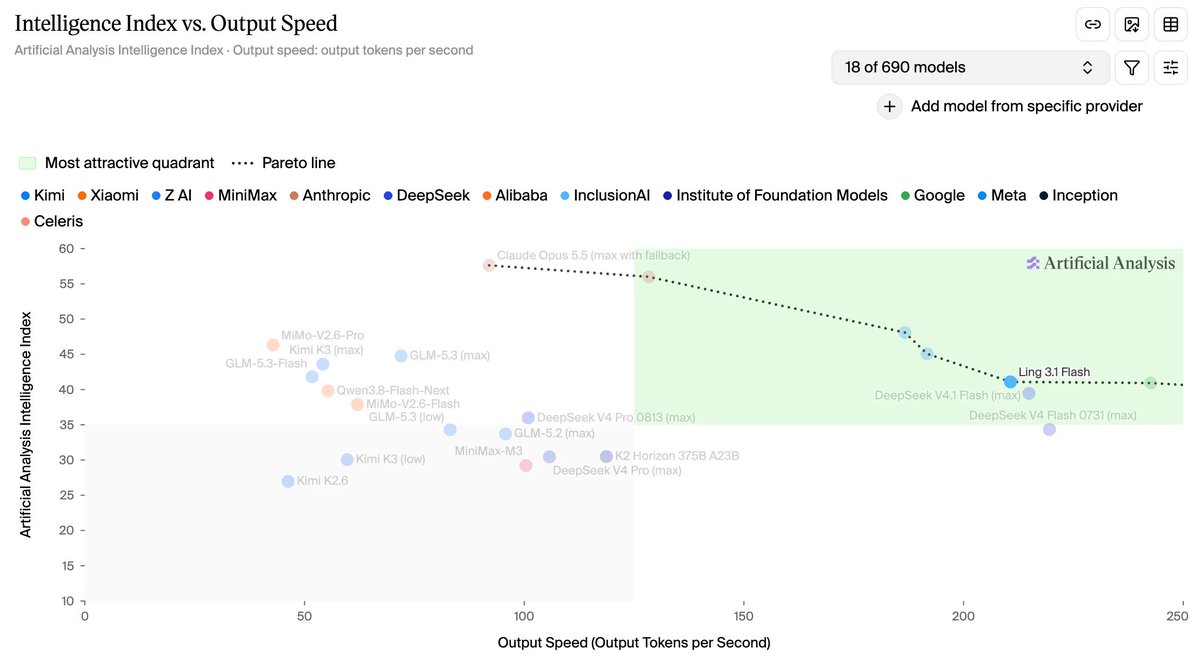
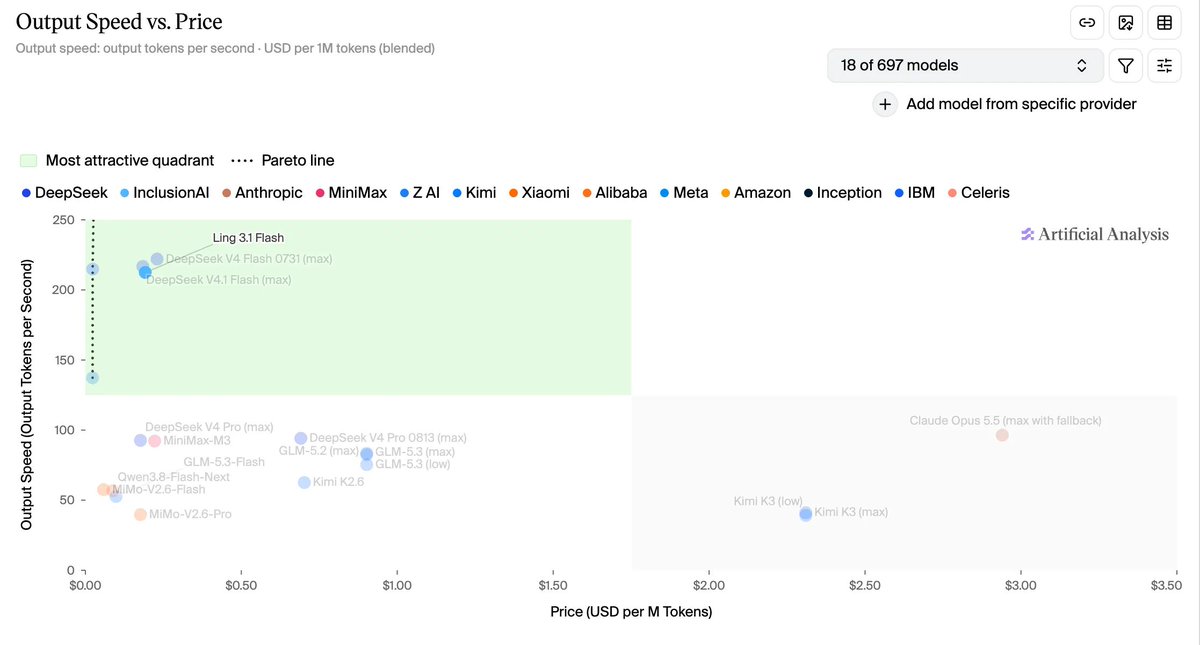
⚡ Fast and capable: Scores 41 on the Artificial Analysis Intelligence Index while generating around 210 tokens/s, placing it on the reported intelligence–speed Pareto frontier.
🎨 From prompts to working outputs: Ranks among the top open-weight models in Design Arena for data visualization, React Native, 3D, game development, SVG, and websites.
📦 Easier to deploy: MXFP4 mixed precision reduces the model footprint from around 534GB to 292GB and cuts the tested server setup from 8 accelerators to 4.
🧠 Built for long-running agents: Maintains goals, tool history, and intermediate results across hours-long workflows, with stronger JSON Schema tool calling for production integration.
The hosted API currently supports 256K context; the open model supports configurations up to 1M.
ant just open-sourced ling-3.1-flash.
560b total moe, ~25b active per token, up to 1m context, mit on hugging face + modelscope. hybrid-linear stack (63 kda + 9 gated mla). built for agent / coding / design work — ant's own demo turns a brief into a page or ui prototype.
Ling-3.1-flash is now open source: ~560B total parameters, ~25B active per token and up to 1M context.
Built for real work, it can turn a rough brief into a page, mobile UI or interactive prototype teams can review and refine. See the demo.
proof + framing:
openbmb launch (oct 12): https://t.co/1b96h7qh77
docs: https://t.co/V15aLHGdqn
weights (apache-2.0): https://t.co/dME95MmMFN
freshness: hf weights first appeared about a week ago; oct 12 is the public announce + docs. speed numbers are openbmb's own (iphone 17 pro max 13+ tok/s @ ~3gb; ipad pro m4 16gb 17+ tok/s; ~5× vs unoptimized on that ipad with identical outputs). no independent replication yet.
🚀 Introducing MiniCPM-V 4.7, our new open-source MLLM series!
Advancing the Performance–Efficiency Pareto Frontier.
It brings strong multimodal capabilities to iOS and Android devices with extreme efficiency.
Two new models:
��� MiniCPM-V 4.7 35B-A3B — Bring SOTA performance to local devices with newly introduced LES (Lookahead Expert Scheduling) technique, a new milestone of on-device multimodal AI.
🔹 MiniCPM-V 4.7 1B — Lightweight, efficient multimodal AI. Easier to deploy.
⚡ What's new?
SOTA performance: Competitive results across 34 benchmarks spanning multimodal understanding, STEM reasoning, OCR and long-video comprehension.
Fast on-device inference: LES predicts and preloads expert weights to reduce inference stalls, boosting 5× speedup on iPad Pro M4 (16GB) with byte-for-byte identical outputs. It enables MiniCPM-V 4.7 35B-A3B to achieve 17+ tokens/s on iPad Pro M4 (16GB) and 13+ tokens/s on iPhone 17 Pro Max, while costing only 3GB memory 🤯
Efficient visual processing: 4× and 16× hybrid visual token compression. Even at 16× compression, 35B-A3B scores 90.4 on OCRBench, 5.2 points ahead of Qwen3.6 35B-A3B.
Easier customization: We introduce Self-Replay Fine-Tuning, a simple way to customize new target capabilities at low cost while maintaining general performance.
Broad hardware support: Day-0 adaptations for Apple, Intel, AMD, Arm and Rockchip, with many more platforms supported through FlagOS!
Download, deploy, and build something we haven't imagined yet. 👀👇
🔗 GitHub: https://t.co/msjm2QlrvX
🤗 Hugging Face: https://t.co/W95QKGhymw
openbmb just put a 35b multimodal moe on phones.
minicpm-v 4.7 35b-a3b (the a3b means ~3b params active per token). with lookahead expert scheduling, openbmb reports 13+ tokens/s on an iphone 17 pro max using about 3gb of memory, and says the outputs match the unoptimized run byte-for-byte.
🚀 Introducing MiniCPM-V 4.7, our new open-source MLLM series!
Advancing the Performance–Efficiency Pareto Frontier.
It brings strong multimodal capabilities to iOS and Android devices with extreme efficiency.
Two new models:
��� MiniCPM-V 4.7 35B-A3B — Bring SOTA performance to local devices with newly introduced LES (Lookahead Expert Scheduling) technique, a new milestone of on-device multimodal AI.
🔹 MiniCPM-V 4.7 1B — Lightweight, efficient multimodal AI. Easier to deploy.
⚡ What's new?
SOTA performance: Competitive results across 34 benchmarks spanning multimodal understanding, STEM reasoning, OCR and long-video comprehension.
Fast on-device inference: LES predicts and preloads expert weights to reduce inference stalls, boosting 5× speedup on iPad Pro M4 (16GB) with byte-for-byte identical outputs. It enables MiniCPM-V 4.7 35B-A3B to achieve 17+ tokens/s on iPad Pro M4 (16GB) and 13+ tokens/s on iPhone 17 Pro Max, while costing only 3GB memory 🤯
Efficient visual processing: 4× and 16× hybrid visual token compression. Even at 16× compression, 35B-A3B scores 90.4 on OCRBench, 5.2 points ahead of Qwen3.6 35B-A3B.
Easier customization: We introduce Self-Replay Fine-Tuning, a simple way to customize new target capabilities at low cost while maintaining general performance.
Broad hardware support: Day-0 adaptations for Apple, Intel, AMD, Arm and Rockchip, with many more platforms supported through FlagOS!
Download, deploy, and build something we haven't imagined yet. 👀👇
🔗 GitHub: https://t.co/msjm2QlrvX
🤗 Hugging Face: https://t.co/W95QKGhymw