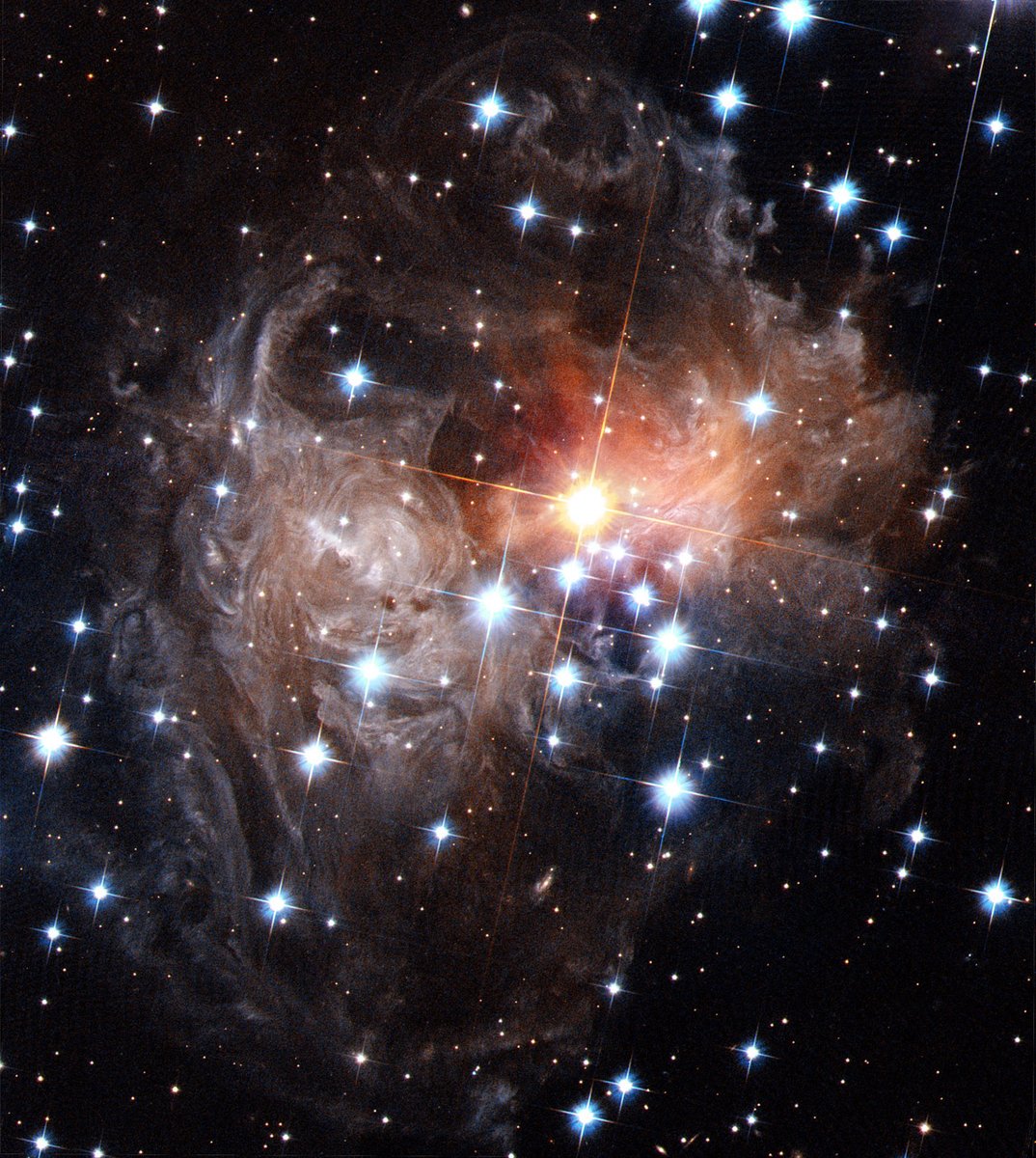
Echoes from the Edge
Light from V838 Mon’s dramatic outburst travels across ancient layers of dust, illuminating distant regions like a cosmic echo.
(Credit: NASA, ESA)
Prediction markets don’t care about your thesis. They care about whether you were right when the clock runs out.
Most of the time in crypto, you can stay vague. You can talk about “asymmetric setups,” post a half-finished chart, and exit before anyone knows if the idea actually worked. Prediction markets kill that luxury. The market resolves, the position is either fully right or fully wrong, and the result is public. There’s nowhere left to hide the trade.
That’s the part @agenticscredit is leaning into.
Instead of asking people to deposit money and hope they stick around, it lets you paper-trade live Polymarket markets with a fixed $10,000 in simulated capital. You’re still making decisions on real markets with real resolution dates, but the platform can watch the full sequence of choices without needing skin in the game first. Over time those decisions stack into an Agentics Credit Score that reflects actual outcomes, not screenshots or self-reported track records.
A credit system only works if the underlying data is hard to fake. Screenshots are easy to cherry-pick. “I made 40% last month” is easy to say. A long, continuous history of resolved positions on live markets is harder to manufacture. The score becomes something that can be checked rather than just claimed.
For anyone building agents that need to act in markets, this distinction starts to matter a lot. How smart the agent is only gets you so far if you can’t also measure whether its decisions hold up once markets close. The quality of the track record sitting behind the reputation may end up being as important as the model itself.
Heading to @ISE_Show 2027?
Visit Daktronics to see our latest LED display technology, including fine-pitch solutions with COB technology and our all-in-one Smart LED display.
See what’s coming to Barcelona and register: https://t.co/zQ0VrgwAnr
#ISE2027