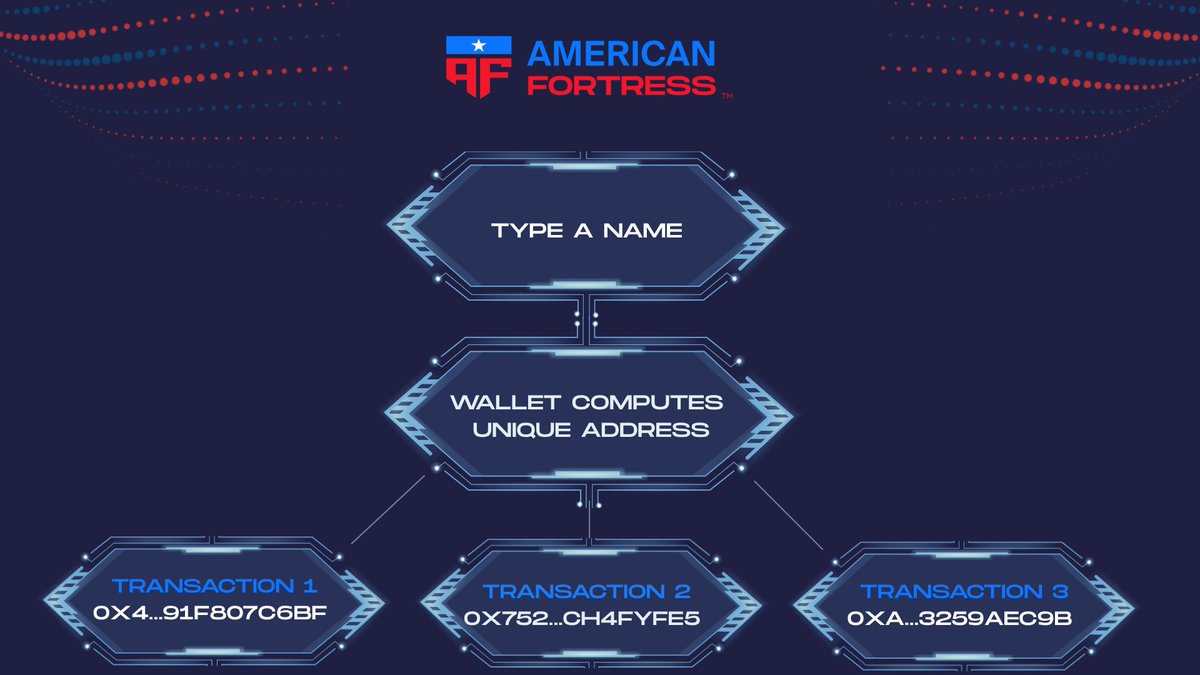
What "privacy by default" actually means in practice:
— Your wallet generates a new address for every transaction automatically
— Your balance is never visible to people you haven't transacted with
— Your transaction history can't be traced back to a single permanent identifier
— Compliance is built in, not bolted on afterward
None of this requires a separate privacy coin. None of it requires a mixer.
None of it requires the user to do anything differently than they do today.
That's what "default" means. It just works. Invisibly.
Tornado Cash was sanctioned in 2022.
Four years later, the compliant privacy alternative is still missing.
What moved in: readability tools that publish your entire financial history (ENS), and privacy tools that put users on regulators' radar.
Neither works for someone who needs both privacy and a clean compliance record.
The gap is still open.
Hear from our CEO @MehowHacks who made crypto private, quantum-proof, compliant, and actually usable without mixers at @proofoftalk on June 2nd.
Register for the workshop with the link below.
Decentralization is the most overused word in crypto.
Most "decentralized" identity systems can still see:
— Who you registered as
— Which wallet that name maps to
— Every transaction tied to that wallet
That's not decentralization. That's a directory service with a marketing budget.
The bar should be: once a name is registered, the issuer has no way to see who you're transacting with, what you're sending, or what your balance is.
What happens at registration and what happens after it are two different questions.
Most systems fail both. The better ones at least solve the second.
Smart contract security has always been asymmetric.
Defenders need to find and fix every vulnerability.
Attackers need just one.
AI coding agents didn't create that asymmetry.
They industrialized it.
The industry kept betting on better audits.
The attack side just got a machine that never sleeps.
🏺 Tessa Hunt and the Golden Sands is LIVE — exclusively at Jackpotter! 🔥
The 10 random users will each receive 10 Free Spins
RT + Tag a friend + Jackpotter Username to enter!
Be the first to spin! 👇 🎮
https://t.co/hvsWtC4zgS
Quick breakdown of how stealth address systems actually work:
1. Someone sends to a human-readable name
2. Their wallet computes a brand new receive address that has never existed before
3. Only the sender and recipient can derive that address
4. The address is never reused
5. It works across every chain and every token
To an outside observer, every payment appears to go to a completely different wallet.
Because cryptographically, it does.
Privacy tools in crypto have become a compliance problem.
Mixers co-mingle funds with unknown counterparties.
You can't verify who you're transacting with.
Zcash works, but only for one token on one chain.
Institutions don't want mixers. They want a decentralized PayPal.
Non-interactive cryptographic proofs can auto-generate a unique stealth address for every transaction.
Counterparty verified.
Nothing hits the public ledger.
Works across every major chain.
Arbitrum holds $16B in TVL, that’s 40% of the entire L2 market. Variational, USDai, GMX. The deepest DeFi stack in the L2 world.
Every position on it is completely visible: your size, entry, counterparty. Anyone with a block explorer can see exactly what you're doing before you do it.
Not anymore. AmericanFortress™ beta is live on Arbitrum. Now you can send to @name, hide your balance, and stay compliant. No mixer.
@arbitrum x @AmericanFort_io