Engineer & obsessive problem solver, philosopher, inventer & autodidact. Lover of coffee, travel and all things artisan. Currently exploring machine learning.
"Sparse Architecture Search for CNNs on Resource-Constrained Microcontrollers": https://t.co/lOtWpTgvKP - fascinating work from Arm Research, running models with less than 2KB of memory on embedded systems.
Better dates, smarter legends for scatter plots, arbitrary scales - these are just a few of the features & improvements in our 3.1 release! 🎇Check it out at
https://t.co/QUGTrqBMLg
@mbostock@observablehq@mbostock not just code; imagine the benefits of visualising logic in legal contracts, insurance policies, government spending...
I'm rather blown away by these beautiful SGD visualizations from inspiring @fastdotai participant @ideami - thank you for sharing! :)
https://t.co/E6ctOuhA6i
Eliminating All Bad Local Minima from Loss Landscapes Without Even Adding an Extra Unit https://t.co/Wf9Wi0WpHv
It's less than one page. It may be deep. It may be trivial. It will definitely help you understand how some claims in recent theory papers could possibly be true.
These were my best courses I took in Machine Learning in no particular order
* Coursera Machine Learning by @AndrewYNg
* CS231n course from Stanford by @karpathy and @jcjohnss
* Fastai courses on practical machine learning by @jeremyphoward
What about yours ?
The popularity of deep learning frameworks is resulting in more data engineering work in Python, but the library support falls way short. The number of people actively working on data engineering technology for Python (e.g. @ApacheArrow, @ApacheParquet) is shockingly small
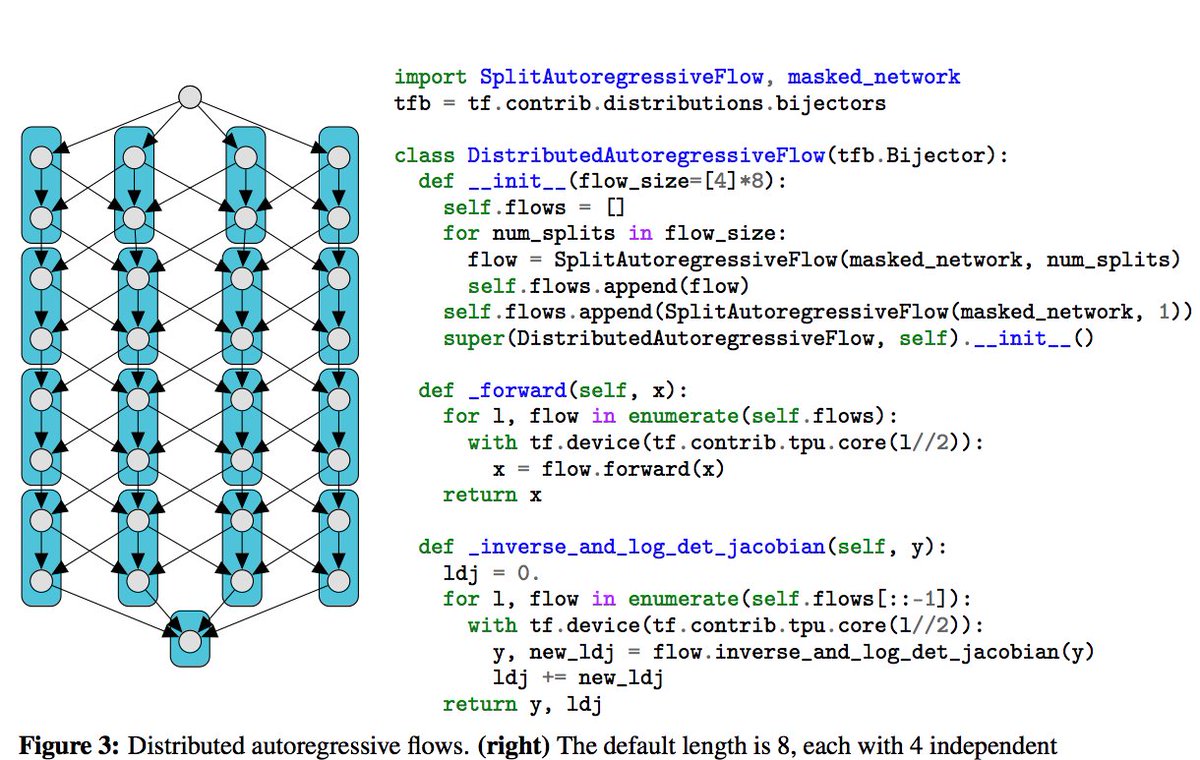
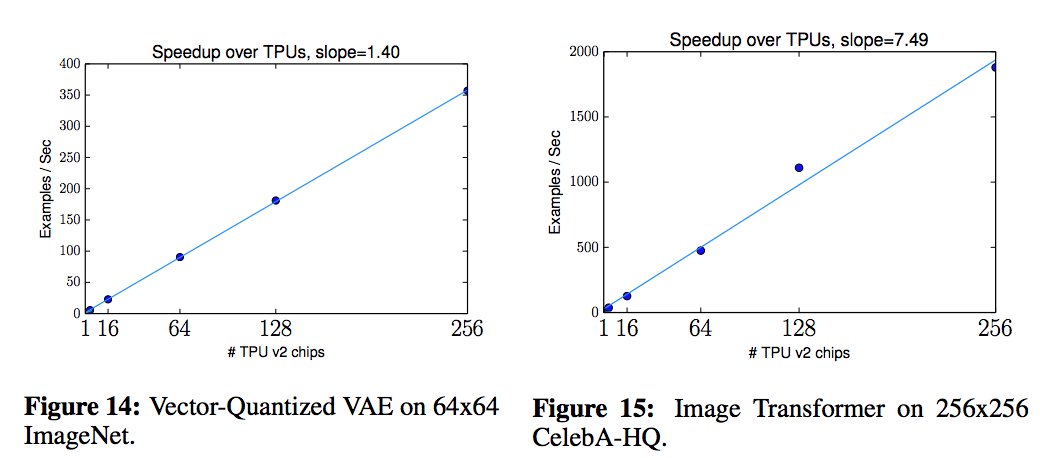
"Simple, Distributed, and Accelerated Probabilistic Programming". The #NIPS2018 paper for Edward2. Scaling probabilistic programs to 512 TPUv2 cores and 100+ million parameter models. https://t.co/v1z4sJbVAf https://t.co/4h7Lt0zN69
@NateSilver538 Asking whether the model is wrong is perhaps the wrong question - they are all wrong. Historical performance is an indicator of how useful the model is. Usefulness is subjective. If performance over many predictions is our concern then 80% correct predictions is probably useful.
Introducing the MAESTRO dataset (172 hours of aligned MIDI and audio piano performances) and Wave2Midi2Wave: a factorized approach to modeling and generating piano performances.
w/ @fjord41 Andriy Stasyuk @iansimon@huangcza@sedielem
Read 👉 https://t.co/Iz6GKbRulQ
Listen 👇
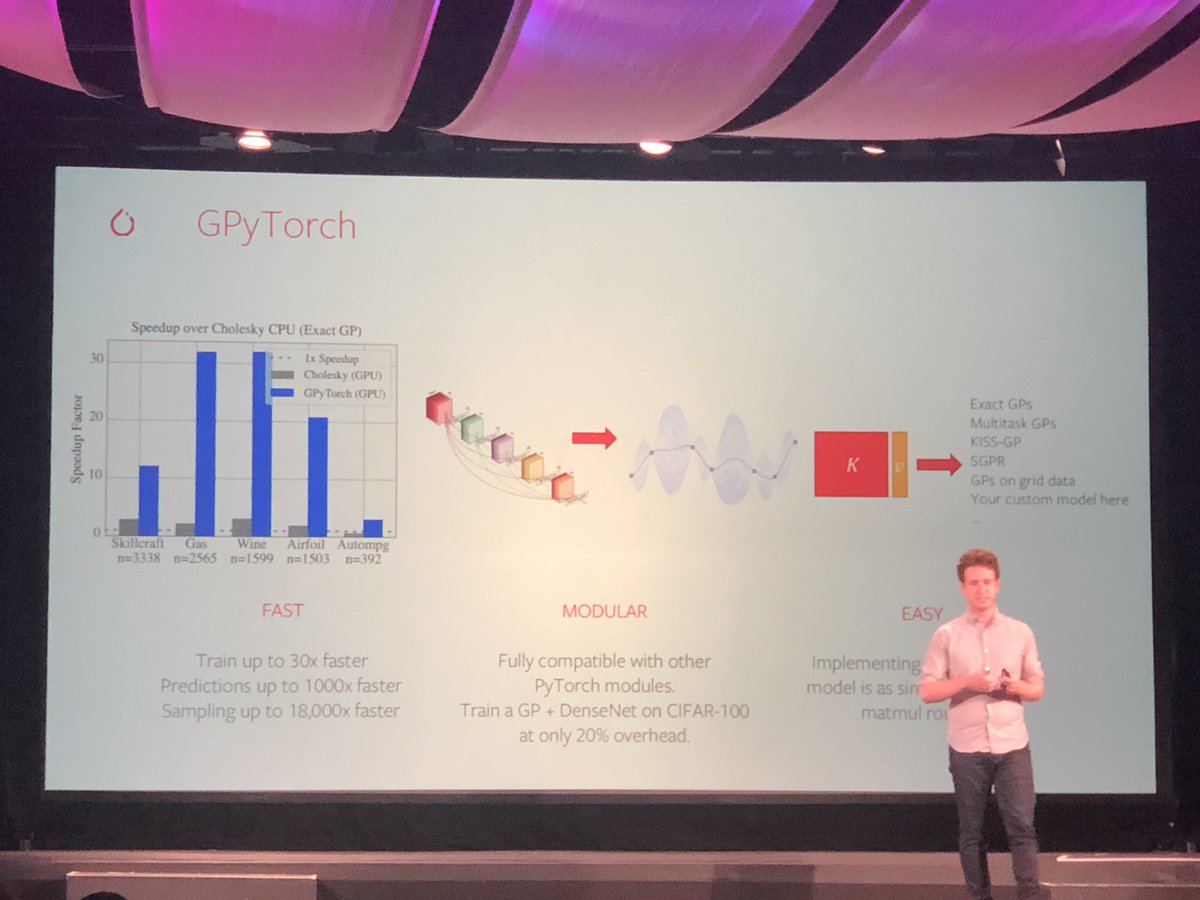
GPyTorch: fast Gaussian processes using PyTorch. Available via pip and can be used with regular NNs or independently. Useful tool for characterizing uncertainties with NN predictions.