The Denisovans who interbred with modern humans were already hybrids. UC Berkeley researchers inferred that 3 to 5 percent of their DNA came from an unidentified hominin lineage that diverged from ours roughly 1.8 million years ago https://t.co/kimHvHndID
I've recently published an Introduction to Statistics Using the R Programming Language. In the article, I cover various statistical concepts and demonstrate how to apply them using R.
The article was created in collaboration with Jim Frost, and you can find it on the Statistics by Jim website: https://t.co/8rDwGfUnCR
Here’s a glimpse of what you’ll learn:
1️⃣ Loading and inspecting a data set.
2️⃣ Calculating descriptive statistics for all variables.
3️⃣ Computing group means.
4️⃣ Creating a correlation matrix to understand variable relationships.
5️⃣ Estimating a linear regression model.
6️⃣ Generating random numbers and visualizing data distributions.
You can follow along by copying and pasting the provided R codes into R or RStudio. All codes are 100% reproducible.
Want to learn more about R? I've developed a course called "Introduction to R Programming for Absolute Beginners." Whether you're a beginner or looking to refresh your skills, this course is a great way to get started with R.
Take a look here for more details: https://t.co/lUOKp2kv2r
#RStats #R4DS #DataAnalytics #programmer
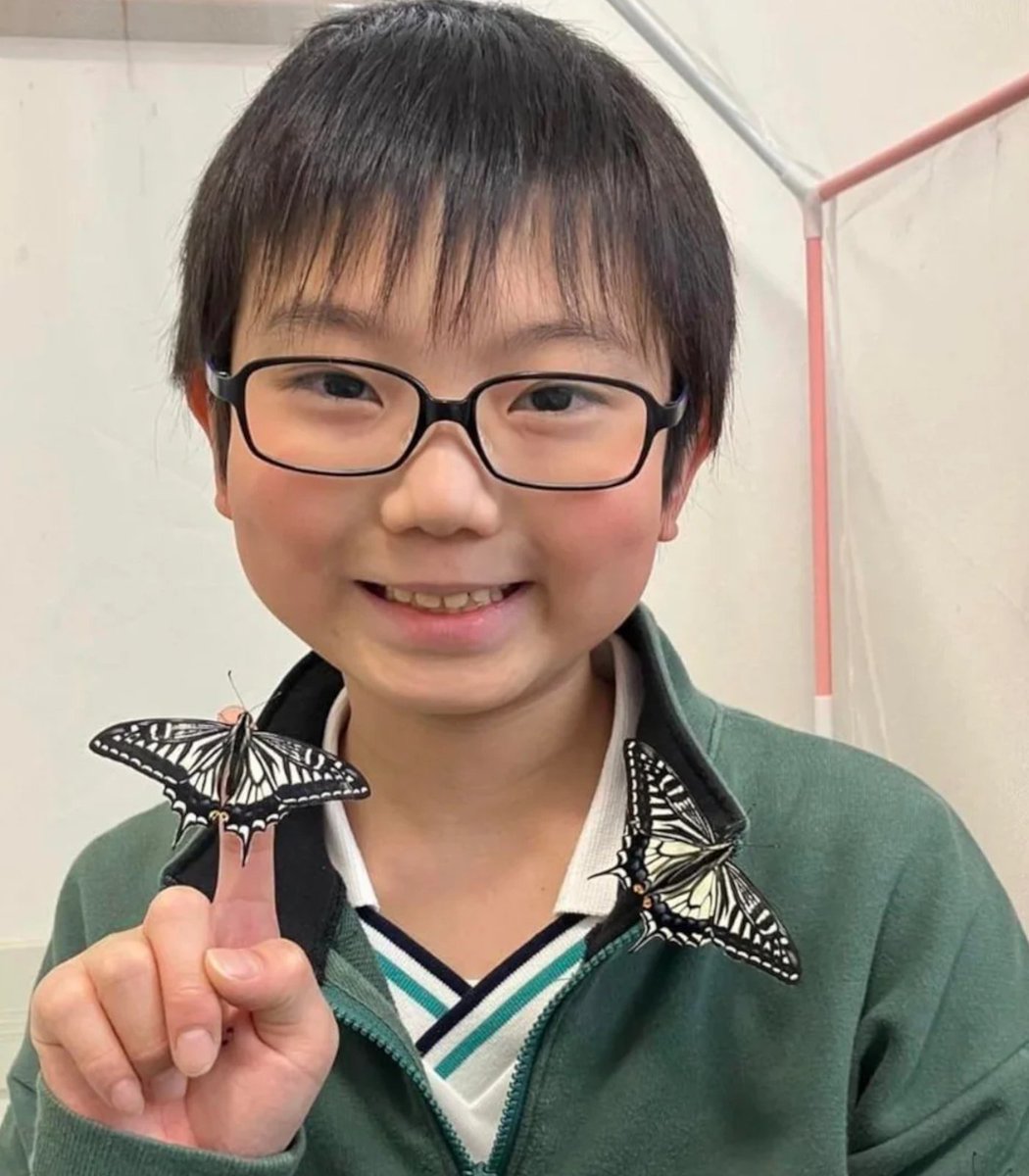
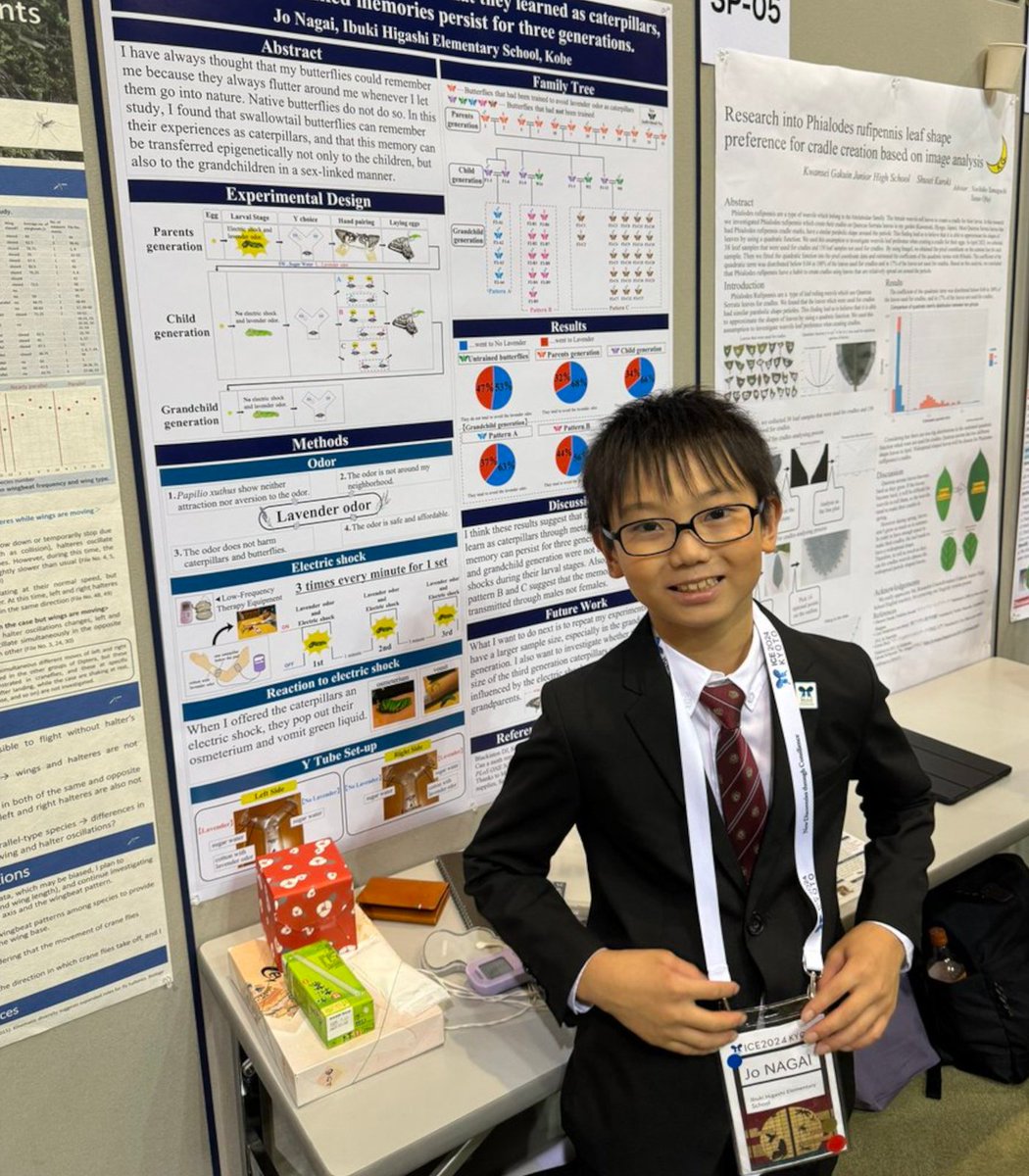
A 10 year-old boy from Japan discovered that butterflies can remember their time as caterpillars.
Jo Nagai noticed his caterpillars still loved him after turning into butterflies, and the affection he had for them led to a genuine scientific discovery.
Fountain pens: We are no more making the transparent stripes on the barrel of our Rs20k+ pen to cut cost.
Rollerball pens: This is waterproof fadeproof refill and it comes inside this Rs100 pen.
Ball pens: Hybrid ink in Rs10, you will break or lose the pen before it runs out.
Four mathematicians have received the 2026 Fields Medal, the highest honor in mathematics for researchers under the age of 40. The medals were presented at the International Congress of Mathematicians in Philadelphia.
Honored with the 2026 Fields Medal:
• Yu Deng (University of Chicago)
• John Pardon (Stony Brook University)
• Hong Wang (New York University & IHES)
• Jacob Tsimerman (University of Toronto)
Their work spans several areas of mathematics and has led to major advances in the field.
Artistic representations of ancient humans often show large men with bulging muscles – but our ancestors were actually smaller than us, in both height and body mass. Columnist Michael Marshall reveals surprising details about the short kings of prehistory https://t.co/J2LAS7UzZV
Handy woman. Portrait of a female Homo habilis - a human ancestor from around 2.4 million years ago. Homo habilis translates to “handy man”, and they were prolific makers of stone tools.
Thrilled to see our FERONIA story recognized among the Best Papers of 2025 in @MPlantPCom
This work was truly a team effort, and I am deeply grateful to all the co-authors, collaborators and colleagues whose contribution made it possible.
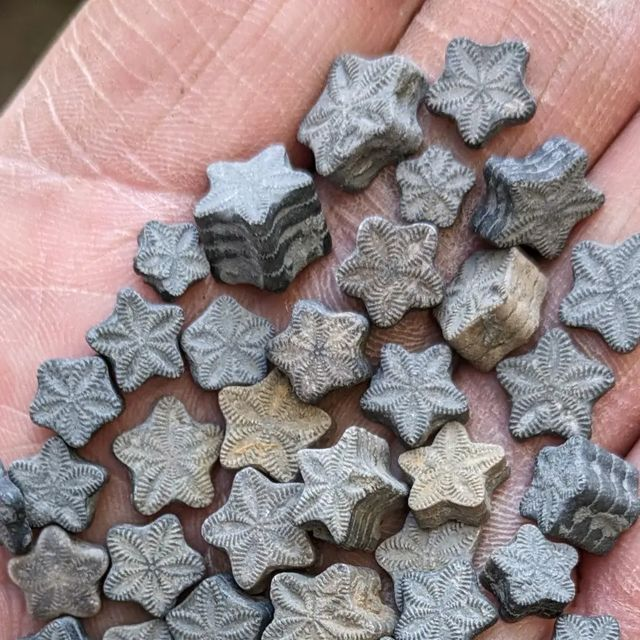
Tiny stone stars from an ancient sea floor. These are star-shaped crinoid columnals, the fossilized stem pieces of sea lilies that lived hundreds of millions of years ago.
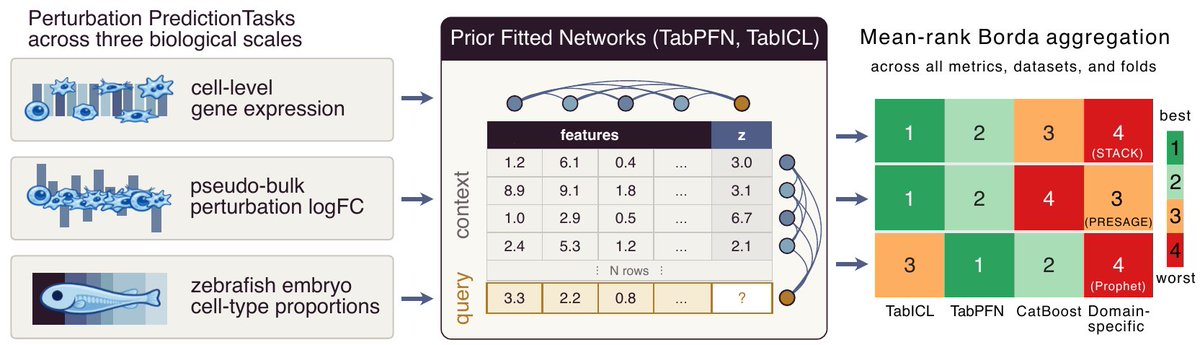
1/📢 New preprint! Do you actually need a biology-specific foundation model to predict how cells respond to perturbations? Surprising answer: a general-purpose tabular model - never trained on a single cell - matches or beats the specialists!
📄 https://t.co/nRvpH27djc
@biohub
7/
Rule 4: Find help when you need it.
Every error you hit, someone else has faced before.
Stack Overflow, Biostars, GitHub issues—these are your friends.
The fastest way to grow is to learn in public and ask.
(pro tip: I did not chatGPT then)
Population studies have found a correlation between regular aerobic exercise and decreased risk of at least 35 different diseases, including heart disease, type 2 diabetes, and cancer. https://t.co/gAim1KKdR9
BREAKING NEWS: Scientists have built a synthetic cell that's right on the edge of life.
Just as the Wright Brothers proved that humans could fly with their first powered airplane in 1903, scientists have now proven we can build (mostly) functional, self replicating cells from non living parts.
In a landmark breakthrough announced today, researchers at the University of Minnesota have created SpudCell — the world’s first synthetic cell assembled entirely from chemical components that can feed, grow, replicate its genome, and divide into daughter cells.
Unlike previous synthetic biology milestones (such as Craig Venter’s 2010 cell, which used a synthetic genome inside a natural cell body), SpudCell was built bottom up from scratch. The team mixed dozens of lab made ingredients: including synthetic DNA, enzymes, ribosomes, and lipid membranes into tiny “beautiful blobs” that behave like real living cells.
The cells not only survive but actively consume resources, grow larger, copy their genetic material, and split into new cells that continue the cycle. This marks the first time a synthetic cell has completed a full life cycle in a controlled, predictable way.
Important limitation: These synthetic cells currently only survive for a few generations (roughly five divisions). They require constant feeding with everything, including new ribosomes, and often pass on uneven amounts of DNA when they divide. The team lead has described them as “incredibly wimpy” for now.
The team is also launching a nonprofit called @Bioticorg to open source the technology and build a global community around it, rather than patenting the breakthrough.
This is a foundational proof of concept that could eventually enable custom designed life forms for medicine, materials, agriculture, and beyond — turning biology into something we can truly engineer from the ground up.
📸 Kate Adamala, Adamala Lab, NYT
After 18 months of writing, coding, and experimenting, Build a Reasoning Model (From Scratch) is
finally out!
My first copies just arrived! 📚
440 full-color pages. Inference scaling, reinforcement learning, and distillation from scratch.
1/ So do you still need the fundamentals now that AI writes the code? More than before.
Your job shifted from typing commands to judging whether the results hold up, and that judgment runs on understanding the methods underneath.