Why we made @Bioticorg. I believe biology today stands roughly where construction and civil engineering stood 300 years ago. That needs to change. A Thread 🧵
Sloan grantee Kate Adamala of @UMNews was highlighted in @nytimes, @TheEconomist, @CNN, and other outlets for her work to build the world's first synthetic cell with a complete lifecycle.
Read more: https://t.co/azR73N7m5w
What if you could build a living cell from scratch, part by part, with nothing hidden inside?
@KateAdamala's team just did exactly that, and it may change how we engineer biology.
For decades, cells have been black boxes. In E. coli, the most studied organism on Earth, a third of its genes still have no confirmed function. You cannot reliably engineer what you do not understand.
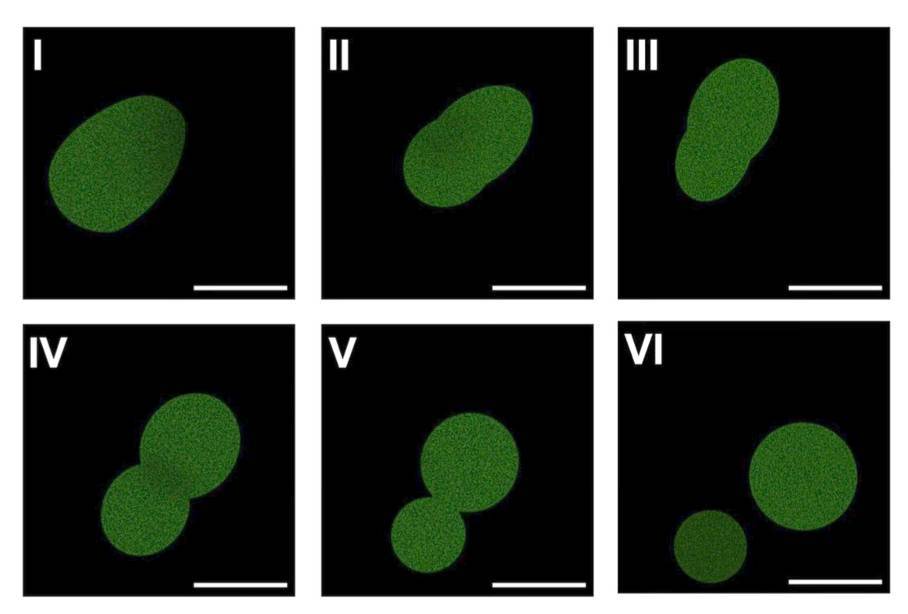
SpudCell flips that problem. It is a minimal synthetic cell built entirely from defined parts, and every component is known and placed on purpose. It expresses proteins, grows by fusing with feeder liposomes, divides without a cytoskeleton, and even undergoes Darwinian selection. In one experiment a mutated version outcompeted the standard cell within five generations.
The team is careful with the language. They call it "constructed rather than created." This is a first prototype, not artificial life, but it is fully defined, and that is the whole point.
The bigger vision is a biology engineered the way computers are, in modular layers that anyone can build on. Alongside the work, Adamala and her co-founders launched @Bioticorg, a nonprofit to keep the chassis open so progress across labs finally adds up.
Visit the #SynBioBeta website to read the full article:
https://t.co/F5smzzcRXF
Researchers at the University of Minnesota have helped create the world's first synthetic cell that can feed, grow and reproduce. Built entirely from non-living chemical components, SpudCell marks a major breakthrough in biological engineering with the potential to transform medicine, manufacturing and more. https://t.co/Z3BCf6TGFM
@KateAdamala@UMNews If you work on synthetic cell engineering, or on the chemistry, physics, computation, medicine, policy, or governance around it, come build with us. Read more here: https://t.co/dhLOGaWvEC
@KateAdamala@UMNews The foundations of general-purpose technologies get built once. Who builds them, and in what spirit, determines who benefits for decades after. We are choosing to build these in the open.