It’s just a microscopic water droplet surrounded by a fatty membrane and stuffed with chemicals and snippets of DNA encoding a mere 36 genes.
But it’s also arguably the closest researchers have come to building a living cell from scratch.
Learn more: https://t.co/KYujFqzHaU
If technology becomes the ultimate criterion, the human person risks being reduced to data, a cog in a machine or a commodity. If, however, technology is integrated with a wise perspective, it can become an instrument of growth, justice and fraternity. #MagnificaHumanitas
Scientists say they have built a cell from scratch for the first time that can feed, grow and replicate like a natural cell. This breakthrough in synthetic biology could usher in an era of made-to-order organisms that function like living machines. https://t.co/weTPfCIQi8
Help us design the first Open-Source Flower Bioengineering toolkit🌺✨!!!
Comment what DNA you'd like to see tested in flowers and @genewizeu will synthesise it for FREE 🧙♂️🧬
All parts will be made available through https://t.co/sT42C3jJ2y
For the very first time, biologists packed nonliving components into a cell-like membrane, piece by piece, and slowly witnessed the bag of molecules start to behave like life. @yasemin_sap reports: https://t.co/l1HwtdlS89
Out today: Researchers have made the first cell capable of “feeding, growth, replication, division and selection...entirely using components scientists put there.”
In other words, a cell that self-replicates and was made entirely from the ground-up, molecule by molecule.
The cell is called SpudCell. And although it is definitely a cell (in that it has a membrane with molecules inside) it is definitely not alive, because it cannot grow indefinitely, survive without human help, make its own ribosomes, or recycle waste. It "dies" after a few divisions.
But it's a starting point! And these same researchers have raised $6-8M+ in philanthropic funding to scale their efforts with a new nonprofit for synthetic cell research, called Biotic.
Astera Neuro is hiring! Come join our effort to decipher how activity across billions of neurons becomes the conscious experience of the world and ourselves.
Senior software engineer: https://t.co/5Q06R12MaB
Senior mechanical engineer:
https://t.co/4G2nJ6bHiy
@JedMcCaleb@seemaychou@AsteraInstitute
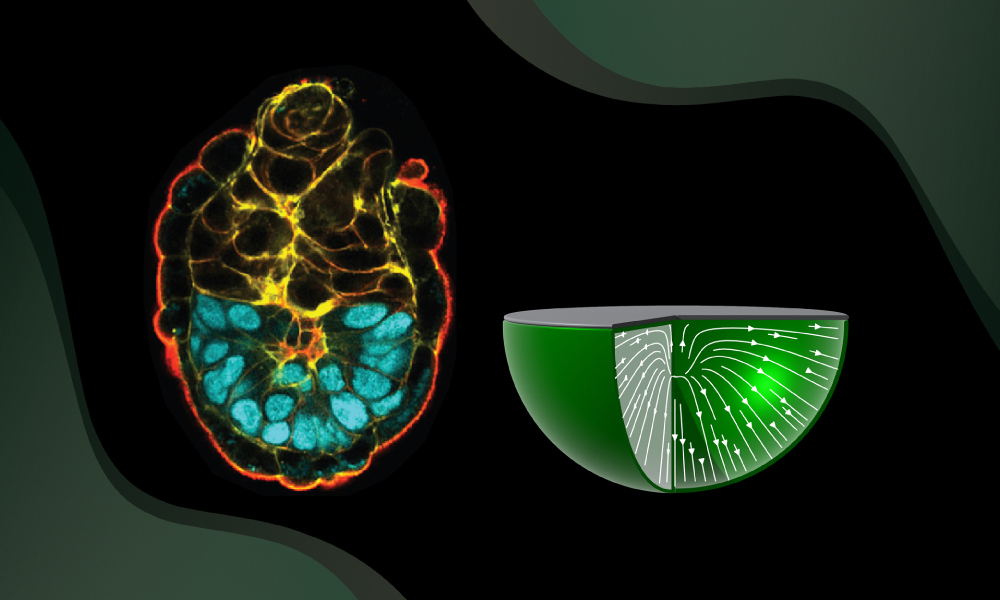
EMBL scientists and colleagues have shown how tissue shapes and cell orientations interact to give rise to complex structures in embryos.
The studies shed light on the fundamental principles that govern the emergence of order in biological systems.
https://t.co/ADcWpZ9Qh0
Our paper "Active-learning-guided optimization of cell-free systems for genome-wide transcriptomic profiling reveals progressive layers of regulation" is online @NatureComms !
Congrats @LeaWagnerSynBio, very proud of this work!
https://t.co/EMu1by7wK3
#cellfree#AI#T7Phage
I spent the summer researching technical standards and their (underrated) role in shaping civilization.
The results of that exploration are being published today:
Standards Make the World
https://t.co/Ft2rI2DHh4
Our latest take on bacterial biosensors is out. We discuss new output modalities and improved biophysical interfaces for better integration into field-deployable devices.
https://t.co/VX8nghl8jN
ok actually insane paper published yesterday
a research group in Korea built a gene switch you can control wirelessly using electromagnetic fields
they exposed mice to 60 hz EMF (same frequency as your wall outlet) using a pair of large coils that generate a uniform magnetic field around the animal, for cyclic 3-day on / 4-day off pulses
they showed this could:
- activate OSK to do epigenetic reprogramming in progeroid and aged mice, extending lifespan and reversing aging markers across multiple tissues
- conditionally switch on mutant amyloid genes only in aged mouse brains, letting them separate aging effects from amyloid effects to study AD biology in a way previous models couldn't
no drugs, no impacts, just a magnetic field from outside the body
Excited to release our latest work, led by postdoc @BabakVH, along with Tom Appleford, Hao Nghi Luu, @RamaswamyMeera, and @maziyarj: https://t.co/omU65wbJhX!
We discovered that immotile microbes can escape confinement by hitching a ride on biogenic bubbles.🫧
Summary ⬇️ [1/10]
Have You Ever Heard of Molecular Communication Systems?
Instead of using radio waves or light, molecular communications send information carefully through released chemical particles. A transmitter emits molecules into a medium, the channel reshapes that signal through diffusion, flow, and randomness. The receiver reads the message from the molecules that arrive and bind.
It is communication theory at microscopic scale, where physics, probability and biology all become part of the channel.
Some applications you may know:
Targeted drug delivery inside the body, microscopic health monitoring with nanosensors, and lab-on-a-chip.
Petunia hybrida has been bred into an incredible diversity of colors and patterns.
Most arise from mutations in the anthocyanin pathway or post-transcriptional gene silencing that turns pigment genes on and off 🧬🎨








![TheSquishyLab's tweet photo. Excited to release our latest work, led by postdoc @BabakVH, along with Tom Appleford, Hao Nghi Luu, @RamaswamyMeera, and @maziyarj: https://t.co/omU65wbJhX!
We discovered that immotile microbes can escape confinement by hitching a ride on biogenic bubbles.🫧
Summary ⬇️ [1/10] https://t.co/JpyZV7O2Qz](https://pbs.twimg.com/media/HFhYmUrbQAAf4-i.jpg)


