I am deeply excited to share that I will be joining @AsteraInstitute to start a new effort to understand how the brain generates consciousness and intelligence.
We’re launching Astera Neuro, a new neuroscience research effort led by @doristsao as Chief Scientist. Our aim is to unravel a profound scientific mystery: how the brain transforms sensory inputs into conscious experience.
Advancing this work could illuminate the computational principles that drive perception and cognition and inspire approaches for neuroscience-informed AI research, potentially generating new pathways to AGI.
Astera will support this work with $600M+ over the next decade. Read more: https://t.co/GIFPBRyrT0
The Lin Lab is hiring!
We're seeking motivated postdocs for projects on voltage imaging and optogenetics in the brain.
If you're excited about using new methods to undersatand and correct brain diseases, working together with other neuroscience labs at Stanford, drop us a line!
One thing great stories share is that they work on multiple levels. This is definitely that: mars, purple paint, and how to become a better scientist 🤩
Space science can have surprising impacts here on Earth.
In this essay, @erika_alden_d explores how work on terraforming Mars led to real-world applications — and why pushing scientific boundaries matters.
Read more: https://t.co/s058gxq8j8
@alfairhall Love your list! I will add: Liping Wang discovering that messy mixed selectivity of single neurons in PFC can be understood as beautiful geometric subspaces for working memory.
The conclusion that the brain is not OFF during anesthesia is very important, and adds to what we already know about preserved activity of autonomic feedback circuits during anesthesia. Neural processing can be very complex without being conscious. Whatever produces consciousness must be a very specific property of brain dynamics.
Thank you, Stan! Inspired by our recent dinner conversation, I just did some vibe coding :)
So, the big problem with answering your question is the limited number of reactivated neurons per session (dream: redo with Neuropixels). k neurons can span at most a k-dimensional feature subspace. So for each session, Claude picked the neurons that were both axis-tuned AND reactivated during imagery (1–7 per session, 43 in total across all sessions), computed each neuron's preferred axis (50D vector, from viewing responses to all 500 stimuli), stacked them, and did SVD to find an orthonormal basis for the k-dimensional subspace those axes span, ordered from most to least collectively represented (Axis 1 = the direction in 50D feature space onto which the k neurons' preferred axes collectively project most strongly, with subsequent axes being orthogonal directions of decreasing collective projection). Note that these axes differ across sessions since they depend on which specific neurons were recorded that day. It then learned a linear decoder W from the viewing responses of just those k neurons across all 500 stimuli, using leave-one-out cross-validation. This same W was then applied to: the viewing responses of those same k neurons for only the stimuli shown during imagery (row 2) and the imagery responses of those same k neurons (row 3). Critically, rows 2 and 3 use only 1–7 neurons per session, so the decoded subspace is severely limited.
The fact that significant decoding is nevertheless observed across multiple axes in imagery (row 3) is therefore a conservative estimate of how well the visual code is reinstated.
Long story short: to the extent we can test with the available neurons, imagery signal appears present across all axes, not just the dominant ones! And in fact axis 1 is surprisingly weak.
[Top row shows viewing decoded from all 43 reactivated neurons pooled across sessions (500 stimuli, LOO)]
I am trusting Claude did all this correctly :)
This is the strongest ephys evidence so far for a generative model in the brain that I know of.
Congratulations @WadiaVarun! Wonderful collaboration with @UeliRutishauser on science that could only be done in humans.
And please check out Fig. 5FG. This is new since biorxiv and really surprised me: the mean response to imagery and viewing is actually the same & there are many cells that respond only during imagery--challenging the idea that signal strength is what distinguishes reality from imagination.
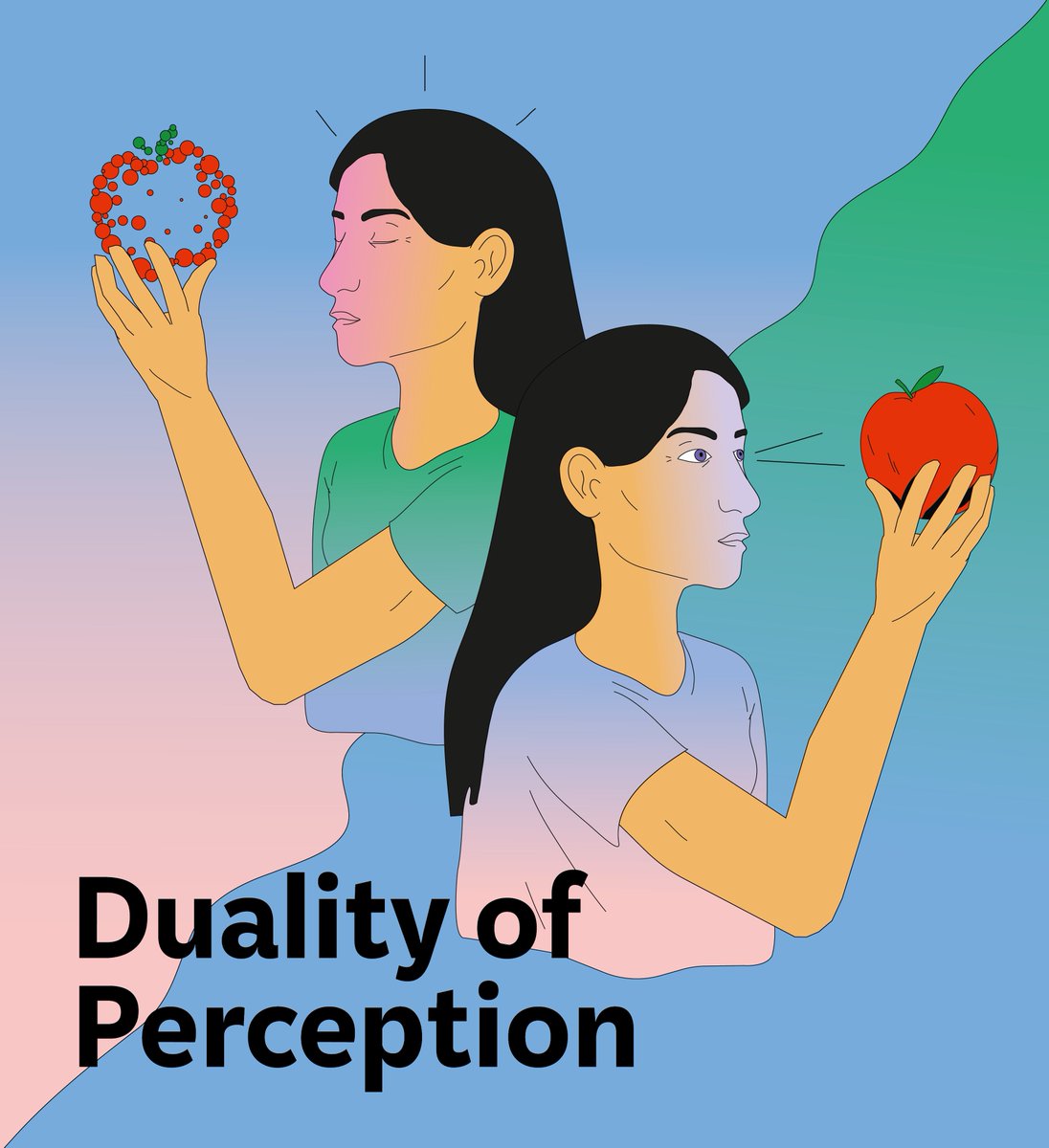
1/8 Our preprint is now a peer-reviewed paper :) Big thanks to our reviewers who pushed us to examine our results more carefully and Olivier Wyart (https://t.co/pQgGhUgdQi) for the exquisite visual. https://t.co/uQzvMXhB7r
I will be giving the Martin Meyerson Faculty Research Lecture tomorrow 4/8 at 4 pm at UC Berkeley. This is a public lecture open to all. Revised title is: "Representing the visual world: from faces to consciousness"
https://t.co/rcmBFDAvtQ
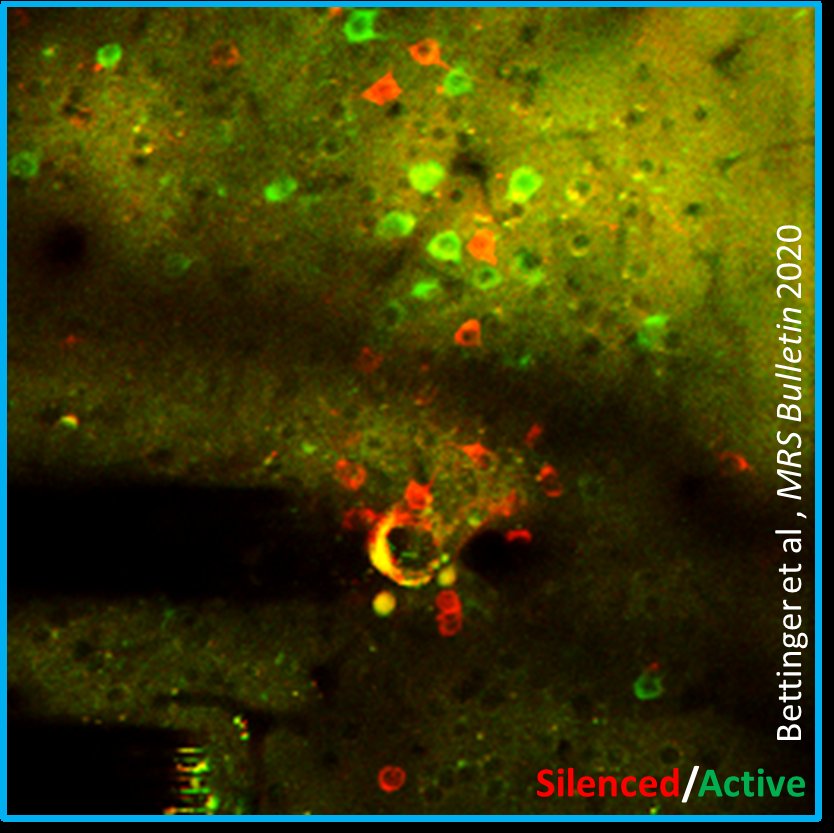
The brain uses 20% of your body's energy with 2% of its mass. Implant an electrode, and you sever the blood vessels delivering that energy. Nearby neurons don't die. They go silent. They're rationing fuel.
Because: 1) I believe in the power of understanding in general, 2) I think evolution is still smarter than us, and humans are the one system whose values we know are aligned to human values, 3) the bits and pieces I've seen about AI alignment through mech interp (e.g., https://t.co/Rv3wRV0Gkw) are fascinating but don't inspire confidence in our ability to control...the take home message I get is that we need raise LLMs like good children and then hope and pray that they will end up with mostly good personas. A deep understanding of how value is generated in the human brain will not only help AI alignment, but also education of human children, which is not exactly yet a science either.
"You cannot align a system to human values without fundamentally understanding how those values are implemented." -James Fickel et al.
"The existence of experience is the universe's sole source of value." -Max Hodak
If the above statements are true (and I think they are), it's critical to understand how experience, i.e., consciousness, is implemented.
Towards Magnanimous AGI
Before we build extremely powerful alien minds, we must understand our own minds and the mechanisms behind prosocial behavior. After years of investigating brain-based AI safety, here’s what we found and the teams we're backing:
https://t.co/xLtD47eoCe
We show face patches implement the following code through recurrent dynamics:
Detect face
If (face found)
Discriminate face
else
Continue to detect face
IMHO, our paper conclusively resolves a debate that has raged since I was a graduate student, about whether face patches are specialized for processing faces or not. It turns out domain-general folks were right early on, domain-specific folks were right later in the response.
So proud of @Yuelin_Shi and the entire team!
Our paper is now out!
https://t.co/qn7xmgh82r
A big question:
1) Is IT cortex well described as a general-purpose feedforward DNN?
OR
2) Are face patches genuinely specialized for processing faces?
Read on to find out the answer. (1/N)
Come be my colleague! Apply to the Astera Fellows program! You will get a great salary AND very generous resources to start your own independent research program. A core area of interest is neuroscience & AI. Please RT
Also! ☝️Apps for our new residency cohort (salary AND research budgets included) are now live https://t.co/DazXIlFKGp -- technical innovators, check it out to see if we might be a great home for your ideas/work


![doristsao's tweet photo. Thank you, Stan! Inspired by our recent dinner conversation, I just did some vibe coding :)
So, the big problem with answering your question is the limited number of reactivated neurons per session (dream: redo with Neuropixels). k neurons can span at most a k-dimensional feature subspace. So for each session, Claude picked the neurons that were both axis-tuned AND reactivated during imagery (1–7 per session, 43 in total across all sessions), computed each neuron's preferred axis (50D vector, from viewing responses to all 500 stimuli), stacked them, and did SVD to find an orthonormal basis for the k-dimensional subspace those axes span, ordered from most to least collectively represented (Axis 1 = the direction in 50D feature space onto which the k neurons' preferred axes collectively project most strongly, with subsequent axes being orthogonal directions of decreasing collective projection). Note that these axes differ across sessions since they depend on which specific neurons were recorded that day. It then learned a linear decoder W from the viewing responses of just those k neurons across all 500 stimuli, using leave-one-out cross-validation. This same W was then applied to: the viewing responses of those same k neurons for only the stimuli shown during imagery (row 2) and the imagery responses of those same k neurons (row 3). Critically, rows 2 and 3 use only 1–7 neurons per session, so the decoded subspace is severely limited.
The fact that significant decoding is nevertheless observed across multiple axes in imagery (row 3) is therefore a conservative estimate of how well the visual code is reinstated.
Long story short: to the extent we can test with the available neurons, imagery signal appears present across all axes, not just the dominant ones! And in fact axis 1 is surprisingly weak.
[Top row shows viewing decoded from all 43 reactivated neurons pooled across sessions (500 stimuli, LOO)]
I am trusting Claude did all this correctly :)](https://pbs.twimg.com/media/HFpG9y_akAAi3is.jpg)