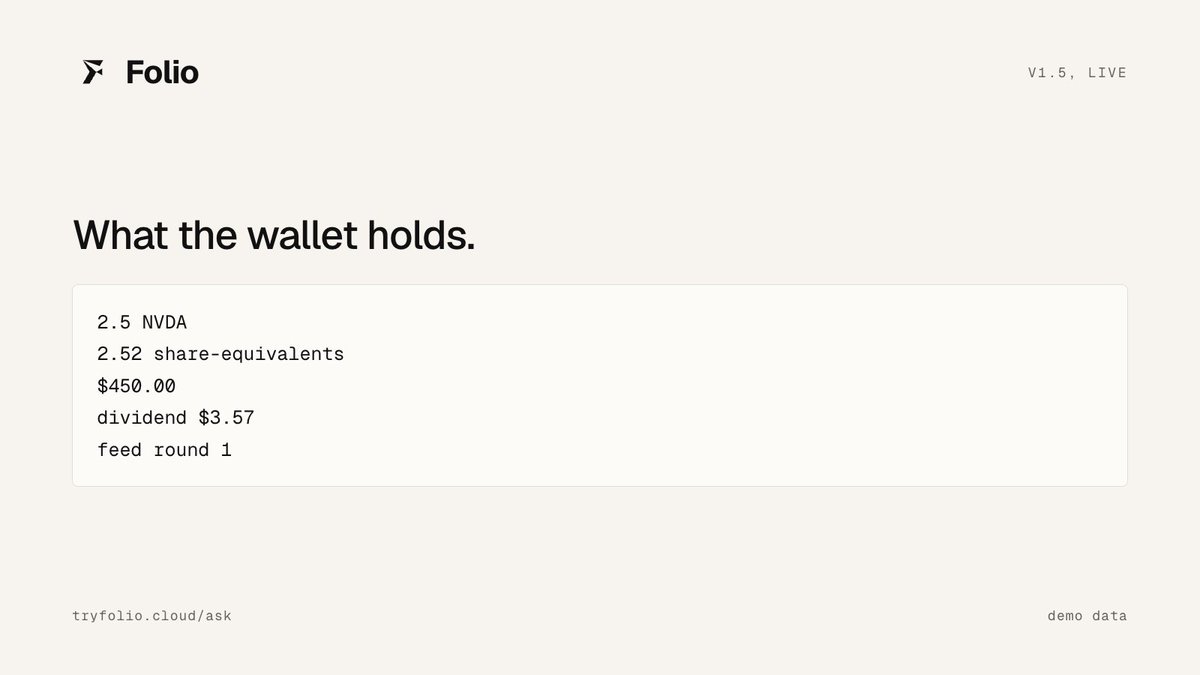
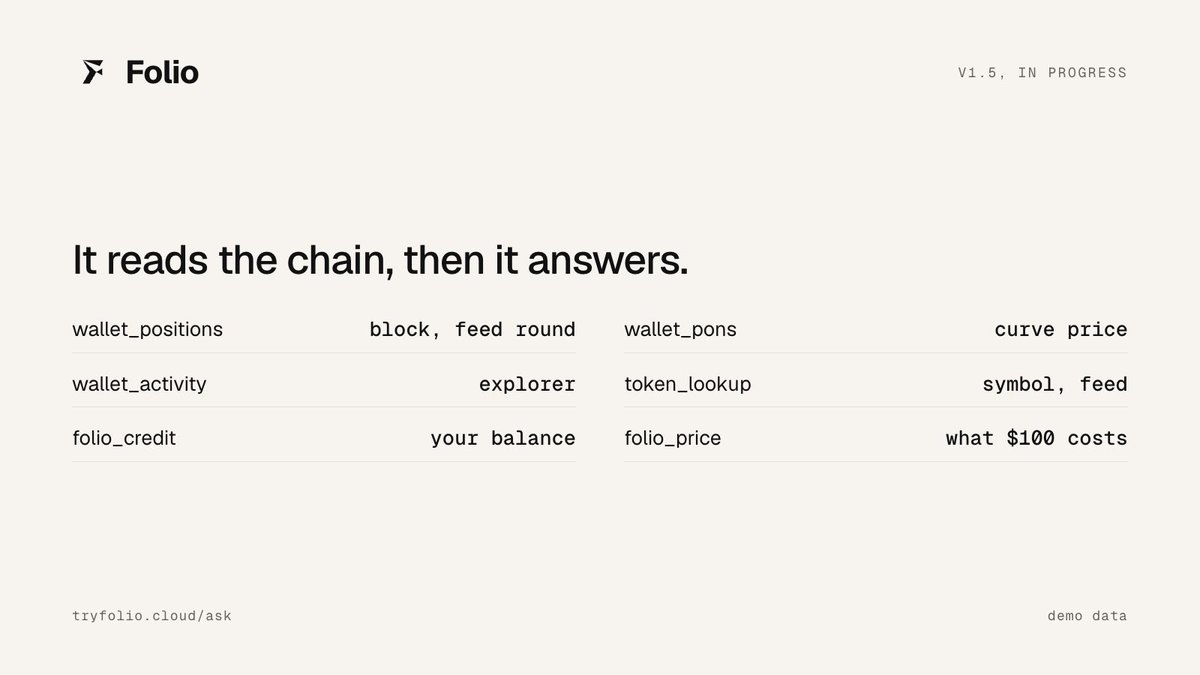
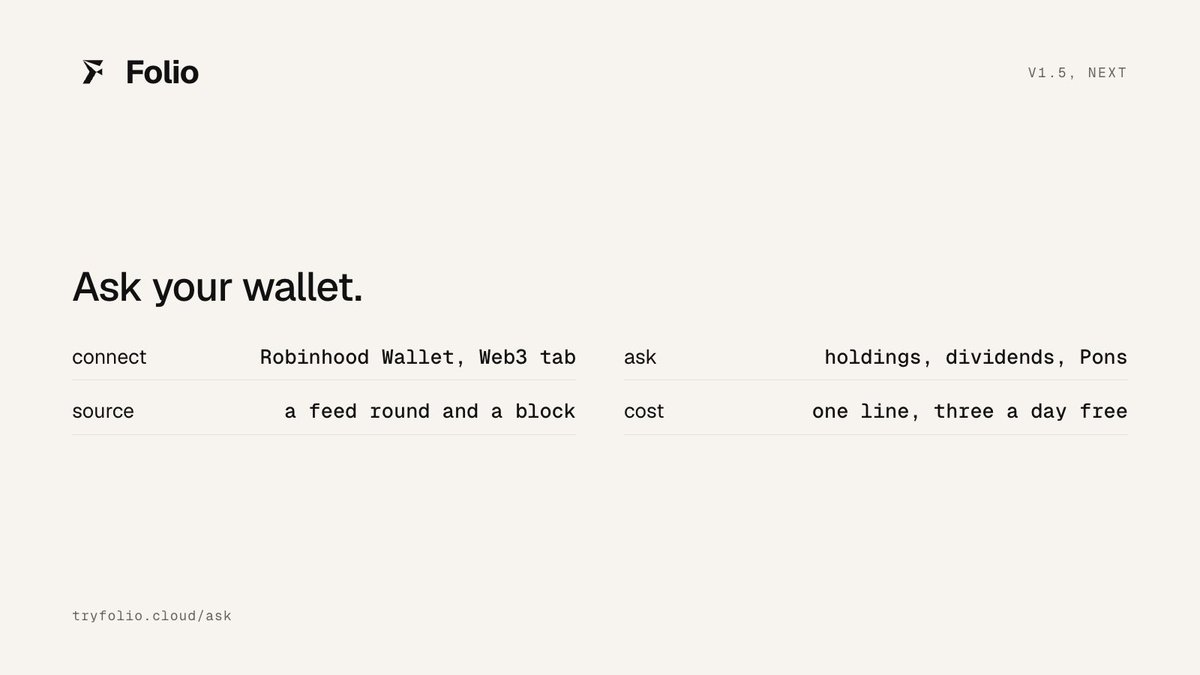
v1.5 is live. https://t.co/FTVpuOwqVY reads a Robinhood Chain wallet. No key. The wallet is the account. The answer names the block and the feed round, and the line under it says what the question cost. Three a day are on the desk. Hold 10,000 FOLIO and your credit pays first.
Building v1.5. Ask what you hold. The desk reads the chain first, and the answer has to name the block and the feed round it used. The cost line comes after.
v1.5 is a chat for a Robinhood Chain wallet. Robinhood's own assistant stops at the brokerage app. This one reads the chain. Connect, ask what you hold, and the answer names the feed round and the block it came from. Three questions a day are on the desk. Live this week.
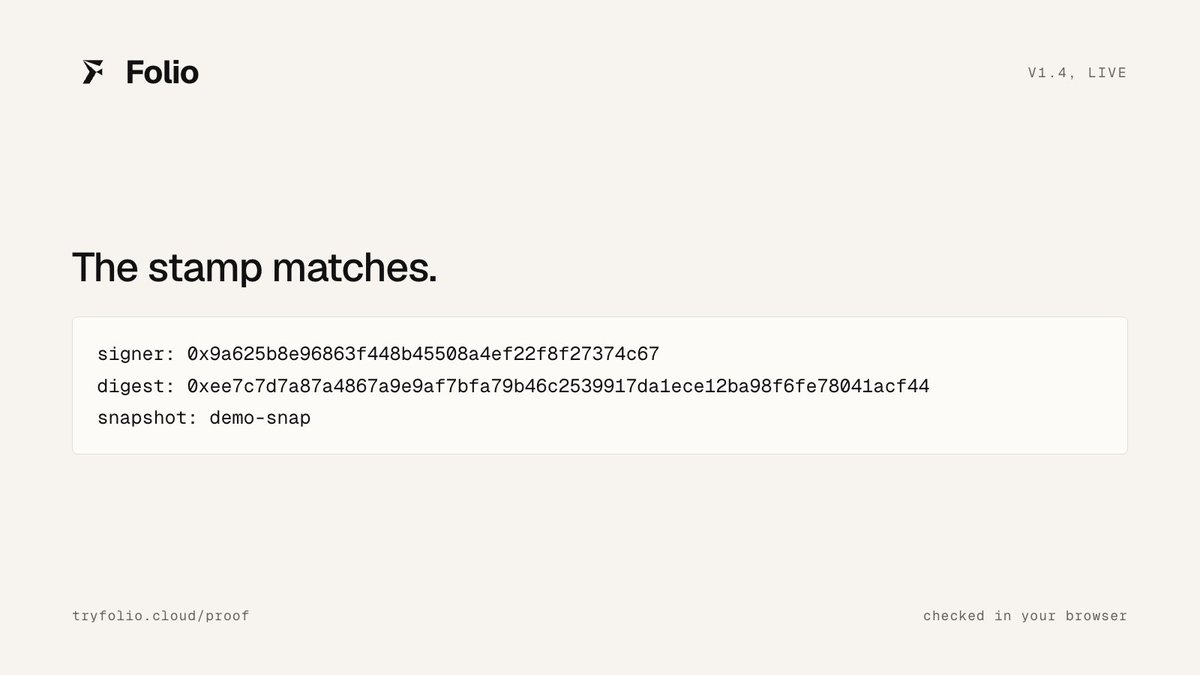
The home line says how covered the desk is. The proof page puts upstream over owed, in dollars. Paste the id and the stamp matches. Change one digit and it fails. The anchor at the bottom is the transaction.
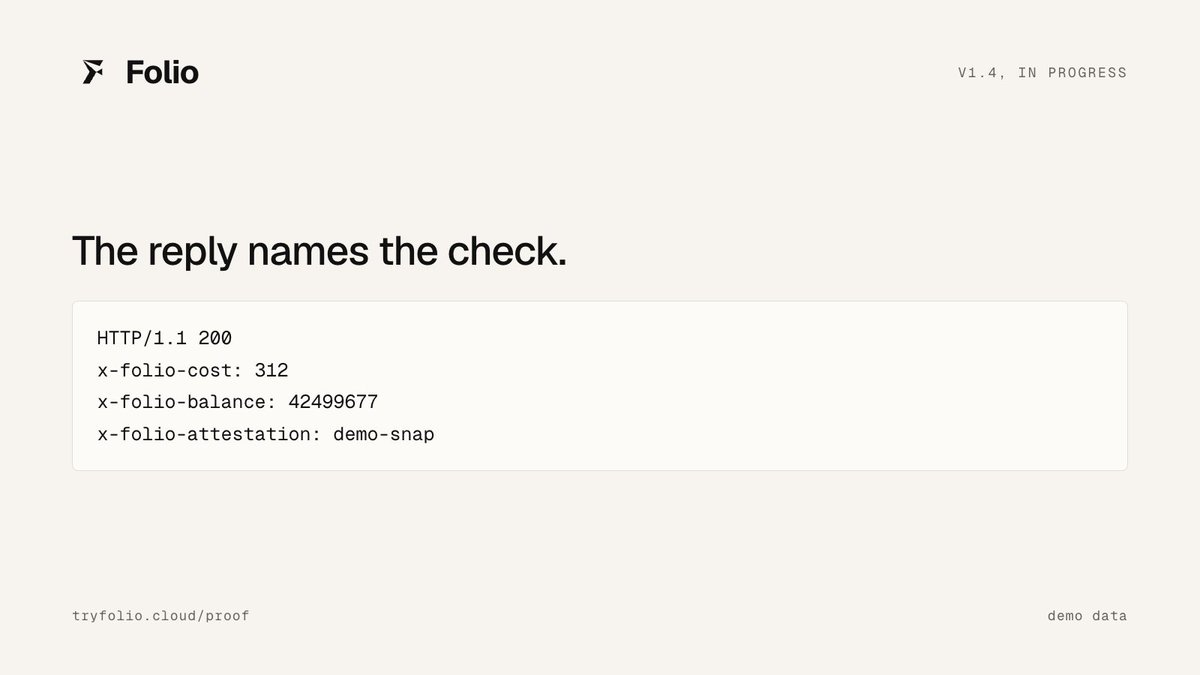
v1.4 is live. Every reply from https://t.co/OjX8l030cb names the reserve check it ran under, signed by a published key and written on chain once an hour. Paste the id on /proof and your browser does the check. Nobody can edit yesterday.
Building v1.4. Every reply now names the reserve check it was served under. Paste that id on /proof and your browser recovers the signer and matches the hash. Once an hour the hash goes on chain.
v1.4 is proof of credit. Today the desk checks every 5 minutes that every balance is backed upstream. Next, that check is signed, written on chain once an hour, and named on every reply. You check it yourself. Live this week.
The Playground shows the cost and what is left under the reply. A finished call puts the cost in micro-dollars. A stream says pending and keeps the cost for the last line. A 402 still says what is free. Docs names both headers.
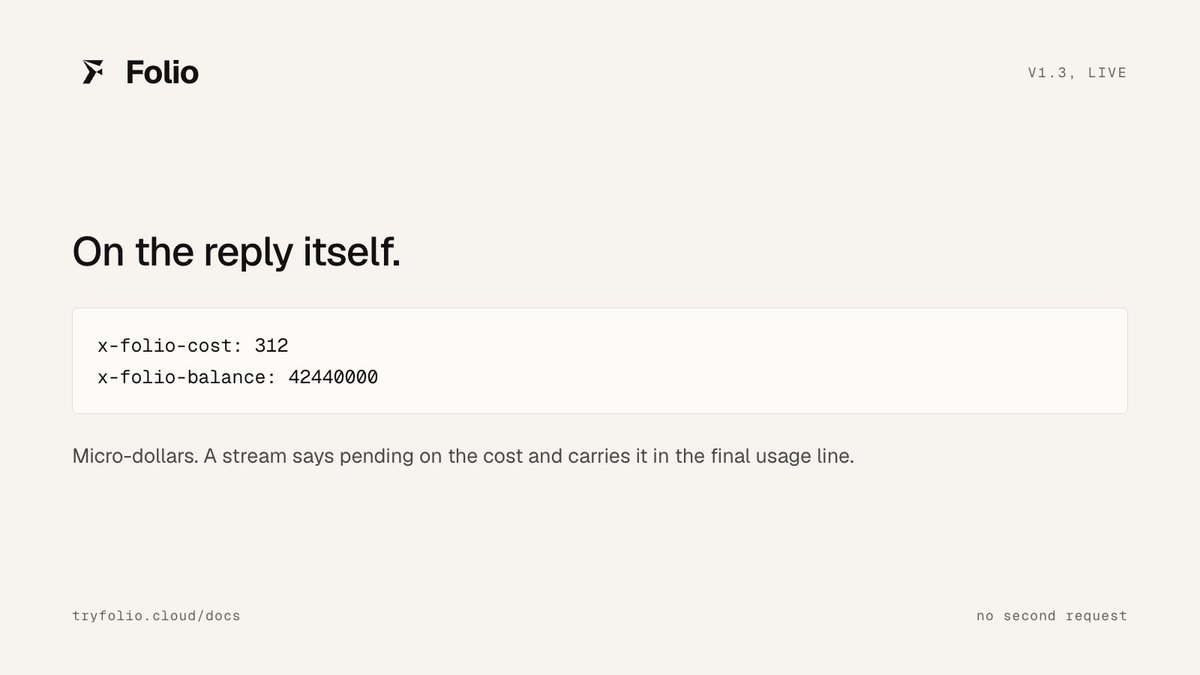
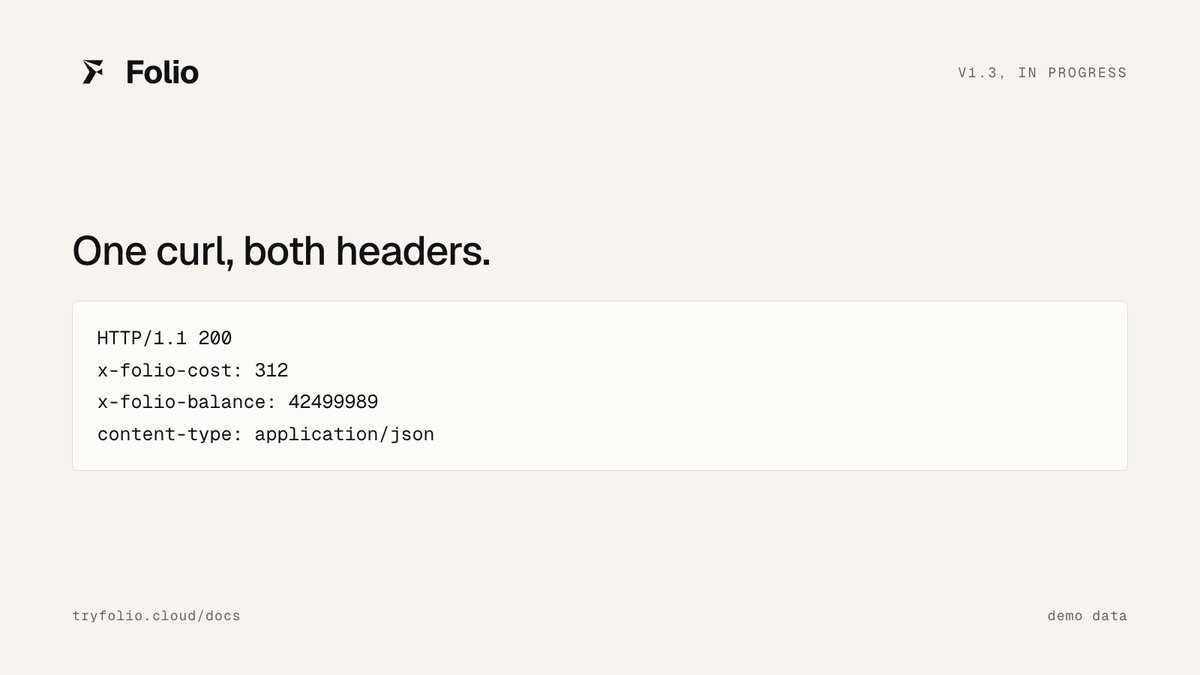
The reply lands as a card first: x-folio-cost in micro-dollars, x-folio-balance after the hold. Then the Playground sends one line and writes both under the answer.
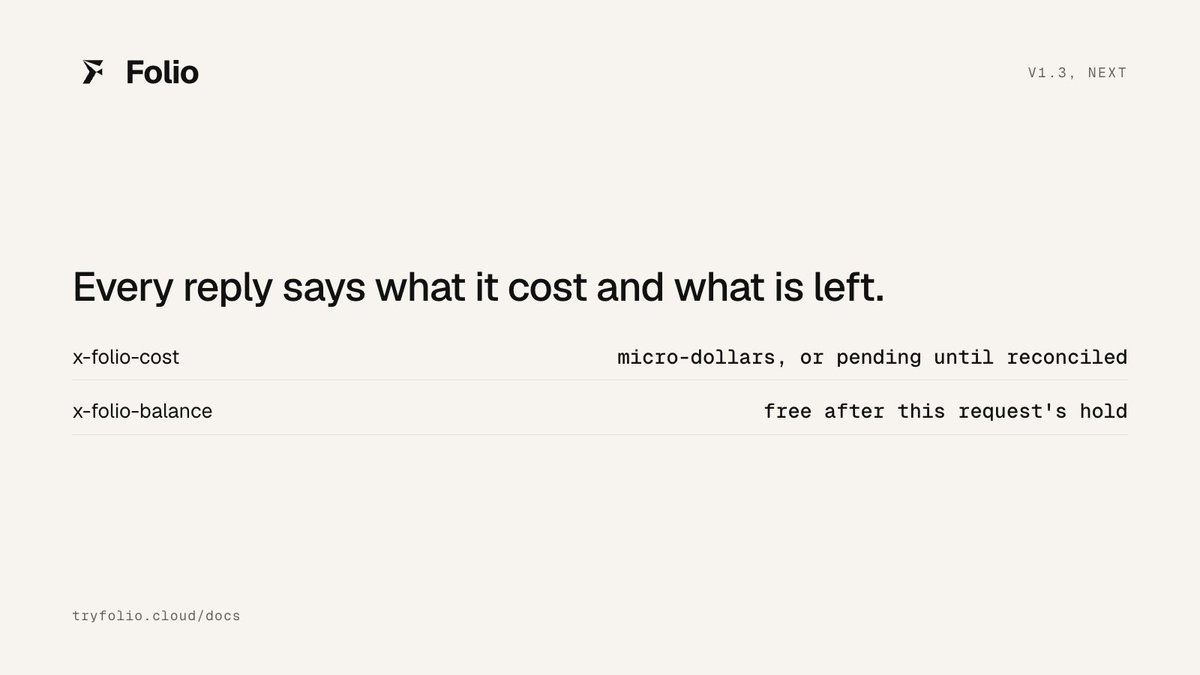
v1.3 is live. Every reply from https://t.co/OjX8l030cb carries x-folio-cost and x-folio-balance. Your client knows what the call cost and what is left the moment the reply lands. No second request.
Building v1.3. One curl -i and the two headers are there: what this reply cost in micro-dollars, and what is free after it. Streams say pending on the cost and carry it in the final usage line.
v1.3 is two headers. Every reply from the desk carries x-folio-cost and x-folio-balance. Your client reads what the call cost and what is left without a second request. Live this week.
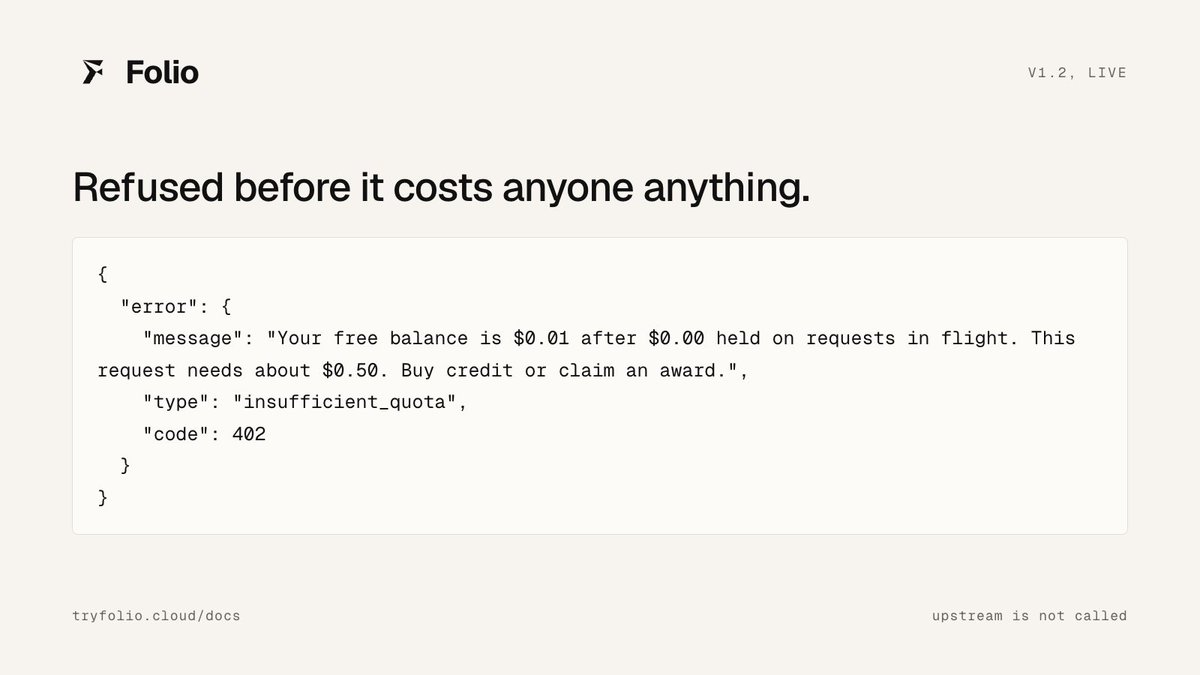
Send one from the Playground. A hold sits on the strip while the reply is still coming in. It drops to zero when the real cost posts. The next request does not fit, so the desk answers 402 and names what is free, what is held, and what that request needed. Account shows the same hold while a call is in flight.
https://t.co/6MsuklbYZC
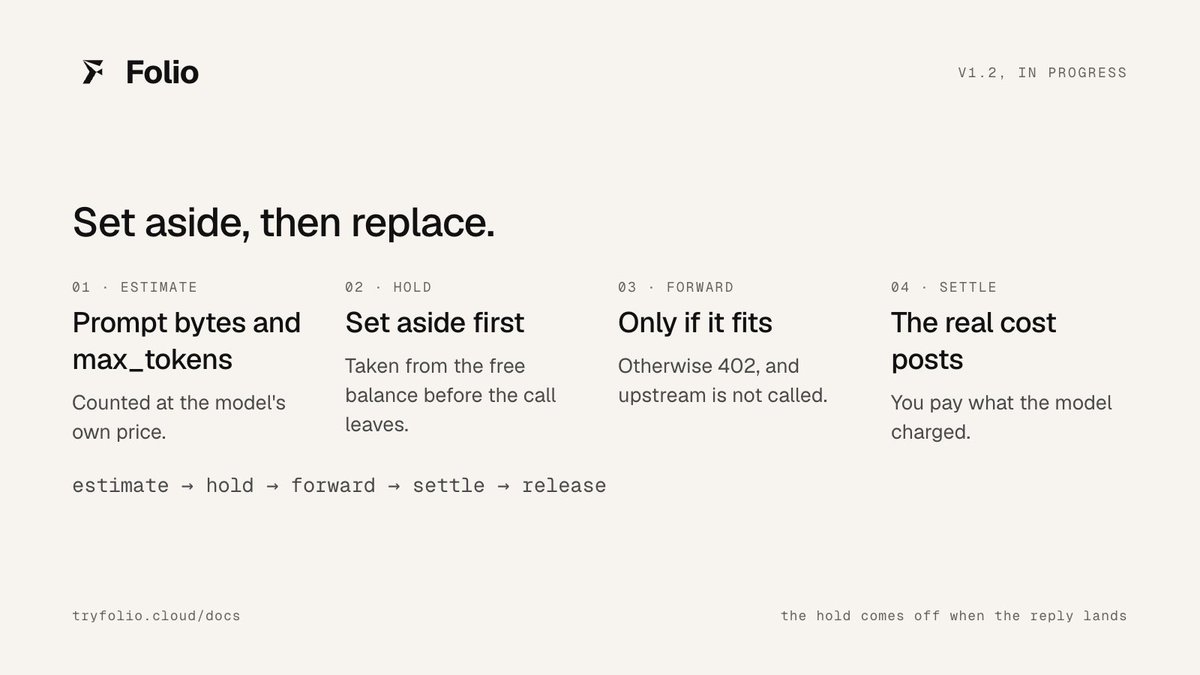
v1.2 is live. Every request sets aside its worst case before it runs and pays the real cost after. A request your balance cannot cover is refused before it is made. Your key cannot overspend.
https://t.co/5j4wwVND6F
Building v1.2. Prompt bytes and max_tokens, at the model's own price, become a hold before the call. The reply's real cost replaces it. Two requests in flight cannot both spend the same dollar.
https://t.co/5j4wwVND6F
v1.2 is spend holds. Before your request leaves the desk, its worst case is set aside from your balance. When the reply lands, the real cost replaces the hold. A request that cannot be paid for is refused before it costs anyone anything. Live this week.
https://t.co/5j4wwVND6F
One URL and your key.
Paste this into Cursor. The address is https://t.co/y47kwqPFPP. The IDE fills in FOLIO_API_KEY. The CLI reads that same variable without the env wrapper.
v1.1 is live. Add https://t.co/y47kwqPFPP to Cursor or Claude Code with your sk-folio key. The agent reads its balance, sees your perk with the day it lapses, and claims it. No gas, no new account.