As a @TheRootNetwork builder, I’m genuinely blown away by what @futureverse is doing with UBF. It allows creators like me to share asset characters, items, and worlds across Unreal and Unity seamlessly connecting metaverse games without the need for re-coding.
Despite the criticism, they’re way ahead of any other metaverse project. It’s hard to explain to people who aren’t deeply familiar with the gaming industry or how things like code, topology, and rigging actually work but I’ll try.
Think of it like this: every game character has a rig, and that rig drives animations. Now imagine I create a sword animation for my character how does that same animation work in another game?
Futureverse created a rigging standard that all projects follow. That means I can animate my character with that rig, and it will work across all compatible characters in different games. Then, I link that asset with UBF.
And that’s just one of many things that make what they’re building on The Root Network actually possible. The fact that it’s already working and actively being updated is honestly insane.
Beep Boop: Transmission Received. 🤖
While scanning deep inside the Shroomfields, a Seeker unearthed an ancient map! Professor Spakenski is already deciphering its secrets. 🫡
Like & repost to unveil where it leads! 🧭🔁
I think that the overall analysis is very solid for where web3 gaming is right now. We have always said web3 hasn't done its job well for providing true enhancement of the gamer experience.
As i have always said the only true value proposition for web3 technology is ownership of digital things. Solving the double spend problem unlocked this amazing everything else in web3 is built on that premise
For gaming that value has been thin for lots of reasons mentioned by Ed but primarily because of lack of interoperability, owning something that and only exist in one game economy is the exact same experience as web2 for gamers. When we tell web2 gamers "now you can own your thing you love" and they then try that out and find out they actually can't do anything different its no wonder the perception of web3 gaming is negative.
Yes web3 has more efficient market place for trading but its only a slightly incremental improvement.
Ed makes a great point about how hard interoperability is to achieve due to the way gaming pipelines work again we have outlined this many times ourselves its an extremely complex multi domain problem few have tackled .
This is why we have spent so much time on the UBF standard to simplify and scale interoperability you can read about it here. https://t.co/AhcRbOzCdn .
Some of the other problems Ed mentions are further solved when you combine UBF with the Murmur Matrix https://t.co/eFPeTa2nZv and with something like @alteredstateai which can create on the fly re renderings/re-texturing from blueprint and matrix data.
I also believe the analysis is true in the context of the current market structure for gaming and studios but i believe that this will fundamentally change soon. We are at the end of the $1B AAA title era.
Studios could create moats and lock in users to their gated content ecosystems and markets because they had the capital to create the best titles and creating the best takes capital. But with AI progressing as fast as it is those economics will entirely alter.
Gaming will soon resemble social media/memes because the same thing is happening now that happened then. Users are being given the tools to become creators and publishers. The amount of quality games being created will skyrocket.
Walled gardens exist because of capital , people have the money to build something that most people can’t do so they can capture users because of that.
That world is disappearing.
Right now 40 new games come to steam a day. Soon a billion people will make games every day.
Game economies will resemble memes in how they are created and distributed monetisation will resemble meme coins, fast , frequent, plentiful, few winners , short term wins.
In this sea of content with temporal value what will become important.
Tooling
Identity
Interoperability
Discoverability
Obviously picks and shovels will generate value , they always have in these scenarios making tools that enable this kind of creativity will and is already generating value. But these tools need to be made with the other 3 things in mind in order to truely win.
If new games are coming every second, if playing a game resembles scrolling your feed then users will value their digital identity more , they will want to take their avatar or branded collectable with them wherever the next game is today just like they take their profile from post to post in social media.
Users will want to take the things which carry real personal value or social capital like their favourite sports team jumper or celebrity avatar or branded accessories with them.
This in turn will drive a preference for interoperability , if I love my avatar I will want to take it everywhere just like my social media profile goes with me from meme to meme. Games that build for interoperability will win more users , if a sports club has a million interoperable avatars and your game accepts them they will tell each other and go there to check it out.
This will also mean that they will want their social graph, messaging and more to be portable between these games and experiences just like their social media profile is today.
Brands and communities that embrace this will win those that don’t will become less and less visible and less and less preferred to these users. Developers and platforms that embrace it will win too.
With this sea of new content and the ability for users to move between these things easily the next important thing is discoverability both for developers and for users wading through the masses of content to find the thing I value will also be important. Just like your TikTok algorithm is important to you now or google was for the current version of the internet and your agent will be in the next version.
Naturally this leads back to the same key of interoperability if you understand what assets are interoperable where you can recommend to users things that fit what they have if you can tell developers what users have they can optimise for the audience they want to get too. Combining this with social mechanics that group users around the things they own and love already allows communities to co-discover, recommend and raid new experiences together.
Thats why we have been building the protocols and tools for a world where 3b gamers who will make their own games.
Altered State is our SOTA generative 3D tooling built with interoperability in mind. Everything generated can be owned by a user and seamlessly taken with them between any experience on any engine. Not only that Altered State assets contain unique patented metadata that allows LLMs to understand those objects so that user agents can discover and recommend what is compatible where.
SYLO is our user identity and social graph that makes it possible for people to take their social network between games and experiences as well as their core identity and assets.
UBF is our standard for interoperability that allows content like their avatar or favourite sports team wearable to follow users everywhere they go.
The Readyverse is the social discovery engine for connected experiences built by anyone its the front end for users to generate interoperable content and its the front door for brands to become part of this new phase of gaming and of the internet.
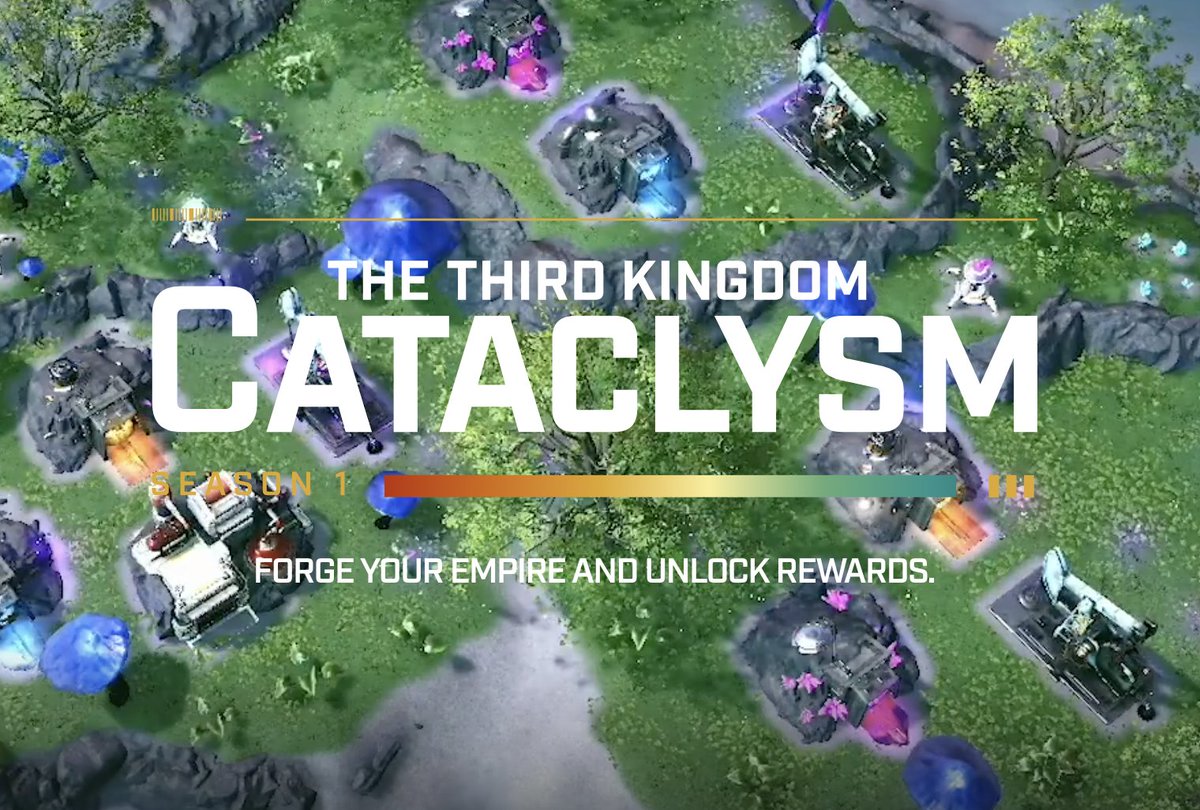
THE THIRD KINGDOM: CATACLYSM, EPISODE 2 IS LIVE! 🏰
Play now at https://t.co/SASVlTm3i3.
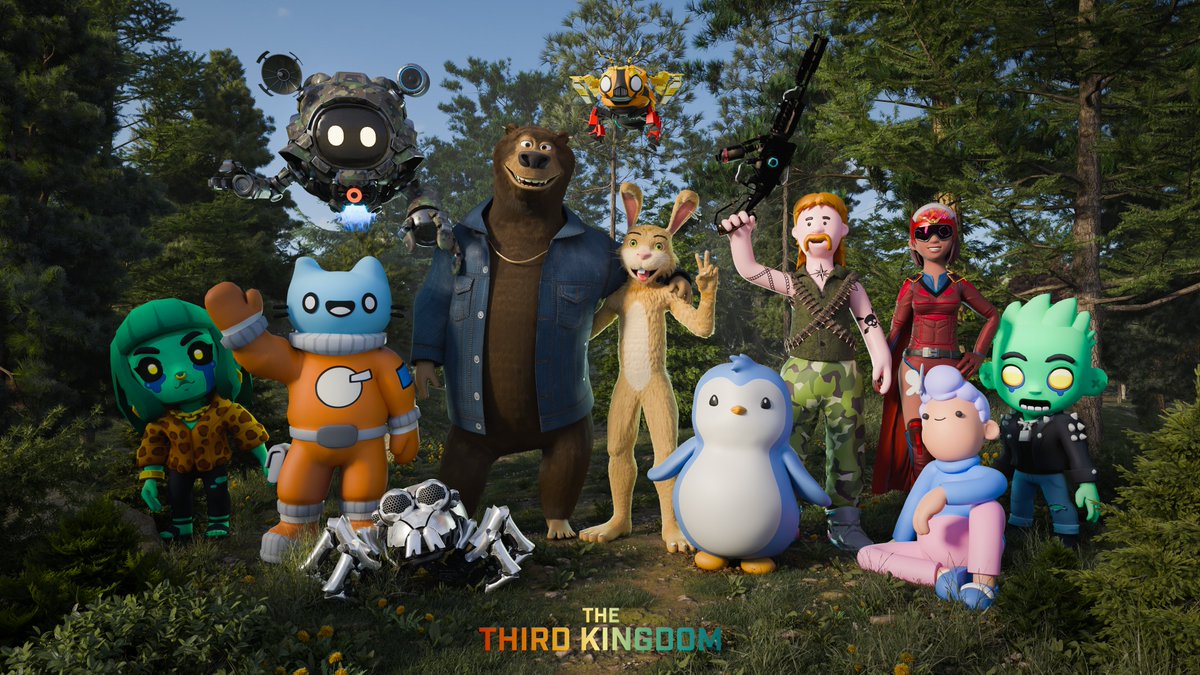
Dive into a strategy simulation game with @doodles, @coolcats, @walkerworld_, @Deadfellaz, and @pudgypenguins. Build your empire, embark on missions, and unlock up to 312,500,000 $ROOT.
Soon you will be a pro like @jmetcalfe_ too with the push of a button in @alteredstateai your creation will be made into a UBF blueprint ready to use in any game with any engine.
Are you ready to experience Shibuya City like never before?
👀 First sneak peek drops Feb 7 PT.
🌍 Stay tuned on X.
🇯🇵 In Japan? See it first at DIG Shibuya – https://t.co/U3mmKWv8Kq.
🔥 Open Space Contest Alert! 🔥
Spread the word about our Open Space series launching today, for a chance to win 5,000 $ROOT. 💰
To enter, Retweet or Quote Retweet the Spaces link. Two winners will be chosen at random and announced on X. Details below!
https://t.co/fCZHUvjv9O
Geeky tech stuff. I love this. Mostly because of the thought process > from ideas, to goals through to user experiences. There are things in how @futureverse thinks about the Metaverse, for example, that are astonishingly elegant solutions to age-old challenges. They aren't superficial, they come from some deep-thinking space.
It's a bit shocking, honestly, that they're able to understand where the *real* challenges lie in an "interoperable" Metaverse (hint: it isn't moving stuff around, it's identity, user content, culture, community and the management of 'world space').
I've seen some of this as it plays out in Emergence in how it embeds FV integration in the Release Candidate.
It's these ripples - from big thoughts, through experiments and building, down to the level of code.
I've long stood in opposition to the idea that "tech is neutral" or "code doesn't have values" because it's blatantly untrue. The values of our team ARE embedded in the code.
So...maybe we won't get into all of this tomorrow. But will be fun to chat about the "stack" and trace the values, utility, and goals for players/developers.
Oh! And not to forget - am super energized by @RCADIAHQ ...they bring something really special to the 'space'. I find myself instantly optimistic when they're around.
Set yourself a reminder: :) See you tomorrow!
https://t.co/eNk0OLekN8
Today, we couldn't be more excited to premiere Jen [ALPHA]. 🎵
Our ethically-trained generative AI music platform introduces a new standard for copyright compliance in text-to-music generation. Now, you can make music with your mind on https://t.co/iRqCeonM4N.
Its been complex because.
1. You're early you are on the inside of product dev process.
2. The intersection of these complex systems is where the opportunity is. No one is building at all these intersections so they fail to see the nuance that will make the difference.
3. We've been focused on the underlying systems which are hard to grasp but we are now moving to the apps which make it simpler.
4. People who can see through this have the advantage :)