@claudeai@claudeai My account was hacked in April 2026, $440 in unauthorized Gift Max charges. 6+ weeks, no human response. Conversation ID: 215473973937203. Please help. #Anthropic#billing
@claudeai@claudeai My account was hacked in April 2026, $440 in unauthorized Gift Max charges. 6+ weeks, no human response. Conversation ID: 215473973937203. Please help. #Anthropic#billing
AI at #AIBigDataExpo2026 is moving from demos to real enterprise use cases.
The real value is not just better chatbots, but AI connected to real workflows, real data, real users and measurable outcomes.
#AgenticEnterprise#MISA#AI#BigData#AMIS
AI is moving beyond assistants and copilots toward the Agentic Enterprise. Not replacing humans, but enabling Human-Agent teams: people set goals and guardrails; AI agents analyze, recommend and automate.
#MISA#AgenticEnterprise#AIBigDataExpo2026
Apps inside ChatGPT are the way to get your business discovered by 900M+ people using it, but building them is still too hard.
So we built Fractal: @Lovable for ChatGPT Apps
It’s the fastest way for business owners, with or without a technical team, to ship exceptional ChatGPT apps
Every stage of the traditional SDLC is collapsing, except monitoring. And monitoring needs to evolve.
Observability becomes the feedback mechanism that drives the entire loop...the connective tissue of the whole system. 🙌
Read the rest from @boristane, https://t.co/V4sPWEZW9F
Very interested in what the coming era of highly bespoke software might look like.
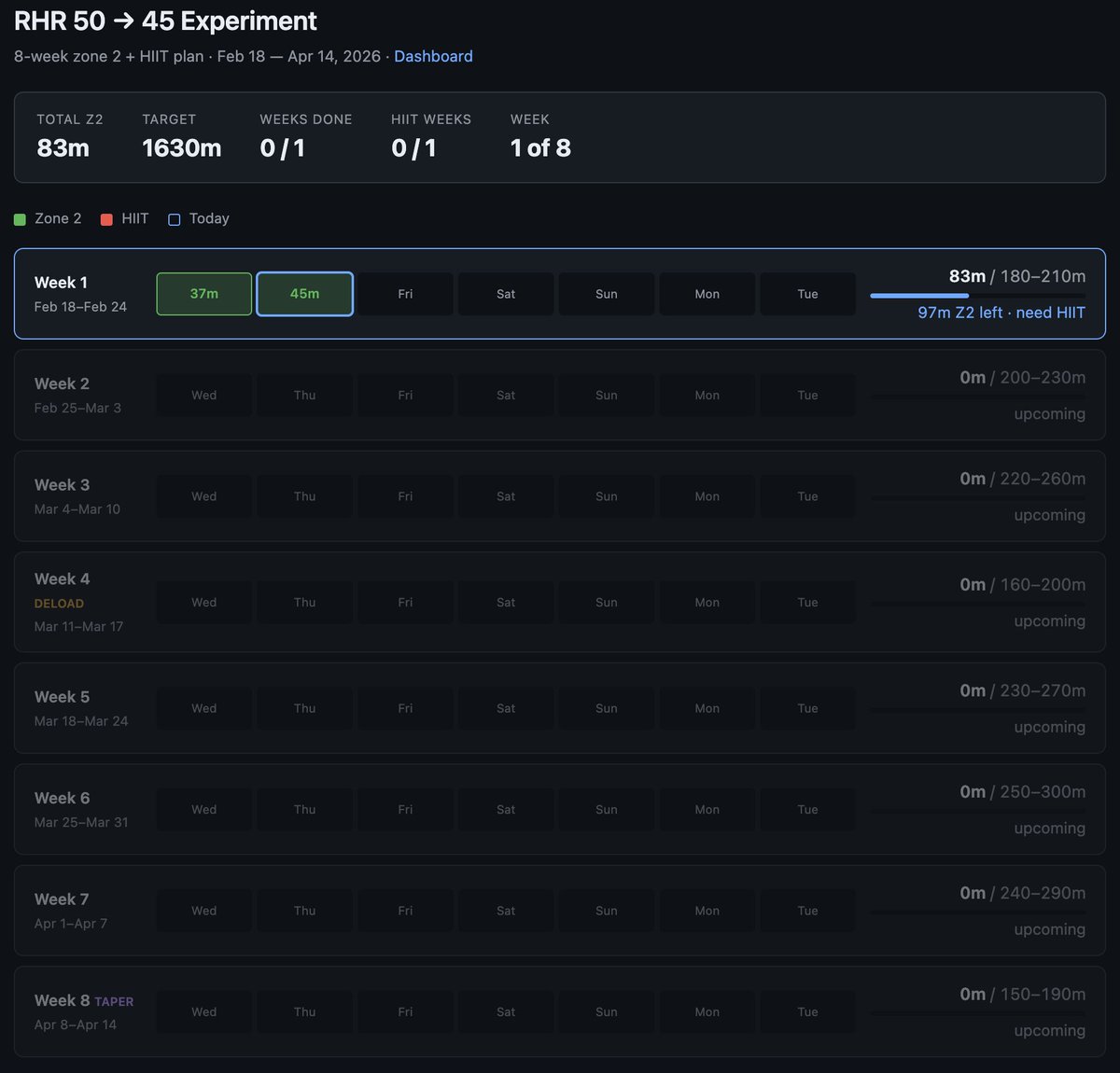
Example from this morning - I've become a bit loosy goosy with my cardio recently so I decided to do a more srs, regimented experiment to try to lower my Resting Heart Rate from 50 -> 45, over experiment duration of 8 weeks. The primary way to do this is to aspire to a certain sum total minute goals in Zone 2 cardio and 1 HIIT/week.
1 hour later I vibe coded this super custom dashboard for this very specific experiment that shows me how I'm tracking. Claude had to reverse engineer the Woodway treadmill cloud API to pull raw data, process, filter, debug it and create a web UI frontend to track the experiment. It wasn't a fully smooth experience and I had to notice and ask to fix bugs e.g. it screwed up metric vs. imperial system units and it screwed up on the calendar matching up days to dates etc.
But I still feel like the overall direction is clear:
1) There will never be (and shouldn't be) a specific app on the app store for this kind of thing. I shouldn't have to look for, download and use some kind of a "Cardio experiment tracker", when this thing is ~300 lines of code that an LLM agent will give you in seconds. The idea of an "app store" of a long tail of discrete set of apps you choose from feels somehow wrong and outdated when LLM agents can improvise the app on the spot and just for you.
2) Second, the industry has to reconfigure into a set of services of sensors and actuators with agent native ergonomics. My Woodway treadmill is a sensor - it turns physical state into digital knowledge. It shouldn't maintain some human-readable frontend and my LLM agent shouldn't have to reverse engineer it, it should be an API/CLI easily usable by my agent. I'm a little bit disappointed (and my timelines are correspondingly slower) with how slowly this progression is happening in the industry overall. 99% of products/services still don't have an AI-native CLI yet. 99% of products/services maintain .html/.css docs like I won't immediately look for how to copy paste the whole thing to my agent to get something done. They give you a list of instructions on a webpage to open this or that url and click here or there to do a thing. In 2026. What am I a computer? You do it. Or have my agent do it.
So anyway today I am impressed that this random thing took 1 hour (it would have been ~10 hours 2 years ago). But what excites me more is thinking through how this really should have been 1 minute tops. What has to be in place so that it would be 1 minute? So that I could simply say "Hi can you help me track my cardio over the next 8 weeks", and after a very brief Q&A the app would be up. The AI would already have a lot personal context, it would gather the extra needed data, it would reference and search related skill libraries, and maintain all my little apps/automations.
TLDR the "app store" of a set of discrete apps that you choose from is an increasingly outdated concept all by itself. The future are services of AI-native sensors & actuators orchestrated via LLM glue into highly custom, ephemeral apps. It's just not here yet.
we released our first State of Enterprise AI report today -- grounded in actual usage and survey data, it shows that enterprise AI adoption is not only broadening but deepening. some notes:
*enterprise messaging volume is up ~8× YoY, with the avg employee sending ~30% more messages
*coding-related messages increased 36% for workers outside of technical functions
*tech, healthcare, and manufacturing are the fastest growing sectors
*workers using AI report saving 40–60 minutes per day
*weekly users of GPTs and Projects are up ~19×, and ~20% of messages flow thru custom workflows
*frontier adopters (top 5%) send ~6× more messages than the median
I still can’t believe this is free.
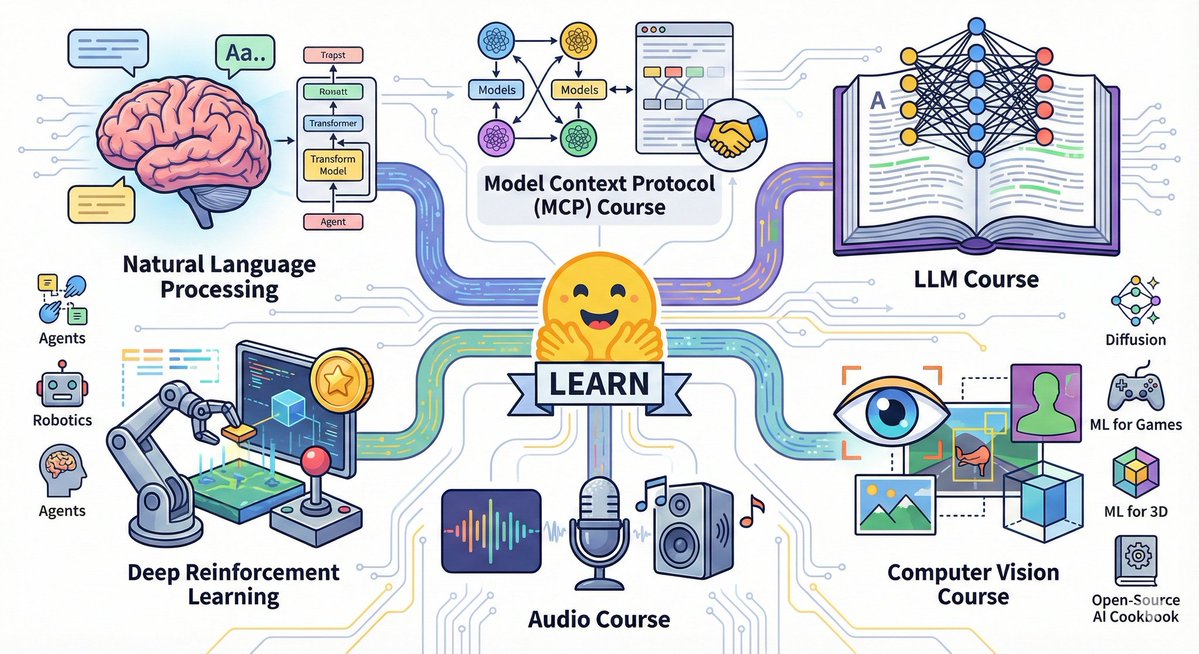
Most bootcamps are charging $3,000 to teach you outdated material.
Meanwhile, @huggingface is giving away the state-of-the-art curriculum for $0.
• Agents? ✅ • Robotics? ✅ • The new MCP standard? ✅
Check this. Bookmark.👇
Context engineering vs. prompt engineering:
In the early days of LLMs, crafting clever prompts was the secret sauce.
But if you're building serious AI agents today, prompt engineering alone won’t cut it.
You need context engineering.
Here’s why:
- Prompting is about what you say
- Context engineering is about what the model sees
And what it sees matters more than ever.
Every token in context costs attention. The bigger the context, the more likely the model gets distracted, forgets, or slows down.
Just like humans, LLMs can lose focus.
That’s why good agents don’t just dump everything into context. They:
1️⃣ Curate what’s useful
2️⃣ Summarize what’s old
3️⃣ Fetch what’s needed (just in time)
4️⃣ Write notes for themselves
5️⃣ Delegate work to sub-agents when needed
This isn’t theory, it’s how systems like Claude Code, real-world agents, and effective memory tools are already working today.
Context engineering is becoming the core skill for anyone building long-horizon, multi-step agents.
If you’re serious about agents, start treating context as a finite, high-value resource.
And engineer it that way.
This post is inspired by Anthropic's latest blog on the same topic.
I highly recommend reading it; the link is shared in the next tweet!
Cursor is powerful.
But if you’re just prompting it randomly, you’re leaving 80% of its potential untapped.
Here’s my exact playbook after building 17+ products with it.
Our Researcher and Analyst agents are like having a highly skilled expert on call for you 24/7 across your work data and the web. Excited to bring reasoning to Microsoft 365 Copilot & Copilot Studio today. https://t.co/1eC43EzQdi
Harvard’s AI Research Experience free course book by @pranavrajpurkar covers the essentials and tips on doing research:
- VSCode, Git, Conda
- PyTorch, W&B
- AWS, colab
- LLMs and VLMs
- reading AI papers
- research progress and organization
this is a must read!
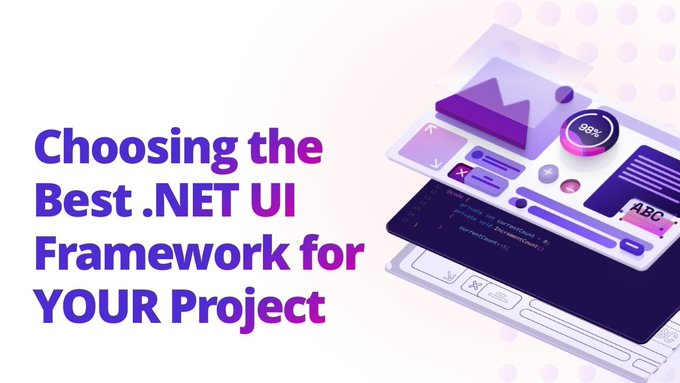
ICYMI - Choosing the right UI framework in .NET can be a daunting task with options like #dotNETMAUI, Blazor Hybrid, and more.
In this talk, we dive into the best .NET UI frameworks for building desktop, smartphone, and tablet apps. https://t.co/apGrxFDoGk #dotnet